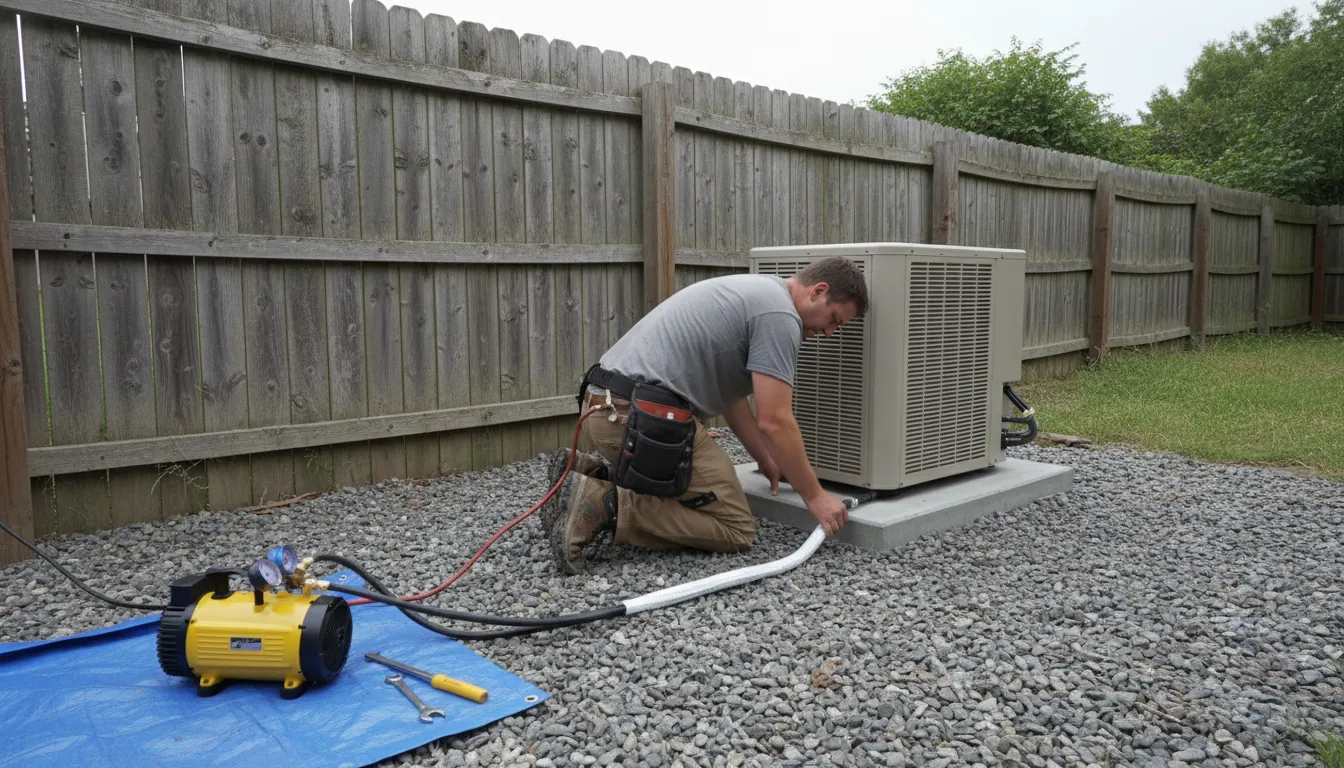
Find the Best Mini-Split Installers for Your Business
No obligation • Fast responses • Nationwide coverage

Why you can trust HVAC Firms
HVAC Firms is a leading United States resource for evaluating HVAC service providers. Our team researches companies, checks credentials, and reviews customer feedback to present clear, unbiased information. Listings and rankings are based on merit, and companies cannot pay to change our editorial content.
Search providers near you
Top Mini-Split Installers in Mountain View, California Ranked
A ductless mini-split system is an efficient, flexible heating and cooling solution perfect for modernizing your Mountain View home. These systems provide targeted, zoned comfort, making them ideal for room additions, homes without existing ductwork, or for creating independent climate zones throughout your living space. This guide will help you understand the options, costs, and key considerations for a successful installation, connecting you with the information needed to find qualified local professionals.
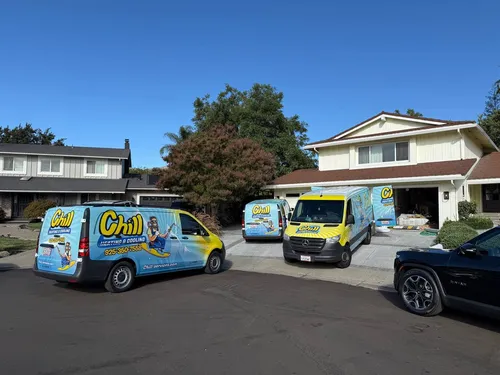
Chill Heating and Cooling
23 Beta Ct suite f, San Ramon, CA 94583
Chill Heating and Cooling is a full-service HVAC company based in Oakland, CA, offering heating and cooling repairs, maintenance, and installations for residential and commercial clients. They provide services including air conditioning, furnace, heat pump, mini split, and thermostat installation and repair. The company is an authorized Carrier dealer and serves the Oakland area with expertise in diagnosing and repairing HVAC systems, as well as installing new units tailored to home or business needs. Chill Heating and Cooling is available for emergency calls and offers same-day service to address urgent heating and cooling issues.
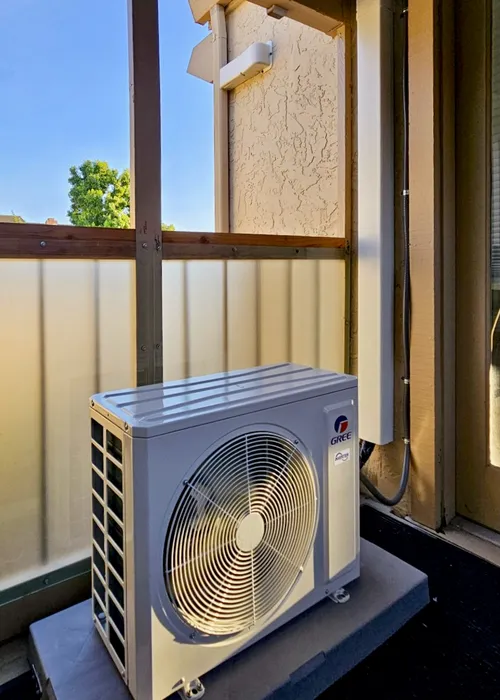
Freon HVAC, Electrical & Appliance
299 E McGlincy Ln Suite A, Campbell, CA 95008
Freon HVAC, Electrical & Appliance provides a range of heating and air conditioning services in San Jose, CA. They specialize in HVAC installation, repair, and maintenance, including air conditioning, furnaces, heat pumps, mini splits, and thermostat installation. Their team handles ductwork repair and indoor air quality services to support comfortable indoor environments. Freon HVAC offers expertise in refrigerant replacement and commercial HVAC solutions, focusing on efficient system operation throughout the year.
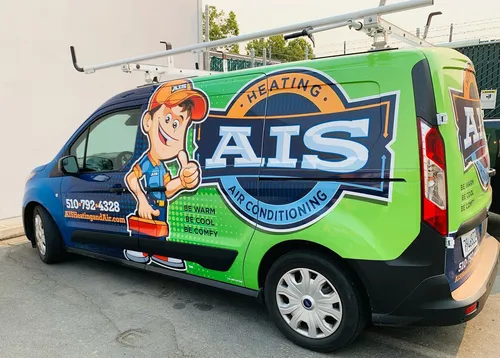
AIS Heating & Air Conditioning
76 Wright Brothers Ave, Livermore, CA 94551
AIS Heating & Air Conditioning is an HVAC contractor serving Oakland, CA, and nearby areas including Fremont and Livermore. Since 2008, they have provided a full range of heating and cooling services such as air conditioning repair and installation, furnace and heat pump services, and indoor air quality solutions. Their capabilities include ductwork installation and air duct sealing to improve home air quality. The company offers comprehensive HVAC maintenance and repair to keep homes comfortable throughout the year.

Upgrade Home Services, HVAC
743 Ames Ave, Milpitas, CA 95035
Upgrade Home Services, HVAC is a family-owned company serving San Jose, CA, and the surrounding Bay Area since 2002. They provide a range of HVAC services including air conditioning, furnace, heat pump, and mini split installation and repair, as well as indoor air quality testing and improvements. The company is experienced in handling all major HVAC brands and offers tailored solutions for both basic maintenance and complex home remodeling projects. Their expertise includes helping customers transition to energy-efficient electric heat pump systems. Upgrade Home Services is committed to maintaining comfortable home environments year-round.
Evergreen Air HVAC Corp
San Jose, CA
Evergreen Air HVAC Corp is a family-owned HVAC company serving San Jose, CA, and the Bay Area since 2008. They provide a wide range of heating and air conditioning services, including installation, repair, and maintenance for residential and commercial clients. Their skilled technicians are trained in the latest HVAC technologies and offer services such as A/C installation and repair, gas and electric furnace installation and repair, ductless A/C services, thermostat repair, and air duct installation. Evergreen Air also provides emergency services and virtual consultations to accommodate customer needs.
Why Choose a Ductless Mini-Split System?
Ductless mini-splits, often simply called mini-splits, are a popular choice for Bay Area homes due to their energy efficiency and design flexibility. Unlike traditional central HVAC that uses extensive ductwork, a ductless system consists of a compact outdoor condenser unit connected to one or more sleek indoor air handlers. This setup eliminates the energy losses associated with ducts, which can account for more than 30% of energy consumption for space conditioning, especially if the ducts are in an unconditioned space like an attic1 2. For homeowners in Mountain View looking to add air conditioning to a specific area, retrofit an older home, or achieve personalized comfort in different rooms, a ductless air conditioner or heat pump is a compelling solution.
Ideal Applications for Mountain View Homes
The versatility of ductless technology makes it suitable for a wide range of projects in our community.
- Room Additions, Garages, and ADUs: Adding a sunroom, converting a garage, or building an Accessory Dwelling Unit (ADU) often means extending ductwork is impractical or prohibitively expensive. A single-zone mini-split provides perfect, independent climate control for these new spaces without the hassle and cost of major construction 3.
- Whole-Home Comfort Upgrades: For houses with outdated or failing systems, a multi-zone ductless setup can provide comprehensive heating and cooling. By installing multiple indoor units (for bedrooms, living areas, home offices), you create a zoned system that allows different temperatures in different areas, enhancing comfort and efficiency.
- Historic and Older Homes: Preserving the character of Mountain View's charming older homes is a priority. Ductless systems are non-invasive, requiring only a small hole for the conduit, making them ideal for homes where installing or hiding bulky ductwork would be difficult or damaging to historic features.
Understanding System Types and Configurations
Choosing the right configuration is the first step in planning your installation. The two primary setups are defined by how many areas, or "zones," you need to condition.
- Single-Zone Systems: This is the most basic and cost-effective configuration. It involves one outdoor condenser connected to a single indoor air handler. It's designed to heat and cool one specific room or open area, such as a master bedroom suite, home office, or garage workshop 4.
- Multi-Zone Systems: This is where ductless technology truly shines for whole-home comfort. A single, more powerful outdoor condenser can connect to multiple indoor units (typically 2 to 5 or more). Each indoor unit operates independently, allowing you to set different temperatures in the living room, kitchen, and bedrooms simultaneously. This eliminates arguments over the thermostat and can lead to significant energy savings by not conditioning unoccupied rooms.
Selecting and Placing Indoor Air Handlers
The indoor unit, or air handler, is the visible component inside your home. Selecting the right type and placing it correctly are crucial for performance and aesthetics.
- High-Wall Units: This is the most common and economical style. Mounted high on an interior wall, they provide excellent airflow distribution across the room. Professional installers focus on placing them on an exterior wall for shorter line runs, ensuring there are no obstructions like tall furniture that would block airflow, and considering the path for condensate drainage.
- Ceiling Cassette Units: For a more discreet and upscale look, ceiling-recessed cassettes are an excellent option. They are flush with the ceiling, distributing air in four directions for even coverage. These are more expensive due to the complexity of installation (requiring ceiling cavity access) but are often preferred for main living areas, hallways, or rooms with limited wall space.
Key placement considerations for any indoor unit include ensuring unobstructed airflow, accessibility for filter cleaning, minimizing the visual impact of the unit and its connecting lines, and planning for condensate drainage, which may require a condensate pump if a gravity drain isn't feasible 5.
Find the perfect mini-split installers for your needs
Get personalized recommendations and expert advice
Critical Installation Considerations: From Outdoor Units to Electrical
A professional installation addresses several critical technical and logistical factors that ensure system longevity, efficiency, and compliance with local codes.
- Outdoor Unit Placement: The condenser needs a location with adequate clearance (usually 12-24 inches on all sides) for proper airflow and future service access. Installers will also consider noise direction, avoiding pointing the fan towards neighboring windows or outdoor living spaces, and ensure the unit is on a stable, level pad.
- Line Routing and Concealment: The refrigerant lines, electrical conduit, and condensate drain line must be run from the outdoor unit to each indoor handler. In Mountain View, where home aesthetics are important, skilled installers use clever techniques to minimize visual impact. This includes routing lines through closets, basements, or attics, using paintable line-hide covers, or even employing slim ducting (like 2"x4" chases) to conceal the bundle neatly along walls.
- Electrical Requirements: Ductless systems require dedicated electrical circuits. A single-zone system may need a new 15-20 amp circuit, while a multi-zone system often requires a 220-volt circuit and potentially a new sub-panel. All electrical work must be performed to California and Mountain View building codes, which a licensed HVAC professional will manage.
- Permits and Professional Installation: A proper installation almost always requires a permit from the City of Mountain View. This ensures the work is inspected for safety and code compliance. Crucially, professional installation is required to maintain the manufacturer's warranty on the equipment. DIY installations typically void these warranties, leaving you unprotected against future repair costs.
Understanding Investment and Cost Factors
The cost of a ductless mini-split installation in Mountain View varies significantly based on the project's scope and specifications. Here is a general cost breakdown based on current market data 6 7 8 9:
- Single-Zone System: $3,000 - $6,000
- 2-3 Zone System: $5,500 - $8,500+
- 4+ Zone System: $8,000 - $15,000+
Several key factors influence where your project falls within these ranges:
- Number of Zones: Adding more indoor units increases the equipment and labor cost.
- Brand and Quality: Premium brands like Mitsubishi and Fujitsu often command a higher price due to their advanced technology, reliability, and efficiency.
- Efficiency Rating (SEER2): Systems with higher SEER2 ratings are more energy-efficient, leading to lower utility bills, but have a higher upfront equipment cost.
- Installation Complexity: The choice of indoor unit (a standard high-wall vs. a ceiling cassette), the length of the refrigerant line runs, the need for a condensate pump, and the difficulty of routing lines through your home's structure all impact labor time and cost.
- Electrical Work: The need for a new sub-panel or extensive new circuit wiring will add to the project cost.
Frequently asked questions
Sources
Footnotes
-
Mini Split Installation Mountain View CA Service - Plum HVAC - https://plumhvac.com/mini-split/mini-split-installation-in-mountain-view-ca ↩
-
Ductless mini-split installation: Cool 2025 Guide - Southern Air - https://www.southern-air.com/blog/ductless-mini-split-installation ↩
-
Whole House Ductless Mini Split Walk Through - https://www.youtube.com/watch?v=lDwutt_ywsA&t=2 ↩
-
DIY MULTI-ZONE Ductless MINI SPLIT Installation in New ... - https://www.youtube.com/watch?v=KD2GM0fg8eU ↩
-
Ductless Mini-Splits: A Comprehensive Cost Breakdown - https://www.myfivestarhomeservices.com/ductless-mini-splits-a-comprehensive-cost-breakdown/ ↩
-
Ductless Mini-Split Installation Cost in 2025: Full Breakdown - https://osborneheatingncooling.com/ductless-mini-split-installation-cost/ ↩
-
Ductless Mini Split Installation Costs in 2026 - Carrier - https://www.carrier.com/residential/en/us/products/ductless-mini-splits/ductless-mini-split-installation-cost/ ↩
-
Mini-Split AC Installation in California - Bonney: Plumbing - https://www.bonney.com/blog/mini-split-ac-cost-california/ ↩
-
How much to install mini split? - https://mrgoodguyhvac.com/how-much-to-install-mini-split/ ↩