Find the Best Mini-Split Installers for Your Business
No obligation • Fast responses • Nationwide coverage

Why you can trust HVAC Firms
HVAC Firms is a leading United States resource for evaluating HVAC service providers. Our team researches companies, checks credentials, and reviews customer feedback to present clear, unbiased information. Listings and rankings are based on merit, and companies cannot pay to change our editorial content.
Search providers near you
Top Mini-Split Installers in Los Banos, California Ranked
Ductless mini-split systems provide a modern, efficient solution for heating and cooling homes and specific rooms without the need for extensive ductwork. For residents of Los Banos, these systems are particularly valuable for managing the region's climate, offering zoned comfort control that can lead to significant energy savings. This guide explains the key considerations for ductless AC and heat pump installation, helping you understand the process, benefits, and how to connect with qualified local professionals for your project.
Understanding Ductless Mini-Split Systems
A ductless mini-split system consists of one or more quiet indoor air-handling units connected by refrigerant lines to a single outdoor compressor/condenser. This setup eliminates the need for the bulky ductwork required by traditional central HVAC systems. The core appeal is zoned comfort; you can independently control the temperature in different rooms or areas of your home. This is ideal for cooling a home office during the day while keeping unused bedrooms off, or for heating a family room in the evening without wasting energy on the entire house.
In Los Banos, where summer temperatures can soar, the efficiency of these systems is a major advantage. They operate on inverter technology, which allows the compressor to adjust its speed rather than constantly turning on and off. This results in precise temperature maintenance and reduced energy consumption compared to conventional window units or outdated central systems.
Ideal Applications for Los Banos Homes
Ductless technology is not a one-size-fits-all solution, but it is exceptionally well-suited for several common scenarios in the Los Banos area:
- Homes Without Existing Ductwork: Many older homes, including historic properties, were built without central air conditioning ducts. Installing a ductless system is often far more practical and less invasive than attempting to retrofit ductwork into finished walls and ceilings.
- Room Additions and Converted Spaces: Adding a sunroom, converting a garage into a living area, or finishing a basement creates spaces that your existing central HVAC system may not adequately cover. A mini-split provides targeted, efficient climate control for these new zones without overburdening your old system1.
- Supplementing Central HVAC: If certain rooms in your home are consistently too hot or too cold (like a south-facing master bedroom or a drafty sunroom), a single-zone mini-split can solve the problem without the need to rebalance or replace your entire system.
- Whole-Home Comfort: Multi-zone ductless systems, with several indoor units connected to one outdoor unit, can provide complete heating and cooling for an entire house. This is a popular option for newer, open-concept homes or for fully replacing an inefficient and costly old furnace and air conditioner2.
System Components and Placement Considerations
Successful installation hinges on proper planning for both indoor and outdoor components.
Indoor Air Handlers: These are mounted on walls, ceilings, or placed as floor consoles. The most common type is the high-wall mount, which is installed high on an interior wall for optimal air circulation across the room 3. Ceiling cassette models are recessed into the ceiling for a more discreet look, while floor units are good for rooms with limited wall space. Professional installers will assess room layout, window placement, and furniture to choose a location that avoids direct airflow onto occupants and ensures even temperature distribution.
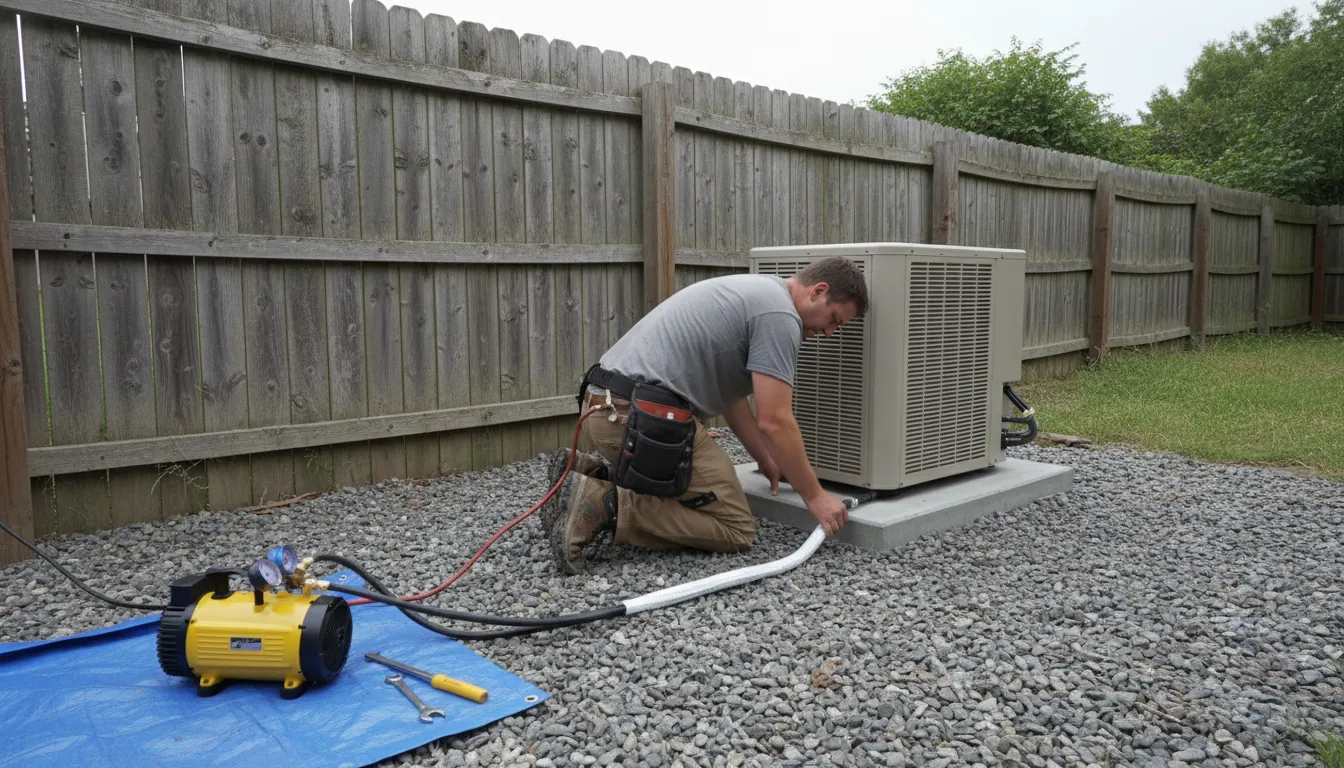
Outdoor Condenser: This unit must be placed on a stable, level surface-typically a concrete pad or specially rated mounting brackets on the side of the home. Critical clearance (usually 1-2 feet on all sides) must be maintained for airflow and service access. The ideal location is away from direct afternoon sun, dense vegetation, and areas prone to debris or high foot traffic. It should also be situated reasonably close to the indoor units to minimize the length of the connecting conduit run.
The Connection: A small hole (about 3 inches in diameter) is drilled through the exterior wall. A conduit containing the refrigerant lines, electrical power cable, and a condensate drain line is run through this hole, connecting the indoor and outdoor units. This slim conduit is the only penetration needed, preserving your home's structure and aesthetics4 5.
The Professional Installation Process
While DIY kits exist, professional installation is strongly recommended for warranty validation, electrical safety, and system performance. A certified technician ensures the job meets all local Los Banos and California building codes. The process generally involves:
- Site Evaluation and Load Calculation: A technician will assess your home's insulation, square footage, window types, and orientation to determine the correct BTU (British Thermal Unit) capacity needed for each zone. An oversized or undersized unit will lead to inefficiency and discomfort.
- System Design and Permitting: The installer designs the layout for optimal airflow and efficiency. They will also typically pull any required local permits, which is a crucial step for safety and future home sales.
- Mounting and Electrical Work: The indoor and outdoor units are securely mounted. A dedicated electrical circuit is often installed from your main panel to power the outdoor condenser6 7.
- Refrigerant Line Connection: The copper refrigerant lines are carefully flared, connected, and tested for leaks. Proper evacuation of the lines is essential to remove moisture and air, which can damage the compressor.
- System Testing and Commissioning: After everything is connected, the technician will charge the system with refrigerant, test all modes (heating and cooling), verify drainage, and demonstrate the thermostat controls to the homeowner.
Find the perfect mini-split installers for your needs
Get personalized recommendations and expert advice
Cost Factors for Mini-Split Installation
The total investment for a ductless mini-split system in Los Banos varies widely based on your specific needs. Understanding the cost breakdown helps in planning your project.
The primary cost driver is the number of zones. Here is a general cost range based on system size 8 9:
- Single-Zone System: $2,500 - $6,000. Ideal for one room, such as a garage conversion or primary bedroom.
- Two-Zone System: $4,500 - $8,000. A good solution for a small home or two primary living areas.
- Three-Zone System: $6,500 - $11,000. Can cover the main living areas of a medium-sized home.
- Multi-Zone (4-5 Zones): $10,000 - $15,000+. Provides whole-home comfort for larger residences.
Beyond the number of indoor heads, other factors influence the final price:
- Unit Efficiency (SEER Rating): Higher Seasonal Energy Efficiency Ratio (SEER) units cost more upfront but offer lower operating costs, which is important for Los Banos summers.
- Labor Complexity: Installations requiring longer refrigerant line runs, complex electrical work, or challenging mounting situations (e.g., on a second story) will increase labor time and cost.
- Equipment Type: Ceiling cassettes or specialized floor models may cost more than standard wall-mounted units.
- Permits and Inspections: Local permit fees in Merced County are a necessary part of the project cost.
Financial Incentives: California homeowners should actively investigate available rebates. Utility companies and state energy efficiency programs often offer significant rebates for installing high-efficiency ductless heat pumps, which can substantially offset the initial investment10 11 12. A qualified local installer will be knowledgeable about current incentive programs.
Long-Term Benefits and Efficiency
The initial cost of a ductless installation is an investment in long-term comfort and savings. Because they lack ducts, which can account for more than 30% of energy loss in a central system, mini-splits are inherently efficient13. The zoned operation means you only condition the spaces you are using. Furthermore, modern inverter-driven compressors use only the precise amount of energy needed to maintain your set temperature, avoiding the large energy surges of conventional systems.
For Los Banos residents, this translates to lower monthly electricity bills, especially during peak cooling seasons. The systems also provide highly effective heat pump technology for winter, extracting warmth from the outside air to heat your home efficiently even in cooler California weather. This dual heating and cooling capability from one system simplifies your home's mechanical needs.
Frequently asked questions
Sources
Footnotes
-
Heating and Air Conditioning Installation in Los Banos, CA - https://www.homedepot.com/services/l/ca/los-banos/heating-air-conditioning-installation/c16fbb4b7 ↩
-
Is a Ductless System the Right Choice for You in Los Banos ... - https://cencalair.com/blog/ductless-system-right-choice-los-banos-ca ↩
-
Ductless Mini-Splits: A Comprehensive Cost Breakdown - https://www.myfivestarhomeservices.com/ductless-mini-splits-a-comprehensive-cost-breakdown/ ↩
-
Ductless Mini-Split Installation Cost in 2025: Full Breakdown - https://osborneheatingncooling.com/ductless-mini-split-installation-cost/ ↩
-
Ductless Mini Split Setup: An Ultimate Guide - Airflow Heating & Air - https://www.goairflow.com/blog/ductless-mini-split-installation/ ↩
-
Ductless mini-split installation: Cool 2025 Guide - Southern Air - https://www.southern-air.com/blog/ductless-mini-split-installation ↩
-
Ductless Mini-Split AC: The Pros & Cons in California - Lee's Air - https://leesair.com/ductless-mini-split-ac-the-pros-cons-in-california/ ↩
-
Cost to Install Mini Split AC System in 2025 - https://dellahome.com/blogs/della-blog/cost-to-install-mini-split-ac-system ↩
-
Understanding mini split installation costs: A quick guide - Homeaglow - https://www.homeaglow.com/hub/content/mini-split-installation-cost ↩
-
Mini-Split AC Installation in California - Bonney: Plumbing - https://www.bonney.com/blog/mini-split-ac-cost-california/ ↩
-
Ductless Mini Split Installation Costs in 2026 - Carrier - https://www.carrier.com/residential/en/us/products/ductless-mini-splits/ductless-mini-split-installation-cost/ ↩
-
Are Mini Split Systems Good For California Homes? Find Out! - https://alamoheatingandcoolinginc.com/are-mini-split-systems-good-for-california-homes/ ↩
-
Mini-Split Systems: Boost Home Comfort & Save Energy - https://calbayservice.com/blog/ductless-mini-split-home-comfort/ ↩