Find the Best Mini-Split Installers for Your Business
No obligation • Fast responses • Nationwide coverage

Why you can trust HVAC Firms
HVAC Firms is a leading United States resource for evaluating HVAC service providers. Our team researches companies, checks credentials, and reviews customer feedback to present clear, unbiased information. Listings and rankings are based on merit, and companies cannot pay to change our editorial content.
Search providers near you
Top Mini-Split Installers in Encinitas, California Ranked
A ductless mini-split system is a versatile and efficient solution for heating and cooling specific areas of your home. For Encinitas residents, these systems are particularly valuable for adding comfort to room additions, older homes without existing ductwork, or creating personalized climate zones throughout a house. This guide will help you understand the process, applications, and considerations for installing a ductless air conditioner or heat pump in Encinitas, so you can make an informed decision and connect with qualified local professionals.
Ez Breezy Heating & Air
5160 Mercury Point Unit B, San Diego, CA 92111
Ez Breezy Heating & Air is an HVAC installation contractor based in San Diego, CA. They specialize in installing air conditioning systems, furnaces, heat pumps, mini splits, and thermostats. The company is an authorized dealer of Trane and Mitsubishi products and is recognized as a Google Nest Pro and Google Guaranteed contractor. Ez Breezy Heating & Air focuses on transparent communication and professional work to build lasting relationships with customers.
Flite Mechanical Heating & Air Professionals
3781 El Canto Dr, Spring Valley, CA 91977
Flite Mechanical Heating & Air Professionals provides HVAC installation, repair, and indoor air quality services in San Diego, CA. They handle air conditioning, furnace, mini split, and new construction HVAC systems. The company is equipped with skilled technicians who focus on accurate and reliable service to maintain comfortable indoor environments year-round. Serving homeowners and businesses in San Diego and nearby areas, Flite Mechanical is committed to supporting both residential and commercial HVAC needs.
Morey Plumbing, Heating, & Cooling, Inc.
7895 Convoy Ct SUITE 13, San Diego, CA 92111
Morey Plumbing, Heating, & Cooling, Inc. is a family-owned HVAC and plumbing contractor serving San Diego, CA. They offer a wide range of services including air conditioning and heating installation, repair, and maintenance, as well as plumbing and water filtration solutions. With over 25 years of experience, the company provides annual maintenance programs and 24-hour emergency service to help maintain system performance and address urgent needs. Their licensed and insured technicians are equipped to handle various HVAC and plumbing projects across the greater San Diego area.
Amaze Service Electrical Air and Heating
9880 Saskatchewan Ave, San Diego, CA 92129
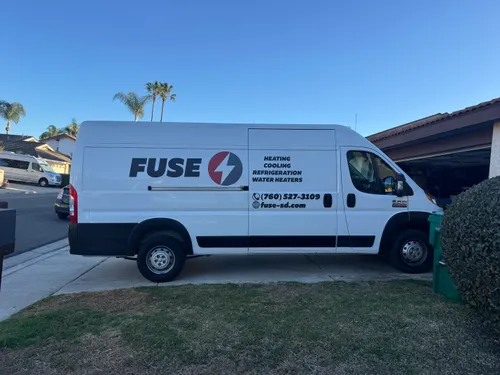
Amaze Service Electrical Air and Heating is an HVAC company based in San Diego, CA. They provide a range of services including air conditioner, furnace, heat pump, and mini split installation and repair, as well as duct cleaning and HVAC tune-ups. The company also offers commercial and residential refrigeration and appliance repair services. One notable capability is their expertise in installing multi-zone Mitsubishi ductless mini-split heat pump systems. The business is fully insured, licensed, and staffed with EPA-certified technicians. They serve San Diego and surrounding communities such as Del Mar, Lakeside, and Rancho San Diego.
NextWave heating and air
28905 Olive Ln, Valley Center, CA 92082
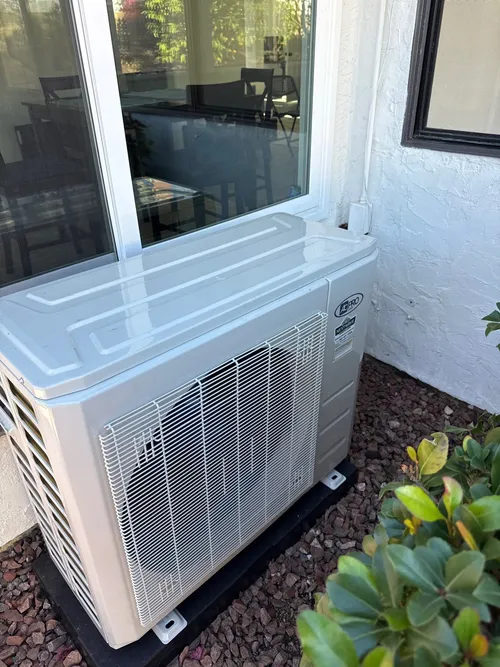
NextWave Heating and Air is a family-owned HVAC company serving San Diego, CA, with over 40 years of experience. They offer a wide range of services including air conditioning, furnace, heat pump, and mini split installation and repair, as well as indoor air quality solutions. Their expertise includes custom HVAC system design for new construction and remodels, ensuring efficient and code-compliant installations. Founded in 1996 and passed down within the family, NextWave combines traditional values with modern technology to provide reliable home comfort solutions.
Why Choose a Ductless System in Encinitas?
Encinitas's coastal climate, with its mild winters and cool summers, is ideally suited for the high-efficiency operation of ductless mini-split heat pumps. Unlike traditional central forced-air systems that lose energy through ductwork, ductless systems deliver conditioned air directly to a room, eliminating those losses and offering superior energy efficiency 1. This makes them a smart choice for managing energy costs while maintaining comfort. The primary advantage is zone control; you can heat or cool only the rooms you are using, which is perfect for families with different temperature preferences or for spaces used at varying times of the day 2.
Common Applications for Mini-Splits
Ductless installations solve specific comfort challenges common in Encinitas neighborhoods. Here are the most frequent uses:
- Room Additions, Garages, and ADUs: Adding a sunroom, converting a garage, or building an Accessory Dwelling Unit (ADU) often means the new space isn't connected to the home's central ductwork. A mini-split is the most efficient and practical way to add independent climate control.
- Older and Historic Homes: Many charming older homes in Encinitas were built without any ductwork. Installing ducts can be prohibitively expensive and destructive to original architecture. A ductless system provides a modern comfort solution without the need for major renovation.
- Whole-Home Zoning: For complete control, multiple indoor units can be installed throughout a home, each connected to one or more outdoor condensers. This allows you to set different temperatures for bedrooms, living areas, and home offices, optimizing comfort and efficiency.
- Supplementing Existing Systems: If your central HVAC struggles with hot or cold spots-like a sun-drenched south-facing room or a basement-a single-zone mini-split can target that specific area, relieving strain on your main system.
Types of Ductless Mini-Split Systems
Understanding the configuration options is key to planning your installation.
- Single-Zone Systems: This is the most basic setup, consisting of one outdoor condenser unit connected to one indoor air handler. It's an excellent and cost-effective solution for cooling and heating a single room, such as a home office, master bedroom, or garage apartment 3.
- Multi-Zone Systems: A single outdoor unit can connect to multiple indoor units (typically 2 to 5+). This is the core of whole-home zoning. Each indoor unit operates independently, allowing for different temperatures in different rooms. This setup is more efficient than installing several separate single-zone systems.
- Indoor Unit Styles: The indoor component isn't one-size-fits-all. You can choose from:
- Wall-Mounted: The most common type, mounted high on a wall for unobtrusive, widespread airflow.
- Floor Console: A low-profile unit installed near the floor, ideal for rooms with high ceilings or limited wall space.
- Ceiling Cassette: Recessed into the ceiling, offering a very discreet look with four-way air distribution, perfect for common living areas.
The Professional Installation Process
A proper ductless mini-split installation is not a simple DIY project. Professional installation is crucial for performance, efficiency, and maintaining the manufacturer's warranty. The process involves several technical steps:
- Site Evaluation and Planning: A technician will assess your home to determine the optimal location for the indoor and outdoor units, calculate the correct BTU capacity needed for each space, and plan the refrigerant line routing.
- Mounting the Indoor Unit: The indoor air handler is mounted securely to a wall, ensuring it is level and has the recommended clearance (typically about 6 inches from the ceiling and sides) for proper airflow.
- Installing the Outdoor Unit: The condenser is placed on a stable, level concrete pad or mounted on brackets against an exterior wall. Critical clearances (often several feet) must be maintained around the unit for adequate airflow and service access.
- Drilling and Running Linesets: A small hole (approximately 3 inches in diameter) is drilled through the exterior wall. The refrigerant copper lines, condensate drain line, and electrical wiring are run through this hole, connecting the indoor and outdoor units 4.
- Electrical Connections: Power is run from your home's electrical panel to the outdoor unit. This must be done to local Encinitas and national electrical codes.
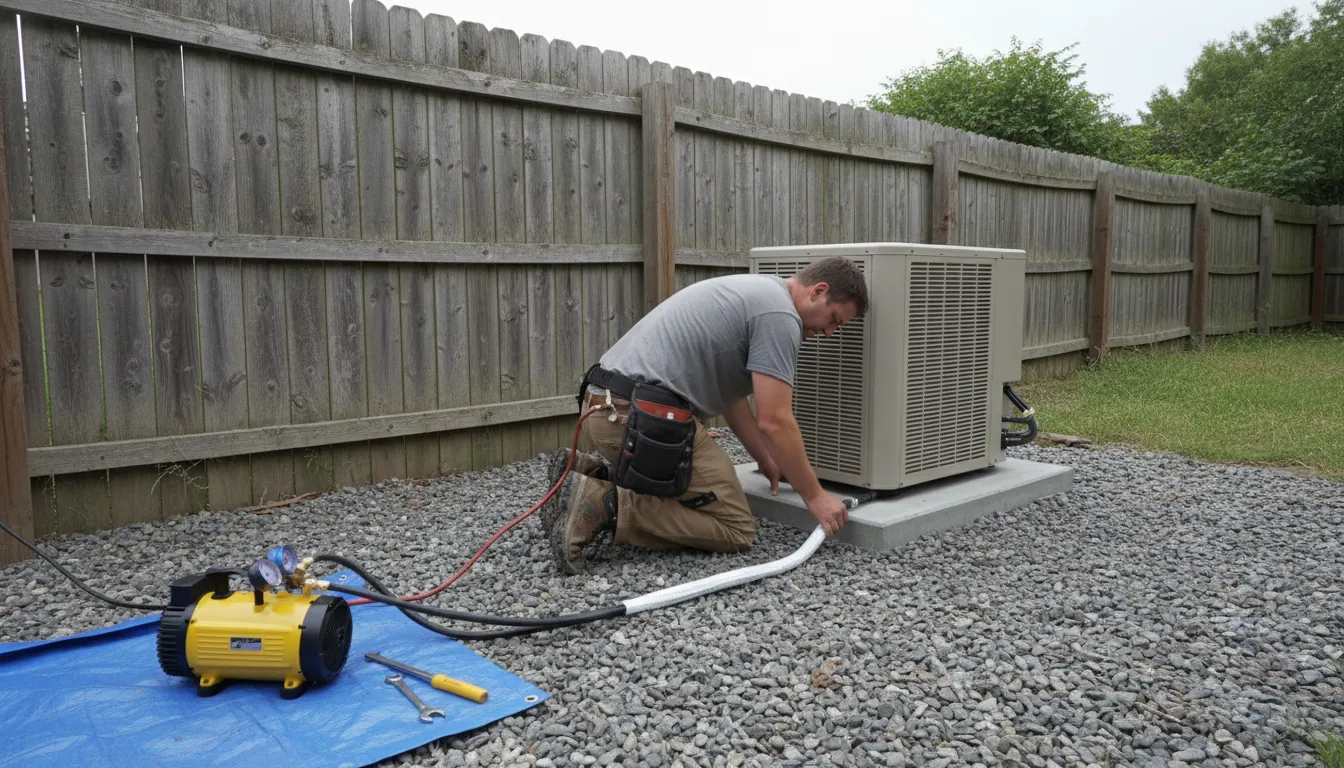
- System Evacuation and Charging: The refrigerant lines are connected, and a vacuum pump is used to remove all air and moisture from the sealed system-a vital step to prevent damage and ensure efficiency. The system is then charged with the correct amount of refrigerant 5.
- Testing and Commissioning: The system is powered on and tested in both heating and cooling modes. The technician will verify proper operation, check for leaks, calibrate the thermostat, and explain the basic controls to the homeowner.
Find the perfect mini-split installers for your needs
Get personalized recommendations and expert advice
Understanding Installation Costs in Encinitas
The cost for a ductless air conditioner installation in Encinitas varies significantly based on the system's complexity and specifications. Professional labor, which includes the technical steps outlined above, is a major component of the total price.
- Single-Zone System: For one indoor unit and one outdoor unit, homeowners can expect a range of $2,500 to $8,000. The final price depends on the brand, efficiency (SEER2 rating), and BTU capacity.
- Multi-Zone System (2-3 zones): Installing a system with two or three indoor handlers connected to one outdoor condenser typically ranges from $5,500 to $11,000 6.
- Large Multi-Zone System (4+ zones): For whole-home comfort with four or more indoor units, costs often range from $8,000 to $15,000 or more7 8.
Key factors influencing these costs include the brand (e.g., Mitsubishi, Fujitsu, Daikin), the system's SEER2 rating for energy efficiency, the physical size (BTUs) of the units required, and the complexity of the installation labor (e.g., running lines long distances, dealing with multi-story homes, or challenging wall constructions).
Key Considerations Before You Install
- Sizing is Critical: An undersized unit will run constantly without reaching the desired temperature, while an oversized unit will short-cycle (turn on and off frequently), leading to poor humidity control, uneven temperatures, and higher wear. A professional load calculation is essential.
- Placement Matters: The location of the indoor unit affects comfort. It should be mounted where its airflow won't be blocked by furniture and can circulate evenly throughout the room. Avoid placing it directly above televisions or large pieces of furniture 9.
- Maintenance Requirements: Like any HVAC system, mini-splits require regular maintenance. This primarily involves cleaning or replacing the air filters in the indoor units monthly and ensuring the outdoor condenser coil is free of leaves and debris to maintain efficiency and longevity.
Frequently asked questions
Sources
Footnotes
-
Ductless mini-split installation: Cool 2025 Guide - Southern Air - https://www.southern-air.com/blog/ductless-mini-split-installation ↩
-
Ductless Mini-Split Installation in San Diego County | Airmaxx - https://airmaxx.com/hvac-installation/ductless-mini-splits/ ↩
-
How Much Does a Mini Split Installation Cost? (2026) - HomeGuide - https://homeguide.com/costs/ductless-mini-split-ac-cost ↩
-
How to Install a Ductless Mini-Split Air Conditioner | This Old ... - https://www.youtube.com/watch?v=ozaw9QhxkQU&t=25 ↩
-
Ductless Mini Split Setup: An Ultimate Guide - Airflow Heating & Air - https://www.goairflow.com/blog/ductless-mini-split-installation/ ↩
-
Ductless Mini-Splits: A Complete Guide To Cost, Benefits, And ... - https://petermanhvac.com/about-us/blog/mini-splits-complete-guide/ ↩
-
Ductless Mini-Split Installation Cost in 2025: Full Breakdown - https://osborneheatingncooling.com/ductless-mini-split-installation-cost/ ↩
-
Mini-Split AC Installation in California - Bonney: Plumbing - https://www.bonney.com/blog/mini-split-ac-cost-california/ ↩
-
DIY Mini Split Install - All the Things Nobody Shows You - https://www.youtube.com/watch?v=2mKwCmaR5Qg&t=16 ↩