Find the Best Mini-Split Installers for Your Business
No obligation • Fast responses • Nationwide coverage

Why you can trust HVAC Firms
HVAC Firms is a leading United States resource for evaluating HVAC service providers. Our team researches companies, checks credentials, and reviews customer feedback to present clear, unbiased information. Listings and rankings are based on merit, and companies cannot pay to change our editorial content.
Search providers near you
Top Mini-Split Installers in Apple Valley, California Ranked
A ductless mini-split system is a versatile heating and cooling solution perfect for many homes in Apple Valley. These systems provide targeted comfort through zoning, making them ideal for room additions, homes without existing ductwork, or supplementing an inefficient central system. This guide will help you understand the applications, installation process, and costs for ductless air conditioners and heat pumps in our area, so you can confidently find a qualified professional for your project.
AC Plus Heating & Air Conditioning
14615 Palmdale Rd, Victorville, CA 92392
AC Plus Heating & Air Conditioning serves homeowners in Los Angeles, CA, offering a full range of HVAC services including air conditioning and furnace repair, installation, and maintenance. The company specializes in ductless mini split system installation, providing energy-efficient solutions tailored to home size and climate. Their technicians handle emergency repairs and routine tune-ups to keep systems running smoothly. Based in Victorville, AC Plus Heating & Air Conditioning brings years of experience to the Los Angeles area.
Davidson's Air Conditioning & Heating
495 S Sierra Way, San Bernardino, CA 92408
Davidson's Air Conditioning & Heating is an HVAC company serving Riverside, CA, and the Inland Empire area. They offer installation, repair, and maintenance services for air conditioners, furnaces, heat pumps, mini split systems, thermostats, and indoor air quality equipment. As a Carrier dealer, they provide a range of indoor comfort products including air conditioners, heat pumps, gas furnaces, humidifiers, and air cleaners. With over 60 years of experience, Davidson's Air Conditioning & Heating has built a reputation for reliable installations and repairs. They also offer service agreements to help maintain system performance.
J Adams Air Conditioning Heating And Plumbing | Rialto CA
622 W Rialto Ave, Rialto, CA 92376
J Adams Air Conditioning Heating And Plumbing | Rialto CA is a full-service HVAC and plumbing company serving the Riverside, CA area. With over 20 years of experience, they provide air conditioning and furnace repair, HVAC installations including ductless mini-splits, thermostat upgrades, and plumbing services such as drain clearing, water heater repair, and slab leak detection. Their team uses advanced technology like high-pressure water jetting and electronic leak detection to address plumbing issues efficiently. They offer 24/7 emergency services to handle urgent heating, cooling, and plumbing problems for residential and small commercial properties.
Understanding Ductless Mini-Split Systems
Ductless mini-splits, often simply called mini-splits, consist of an outdoor condenser unit connected by refrigerant lines to one or more indoor air handlers. Unlike traditional central HVAC, they don't require extensive ductwork. This makes them a superb choice for Apple Valley homes with radiant heat, older properties without ducts, or new additions where extending ducts is impractical or too costly. The primary benefit is zoning-the ability to control the temperature in individual rooms or "zones" independently, which enhances comfort and can improve energy efficiency by not conditioning unused spaces.
Common Applications in Apple Valley Homes
Homeowners in Apple Valley turn to ductless systems for several specific reasons:
- Room Additions, Garages, and Sunrooms: This is the most common application. Adding a ductless unit to a new family room, converted garage, or sunroom provides efficient comfort without the major renovation of extending your home's duct system.
- Whole-Home Comfort with Multi-Zone Systems: For homes entirely without ducts, a multi-zone mini-split system can provide heating and cooling for the entire house. Multiple indoor units connected to a single outdoor condenser allow for different temperatures in the living room, bedrooms, and kitchen, eliminating hot and cold spots 1.
- Supplementing Existing Central Systems: If you have a central furnace and air conditioner but one room is always too hot or too cold (like a south-facing bedroom or a finished basement), a single-zone mini-split can perfectly solve that problem without overworking your main system 2.
Zoning Options and Indoor Unit Styles
Choosing the right configuration is key to your comfort and budget.
- Single-Zone Systems: These involve one outdoor unit connected to one indoor unit. They are perfect for conditioning a single space, such as a master bedroom suite, home office, or garage workshop.
- Multi-Zone Systems: A single outdoor condenser can connect to multiple indoor units (typically 2 to 5). This allows you to independently control the temperature in the living room, kitchen, and multiple bedrooms from one efficient system 3. The total cost is influenced by the number of zones and the combined BTU capacity required.
Indoor units come in styles to suit any room:
- Wall-Mounted: The most common type, installed high on an exterior wall for optimal air distribution.
- Ceiling Cassette: Flush-mounted into the ceiling, offering a discreet look and four-way airflow. Ideal for rooms with low walls or a desire for minimal visual impact.
- Floor Console: A low-profile unit that sits near the floor, often used in rooms with lots of glass or where wall space is limited.
The Mini-Split Installation Process
Professional installation is crucial for performance, efficiency, and maintaining the manufacturer's warranty. Here's what a standard installation by a qualified Apple Valley technician entails:
- Site Evaluation & Planning: A technician will assess your home to determine the optimal location for the outdoor unit and indoor air handlers, considering airflow, aesthetics, and line-set runs.
- Mounting the Indoor Unit: A mounting bracket is securely attached to the wall (or ceiling for a cassette). A small, 3-inch hole is carefully drilled through the exterior wall.
- Running the Line-Set: The refrigerant lines, condensate drain tube, and electrical communication cable are run from the indoor unit location, through the wall hole, to the outdoor unit location.
- Placing the Outdoor Condenser: The outdoor unit is placed on a stable, level pad or mounting bracket. Proper clearances (typically 12-24 inches on all sides) are essential for airflow and service access 4.
- Electrical Connection: A dedicated electrical circuit is often required from your home's main panel to the outdoor unit. This is specialized work that must be done to code.
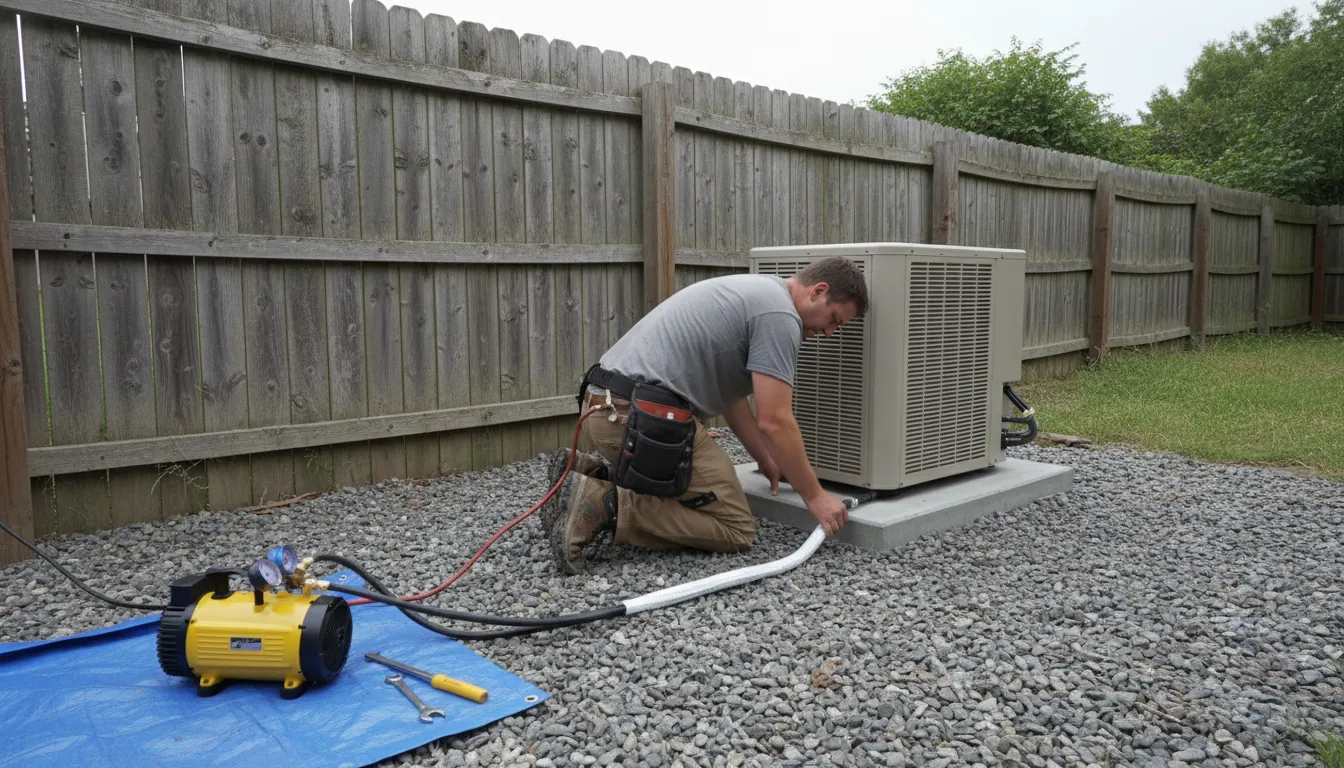
- Making Connections & Evacuation: The technician connects the refrigerant lines between the indoor and outdoor units. A vacuum pump is then used to evacuate all air and moisture from the refrigerant lines-a critical step for system longevity and efficiency.
- System Testing & Commissioning: Finally, the system is charged with refrigerant, powered on, and thoroughly tested for proper operation, cooling, heating, and drainage.
Find the perfect mini-split installers for your needs
Get personalized recommendations and expert advice
Cost Guide for Mini-Split Installation in Apple Valley
Installation costs in Apple Valley and across California can vary widely based on system complexity and home specifics. The following ranges reflect typical professional installations, including equipment and labor 5:
- Single-Zone System: $2,500 - $6,000
- Two-Zone System: $4,500 - $8,000
- Three-Zone System: $6,500 - $11,000+
- Five-Zone System: $10,000 - $15,000+
For a more localized estimate, a ductless installation in Apple Valley can range from $2,500 to $5,000 for a single-zone system and $4,500 to $12,000 or more for a multi-zone setup 6 7.
Key Factors Influencing Your Final Cost
- Number of Zones and Capacity (BTUs): More indoor units and a higher total cooling/heating capacity require a larger, more expensive outdoor unit and more labor for installation.
- System Efficiency: Units with higher SEER2 (Seasonal Energy Efficiency Ratio) ratings, such as 18 SEER2 or above, cost more upfront but offer significant savings on monthly energy bills, which is a valuable consideration in Apple Valley's climate 8.
- Brand and Features: Premium brands with advanced inverters and smart features command a higher price than budget-friendly lines. It's a balance between initial investment and long-term reliability.
- Installation Complexity: Costs increase if the installation requires an extensive electrical upgrade (new circuit from the panel), long refrigerant line runs, difficult wall penetrations (like stucco or stone), or custom mounting solutions for the outdoor unit 9 10.
- Permits: Most municipalities, including Apple Valley, require permits for HVAC installation. Permit fees typically range from $100 to $300 and ensure the work is inspected for safety and code compliance 11.
Critical Installation Considerations
- Professional Installation is Non-Negotiable: While DIY kits exist, the proper handling of refrigerant, electrical work, and system evacuation is complex. Professional installation is required to validate the equipment warranty and ensure safe, efficient operation 12.
- Outdoor Unit Placement: The location of the condenser is vital. It needs a stable, level base (a concrete pad or composite mounting bracket), unobstructed airflow on all sides, and should be positioned where operational noise won't disturb you or your neighbors 13 14.
- Sizing Matters: An improperly sized system-too large or too small-will lead to poor comfort, short cycling, and higher energy costs. A reputable installer will perform a Manual J load calculation to determine the precise BTU needs for your space.
Frequently asked questions
Sources
Footnotes
-
How to Choose the Best Mini Split System for Your Home - https://www.greecomfort.com/news-and-events/how-to-choose-the-best-mini-split-system-for-your-home/ ↩
-
Ductless mini-split installation: Cool 2025 Guide - Southern Air - https://www.southern-air.com/blog/ductless-mini-split-installation ↩
-
DIY MULTI-ZONE Ductless MINI SPLIT Installation in New ... - https://www.youtube.com/watch?v=KD2GM0fg8eU ↩
-
Ductless Mini Split Setup: An Ultimate Guide - Airflow Heating & Air - https://www.goairflow.com/blog/ductless-mini-split-installation/ ↩
-
Understanding mini split installation costs: A quick guide - Homeaglow - https://www.homeaglow.com/hub/content/mini-split-installation-cost ↩
-
How Much Does a Mini-Split Installation Cost? - Taskrabbit Blog - https://www.taskrabbit.com/blog/mini-split-installation-cost/ ↩
-
Mini Split AC Apple Valley CA | Aace's Heating - https://aacesheatingac.com/mini-split-ac-apple-valley-ca/ ↩
-
Mini-Split AC Installation in California - Bonney: Plumbing - https://www.bonney.com/blog/mini-split-ac-cost-california/ ↩
-
What Is a 3-Zone Mini Split & Installation Cost Guide For 2026 - https://www.budgetheating.com/what-is-a-3-zone-mini-split-installation-cost-guid/ ↩
-
Ductless Mini-Split Installation Cost in 2025: Full Breakdown - https://osborneheatingncooling.com/ductless-mini-split-installation-cost/ ↩
-
Cost to Install Mini Split AC System in 2025 - https://dellahome.com/blogs/della-blog/cost-to-install-mini-split-ac-system ↩
-
Installing a Gree Mini-Split: What Homeowners Should Know Before You Buy - https://thefurnaceoutlet.com/blogs/hvac-tips/installing-a-gree-mini-split-what-homeowners-should-know-before-you-buy ↩
-
Mini-Split Installation: How to Install a Mini-Split in 4 Steps - https://www.alpinehomeair.com/learning-center/ductless-mini-split-systems/how-to-install-a-mini-split-in-4-steps ↩
-
Mini Split AC | Ductless Air Conditioner | Mini Split Heat Pump - https://www.costway.com/appliance/mini-split-air-conditioners.html ↩