Find the Best Geothermal Heat Pump Contractors for Your Business
No obligation • Fast responses • Nationwide coverage

Why you can trust HVAC Firms
HVAC Firms is a leading United States resource for evaluating HVAC service providers. Our team researches companies, checks credentials, and reviews customer feedback to present clear, unbiased information. Listings and rankings are based on merit, and companies cannot pay to change our editorial content.
Search providers near you
Top Geothermal Heat Pump Contractors in Sugar Land, Texas Ranked
A geothermal heat pump, also known as a ground-source heat pump, is one of the most energy-efficient heating and cooling systems available for your Sugar Land home. It leverages the earth's stable underground temperature to provide consistent comfort year-round, dramatically reducing energy consumption and utility bills. This guide explains how these systems work, what installation involves, and how you can find qualified local professionals to assess your property and provide a quote.
Century Air Solutions, Llc
11709 Boudreaux Rd Ste. 630, Tomball, TX 77375
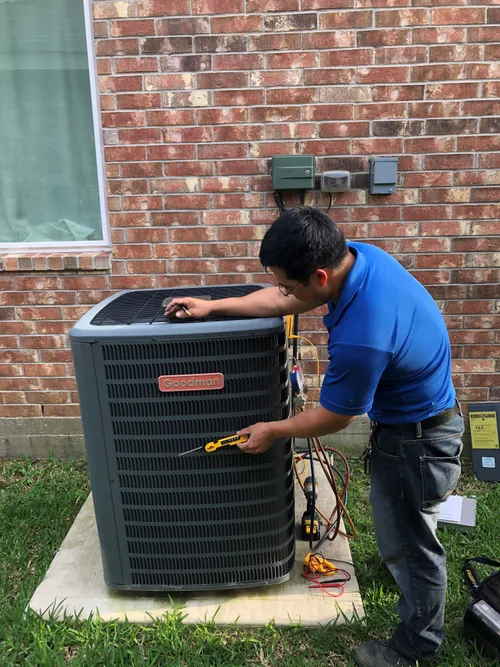
Century Air Solutions, LLC is an HVAC contractor serving Houston, TX, and surrounding areas including Tomball, Spring, and Cypress. They provide a range of services such as air conditioning repair and maintenance, heating system installation and replacement, geothermal HVAC solutions, and indoor air quality improvements. The company offers 24/7 emergency HVAC services and works with both residential and commercial clients. Their certified technicians focus on energy-efficient installations and repairs, helping customers qualify for federal tax credits and local utility rebates.
Polar Air Corp
8718 Antelope Dr, Houston, TX 77063
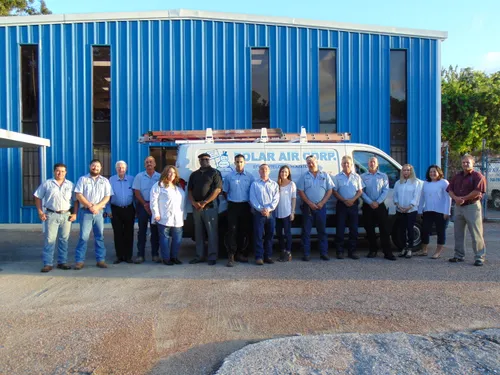
Polar Air Corp is a family-owned HVAC installation contractor serving Houston, TX, and the surrounding communities. They specialize in installing air conditioning systems, furnaces, heat pumps, boilers, mini splits, and geothermal heat pumps. With experience dating back to 1967, Polar Air Corp has a long history of providing tailored heating and cooling solutions for homes and businesses in the area.
TEXAS UNITED MECHANICAL, LLC
1118 N Main St #2G, Pearland, TX 77581
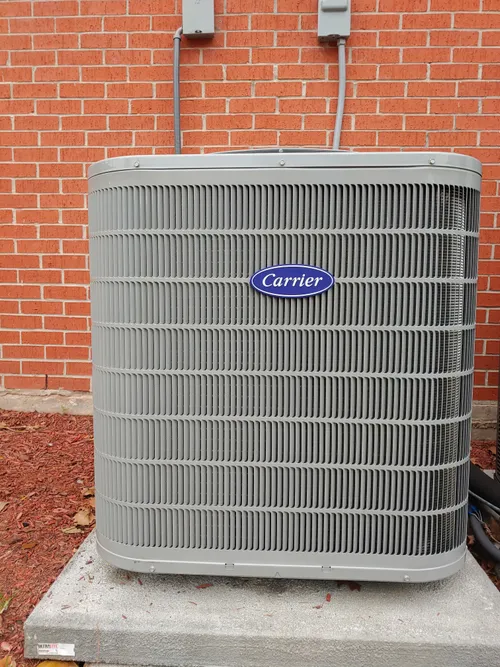
Texas United Mechanical, LLC is an HVAC company serving Houston, TX, and surrounding communities including Baytown, Brenham, Galveston, and Conroe. They provide a wide range of services such as air conditioner, furnace, and heat pump repair and installation, duct cleaning, thermostat installation, indoor air quality solutions, and geothermal system services. As a Carrier Factory Authorized Dealer, their technicians are factory-trained in both conventional and geothermal HVAC systems. With over 70 years of combined experience, the team offers 24/7 availability for emergency repairs and maintenance.
How Geothermal Heating and Cooling Works
Unlike conventional air conditioners and furnaces that create hot or cold air, a geothermal system moves heat. It uses the earth as a massive, free thermal battery. Just a few feet below the surface, the ground in Sugar Land maintains a relatively constant temperature of approximately 70°F year-round 1. A geothermal heat pump taps into this stable resource.
The core of the system is a network of buried pipes called a ground loop, which is filled with a water-based fluid. In the winter, this fluid circulates through the loop, absorbing the earth's natural warmth. It then carries this heat to the indoor heat pump unit, which concentrates it and distributes it throughout your home via your ductwork. In the summer, the process reverses: the system extracts heat from your indoor air, transfers it to the fluid in the loop, and dissipates it into the cooler ground. This "heat exchange" process is incredibly efficient because moving heat requires far less energy than generating it.
Types of Ground Loop Systems
The design of the underground loop is critical and depends on your property's characteristics. There are two primary types of closed-loop systems, which are the most common for residential use.
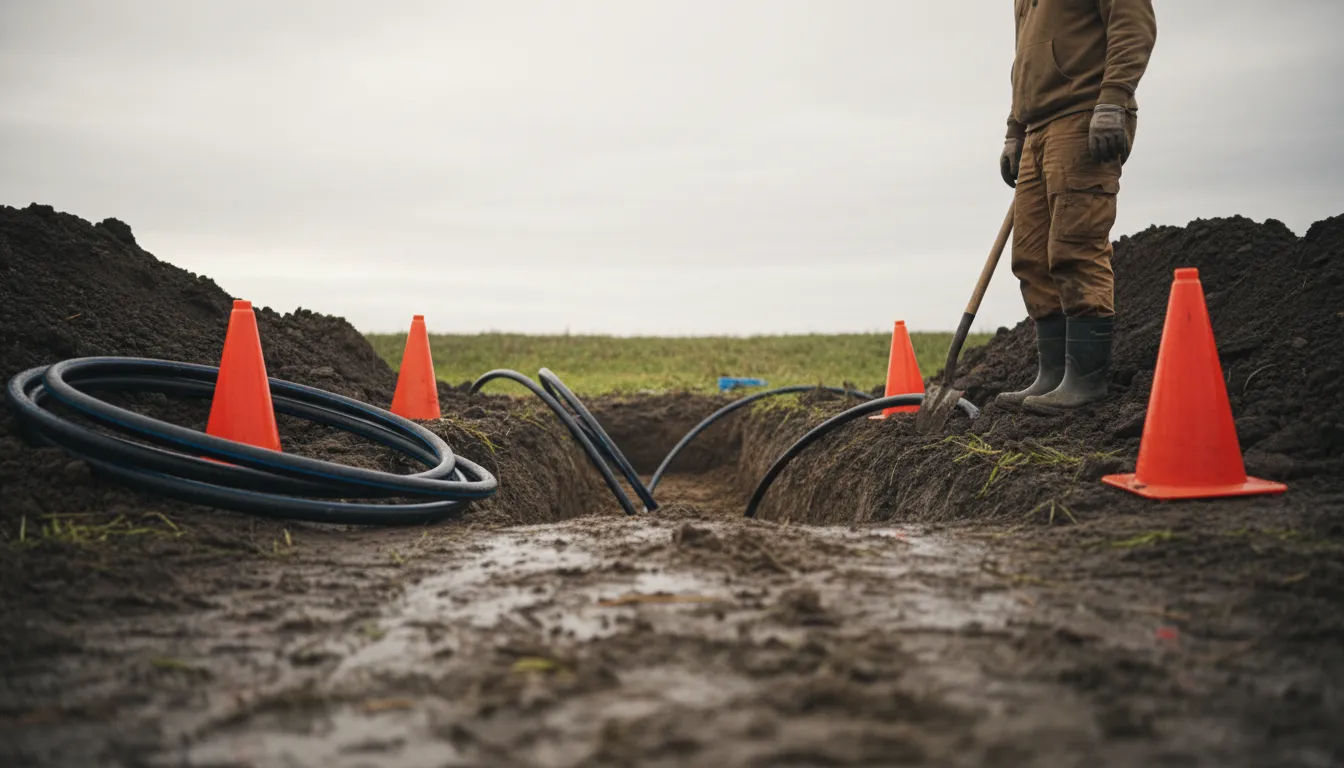
Closed-Loop Horizontal Systems This installation involves digging trenches several feet deep and hundreds of feet long in your yard. The piping is laid in these trenches in a slinky-like configuration. Horizontal loops are typically more cost-effective to install but require a significant amount of open land, making them ideal for new construction projects or homes with ample yard space 2 3 4.
Closed-Loop Vertical Systems For homes with smaller lots, like many in established Sugar Land neighborhoods, a vertical ground loop is the standard solution. Contractors drill deep boreholes, typically 150 to 450 feet deep, and insert U-shaped loops of pipe into each hole. The holes are then grouted. While drilling is more expensive than trenching, a vertical field requires much less surface area and is often the only viable option for retrofit projects.
A less common option is an open-loop system, which uses well water directly as the heat exchange fluid. It requires a sufficient supply of clean water and has additional considerations regarding water use and discharge, making it less frequently installed.
The Installation Process for Sugar Land Homes
Installing a geothermal system is a significant project that requires careful planning and expert execution. The process generally follows these steps:
- Site Assessment and Design: A qualified installer will evaluate your property, examining soil composition, rock content, available space, and your home's existing ductwork and heating/cooling loads. This assessment determines the optimal loop type and size for maximum efficiency 5.
- Loop Field Installation: This is the major excavation phase. For a horizontal system, a backhoe digs the trench network. For a vertical system, a drilling rig creates the boreholes. The high-density polyethylene pipe is then placed and connected into a continuous loop.
- Indoor Unit Installation: The geothermal heat pump unit, which is about the size of a small refrigerator, is installed in your garage, utility room, or basement. It is connected to the ground loop and to your home's existing ductwork or hydronic distribution system.
- System Charging and Startup: The loop is filled and pressurized with fluid, the system is purged of air, and the heat pump is electrically connected. The contractor will then commission the system, ensuring all components work in harmony.
Local factors in Texas, including clay-heavy soils and the growing adoption of geothermal technology, mean it's essential to work with experienced contractors familiar with regional conditions 6.
Find the perfect geothermal heat pump contractors for your needs
Get personalized recommendations and expert advice
Benefits and Long-Term Value
The decision to install a geothermal system is an investment in long-term savings, comfort, and sustainability.
- Exceptional Energy Savings: Geothermal heat pumps are 300-600% efficient, meaning they move 3 to 5 units of heat for every 1 unit of electricity they consume. This can translate to savings of up to 65% on your heating and cooling bills compared to conventional systems 7 8 9 10.
- Long System Lifespan: The indoor heat pump unit typically lasts 20 to 25 years, which is comparable to high-end conventional systems. The buried ground loop, however, has a lifespan of 50 years or more, often outlasting the home itself.
- Quiet Operation and Comfort: With no noisy outdoor condenser unit, operation is very quiet. The system provides consistent, even heating and cooling without the drafts or temperature swings associated with fossil fuel furnaces.
- Reduced Environmental Impact: By using renewable thermal energy from the ground and electricity, a geothermal system significantly reduces your home's carbon footprint. It uses no combustion on-site, eliminating the risk of carbon monoxide and improving indoor air quality.
Understanding Costs and Payback
The primary barrier to geothermal adoption is the higher upfront cost. A full residential system in Sugar Land can range from $20,000 to over $40,000, depending on the loop type, home size, and existing infrastructure 11. This is often comparable to a high-end conventional system with a new furnace and air conditioner.
However, the payback period-the time it takes for energy savings to recoup the initial investment-is a critical metric. With substantial utility savings, this period is typically 5 to 10 years in Texas, and can be shorter with available incentives 12. Furthermore, when considering a 50-year loop life, the long-term cost of ownership is often lower than maintaining and replacing multiple conventional systems over the same period.
Homeowners should explore available rebates, such as the federal tax credit for renewable energy, which can significantly offset installation costs. Your local installer will be your best resource for current incentive information.
Is a Geothermal System Right for Your Home?
Geothermal heat pumps are an excellent choice for homeowners planning to stay in their homes long enough to realize the financial payback, those interested in maximizing energy efficiency and comfort, and anyone looking to reduce their environmental impact. They work exceptionally well with radiant floor heating and are ideal for both new construction and major renovation projects.
The key to a successful geothermal project is partnering with a certified, experienced installer who can properly size and design the system for your specific Sugar Land property. A professional assessment is the essential first step to understanding your home's potential.
Frequently asked questions
Sources
Footnotes
-
How a Geothermal Heat Pump Works | This Old House - https://www.youtube.com/watch?v=d5Tbsx3R2T8 ↩
-
Understanding Geothermal Heating & Cooling Systems - https://www.tchvac.net/news/geothermal-heating-and-cooling-explained ↩
-
Geothermal Heat Pumps, Explained - Bosch Home Comfort - https://www.bosch-homecomfort.com/us/en/residential/connect/blog/geothermal-heat-pumps-go-green-save-green/ ↩
-
Geothermal heating & cooling, heat pumps, heat exchange ... - https://aztechgeo.com/residential-geothermal/how-it-works/ ↩
-
Geothermal Heat Pumps | WBDG - https://www.wbdg.org/resources/geothermal-heat-pumps ↩
-
About Geothermal Heat Pumps and Geothermal Cooling - Houston TX - http://earthpowerac.com/about-geo-in-texas/ ↩
-
Geothermal Heat Pumps - EnergySmart CNY - https://www.energysmartcny.org/heat-pumps/geothermal/ ↩
-
5 Things You Should Know about Geothermal Heat Pumps - https://www.energy.gov/cmei/articles/5-things-you-should-know-about-geothermal-heat-pumps ↩
-
Geothermal Heat Pumps - Department of Energy - https://www.energy.gov/energysaver/geothermal-heat-pumps ↩
-
How Do Geothermal Systems Work for Residential Homes? - https://www.davisheat.com/blog/how-do-geothermal-systems-work-for-residential-homes/ ↩
-
Geothermal Heat Pump Guide: Installation Costs, Types And Benefits - https://modernize.com/hvac/heating-repair-installation/heat-pump/geothermal ↩
-
Guide to Geothermal Heat Pumps - https://www.energy.gov/sites/prod/files/guide_to_geothermal_heat_pumps.pdf ↩