
Find the Best Geothermal Heat Pump Contractors for Your Business
No obligation • Fast responses • Nationwide coverage

Why you can trust HVAC Firms
HVAC Firms is a leading United States resource for evaluating HVAC service providers. Our team researches companies, checks credentials, and reviews customer feedback to present clear, unbiased information. Listings and rankings are based on merit, and companies cannot pay to change our editorial content.
Search providers near you
Top Geothermal Heat Pump Contractors in San Antonio, Texas Ranked
A geothermal heat pump, or ground-source heat pump, is a highly efficient heating and cooling system that leverages the earth's stable underground temperature. For San Antonio homeowners, this technology offers a powerful way to reduce energy bills and environmental impact while ensuring year-round comfort. This guide explains how these systems work, what installation entails, and how you can find qualified local experts to assess your property for this sustainable upgrade.
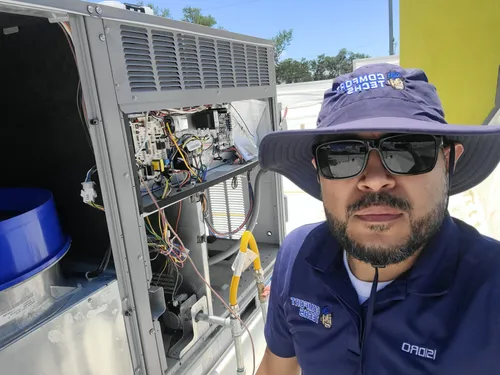
Comfort Techs
10415 Perrin Beitel Suite 103-B, San Antonio, TX 78217
Comfort Techs is an HVAC company based in San Antonio, TX, offering a wide range of heating and cooling services. Their expertise includes air conditioning repair and installation, furnace and heat pump services, duct cleaning, indoor air quality solutions, and thermostat installation. The company also handles specialty HVAC systems such as geothermal heat pumps and mini splits. Comfort Techs provides 24/7 emergency services to ensure customers have support whenever needed. With over 70 years of combined experience among their certified technicians, they have been serving the San Antonio community since 2017.
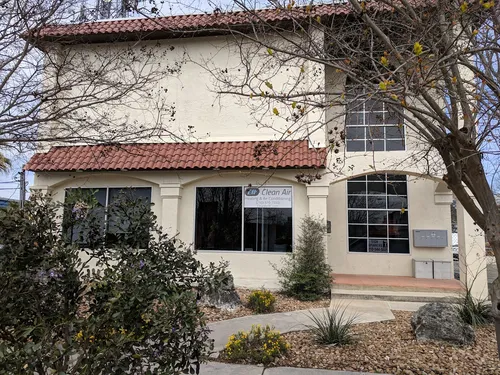
Clean Air Heating & Air Conditioning
115 E Myrtle St, San Antonio, TX 78212
Clean Air Heating & Air Conditioning is an HVAC contractor serving San Antonio, TX. They provide installation, repair, and maintenance services for air conditioners, furnaces, heat pumps, mini splits, and geothermal heat pumps. Their licensed technicians work with equipment from various manufacturers including Carrier, Daikin, Mitsubishi, and Trane. With over 20 years of experience, they offer custom HVAC solutions focused on energy efficiency and indoor air quality.
How Geothermal Systems Work: Tapping into the Earth's Constant Temperature
Unlike conventional air-source heat pumps that exchange heat with the outside air, a geothermal system uses the earth as its heat source in winter and its heat sink in summer. Just a few feet below the surface, the ground maintains a nearly constant temperature between 40°F and 70°F year-round, regardless of the scorching Texas summer or a chilly winter night 1. This stability is the key to the system's remarkable efficiency.
The process centers on a closed loop of pipes, called a ground loop, buried in your yard. A water-based fluid circulates through these pipes. In the heating mode, this fluid absorbs the mild heat from the earth and carries it to an indoor heat pump unit. The heat pump then concentrates this low-grade heat and distributes warm air through your home's ductwork. In the cooling mode, the system reverses: it extracts heat and humidity from your home's air, transfers it to the fluid in the loop, and deposits it into the cooler earth 2 3 4. This efficient heat exchange process can lead to significant energy savings, often cited between 40% and 70% compared to traditional HVAC systems.
Types of Ground Loop Systems for San Antonio Properties
The design of the underground loop field is the most critical site-specific aspect of a geothermal installation. The right type for your San Antonio home depends primarily on the available land and soil composition. The three main configurations are:
Vertical Closed Loops: This is the most common choice for residential properties with limited yard space, which is typical for many urban and suburban lots in San Antonio. Contractors drill several boreholes, typically 150 to 400 feet deep and about 20 feet apart. U-shaped pipes are inserted into each borehole, which is then filled with a special grout to ensure good thermal conductivity 5. While drilling costs can be higher, vertical loops minimize surface disruption and are excellent for smaller plots.
Horizontal Closed Loops: If you have ample, open land-common in more rural areas around Bexar County-a horizontal loop can be a cost-effective option. Trenches are dug about four to six feet deep, and pipes are laid in a series of parallel runs or coiled slinky patterns 6. This method generally requires more square footage of land but can avoid the cost of specialized drilling equipment.
Pond/Lake Loops: This is a specialized and less common option that requires a nearby body of water of sufficient size, depth, and quality. Coils of pipe are submerged at the bottom of the pond or lake, using the water as the heat exchange medium 7 8. This can be the lowest-cost loop option if the water source is suitable and accessible on your property.
The Geothermal Installation Process: What to Expect
Installing a ground-source heating and cooling system is a significant project that requires careful planning and skilled professionals. Understanding the steps can help you prepare.
- Initial Site Assessment and Design: A qualified installer will first evaluate your property. This includes assessing soil and rock conditions (often with the help of a geologist), evaluating available space, calculating your home's heating and cooling loads, and designing the optimal loop field and system size.
- Ground Loop Installation: This is the major earthwork phase. For a vertical system, a drilling rig will create the boreholes. For a horizontal system, a backhoe or trencher will dig the necessary trenches. The high-density polyethylene pipes are then placed and connected into a continuous loop.
- Trenching to the Home: A separate trench is dug from the loop field to your home's foundation. The pipes from the ground loop are connected to a manifold and run through this trench into your basement, crawlspace, or utility room.
- Indoor Unit Installation: The geothermal heat pump unit-which looks similar to a traditional furnace-is installed indoors. The ground loop pipes are connected to it, and it is integrated with your existing ductwork or a new air distribution system 9. The system is then charged with fluid, pressurized, tested for leaks, and commissioned.
The entire process from start to finish can take several days to a couple of weeks, depending on the system's complexity and the loop type 10.
Find the perfect geothermal heat pump contractors for your needs
Get personalized recommendations and expert advice
Key Benefits and Considerations for San Antonio Homeowners
Choosing a geothermal system is a long-term investment in your home's efficiency and comfort. Here are the primary advantages and factors to weigh.
Substantial Energy Savings: This is the most compelling benefit. By leveraging the earth's consistent temperature, geothermal heat pumps operate much more efficiently than even the best air-source units, especially during San Antonio's extreme summer peaks. Homeowners can see savings of 40% to 70% on heating and cooling bills, which can translate to over $1,000 in annual savings for a typical home 11.
Durability and Low Maintenance: The underground loop system is built from durable materials with a lifespan often exceeding 50 years. The indoor heat pump unit typically lasts 20-25 years, significantly longer than the average conventional outdoor AC condenser. With fewer mechanical parts exposed to the elements, maintenance is generally simpler and less frequent.
Quiet Operation and Comfort: Since there is no loud outdoor condenser fan unit, geothermal systems operate very quietly. They also provide exceptionally consistent temperatures and better humidity control than forced-air systems, eliminating hot or cold spots in your home 12.
High Upfront Cost: The initial investment is the biggest hurdle. A complete residential geothermal system, including the ground loop and heat pump, can range from $20,000 to over $40,000 13 14. The ground loop excavation or drilling constitutes a large portion of this cost.
Importance of Quality Installation: The performance and longevity of the system are directly tied to proper design and installation. A poorly sized loop field or sloppy installation can lead to inefficient operation and costly repairs. It is absolutely critical to work with experienced, certified professionals who specialize in this technology 15 16.
Available Incentives: To offset the high initial cost, homeowners can take advantage of federal tax credits for renewable energy. Additionally, some local utilities or state programs may offer rebates or special financing for geothermal installations, improving the return on investment.
Is Your San Antonio Property a Good Candidate?
Your property's characteristics will largely determine the feasibility and cost of a geothermal system. Available space is the first consideration. A small urban yard likely points to a vertical loop system, while an acre or more of open land might make a horizontal loop viable and more economical. The soil and rock composition also affect thermal conductivity and drilling difficulty. Clay soils transfer heat well, while sandy soils are less efficient, which may require a larger loop field. A reputable installer will conduct a thorough site evaluation to answer these questions.
Finally, consider your long-term plans. The significant upfront cost is best justified if you plan to stay in your home for many years to realize the full benefit of the energy savings. For homeowners committed to sustainability, reduced carbon footprint, and long-term utility savings, a geothermal heat pump is an outstanding solution that leverages the unique, stable energy source right beneath our feet in San Antonio.
Frequently asked questions
Sources
Footnotes
-
How Do Geothermal Systems Work for Residential Homes? - https://www.davisheat.com/blog/how-do-geothermal-systems-work-for-residential-homes/ ↩
-
5 Things You Should Know about Geothermal Heat Pumps - https://www.energy.gov/cmei/articles/5-things-you-should-know-about-geothermal-heat-pumps ↩
-
Geothermal Heating & Cooling - Department of Energy - https://www.energy.gov/eere/geothermal/geothermal-heating-cooling ↩
-
All You Need to Know About Home Geothermal Heating & Cooling - Dandelion Energy - https://dandelionenergy.com/all-you-need-to-know-about-home-geothermal-heating-cooling ↩
-
Geothermal Heat Pump Installation: What To Expect For Your ... - https://jomory.com/geothermal-heat-pump-installation-what-to-expect-for-your-property/ ↩
-
Geothermal Heat Pumps, Explained - Bosch Home Comfort - https://www.bosch-homecomfort.com/us/en/residential/connect/blog/geothermal-heat-pumps-go-green-save-green/ ↩
-
Everything You Need to Know About Geothermal Heat Pumps - https://www.familyhandyman.com/article/everything-you-need-to-know-about-geothermal-heat-pumps/ ↩
-
Geothermal heating & cooling, heat pumps, heat exchange ... - https://aztechgeo.com/residential-geothermal/how-it-works/ ↩
-
Exploring Geothermal Systems: Advantages and Considerations - https://dilandroandrews.com/understanding-geothermal-systems/ ↩
-
How Long Does Geothermal Installation Usually Take? - Tuckers AC - https://tuckersac.com/how-long-does-geothermal-installation-usually-take/ ↩
-
How Does A Geothermal Heat Pump Work? Complete 2025 Guide - https://solartechonline.com/blog/how-does-geothermal-heat-pump-work/ ↩
-
Geothermal Heating | Efficient AC, Electric & Plumbing | Austin, TX - https://efficienttexas.com/geothermal/ ↩
-
Guide to Geothermal Heat Pumps - https://www.energy.gov/sites/prod/files/guide_to_geothermal_heat_pumps.pdf ↩
-
Geothermal Heat Pump Guide: Installation Costs, Types And Benefits - https://modernize.com/hvac/heating-repair-installation/heat-pump/geothermal ↩
-
Geothermal Heat Pumps - Department of Energy - https://www.energy.gov/energysaver/geothermal-heat-pumps ↩
-
About Geothermal Heat Pumps and Geothermal Cooling - Houston TX - http://earthpowerac.com/about-geo-in-texas/ ↩