
Find the Best Geothermal Heat Pump Contractors for Your Business
No obligation • Fast responses • Nationwide coverage

Why you can trust HVAC Firms
HVAC Firms is a leading United States resource for evaluating HVAC service providers. Our team researches companies, checks credentials, and reviews customer feedback to present clear, unbiased information. Listings and rankings are based on merit, and companies cannot pay to change our editorial content.
Search providers near you
Best Geothermal Heat Pump Contractors in Texas Ranked
Geothermal heat pumps are a highly efficient heating and cooling technology that leverages the earth's stable underground temperature to regulate your home's climate. For Texas homeowners, this system offers a powerful way to combat extreme weather while significantly reducing energy consumption and utility bills. This guide explains how geothermal works, its suitability for Texas conditions, the regulatory and installation process, and how you can find qualified local professionals to assess your property and provide a quote.
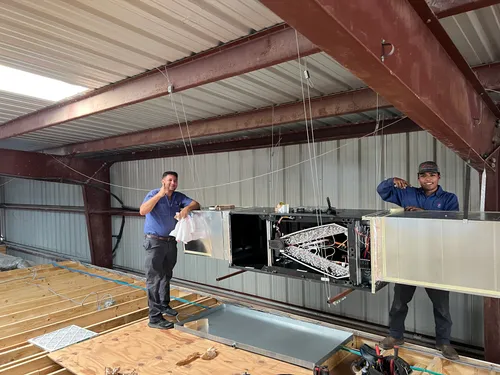
Aircons Heat & Better Air Inc
220 Commercial St, Garland, TX 75040
Aircons Heat & Better Air Inc is an HVAC company based in Dallas, TX, offering a wide range of heating and cooling services. They provide air conditioning and furnace repair, installation of heat pumps and geothermal systems, duct cleaning, thermostat installation, and indoor air quality solutions for both residential and commercial clients. The company is a certified Trane dealer and has over 15 years of experience in the industry. Their team is trained to handle all major HVAC brands and systems. Aircons Heat & Better Air Inc also offers financing options and is available for service calls day and night.
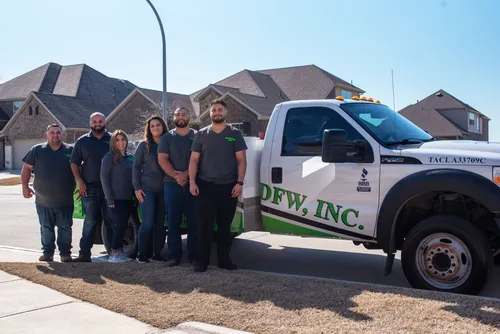
Fix My Air DFW AC Repair Fort Worth
600 W 6th St, W 4th St Floor – Suite 70, Fort Worth, TX 76102
Fix My Air DFW AC Repair Fort Worth is an HVAC contractor serving Fort Worth, TX, and nearby cities including Saginaw, Keller, and Grapevine. They provide a wide range of residential and commercial HVAC services such as air conditioning repair and installation, furnace and heat pump services, duct cleaning, and indoor air quality solutions. Their team is skilled in handling complex HVAC systems, including geothermal heat pumps and duct modifications, ensuring efficient heating and cooling year-round. Established four years ago with over 15 years of combined experience, Fix My Air DFW offers 24-hour emergency HVAC repair to address urgent heating and cooling needs promptly.

Proven Plumbing & Air
300 Brushy Creek Rd Suite 402, Cedar Park, TX 78613
Proven Plumbing & Air is an HVAC and plumbing service provider based in Austin, TX. They offer a range of services including air conditioning, furnace, heat pump, boiler, mini split, and geothermal heat pump installation and repair, along with HVAC tune-up services. The company emphasizes the use of advanced technology and clear communication to support their work. Proven Plumbing & Air aims to provide reliable home service with well-organized teams and equipment.
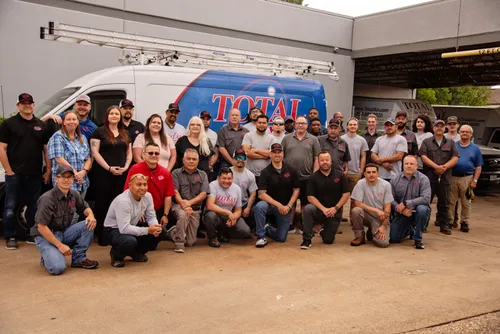
Total Air & Heat Co.
1408 O Ave suite 100, Plano, TX 75074
Total Air & Heat Co. is an HVAC and plumbing service provider based in Dallas, TX. They offer a wide range of services including air conditioning, heating, heat pump, and geothermal heat pump installation and repair, as well as indoor air quality solutions and thermostat installation. The company serves both residential and commercial customers, providing 24/7 repair services for HVAC systems. Established in 1957, Total Air & Heat Co. has over 60 years of experience and is a Carrier Factory Authorized Dealer with NATE-certified technicians. Their capabilities include working with traditional and geothermal heat pumps, as well as offering specialized products like air purifiers and UV lights for improved indoor air quality.

FERSA HVAC HEATING & AIR CONDITIONING
2130 Franklin Dr, Mesquite, TX 75150
FERSA HVAC HEATING & AIR CONDITIONING provides HVAC installation and indoor air quality services in Dallas, TX, and surrounding areas within a 30-mile radius. With 18 years of experience, they specialize in installing air conditioners, furnaces, heat pumps, and geothermal heat pumps for both residential and commercial clients. Their insured team offers 24/7 availability to ensure timely service and maintain comfortable indoor environments year-round.
How Geothermal Heat Pump Systems Work
A geothermal system, often called a ground-source heat pump, doesn't create heat by burning fuel. Instead, it moves existing heat. In the winter, it extracts heat from the ground and transfers it indoors. In the summer, the process reverses, pulling heat from your home and depositing it into the cooler earth. This is possible because just a few feet below the surface, the earth maintains a nearly constant temperature, typically between 67°F and 69°F in North Texas.
This exchange happens through a loop of pipes buried in the ground, called a ground loop, which is filled with a water-based solution. A heat pump unit inside the home then concentrates this thermal energy to provide comfortable temperatures. Because it is moving heat rather than generating it, a geothermal system can deliver remarkable efficiency, moving three to five units of heat for every one unit of electrical energy consumed.
Why Geothermal is a Smart Choice for Texas
Texas presents unique advantages and considerations for geothermal installation.
- Energy Savings: The primary benefit is dramatic reductions in energy bills. Homeowners can typically see a 50% to 70% decrease in heating and cooling costs compared to conventional air-source systems or furnaces. Given Texas's long, hot summers and variable winters, these savings add up quickly.
- Favorable Geology: Much of Texas, particularly regions like North Texas, has clay-dominant soils. Clay has better thermal conductivity than sandy soil, which allows for more efficient heat transfer and can sometimes allow for shorter loop fields.
- Stable Ground Temperature: The consistent underground temperature provides a reliable "heat source" in winter and "heat sink" in summer, enabling the system to operate at peak efficiency year-round, unlike air-source heat pumps that struggle in extreme outdoor air temperatures.
- Durability and Longevity: The protected, underground piping often comes with warranties of 25-50 years, and the indoor heat pump components typically last 20 years or more, offering a long-term solution.
Understanding Costs, Incentives, and Payback
The upfront investment for a geothermal system is higher than for a standard HVAC system, but significant financial incentives and operational savings improve the return on investment.
- Installation Cost Range: A complete residential geothermal system in Texas typically costs between $20,000 and $60,000 or more 1. Costs are often calculated per ton of capacity (a 3-ton system is common for an average home), with equipment averaging around $2,500 per ton, but total installed costs are higher due to site work 2.
- Federal Tax Credit: The Residential Clean Energy Credit (part of the Inflation Reduction Act) provides a tax credit worth 30% of the total installed cost, including both equipment and labor. This credit applies through 2034 3.
- State and Local Rebates: Additional rebates are often available for income-qualified Texas residents, which can cover a percentage of costs, sometimes up to $14,000 for heat pump installations 4 5. Checking with your local utility is essential.
- Payback Period: With the combination of substantial energy savings and available incentives, the payback period for a geothermal system in Texas is frequently estimated to be between 8 and 12 years. After that, the ongoing savings contribute directly to household finances.
Find the perfect geothermal heat pump contractors for your needs
Get personalized recommendations and expert advice
Texas Regulations: The Railroad Commission of Texas (RRC)
A critical step for any Texas geothermal installation involves state regulation. The Railroad Commission of Texas (RRC) oversees all geothermal well activity, including the closed-loop boreholes used for residential systems.
- Permitting Shift: Authority for these wells has shifted from the Texas Commission on Environmental Quality (TCEQ) to the RRC. Installers must now follow rules in 16 Tex. Admin. Code Chapter 6.
- Authorization by Rule: Many residential closed-loop systems qualify for "authorization by rule," which means the installer registers the well with the RRC rather than obtaining an individual permit. However, the installation must still comply with strict RRC standards for construction, testing, and backfilling.
- Installer Responsibility: Licensed installers are required to verify property owner information, ensure proper well construction, and submit necessary documentation to the RRC, making it vital to choose a provider familiar with these state-specific requirements.
The Geothermal Installation Process in Texas
A professional installation follows a meticulous sequence to ensure system efficiency, longevity, and regulatory compliance.
- Site Evaluation: A contractor assesses your property's soil composition, available land area, water table, and accessibility for drilling equipment. This evaluation determines the best loop field design.
- Loop Field Design: The installer designs the ground loop system. Horizontal loops require more land area but are shallower. Vertical loops are used where space is limited, involving deeper boreholes 6.
- RRC Registration/Permitting: Your installer handles the necessary registration with the Railroad Commission of Texas under the "authorization by rule" or secures a permit if required 7.
- Ground Loop Installation: Using a drilling rig or trenching equipment, crews install the high-density polyethylene (HDPE) pipe loops into the ground. The loops are connected into a manifold and pressure-tested.
- Indoor Unit Installation: The heat pump unit is installed inside your home (often in place of a traditional furnace) and connected to your existing ductwork, along with a circulation pump and controls 8.
- System Charging and Testing: The loop is filled with fluid, the entire system is pressurized and tested for leaks, and the heat pump is started and calibrated for optimal performance 9 10.
- Backfilling and Restoration: Once testing is complete, the boreholes or trenches are backfilled with a special grout to ensure good thermal conductivity, and the landscape is restored as much as possible 11.
Finding the Right Professional in Texas
Selecting an experienced installer is the most important decision you will make. Look for contractors who:
- Are licensed, insured, and have specific experience with geothermal installations.
- Can explain the RRC regulatory process and handle the paperwork.
- Conduct a detailed Manual J load calculation and site assessment before providing a quote.
- Offer clear warranties on both the equipment and the ground loop installation.
- Can provide references from past geothermal customers in your area.
Frequently asked questions
Sources
Footnotes
-
Geothermal Heat Pump Guide: Installation Costs, Types And Benefits - https://modernize.com/hvac/heating-repair-installation/heat-pump/geothermal ↩
-
Heat Pump Installation Cost Texas 2025 - Jupitair HVAC - https://jupitairhvac.com/blog/heat-pump-installation-cost-guide-2025-north-texas/ ↩
-
Geothermal HVAC: Feasibility & ROI - https://jupitairhvac.com/blog/geothermal-hvac-systems-feasibility-north-texas/ ↩
-
Save Big with Tax Credits: Texas HVAC & Plumbing Rebates (2023 ... - https://mendservices.com/texas-hvac-plumbing-rebates-tax-credits/ ↩
-
2025 Texas HVAC Rebates | Air Authority LLC - https://airauthorityllc.com/texas-hvac-rebates-tax-incentives-to-take-advantage-of/ ↩
-
Geothermal Heat Pumps - Department of Energy - https://www.energy.gov/energysaver/geothermal-heat-pumps ↩
-
Geothermal - The Railroad Commission of Texas - https://www.rrc.texas.gov/oil-and-gas/applications-and-permits/injection-storage-permits/geothermal/ ↩
-
Guide to Geothermal Heat Pumps - https://www.energy.gov/sites/prod/files/guide_to_geothermal_heat_pumps.pdf ↩
-
The Complete Guide To Geothermal Heat Pump Installation - https://ultrageothermal.com/the-complete-guide-to-geothermal-heat-pump-installation/ ↩
-
16 Tex. Admin. Code § 6.108 - Pump Installer Requirements - https://www.law.cornell.edu/regulations/texas/16-Tex-Admin-Code-SS-6-108 ↩
-
As in effect on January 6, 2025 1 TITLE 16 ECONOMIC ... - https://www.rrc.texas.gov/media/l0kfujvw/chapter6-all-effective-jan6-2025.pdf ↩