Find the Best Geothermal Heat Pump Contractors for Your Business
No obligation • Fast responses • Nationwide coverage

Why you can trust HVAC Firms
HVAC Firms is a leading United States resource for evaluating HVAC service providers. Our team researches companies, checks credentials, and reviews customer feedback to present clear, unbiased information. Listings and rankings are based on merit, and companies cannot pay to change our editorial content.
Search providers near you
Top Geothermal Heat Pump Contractors in Port Arthur, Texas Ranked
Geothermal heat pumps, also known as ground-source heat pumps, provide highly efficient heating and cooling for homes and businesses by leveraging the earth's stable underground temperature. This technology is a smart long-term investment for Port Arthur residents, offering significant energy savings and reliable comfort year-round. This guide explains how these systems work, what installation involves locally, and how you can connect with qualified professionals to explore options for your property.
How a Geothermal System Works in Port Arthur
The core principle behind a geothermal heating and cooling system is remarkably simple: it uses the earth as a heat source in winter and a heat sink in summer. Unlike the air temperature in Port Arthur, which can swing from hot and humid to occasionally cool, the ground just a few feet below your yard maintains a relatively constant temperature of around 50-60°F year-round 1.
- Heating Mode (Winter): A fluid (usually water mixed with antifreeze) circulates through a loop of pipes buried underground, absorbing the earth's natural warmth. This warmed fluid is brought back to the geothermal heat pump unit inside your home. The unit extracts the heat from the fluid, concentrates it using a compressor and refrigerant cycle, and then distributes the warm air through your existing ductwork.
- Cooling Mode (Summer): The process reverses. The system extracts heat and humidity from your indoor air and transfers it into the circulating fluid. The now-warmed fluid travels through the underground loop, where it releases the heat into the cooler earth. The chilled fluid returns to cool your home.
This elegant exchange with the stable ground, rather than the volatile outside air, is what makes geothermal technology so exceptionally efficient compared to conventional air-source heat pumps or furnaces.
Types of Ground Loop Systems for Port Arthur Properties
The buried pipe network, called the ground loop, is the heart of the system. The right type for your Port Arthur home depends on your lot size, soil conditions, and budget. The three main configurations are:
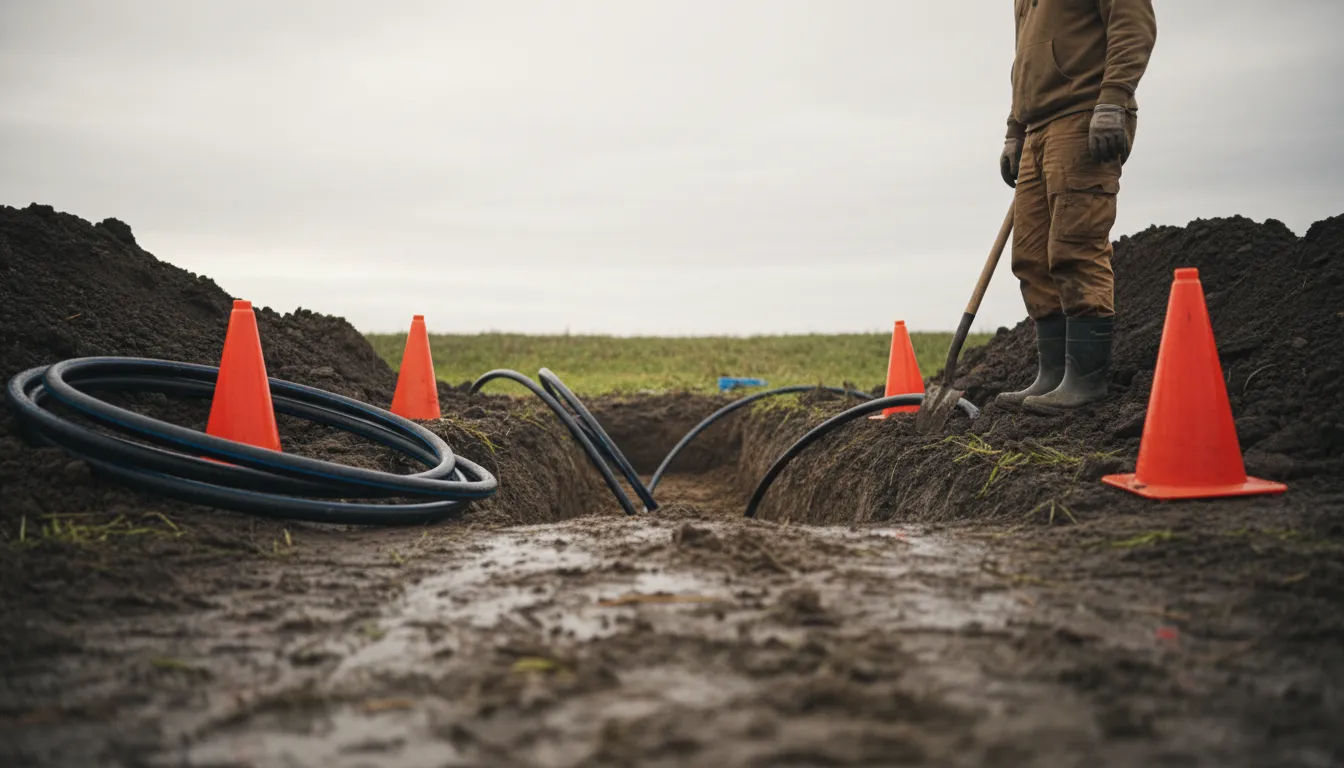
Closed-Loop Horizontal Systems This is the most common and often most cost-effective installation method for properties with sufficient land. Trenchers dig long, shallow trenches (typically 4 to 6 feet deep) across your yard, and pipes are laid in a serpentine pattern. This approach requires a larger, open area but generally involves lower excavation costs than drilling 2.
Closed-Loop Vertical Systems For homes with smaller yards, like many in established Port Arthur neighborhoods, a vertical ground source heat pump system is ideal. Installers use a drilling rig to bore deep holes, typically 150 to 400 feet down 3 4. U-shaped pipe loops are inserted into each borehole, which are then grouted. This method minimizes landscape disruption and is excellent for retrofitting a system onto an existing home with limited space, though drilling costs are higher 5 6.
Open-Loop Systems This configuration is less common and requires a specific water source. It uses groundwater from a well or a nearby pond as the heat exchange fluid, circulating it directly through the heat pump before discharging it. While potentially very efficient, it requires an adequate, consistent supply of clean water and may be subject to more local permitting and environmental regulations 7.
The Geothermal Installation Process: What to Expect
Installing a geothermal HVAC system is a significant project that requires professional expertise. Understanding the steps can help you prepare.
- Site Assessment & System Design: A qualified installer will evaluate your property, considering soil composition, lot layout, and your home's heating and cooling load. This critical step ensures the system is correctly sized for maximum efficiency and longevity.
- Ground Loop Installation: This is the major outdoor work. For a horizontal system, a trencher will dig the necessary loops. For a vertical system, a drilling rig will be brought in. The high-density polyethylene (HDPE) or PEX pipes are then placed, connected, and pressure-tested.
- Heat Pump & Indoor Unit Installation: The indoor geothermal unit, which looks similar to a traditional furnace, is installed in your garage, basement, or utility closet. It is connected to the ground loop piping and your home's electrical system.
- Connection, Charging, & Commissioning: The installer connects the indoor unit to your ductwork, charges the system with refrigerant, and performs thorough testing. They will ensure everything operates correctly, explain your new controls, and review the system's performance metrics with you.
Find the perfect geothermal heat pump contractors for your needs
Get personalized recommendations and expert advice
Key Benefits for Port Arthur Homeowners
Investing in a geothermal system offers a compelling array of advantages that go beyond simple temperature control.
- Substantial Energy Savings: This is the most significant benefit. By tapping into the earth's consistent temperature, geothermal heat pumps operate with remarkable efficiency. Homeowners often see a 30% to 70% reduction in heating and cooling energy bills compared to conventional systems 8 9 10. While the upfront cost is higher, these savings typically lead to a payback period of 5 to 10 years, after which you enjoy decades of lower operating costs 9 11.
- Exceptional Longevity and Reliability: The system's durability is a major selling point. The indoor heat pump unit often lasts about 25 years, while the buried ground loop, made from robust materials, can have a lifespan exceeding 50 years with minimal maintenance 12. This far outlasts traditional outdoor air conditioning condensers.
- Quiet, Clean, and Consistent Comfort: A geothermal system operates very quietly because there's no loud outdoor fan unit. It provides even, draft-free heating and cooling without the hot or cold blasts common with fossil fuel systems. It also reduces your home's carbon footprint by using electricity to move heat rather than create it through combustion.
- All-in-One Solution: A single geothermal system can handle your space heating, air conditioning, and, with the addition of a desuperheater, can provide a significant portion of your domestic hot water for free in the summer and at a reduced cost in the winter 13.
Considerations and Planning for Your Installation
A successful geothermal project requires careful planning. Key considerations for Port Arthur residents include:
- Upfront Investment: The initial cost for a geothermal heating and cooling system is higher than for a standard HVAC system, primarily due to the ground loop excavation or drilling. However, federal tax credits, potential local utility rebates, and the dramatic energy savings help offset this investment over time.
- Property Suitability: Your lot size and soil conditions will dictate the best loop type. A professional assessment is essential. Horizontal loops need ample space, while vertical loops are a versatile solution for smaller plots.
- Choosing the Right Contractor: This is the most important decision you'll make. Look for experienced, certified installers who specialize in geothermal technology. They should perform a detailed Manual J load calculation for your home and provide clear explanations of the design, equipment options, and warranty.
Frequently asked questions
Sources
Footnotes
-
How Do Geothermal Systems Work for Residential Homes? - https://www.davisheat.com/blog/how-do-geothermal-systems-work-for-residential-homes/ ↩
-
Ground-source heat pumps systems and applications - https://www.sciencedirect.com/science/article/pii/S1364032106001249 ↩
-
Geothermal heat pumps: The ultimate guide to ground-source ... - https://termo-plus.com/blog/geothermal-ultimate-guide-to-ground-source-heat-pumps/ ↩
-
Geothermal Heat Pumps | WBDG - https://www.wbdg.org/resources/geothermal-heat-pumps ↩
-
Geothermal heating & cooling, heat pumps, heat exchange ... - https://aztechgeo.com/residential-geothermal/how-it-works/ ↩
-
Ground Source Heat Pumps: Everything You Need To Know - https://www.boxt.co.uk/heat-pumps/guides/ground-source-heat-pumps ↩
-
Exploring Geothermal Systems: Advantages and Considerations - https://dilandroandrews.com/understanding-geothermal-systems/ ↩
-
Geothermal Heat Pumps - EnergySmart CNY - https://www.energysmartcny.org/heat-pumps/geothermal/ ↩
-
5 Things You Should Know about Geothermal Heat Pumps - https://www.energy.gov/cmei/articles/5-things-you-should-know-about-geothermal-heat-pumps ↩ ↩2
-
Geothermal Heating | Efficient AC, Electric & Plumbing | Austin, TX - https://efficienttexas.com/geothermal/ ↩
-
Geothermal Heat Pumps - Department of Energy - https://www.energy.gov/energysaver/geothermal-heat-pumps ↩
-
PEX Pipe Guide for Geothermal Heat Pump - https://outdoorboiler.com/blogs/news/pex-for-geothermal-heat-pumps-what-you-need-to-know ↩
-
Geothermal Heating, Cooling, and Hot Water Systems - https://igshpa.org/wp-content/uploads/Homeowners-Guide-to-Geothermal.pdf ↩