Find the Best Geothermal Heat Pump Contractors for Your Business
No obligation • Fast responses • Nationwide coverage

Why you can trust HVAC Firms
HVAC Firms is a leading United States resource for evaluating HVAC service providers. Our team researches companies, checks credentials, and reviews customer feedback to present clear, unbiased information. Listings and rankings are based on merit, and companies cannot pay to change our editorial content.
Search providers near you
Top Geothermal Heat Pump Contractors in Mesquite, Texas Ranked
A geothermal heat pump is a highly efficient, year-round heating and cooling system that leverages the earth's stable underground temperature. For Mesquite homeowners, this technology offers a powerful way to slash energy bills while maintaining exceptional indoor comfort. This guide explains how geothermal systems work, their benefits for our local climate, and how you can find qualified professionals to assess your property and install a system tailored to your home.
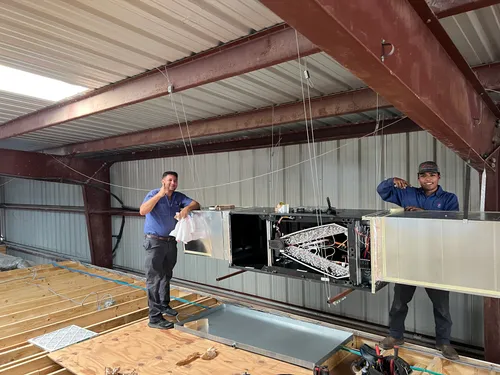
Aircons Heat & Better Air Inc
220 Commercial St, Garland, TX 75040
Aircons Heat & Better Air Inc is an HVAC company based in Dallas, TX, offering a wide range of heating and cooling services. They provide air conditioning and furnace repair, installation of heat pumps and geothermal systems, duct cleaning, thermostat installation, and indoor air quality solutions for both residential and commercial clients. The company is a certified Trane dealer and has over 15 years of experience in the industry. Their team is trained to handle all major HVAC brands and systems. Aircons Heat & Better Air Inc also offers financing options and is available for service calls day and night.
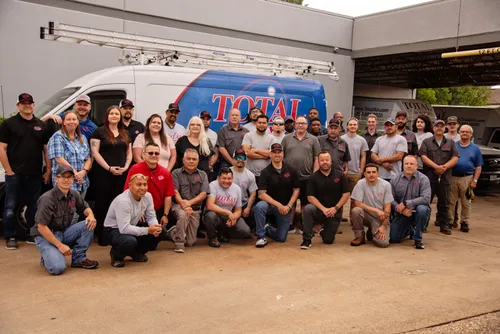
Total Air & Heat Co.
1408 O Ave suite 100, Plano, TX 75074
Total Air & Heat Co. is an HVAC and plumbing service provider based in Dallas, TX. They offer a wide range of services including air conditioning, heating, heat pump, and geothermal heat pump installation and repair, as well as indoor air quality solutions and thermostat installation. The company serves both residential and commercial customers, providing 24/7 repair services for HVAC systems. Established in 1957, Total Air & Heat Co. has over 60 years of experience and is a Carrier Factory Authorized Dealer with NATE-certified technicians. Their capabilities include working with traditional and geothermal heat pumps, as well as offering specialized products like air purifiers and UV lights for improved indoor air quality.

FERSA HVAC HEATING & AIR CONDITIONING
2130 Franklin Dr, Mesquite, TX 75150
FERSA HVAC HEATING & AIR CONDITIONING provides HVAC installation and indoor air quality services in Dallas, TX, and surrounding areas within a 30-mile radius. With 18 years of experience, they specialize in installing air conditioners, furnaces, heat pumps, and geothermal heat pumps for both residential and commercial clients. Their insured team offers 24/7 availability to ensure timely service and maintain comfortable indoor environments year-round.
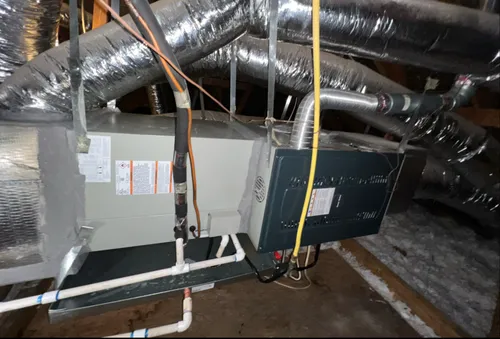
Bohannon Service Company LLC
2909 E Arkansas Ln Suite C, Arlington, TX 76010
Bohannon Service Company LLC is a locally owned HVAC contractor based in Arlington, TX, serving customers throughout North Texas. They provide a range of services including repair and installation of air conditioning, furnaces, heat pumps, boilers, mini splits, and geothermal heat pumps. The company emphasizes clear communication and fair estimates, ensuring customers understand the work needed before it begins. They offer emergency service after hours and are available six days a week.
Premier HVAC Services LLC
Fort Worth, TX
Premier HVAC Services LLC offers a range of heating and cooling solutions in Fort Worth, TX. They provide repair and installation services for air conditioners, furnaces, heat pumps, boilers, mini splits, and geothermal heat pumps. Their team also handles HVAC tune-ups to maintain system efficiency. Premier HVAC Services focuses on delivering comprehensive HVAC support tailored to local needs.
How Geothermal Heating and Cooling Works in Mesquite
Unlike conventional systems that create heat or cold by burning fuel or using outside air, a geothermal system, often called a ground-source heat pump, simply transfers heat. It uses a network of buried pipes, called a ground loop, filled with a water-based solution. The earth beneath Mesquite maintains a relatively constant temperature between 50-60°F year-round, providing a perfect thermal battery for your home 1.
In the winter, the fluid circulating through the underground loops absorbs the earth's natural warmth. This warmed fluid is brought into the heat pump unit inside your home, which concentrates the thermal energy and distributes it through your existing ductwork as warm air 2. During our hot Texas summers, the process reverses: the system extracts heat and humidity from your indoor air and transfers it into the cooler ground loop, leaving your home comfortably cooled 3 4. This elegant heat exchange process is why these systems are so efficient, moving 3 to 5 units of energy for every 1 unit of electricity they consume 5.
Types of Ground Loop Systems for Mesquite Properties
The design of the underground loop field is critical and depends entirely on your property's characteristics. A professional installer will conduct a thorough site assessment to determine the best option.
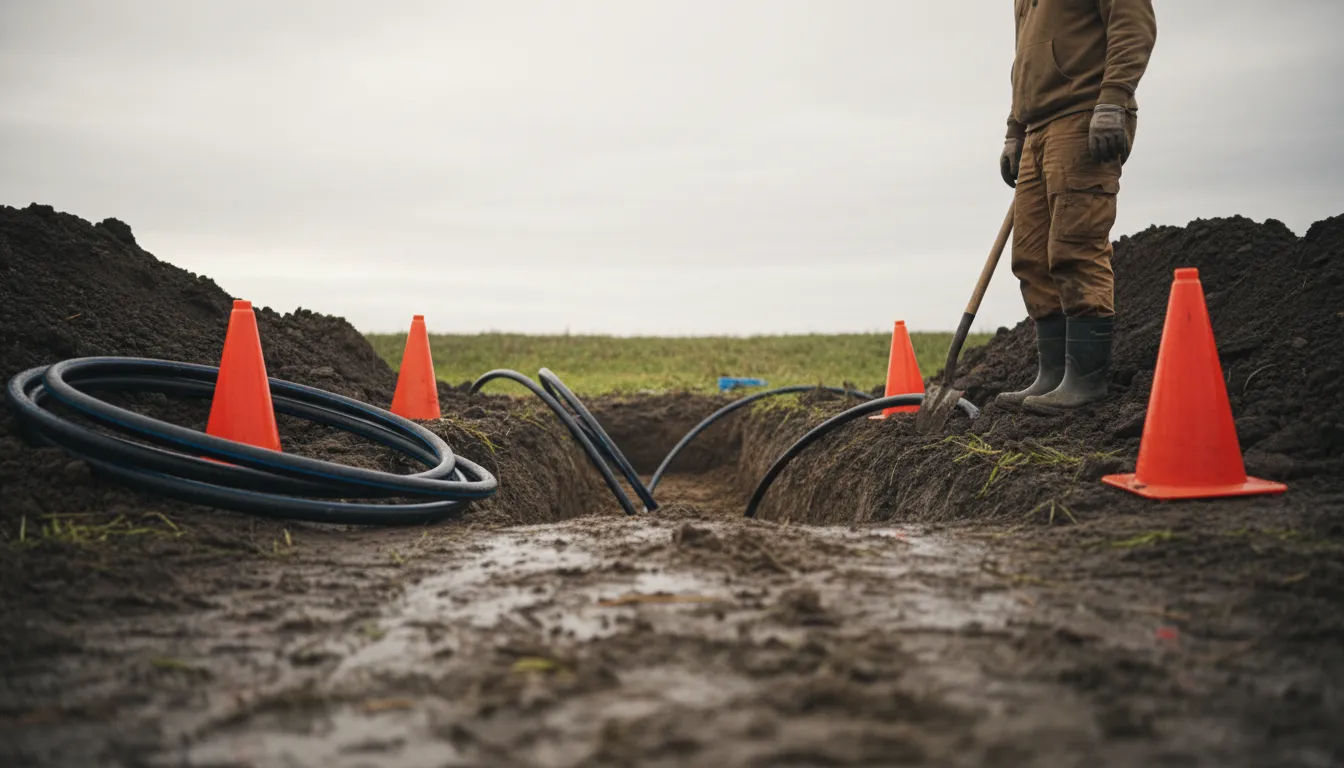
Horizontal Closed Loops: This is often the most cost-effective method if space allows. Trenches are dug 4 to 6 feet deep across a large area of your yard-typically requiring 1/4 to 3/4 of an acre. Pipes are laid in these trenches and connected. This option is ideal for new construction projects or homes with ample, clear land 6 7.
Vertical Closed Loops: For homes in Mesquite with smaller lots, vertical loops are the standard solution. Contractors use a drilling rig to bore holes 150 to 400 feet deep. U-shaped pipes are inserted into these boreholes, which are then grouted. This method minimizes surface disruption and is less dependent on available land area, though it involves specialized drilling equipment.
Pond/Lake Loops: If your property has access to a suitable body of water-generally at least 1/2 acre in surface area and 10-12 feet deep-a pond loop can be an excellent option. Coils of pipe are submerged at the bottom of the pond, where the water temperature remains stable. This can be the lowest-cost loop option if the conditions are right 8.
Why Geothermal is a Smart Choice for Mesquite Homes
The North Texas climate presents specific challenges and opportunities that make geothermal heat pumps a particularly wise investment for many local homeowners.
- High Cooling Loads: Our long, hot summers mean air conditioning systems work extremely hard. Geothermal systems excel in high-cooling-load environments because they reject heat into the much cooler earth rather than into hot outdoor air, operating at peak efficiency when you need it most.
- Substantial Energy Savings: By tapping into the earth's consistent temperature, geothermal systems can reduce energy consumption for heating and cooling by up to 65% compared to conventional systems like standard air-source heat pumps or gas furnaces with central AC. This translates directly to lower monthly utility bills.
- Long-Term Reliability and ROI: The underground loop system is typically warranted for 50+ years and can last generations, while the indoor heat pump unit often lasts 20-25 years. Although the upfront installation cost is higher, the combination of massive energy savings, low maintenance, and long lifespan can offer an excellent return on investment over time.
- Eco-Friendly Comfort: Geothermal systems use electricity and have no on-site combustion, meaning no carbon monoxide risk and a significantly reduced carbon footprint for your home. They also operate very quietly, with no noisy outdoor condenser unit.
Find the perfect geothermal heat pump contractors for your needs
Get personalized recommendations and expert advice
The Geothermal Installation Process: What to Expect
Understanding the steps involved can help you prepare for a geothermal installation project.
- Comprehensive Site Evaluation: A qualified installer will visit your property to assess soil composition, lot size, landscaping, and access. This evaluation determines the feasible loop type (horizontal, vertical, or pond) and the system size needed for your home.
- Loop Field Installation: For a horizontal system, trenching equipment will excavate the necessary area. For a vertical system, a drilling rig will be brought in to create the boreholes. The high-density polyethylene pipes are then placed, connected, and pressure-tested 9.
- Connection to the Home: A trench is dug from the loop field to your home's foundation. The pipes are brought through the foundation wall and connected to the indoor heat pump unit.
- Indoor Unit Installation: The geothermal heat pump, which is about the size of a traditional furnace, is installed in your utility room or basement. It is connected to your home's electrical system and existing ductwork. The system is then charged with refrigerant, started, and balanced for optimal performance 10.
Understanding Costs and Financial Incentives
The initial investment for a complete geothermal heating and cooling system in Mesquite typically ranges from $20,000 to $40,000 or more for an average-sized home 11 12. A common benchmark is roughly $2,500 per ton of capacity, plus the cost of drilling or trenching for the ground loop 11 13. While this is higher than a conventional system, it's crucial to view it as a long-term investment in your home's efficiency and value.
The significant reduction in monthly energy costs begins immediately. Furthermore, federal tax incentives can substantially offset the upfront cost. It's essential to consult with a tax professional, but current federal programs can offer a credit worth a percentage of the total installed cost, including the ground loop. When calculating the payback period, factor in these incentives, your projected energy savings, and the increased longevity of the system.
Finding the Right Geothermal Professional in Mesquite
Selecting an experienced, certified installer is the most critical step in your geothermal journey. Look for contractors who are accredited by organizations like the International Ground Source Heat Pump Association (IGSHPA). They should have specific, verifiable experience installing the type of loop system your property requires. Ask for local references, detailed proposals that break down all costs, and information on warranties for both the equipment and the installation work. A reputable professional will always start with a detailed load calculation and site survey, not just a quick quote.
Frequently asked questions
Sources
Footnotes
-
Geothermal Heat Pumps - EnergySmart CNY - https://www.energysmartcny.org/heat-pumps/geothermal/ ↩
-
Nashville Geothermal HVAC Heating and Cooling - https://jewellmechanical.com/geothermal-heating-cooling/ ↩
-
Geothermal Heating & Cooling - Department of Energy - https://www.energy.gov/eere/geothermal/geothermal-heating-cooling ↩
-
How a Geothermal Heat Pump Works | This Old House - https://www.youtube.com/watch?v=d5Tbsx3R2T8 ↩
-
5 Things You Should Know about Geothermal Heat Pumps - https://www.energy.gov/cmei/articles/5-things-you-should-know-about-geothermal-heat-pumps ↩
-
Geothermal Heat Pumps - Department of Energy - https://www.energy.gov/energysaver/geothermal-heat-pumps ↩
-
Geothermal heating & cooling, heat pumps, heat exchange ... - https://aztechgeo.com/residential-geothermal/how-it-works/ ↩
-
How Do Geothermal Systems Work for Residential Homes? - https://www.davisheat.com/blog/how-do-geothermal-systems-work-for-residential-homes/ ↩
-
How Does A Geothermal Heat Pump Work? Complete 2025 Guide - https://solartechonline.com/blog/how-does-geothermal-heat-pump-work/ ↩
-
Geothermal Heat Pump Installation: What To Expect For Your ... - https://jomory.com/geothermal-heat-pump-installation-what-to-expect-for-your-property/ ↩
-
Geothermal HVAC: Feasibility & ROI - https://jupitairhvac.com/blog/geothermal-hvac-systems-feasibility-north-texas/ ↩ ↩2
-
Geothermal Heat Pump Guide: Installation Costs, Types And Benefits - https://modernize.com/hvac/heating-repair-installation/heat-pump/geothermal ↩
-
Guide to Geothermal Heat Pumps - https://www.energy.gov/sites/prod/files/guide_to_geothermal_heat_pumps.pdf ↩