Find the Best Geothermal Heat Pump Contractors for Your Business
No obligation • Fast responses • Nationwide coverage

Why you can trust HVAC Firms
HVAC Firms is a leading United States resource for evaluating HVAC service providers. Our team researches companies, checks credentials, and reviews customer feedback to present clear, unbiased information. Listings and rankings are based on merit, and companies cannot pay to change our editorial content.
Search providers near you
Top Geothermal Heat Pump Contractors in Kyle, Texas Ranked
Geothermal heat pumps, also known as ground-source heat pumps, are a highly efficient method for heating and cooling your home by leveraging the Earth's stable underground temperature. For homeowners in Kyle, this technology offers a way to achieve significant energy savings and consistent comfort year-round, regardless of the extreme Texas weather above ground. This guide explains how these systems work, what installation entails, and how you can find qualified local experts to evaluate your property for this sustainable upgrade.
How Geothermal Systems Work: Tapping into the Earth's Constant Temperature
The core principle behind a geothermal heating and cooling system is remarkably simple: a few feet below the surface, the Earth maintains a nearly constant temperature. In Central Texas, this ground temperature hovers in the 60-75°F range. This is warmer than the winter air and cooler than the blistering summer air, providing a perfect source for efficient heat exchange.
A geothermal system uses a network of buried pipes, called a ground loop, filled with a water or antifreeze solution. In the winter, this fluid circulates through the loops, absorbing the Earth's gentle warmth. The warmed fluid is then pumped to an indoor heat pump unit. Here, a refrigerant cycle and heat exchanger concentrate this low-grade heat and distribute it as warm air through your home's existing ductwork 1. The process reverses in the summer; the system extracts heat from your home and transfers it into the cooler ground loop, effectively providing air conditioning 2.
This direct exchange with the stable ground, rather than the highly variable outside air, is what makes ground-source heat pumps so remarkably efficient, often leading to reductions of 40-70% on heating and cooling bills compared to conventional systems.
Types of Ground Loop Systems for Kyle Properties
The underground portion of the system, the ground loop, is the most site-specific component. The two main types of closed-loop systems are chosen based on your property's characteristics.
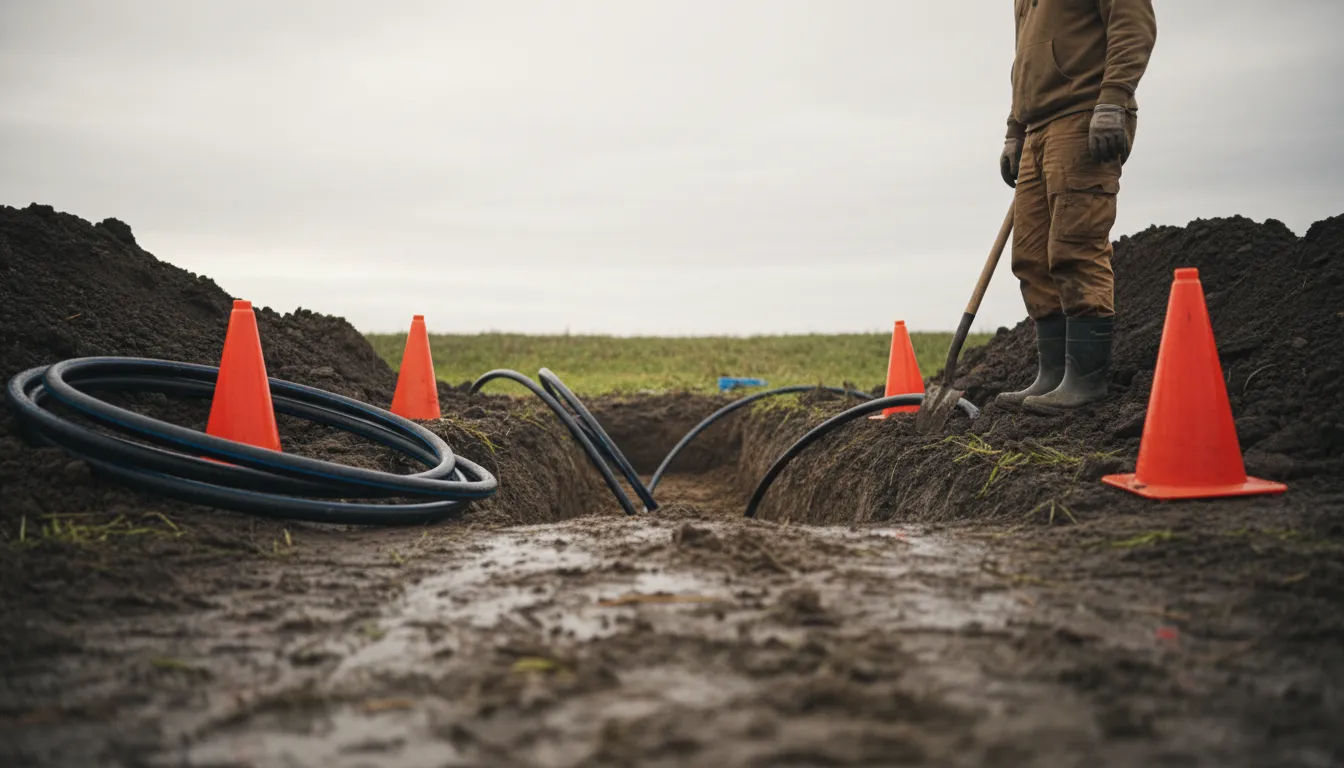
Horizontal Ground Loops: This configuration involves digging trenches four to six feet deep over a relatively large area of your yard 3. The polyethylene piping is laid in these trenches in a slinky-like coil or straight runs. This method is often most cost-effective for new construction projects where ample land is readily available for excavation 4.
Vertical Ground Loops: For homes in Kyle with smaller lots or rocky soil closer to the surface, vertical loops are the typical solution. Contractors drill boreholes 150 to 450 feet deep and insert U-shaped loop pipes into each hole. While the drilling equipment is more specialized, this approach minimizes the surface area required, making it ideal for retrofits into existing landscapes 5.
A third, less common option is an open-loop system, which uses well water as the heat exchange fluid directly. This requires a sufficient supply of clean water and a method for discharge, making it highly dependent on local geology and water regulations 6.
The Installation Process for a Geothermal Heat Pump
Installing a residential geothermal system is a significant project that follows a clear sequence. Understanding the steps can help you know what to expect from local providers.
- Site Assessment and Design: A qualified installer will evaluate your home's heating and cooling loads, inspect your existing ductwork, and survey your property. They will assess soil composition, available space, and rock content to recommend the optimal loop type and size the system correctly.
- Ground Loop Installation: This is the major earth-moving phase. For a vertical system, a drilling rig will create the boreholes. For a horizontal system, a backhoe will dig the necessary trenches. The high-density polyethylene (HDPE) pipe is then placed, connected, and pressure-tested before the trenches or holes are backfilled.
- Heat Pump and Indoor Unit Installation: The indoor heat pump unit, which is typically about the size of a traditional furnace, is installed in your garage, basement, or utility closet. If needed, existing ductwork will be modified or sealed to ensure efficient airflow.
- System Connection and Commissioning: The ground loops are connected to the heat pump via underground piping that enters your home. The system is filled with fluid, all electrical and control connections are made, and the contractor will thoroughly test and balance the entire system to ensure optimal performance 7.
Local Considerations for Kyle Homeowners
Kyle's specific conditions in Central Texas play a direct role in geothermal feasibility and installation.
- Soil and Geology: The soil composition in the area, which can include clay and limestone rock, directly impacts the drilling or trenching process. Rocky conditions can increase the time and cost for vertical drilling but also promote good heat transfer 8 9.
- Lot Size: With many residential lots in Kyle, vertical boreholes often become the default choice as they require the least surface area, preserving your yard.
- Climate Benefit: The high cooling demand during long Texas summers is where geothermal systems truly shine. Their efficiency in moving heat from your home into the ground is superior to standard air conditioners struggling against 100°F days.
- Permitting: Your installer will handle all necessary local permits for the drilling and electrical work, but it's a key step in the process.
Find the perfect geothermal heat pump contractors for your needs
Get personalized recommendations and expert advice
Understanding Costs, Savings, and Value
The decision to install a geothermal system is a long-term investment in your home's efficiency and comfort.
Upfront Costs: A complete geothermal heat pump system for a typical single-family home in Kyle can range from $20,000 to over $40,000 10. The wide range depends heavily on the loop type (vertical is more expensive than horizontal), the size of your home, the existing ductwork, and the specific ground conditions on your property.
Operational Savings and Payback: This is where the value becomes clear. By reducing energy consumption for heating and cooling by 40-70%, homeowners can see dramatically lower utility bills 11 12. For many, the savings on monthly bills allow the system to pay for itself within a 4 to 15-year period 13. With electricity prices and usage patterns, this payback period can be on the shorter end for Texas homes with high AC use.
Durability and Longevity: A major advantage of geothermal systems is their lifespan. The underground polyethylene piping is often warranted for 50 years and can last for generations 14. The indoor heat pump unit typically lasts about 25 years, significantly longer than the 15-year average of a standard air conditioner or furnace.
Incentives: It's crucial to ask local providers about current federal tax credits, as well as any potential rebates from utility companies or state programs, which can substantially reduce the net installed cost.
Environmental Impact and Efficiency
Choosing a ground-source system is one of the most effective steps a homeowner can take to reduce their carbon footprint. By using electricity simply to move heat rather than create it through combustion, and by doing so with exceptional efficiency, geothermal systems drastically reduce greenhouse gas emissions associated with home comfort. They also eliminate the need for an outdoor condenser unit, reducing noise pollution in your neighborhood.
Finding the Right Local Expertise
Selecting an experienced installer is the most critical step. Look for contractors who are accredited by organizations like the International Ground Source Heat Pump Association (IGSHPA). They should conduct a detailed Manual J load calculation for your home and provide a comprehensive quote that includes all loop, equipment, and labor costs. Ask for references from past local installations and verify their licensing and insurance.
Frequently asked questions
Sources
Footnotes
-
All You Need to Know About Home Geothermal Heating & Cooling - Dandelion Energy - https://dandelionenergy.com/all-you-need-to-know-about-home-geothermal-heating-cooling ↩
-
How a Geothermal Heat Pump Works | This Old House - https://www.youtube.com/watch?v=d5Tbsx3R2T8 ↩
-
Geothermal Installation Steps Explained - https://ultrageothermal.com/geothermal-installation-steps-explained/ ↩
-
Geothermal heating & cooling, heat pumps, heat exchange ... - https://aztechgeo.com/residential-geothermal/how-it-works/ ↩
-
Geothermal Heating, Cooling, and Hot Water Systems - https://igshpa.org/wp-content/uploads/Homeowners-Guide-to-Geothermal.pdf ↩
-
Geothermal Heat Pumps - Department of Energy - https://www.energy.gov/energysaver/geothermal-heat-pumps ↩
-
Geothermal Heat Pump Installation Overview | EnergySage - https://www.energysage.com/heat-pumps/installing-geothermal-heat-pump/ ↩
-
Geothermal heat pumps: The ultimate guide to ground-source ... - https://termo-plus.com/blog/geothermal-ultimate-guide-to-ground-source-heat-pumps/ ↩
-
Ground-Source Heat Pumps: Are They Green? - https://www.buildinggreen.com/feature/ground-source-heat-pumps-are-they-green ↩
-
Geothermal Heat Pump Guide: Installation Costs, Types And Benefits - https://modernize.com/hvac/heating-repair-installation/heat-pump/geothermal ↩
-
How Does A Geothermal Heat Pump Work? Complete 2025 Guide - https://solartechonline.com/blog/how-does-geothermal-heat-pump-work/ ↩
-
5 Things You Should Know about Geothermal Heat Pumps - https://www.energy.gov/cmei/articles/5-things-you-should-know-about-geothermal-heat-pumps ↩
-
Everything You Need to Know About Geothermal Heat Pumps - https://www.familyhandyman.com/article/everything-you-need-to-know-about-geothermal-heat-pumps/ ↩
-
How Do Geothermal Systems Work for Residential Homes? - https://www.davisheat.com/blog/how-do-geothermal-systems-work-for-residential-homes/ ↩