Find the Best Geothermal Heat Pump Contractors for Your Business
No obligation • Fast responses • Nationwide coverage

Why you can trust HVAC Firms
HVAC Firms is a leading United States resource for evaluating HVAC service providers. Our team researches companies, checks credentials, and reviews customer feedback to present clear, unbiased information. Listings and rankings are based on merit, and companies cannot pay to change our editorial content.
Search providers near you
Top Geothermal Heat Pump Contractors in Cedar Park, Texas Ranked
A geothermal heat pump is a highly efficient heating and cooling system that uses the earth's stable underground temperature to regulate your home's climate. For Cedar Park homeowners, this technology offers a path to significant energy savings and enhanced comfort, especially given our region's high cooling demands. This guide explains how these ground-source systems work, what installation involves, and how you can find qualified local experts to assess your property's potential.
Proven Plumbing & Air
300 Brushy Creek Rd Suite 402, Cedar Park, TX 78613
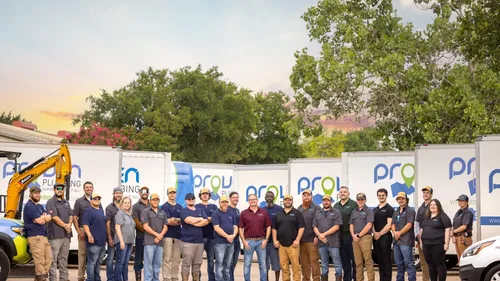
Proven Plumbing & Air is an HVAC and plumbing service provider based in Austin, TX. They offer a range of services including air conditioning, furnace, heat pump, boiler, mini split, and geothermal heat pump installation and repair, along with HVAC tune-up services. The company emphasizes the use of advanced technology and clear communication to support their work. Proven Plumbing & Air aims to provide reliable home service with well-organized teams and equipment.
Petrocelli Services Inc.
12000 Trails End Rd, Leander, TX 78641
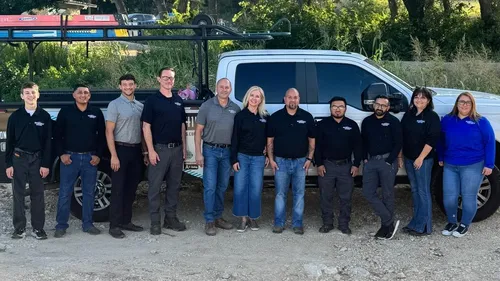
Petrocelli Services Inc. is a full-service HVAC company located in Austin, TX. They provide sales, installation, and repair services for residential and commercial heating and cooling systems, including air conditioners, furnaces, heat pumps, boilers, mini splits, and geothermal heat pumps. Established in 1990, Petrocelli Services has been serving Austin and nearby areas such as Round Rock and Cedar Park for over three decades.
TX Central Services LLC
1011 S Heatherwilde Blvd #220, Pflugerville, TX 78660
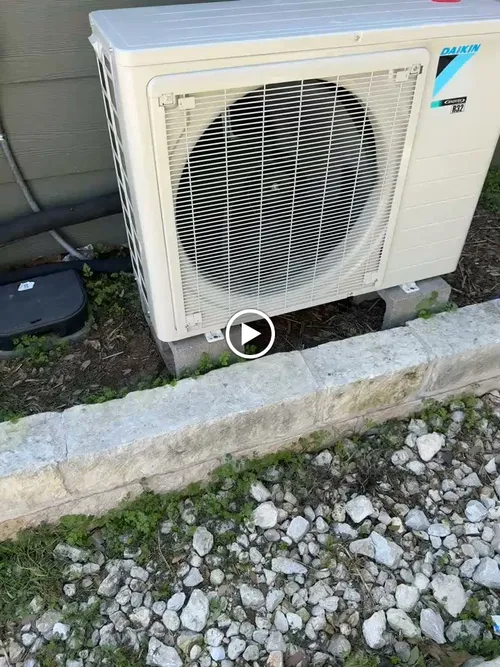
TX Central Services LLC provides comprehensive HVAC services in Austin, TX. They handle maintenance, repairs, and installations for air conditioners, furnaces, heat pumps, boilers, mini splits, and geothermal heat pumps. Their team is skilled in both small repairs and large-scale HVAC installations, ensuring systems operate efficiently and reliably.
Hot Rod Mechanical, Inc.
10706 FM1625, Austin, TX 78747
Hot Rod Mechanical, Inc. is an HVAC and mechanical service provider based in Austin, TX. With 19 years of industry experience, they offer a wide range of services including HVAC installation and repair, boiler service and installation, specialty welding, hot tapping, pipe freezing, and natural gas piping systems. Their capabilities include boiler and pressure vessel welding, supporting both residential and industrial needs.
How a Geothermal System Works
Unlike traditional air-source heat pumps that exchange heat with the outside air, a geothermal or ground-source heat pump leverages the consistent temperature found just below the earth's surface. In Cedar Park, this ground temperature remains a relatively steady 50-60°F year-round. A geothermal unit uses this thermal energy bank to provide both heating and cooling for your home.
The process centers on a sealed loop of pipes, called a ground loop, buried in your yard. A water-based fluid circulates through this loop. In the winter, the fluid absorbs the earth's gentle warmth and carries it to the heat pump unit inside your home. The heat pump concentrates this low-grade heat and distributes warm air through your ductwork. In the summer, the system reverses: it extracts heat from your home's air and transfers it into the cooler ground loop fluid, which then dissipates the heat into the earth, leaving your home comfortably cooled 1. This efficient heat exchange process is the key to the system's remarkable performance.
Types of Ground Loop Systems
The design of the underground loop field is a critical component of any geothermal installation. The right type for your Cedar Park home depends on your lot size, soil conditions, and landscape. There are two primary categories: closed-loop and open-loop systems.
Closed-Loop Systems This is the most common residential configuration, where the fluid continuously circulates through a sealed, buried pipe network. There are three main closed-loop designs:
- Horizontal Loop: Pipes are laid in parallel trenches, typically 4 to 6 feet deep. This method is often more cost-effective but requires a larger amount of open, unobstructed land.
- Vertical Loop: For properties with limited space, like many in Cedar Park, vertical loops are ideal. Contractors drill boreholes 150 to 200 feet deep and insert U-shaped pipes. While drilling can be more expensive than trenching, it minimizes landscape disruption and is excellent for smaller lots 2.
- Pond/Lake Loop: If you have a suitable body of water on your property, a coil of pipe can be submerged at an adequate depth. This option has the lowest installation cost if the water source meets specific size and depth requirements 3.
Open-Loop Systems This configuration uses groundwater from a well as the direct heat exchange fluid. After passing through the heat pump, the water is discharged back into a well, recharge trench, or approved surface body of water. An open-loop system can be highly efficient but requires an abundant, clean water source and compliance with local codes regarding water use and discharge 4.
The Geothermal Installation Process in Cedar Park
Installing a ground-source heat pump is a significant project that requires careful planning and expert execution. Understanding the steps can help you prepare for the process.
- Site Assessment and Design: A qualified installer will evaluate your property, considering soil composition, available land, and your home's heating and cooling loads. They will also locate underground utilities. This assessment determines the optimal loop type and system size.
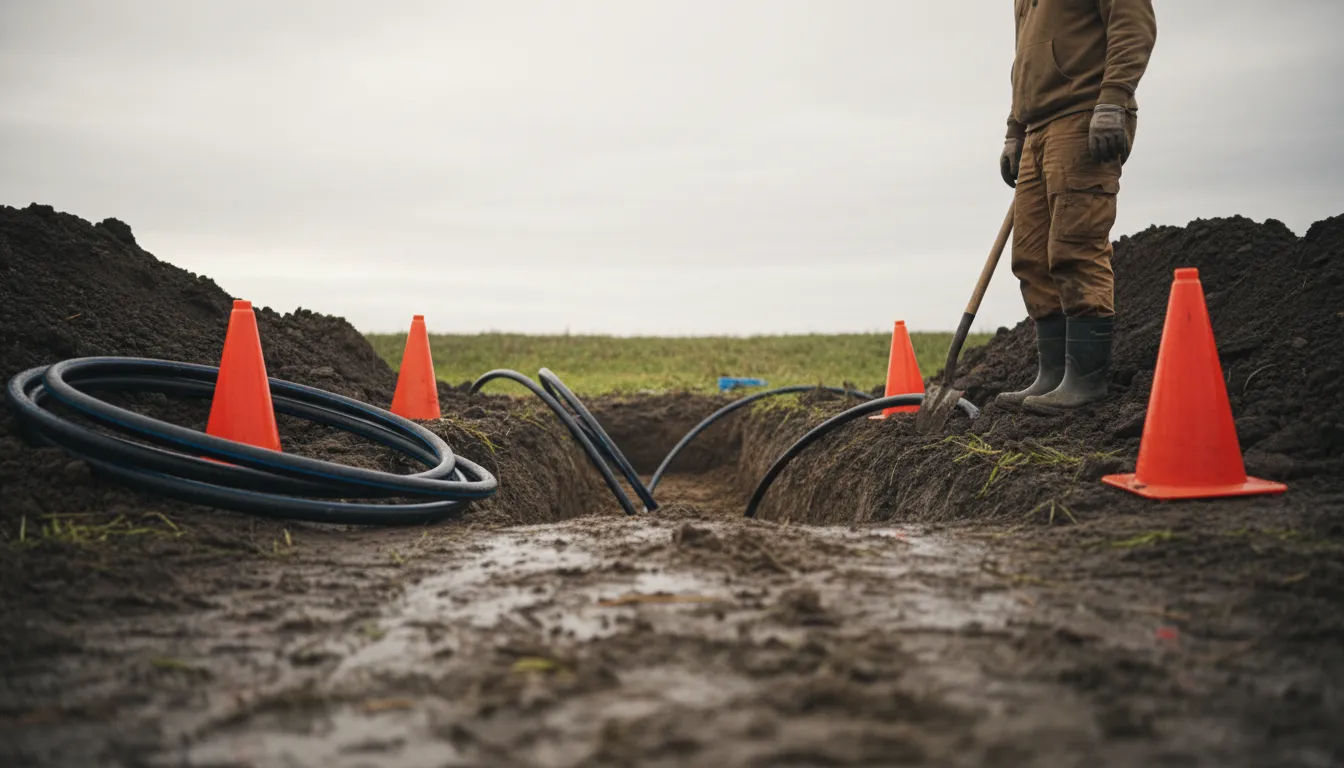
- Ground Loop Installation: This is the most substantial phase. For a horizontal system, excavation equipment digs the necessary trenches. For a vertical system, a drilling rig creates the boreholes. The high-density polyethylene pipes are then placed, connected, and pressure-tested before the trenches or holes are backfilled 5.
- Heat Pump and Ductwork Setup: The indoor heat pump unit is installed, typically in a garage, basement, or mechanical closet. It is connected to your home's existing ductwork or to a new duct system if needed.
- System Startup and Testing: Once all connections are made, the installer fills the loop with fluid, purges air from the lines, and starts the system. They will test and calibrate all components to ensure everything operates at peak efficiency 6.
Find the perfect geothermal heat pump contractors for your needs
Get personalized recommendations and expert advice
Trenching vs. Drilling: What Cedar Park Homeowners Should Know
The method used to install the ground loops has a major impact on the project's cost and scope. Trenching for a horizontal loop is generally less expensive per foot than drilling. However, it requires a large, clear area of your yard and results in more significant short-term landscaping disruption 7.
Drilling for a vertical loop system is often the preferred choice for suburban lots in Cedar Park. While the cost per hole is higher, you need far fewer of them, and the compact drilling footprint causes minimal damage to lawns and gardens. It's the most space-efficient solution and avoids major excavation 8.
Benefits and Feasibility in the Texas Climate
Geothermal heat pumps offer compelling advantages, particularly in a climate like Central Texas with long, hot summers and substantial cooling loads.
- Exceptional Efficiency and Savings: By exchanging heat with the stable ground instead of the hot summer air, geothermal systems operate with remarkable efficiency. They can reduce energy consumption for heating and cooling by up to 70% compared to conventional systems like standard air conditioners and furnaces 9. This translates to significantly lower monthly utility bills.
- Long-Term Cost Analysis: The primary drawback is the high upfront investment. A full geothermal system installation in Cedar Park can range from $20,000 to over $40,000, influenced heavily by the loop field type and drilling requirements 10 11. However, the drastically lower operating costs mean the system often pays for itself through energy savings within 5 to 10 years. Additionally, these systems are known for their durability, with ground loops often warrantied for 50 years and heat pump units lasting 20 years or more 12 13.
- Local Feasibility: The technology is well-suited to the Cedar Park area. Our soil and rock conditions are typically favorable for drilling or trenching. The high cooling demand makes the efficiency gains especially valuable. While the initial cost is a barrier for some, various federal tax credits and potential local utility rebates can improve the financial outlook 14. A professional assessment is crucial to determine if your specific property is a good candidate.
Maintenance and Longevity
One of the standout features of a geothermal system is its low maintenance requirements and long lifespan. The indoor heat pump components require about the same level of care as a traditional HVAC system: regular filter changes and periodic professional check-ups. The buried ground loop, however, is virtually maintenance-free and is designed to last for generations. This reliability and durability contribute greatly to the system's long-term value and return on investment.
Frequently asked questions
Sources
Footnotes
-
Geothermal Heat Pumps | AC Express - https://www.austinacexpress.com/blog/geothermal-heat-pumps ↩
-
Geothermal heating & cooling, heat pumps, heat exchange ... - https://aztechgeo.com/residential-geothermal/how-it-works/ ↩
-
How Do Geothermal Systems Work for Residential Homes? - https://www.davisheat.com/blog/how-do-geothermal-systems-work-for-residential-homes/ ↩
-
Geothermal Heating, Cooling, and Hot Water Systems - https://igshpa.org/wp-content/uploads/Homeowners-Guide-to-Geothermal.pdf ↩
-
Geothermal Heat Pumps - EnergySmart CNY - https://www.energysmartcny.org/heat-pumps/geothermal/ ↩
-
How a Geothermal Heat Pump Works | This Old House - https://www.youtube.com/watch?v=d5Tbsx3R2T8 ↩
-
Geothermal Heat Pump Installation: What To Expect For Your Property - https://jomory.com/geothermal-heat-pump-installation-what-to-expect-for-your-property/ ↩
-
Geothermal Installation Steps Explained - https://ultrageothermal.com/geothermal-installation-steps-explained/ ↩
-
Geothermal Heat Pumps - Department of Energy - https://www.energy.gov/energysaver/geothermal-heat-pumps ↩
-
Geothermal HVAC: Feasibility & ROI - https://jupitairhvac.com/blog/geothermal-hvac-systems-feasibility-north-texas/ ↩
-
Geothermal Heat Pump Guide: Installation Costs, Types And Benefits - https://modernize.com/hvac/heating-repair-installation/heat-pump/geothermal ↩
-
How Does A Geothermal Heat Pump Work? Complete 2025 Guide - https://solartechonline.com/blog/how-does-geothermal-heat-pump-work/ ↩
-
5 Things You Should Know about Geothermal Heat Pumps - https://www.energy.gov/cmei/articles/5-things-you-should-know-about-geothermal-heat-pumps ↩
-
About Geothermal Heat Pumps and Geothermal Cooling - Houston TX - http://earthpowerac.com/about-geo-in-texas/ ↩