Find the Best Geothermal Heat Pump Contractors for Your Business
No obligation • Fast responses • Nationwide coverage

Why you can trust HVAC Firms
HVAC Firms is a leading United States resource for evaluating HVAC service providers. Our team researches companies, checks credentials, and reviews customer feedback to present clear, unbiased information. Listings and rankings are based on merit, and companies cannot pay to change our editorial content.
Search providers near you
Top Geothermal Heat Pump Contractors in Allen, Texas Ranked
Geothermal heat pumps, also known as ground-source heat pumps, are a highly efficient technology for heating and cooling your Allen home. These systems leverage the earth's stable underground temperature to provide year-round comfort, offering significant energy savings and environmental benefits. This guide explains how geothermal systems work, what installation involves, and how you can find qualified local professionals to assess your property and provide a tailored solution.
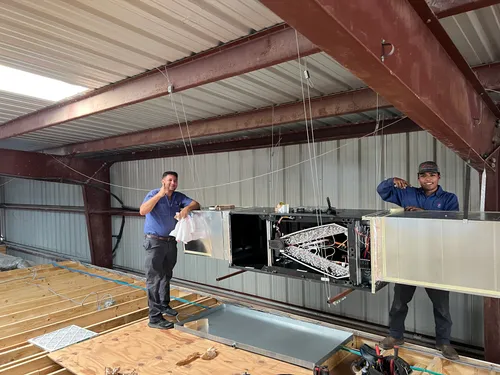
Aircons Heat & Better Air Inc
220 Commercial St, Garland, TX 75040
Aircons Heat & Better Air Inc is an HVAC company based in Dallas, TX, offering a wide range of heating and cooling services. They provide air conditioning and furnace repair, installation of heat pumps and geothermal systems, duct cleaning, thermostat installation, and indoor air quality solutions for both residential and commercial clients. The company is a certified Trane dealer and has over 15 years of experience in the industry. Their team is trained to handle all major HVAC brands and systems. Aircons Heat & Better Air Inc also offers financing options and is available for service calls day and night.
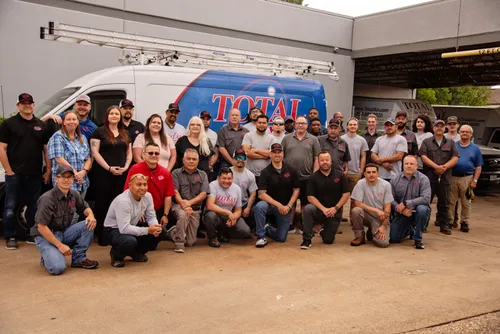
Total Air & Heat Co.
1408 O Ave suite 100, Plano, TX 75074
Total Air & Heat Co. is an HVAC and plumbing service provider based in Dallas, TX. They offer a wide range of services including air conditioning, heating, heat pump, and geothermal heat pump installation and repair, as well as indoor air quality solutions and thermostat installation. The company serves both residential and commercial customers, providing 24/7 repair services for HVAC systems. Established in 1957, Total Air & Heat Co. has over 60 years of experience and is a Carrier Factory Authorized Dealer with NATE-certified technicians. Their capabilities include working with traditional and geothermal heat pumps, as well as offering specialized products like air purifiers and UV lights for improved indoor air quality.
FERSA HVAC HEATING & AIR CONDITIONING
2130 Franklin Dr, Mesquite, TX 75150
FERSA HVAC HEATING & AIR CONDITIONING provides HVAC installation and indoor air quality services in Dallas, TX, and surrounding areas within a 30-mile radius. With 18 years of experience, they specialize in installing air conditioners, furnaces, heat pumps, and geothermal heat pumps for both residential and commercial clients. Their insured team offers 24/7 availability to ensure timely service and maintain comfortable indoor environments year-round.
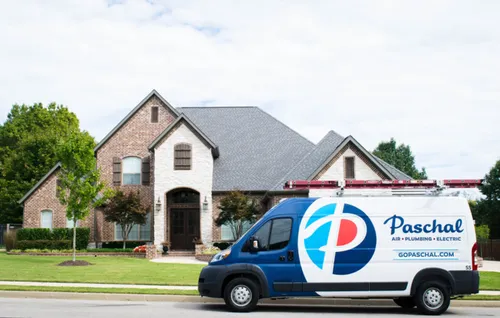
Paschal Air, Plumbing & Electric
2201 Spinks Rd Ste. 109, Flower Mound, TX 75022
Paschal Air, Plumbing & Electric provides HVAC, plumbing, and electrical services in Fort Worth, TX. They offer installation and repair for air conditioning, furnaces, heat pumps, boilers, mini splits, and geothermal heat pumps. Their capabilities include HVAC tune-ups and comprehensive system maintenance to support home and business comfort.
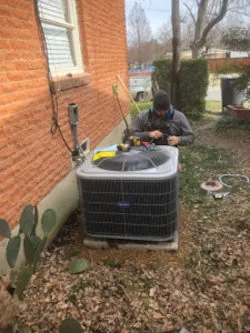
Premier HVAC Services LLC
Fort Worth, TX
Premier HVAC Services LLC offers a range of heating and cooling solutions in Fort Worth, TX. They provide repair and installation services for air conditioners, furnaces, heat pumps, boilers, mini splits, and geothermal heat pumps. Their team also handles HVAC tune-ups to maintain system efficiency. Premier HVAC Services focuses on delivering comprehensive HVAC support tailored to local needs.
How Geothermal Heating and Cooling Works
Unlike conventional air conditioners and furnaces that create heat or fight the extreme outdoor air, a geothermal system simply moves heat. The secret lies in the remarkably stable temperature of the ground just a few feet below the surface. In Allen, the earth maintains a consistent temperature of approximately 67°F year-round 1.
- Winter Heating: During colder months, a fluid circulating in underground pipes absorbs the earth's natural warmth. The geothermal heat pump inside your home concentrates this low-grade heat and distributes it through your existing ductwork or radiant floor system.
- Summer Cooling: The process reverses to provide air conditioning. The system extracts heat and humidity from your indoor air and transfers it into the cooler ground loop. This is far more efficient than a standard air conditioner, which must expel heat into the scorching 100°F+ Texas summer air.
This "heat exchange" process is what allows geothermal HVAC systems to achieve such high efficiency, often cutting heating and cooling energy use by 40% to 60% compared to traditional systems.
Types of Geothermal Systems
Choosing the right ground-source heat pump configuration depends on your property's characteristics. The two main categories are closed-loop and open-loop systems.
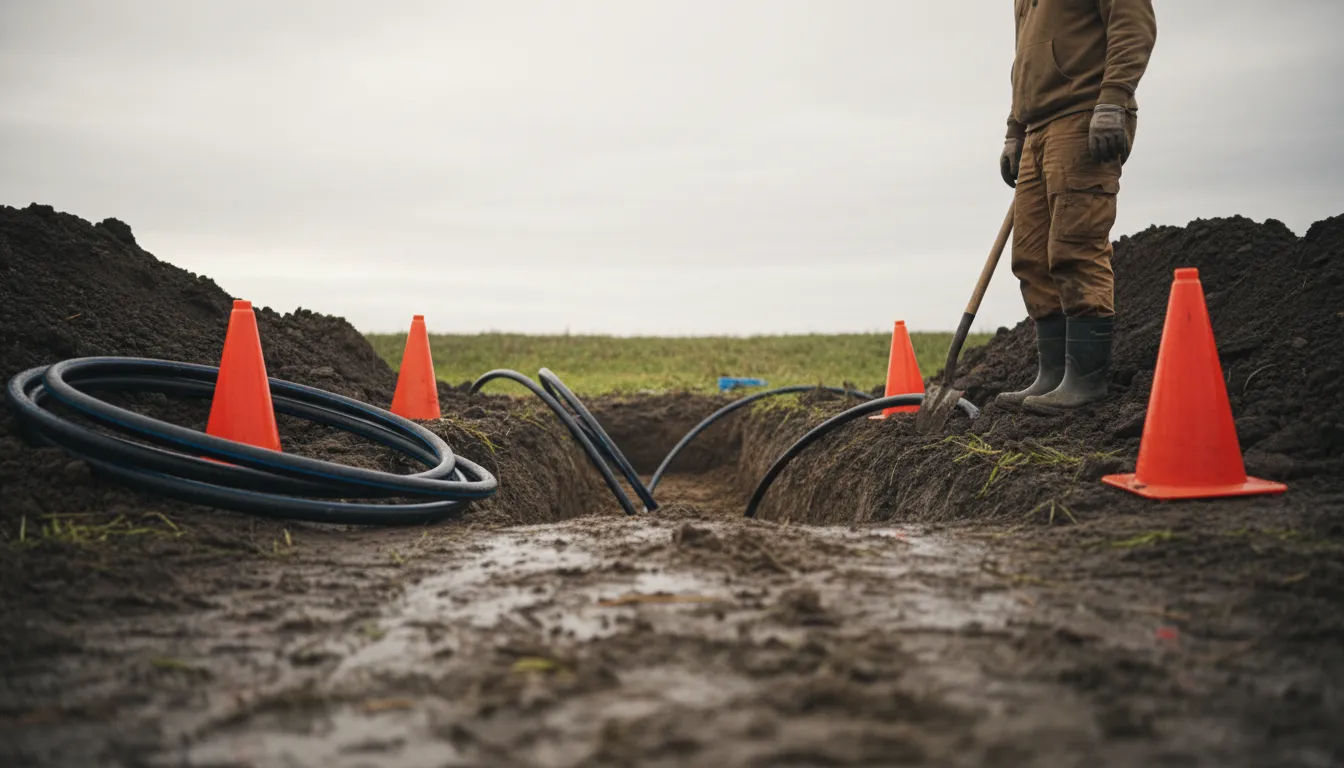
Closed-Loop Systems This is the most common residential setup, using a continuous loop of high-density polyethylene (HDPE) pipe buried underground. A water-based solution circulates within this sealed loop to exchange heat with the earth.
- Horizontal Closed Loop: Pipes are laid in trenches dug 6 feet or deeper. This method requires a larger amount of available land but is often less expensive than drilling if the soil conditions are suitable.
- Vertical Closed Loop: For homes with smaller lots, vertical loops are the ideal solution. Boreholes are drilled 100 to 400 feet deep, and U-shaped loops of pipe are inserted and grouted. While drilling costs are higher, vertical loops often provide superior performance and require minimal surface area 2.
Open-Loop Systems This configuration uses groundwater from a well as the heat exchange fluid. Water is pumped from the well, passes through the heat pump, and is then discharged to a pond, stream, or second "return" well. This system can be very efficient but requires an adequate, consistent supply of clean water (typically 4-8 gallons per minute) and compliance with local codes regarding water discharge 3.
Distribution Within the Home Most geothermal installations in Allen use an air-to-air system, where the heat pump conditions air and distributes it through the home's existing ductwork. Alternatively, an air-to-water (or hydronic) system can be used to circulate warm or cool water through radiant floor tubing or fan coil units 4.
The Geothermal Installation Process in Allen
Installing a ground-source heat pump is a significant project that requires specialized expertise. Here's a typical step-by-step overview of what homeowners can expect.
- Site Assessment and Design: A qualified installer will evaluate your property. This includes analyzing soil and rock composition, available land, and access for equipment. This assessment is critical for determining the optimal loop type (horizontal vs. vertical) and sizing the system correctly for your home's heating and cooling loads.
- Ground Loop Installation: This is the major excavation phase.
- For vertical systems, a drilling rig will bore the necessary deep holes. The loop pipes are inserted, and the holes are filled with a special grout to ensure good thermal contact with the earth.
- For horizontal systems, an excavator digs long trenches. The piping is laid in the trenches before they are carefully backfilled 5.
- Heat Pump and Indoor Connection: The indoor geothermal unit is installed, typically in a basement, utility room, or garage. It is connected to the underground loop field and integrated with your home's ductwork or hydronic distribution system. Electrical and control connections are finalized 6.
- System Testing and Commissioning: The entire system is charged, pressurized, and tested for leaks and proper operation. The installer will ensure the heat pump is communicating correctly with the loop and the home's thermostat.
Find the perfect geothermal heat pump contractors for your needs
Get personalized recommendations and expert advice
Costs, Savings, and Return on Investment
Understanding the financial picture is key when considering a geothermal system. While the upfront cost is higher than a conventional HVAC system, the long-term savings and incentives create a compelling value proposition.
Installation Costs Total installed costs for a complete geothermal system in Allen typically range from $12,000 to over $45,000. A common way to estimate is by the ton of capacity (a measure of cooling power), with costs generally between $4,000 and $8,000 per ton. Vertical loop systems are usually at the higher end of this range due to the drilling involved, while horizontal loops may be less expensive if land is available 7.
Energy Savings and Payback This is where geothermal systems shine. By slashing energy consumption for heating and cooling by 40-60%, homeowners often see a dramatic reduction in their utility bills 8 9 10. For example, a 3-ton system costing around $22,500 to install might save a household $150 to $300 per month on energy costs. With these savings, the system can often pay for itself through lower utility bills in an estimated 5 to 10 years8 9 11. After the payback period, the ongoing savings go directly into your pocket.
Longevity and Incentives The components of a geothermal system are known for their durability. The indoor heat pump unit often lasts 25 years or more, while the underground polyethylene piping is warrantied for 50+ years and can potentially last for generations. To help with the initial investment, be sure to investigate available federal tax credits for residential energy efficiency, as well as any rebate programs offered by local utility companies in the Allen area.
Is Geothermal Right for Your Allen Home?
Geothermal heat pump technology offers a reliable, quiet, and sustainable solution for home comfort. It's an especially smart long-term investment for homeowners planning to stay in their homes long enough to realize the full financial return, those interested in reducing their carbon footprint, and anyone looking to eliminate their dependence on fossil fuels for heating. The first step is a professional consultation to evaluate your specific property and calculate a personalized estimate of costs and savings.
Frequently asked questions
Sources
Footnotes
-
Geothermal (Ground Source) Heat Pumps - NY.gov - https://cleanheat.ny.gov/geothermal-heat-pumps/ ↩
-
How It Works: The Geothermal Installation Process - https://www.awheatingandcooling.com/blog/geothermal-service/how-it-works-the-geothermal-installation-process/ ↩
-
FAQs • What types of ground-source heat pumps and configurat - https://concordma.gov/FAQ.aspx?QID=484 ↩
-
Geothermal Heat Pumps - Department of Energy - https://www.energy.gov/energysaver/geothermal-heat-pumps ↩
-
Geothermal Heating, Cooling, and Hot Water Systems - https://igshpa.org/wp-content/uploads/Homeowners-Guide-to-Geothermal.pdf ↩
-
Geothermal heating & cooling, heat pumps, heat exchange ... - https://aztechgeo.com/residential-geothermal/how-it-works/ ↩
-
How Do Geothermal Systems Work for Residential Homes? - https://www.davisheat.com/blog/how-do-geothermal-systems-work-for-residential-homes/ ↩
-
How Does A Geothermal Heat Pump Work? Complete 2025 Guide - https://solartechonline.com/blog/how-does-geothermal-heat-pump-work/ ↩ ↩2
-
Geothermal HVAC: Feasibility & ROI - https://jupitairhvac.com/blog/geothermal-hvac-systems-feasibility-north-texas/ ↩ ↩2
-
5 Things You Should Know about Geothermal Heat Pumps - https://www.energy.gov/cmei/articles/5-things-you-should-know-about-geothermal-heat-pumps ↩
-
Guide to Geothermal Heat Pumps - https://www.energy.gov/sites/prod/files/guide_to_geothermal_heat_pumps.pdf ↩