
Find the Best Geothermal Heat Pump Contractors for Your Business
No obligation • Fast responses • Nationwide coverage

Why you can trust HVAC Firms
HVAC Firms is a leading United States resource for evaluating HVAC service providers. Our team researches companies, checks credentials, and reviews customer feedback to present clear, unbiased information. Listings and rankings are based on merit, and companies cannot pay to change our editorial content.
Search providers near you
Top Geothermal Heat Pump Contractors in Mentor, Ohio Ranked
Geothermal heat pumps, also known as ground-source heat pumps, are a highly efficient method for heating and cooling your Mentor home by leveraging the stable temperatures found underground. This technology matters because it can dramatically reduce your energy bills and environmental footprint compared to traditional furnaces and air conditioners. This guide will help you understand how geothermal systems work, the installation process, and the long-term benefits, so you can make an informed decision and connect with qualified local professionals for your project.
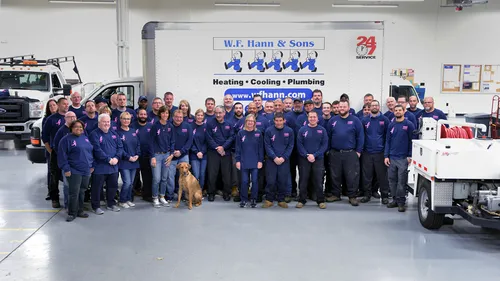
W.F. Hann and Sons
26401 Miles Rd, Warrensville Heights, OH 44128
W.F. Hann and Sons is an HVAC and plumbing company serving Cleveland, OH, and the surrounding Northeast Ohio area. Established in 1907, they offer heating and cooling services including furnace, boiler, heat pump, and air conditioning repair and installation. Their team is factory-trained and certified, providing emergency services and maintenance for residential and commercial customers. The company also handles plumbing needs such as water heater installation and drain cleaning. W.F. Hann and Sons is known for upfront pricing and detailed proposals, with technicians available around the clock for urgent repairs.

Geothermal Professionals
15003 Kinsman Rd, Middlefield, OH 44062
Geothermal Professionals is a geothermal heat pump contractor based in Cleveland, OH, specializing in geothermal HVAC installation, maintenance, and repair. With over 20 years of experience, they provide fully integrated services including system design, loop field drilling, equipment installation, and ongoing maintenance using their own licensed staff without subcontractors. Their expertise includes installing the Hydron Module geothermal system, known for durability and efficiency, which supports sustainable and energy-independent heating and cooling solutions for residential properties.

Kreyman Quality Heating & Cooling
4959 Commerce Pkwy, Warrensville Heights, OH 44128
Kreyman Quality Heating & Cooling is a family-owned HVAC company serving Cleveland, OH, and the surrounding areas within a 50-mile radius. Since 1995, they have provided commercial and residential heating, ventilation, and air conditioning design, installation, and service. Their expertise includes geothermal heat pump systems, offering energy-efficient solutions for homes. Kreyman Quality Heating & Cooling also handles furnace repairs, HVAC tune-ups, and emergency heating and cooling services.
Mantua Heating Cooling & Geothermal, Inc
12602 Frost Rd, Mantua, OH 44255
Mantua Heating Cooling & Geothermal, Inc is an HVAC company serving Cleveland, OH, specializing in geothermal technology alongside traditional heating and cooling systems. They provide installation, repair, maintenance, and duct cleaning services for furnaces, air conditioners, heat pumps, and water heaters. The company focuses on using earth-friendly methods to reduce carbon footprints while educating customers about their heating and cooling systems.
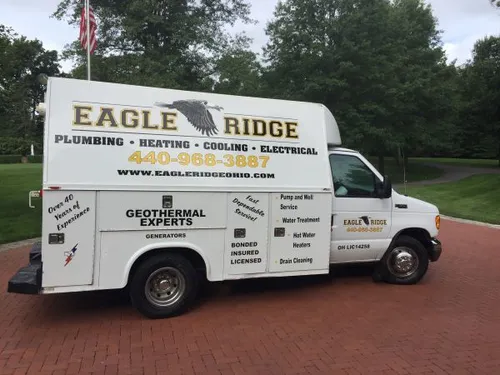
Eagle Ridge Contracting
8595 Plank Rd, Montville, OH 44064
Eagle Ridge Contracting is a service provider based in Cleveland, OH, offering a wide range of heating, cooling, plumbing, and electrical services. Their expertise includes air conditioning repair, furnace and boiler repair, geothermal heat pump installation, and indoor air quality solutions. The company is equipped to handle emergency situations with 24-hour emergency service availability. They also provide specialized capabilities such as radiant floor heating, snow melt systems, water treatment, and air purification technologies. Eagle Ridge Contracting emphasizes safety with PPE protocols and a customer-driven approach to service.
How Geothermal Systems Work in Northeast Ohio
A geothermal heating and cooling system operates on a simple principle of heat transfer rather than combustion. Beneath the frost line in Mentor, the earth maintains a relatively constant temperature between 50°F and 60°F year-round. A geothermal system uses this stable thermal resource as a source of heat in the winter and a place to reject heat in the summer.
The process involves a closed-loop of fluid (usually a water and antifreeze mixture) circulating through high-density polyethylene pipes buried in your yard. During the heating season, this fluid absorbs the warmer ground heat and carries it to a heat pump unit inside your home. The heat pump concentrates this thermal energy and distributes warm air through your existing ductwork 1. For cooling, the cycle reverses: the system extracts heat from your indoor air and transfers it into the cooler ground loop. This elegant exchange is what allows geothermal heat pumps to achieve remarkable efficiency, as they move existing heat rather than generating it through fuel combustion or intense electrical resistance.
Types of Ground Loops for Mentor Properties
The underground piping, or ground loop, is the heart of the system. The right type for your Mentor home depends on your lot size, soil conditions, and local geology. There are three primary configurations:
Closed-Loop Horizontal Systems This is often the most cost-effective option if you have sufficient land. Trenchers or backhoes dig trenches 5 to 8 feet deep across a large area of your yard, typically requiring at least half an acre of suitable land 2 3. Pipes are laid in these trenches in a slinky-coil or straight-run pattern. While this method is generally faster and less expensive than drilling, it is more disruptive to your landscape during installation 4.
Closed-Loop Vertical Systems For properties with limited space, such as smaller residential lots common in many Mentor neighborhoods, vertical loops are the ideal solution. A drilling rig creates boreholes typically 150 to 250 feet deep. Depending on your home's heating and cooling load, two to six of these boreholes may be required, spaced about 15-20 feet apart. U-shaped loops of pipe are inserted into each hole, which are then grouted for optimal thermal conductivity. Vertical installation has less surface impact than trenching but is a more specialized process that can take several days.
Open-Loop Systems Less common in residential settings, an open-loop system uses groundwater from a well or a pond as the direct heat exchange fluid. After passing through the heat pump, the water is returned to a second well or discharged to the surface. This option is highly efficient but entirely dependent on having an adequate supply of suitable water and complying with local codes regarding water use and discharge 5.
Find the perfect geothermal heat pump contractors for your needs
Get personalized recommendations and expert advice
The Geothermal Installation Process: What to Expect
Installing a ground-source heat pump is a significant project that requires careful planning and expert execution. Here's a step-by-step overview of what a typical installation in Mentor entails:
-
Site Evaluation and Load Calculation: A qualified installer will begin with a thorough assessment of your home. This includes calculating the precise heating and cooling loads (Manual J calculation), evaluating your property's soil composition and rock content, and determining the best location for the loop field and indoor unit. This step is crucial for correctly sizing the system.
-
Loop Field Installation: This is the major outdoor work. For a horizontal system, heavy equipment will trench your yard. For a vertical system, a drill rig will be brought in. The piping is carefully laid or inserted, and all connections are pressure-tested to ensure there are no leaks before the trenches are backfilled or the boreholes are grouted 6.
-
Indoor Unit Installation: The geothermal heat pump unit itself is about the size of a traditional furnace. It is typically installed in a mechanical room, basement, or utility closet. Your installer will connect the refrigerant lines and the water lines from the ground loop to this unit.
-
Ductwork and Electrical Connection: The heat pump is connected to your home's existing ductwork to distribute conditioned air. If your ducts are inadequate, modifications or replacements may be necessary. Finally, a licensed electrician will connect the unit to your home's electrical panel 7.
-
System Startup and Commissioning: Once everything is connected, the installer will charge the system with refrigerant, power it up, and test all modes of operation. They will calibrate the thermostat and ensure the system is cycling properly for optimal efficiency and comfort.
Benefits and Financial Incentives for Mentor Homeowners
Investing in a geothermal system offers compelling advantages that go beyond simple temperature control.
-
Substantial Energy Savings: By tapping into the earth's free thermal energy, geothermal heat pumps are 300-600% efficient, meaning they move three to six units of heat for every one unit of electricity used. This can translate to a reduction of 70% or more in your home's heating, cooling, and hot water energy consumption compared to conventional systems 8 9. For a typical Mentor home, this means significantly lower utility bills year-round.
-
Major Federal Tax Credit: The Inflation Reduction Act provides a 30% federal tax credit for qualified geothermal heat pump installations, with no upper limit, through 2032 10 11 12. This credit is applied directly to your income tax liability, dramatically reducing the net installed cost of the system. There may also be additional rebates or incentives from local utilities in Ohio.
-
Exceptional Longevity and Low Maintenance: The indoor components of a geothermal system, like the heat pump, have a lifespan of 20 years or more. The underground polyethylene loop field is incredibly durable and often comes with warranties of 50 years or more, as it is protected from the weather and corrosion. With fewer mechanical parts exposed to the elements, maintenance is generally simpler than for an outdoor air conditioner or furnace.
-
Quiet Operation and Increased Comfort: With no loud outdoor condenser unit, geothermal systems operate very quietly. They also provide exceptionally consistent temperatures and better humidity control than forced-air systems that rely on variable outdoor air temperatures 13.
Frequently asked questions
Sources
Footnotes
-
Geothermal Heating And Cooling System, Toledo, Ohio - Services - https://www.tandmheatingandair.com/geothermal-heating-cooling/ ↩
-
Geothermal Heat Pump Installation: What To Expect For Your ... - https://jomory.com/geothermal-heat-pump-installation-what-to-expect-for-your-property/ ↩
-
Geothermal Installation Steps Explained - https://ultrageothermal.com/geothermal-installation-steps-explained/ ↩
-
Geothermal Basics - https://geoexchange.org/geothermal-basics/ ↩
-
Geothermal Heat Pumps - Department of Energy - https://www.energy.gov/energysaver/geothermal-heat-pumps ↩
-
Geothermal Heating, Cooling, and Hot Water Systems - https://igshpa.org/wp-content/uploads/Homeowners-Guide-to-Geothermal.pdf ↩
-
Geothermal Heat Pump Installation (Steps, Benefits...) - Panther HVAC - https://pantherhvac.com/blog/geothermal-heat-pump-installation/ ↩
-
How Does A Geothermal Heat Pump Work? Complete 2025 Guide - https://solartechonline.com/blog/how-does-geothermal-heat-pump-work/ ↩
-
Geothermal Systems: Stack's Energy Efficiency in Ohio - https://stackheating.com/energy-savings-2/geothermal-systems-energy-efficiency-secret-weapon/ ↩
-
5 Things You Should Know about Geothermal Heat Pumps - https://www.energy.gov/cmei/articles/5-things-you-should-know-about-geothermal-heat-pumps ↩
-
Guide to Geothermal Heat Pumps - https://www.energy.gov/sites/prod/files/guide_to_geothermal_heat_pumps.pdf ↩
-
Everything You Need to Know About Geothermal Heat Pumps - https://www.familyhandyman.com/article/everything-you-need-to-know-about-geothermal-heat-pumps/ ↩
-
Geothermal Heating and Cooling: What You Should Know - https://www.covenantheatingandcooling.com/blog/geothermal-service/geothermal-heating-and-cooling/ ↩