Find the Best Geothermal Heat Pump Contractors for Your Business
No obligation • Fast responses • Nationwide coverage

Why you can trust HVAC Firms
HVAC Firms is a leading United States resource for evaluating HVAC service providers. Our team researches companies, checks credentials, and reviews customer feedback to present clear, unbiased information. Listings and rankings are based on merit, and companies cannot pay to change our editorial content.
Search providers near you
Top Geothermal Heat Pump Contractors in Columbus, Ohio Ranked
Geothermal heat pumps, also known as ground-source heat pumps, are a highly efficient method for heating and cooling your home by leveraging the earth's stable underground temperature. This technology matters because it can dramatically reduce your energy bills and environmental footprint while providing consistent comfort year-round. For Columbus residents, finding a qualified local installer is the first step toward harnessing this renewable energy source for your property.
Foust Plumbing & Heating
321 W Bigelow Ave Suite 200, Plain City, OH 43064
Foust Plumbing & Heating is a family-owned HVAC and plumbing contractor serving Columbus, OH, and surrounding areas. They offer installation, repair, and maintenance services for air conditioning, furnaces, heat pumps, boilers, and geothermal heat pumps. With over 40 years of experience, they work with all major brands and provide emergency service availability. Their team is licensed, insured, and certified, focusing on transparent pricing and skilled workmanship.
Westin Air Heating and Cooling - Sunbury Ohio
725 Kintner Pkwy, Sunbury, OH 43074
Westin Air Heating and Cooling - Sunbury Ohio provides a range of HVAC services including installation, repair, and maintenance of air conditioners, furnaces, heat pumps, and geothermal systems in Columbus, OH. The company also offers indoor air quality solutions and commercial HVAC services. Westin Air is equipped to handle emergency repairs 24/7 and stocks common replacement parts for quick service. Established in 2005, Westin Air has over 18 years of experience serving the Sunbury and Columbus area, ensuring reliable heating and cooling solutions for homes and businesses.
Patriot Air Comfort Systems
4025 Lakeview Crossing, Groveport, OH 43125
Patriot Air Comfort Systems is an HVAC company serving Columbus, OH, and the Central Ohio area. Since 2004, they have provided installation, maintenance, and repair services for air conditioning, furnaces, heat pumps, geothermal systems, and ductless mini-split systems. Their NATE-certified technicians are trained to handle a wide range of HVAC needs, including thermostat installation and system tune-ups. Patriot Air offers worry-free maintenance plans and emphasizes clear communication with customers. They also provide 24/7 emergency repair services to address urgent heating and cooling issues promptly.
Cosby Heating and Cooling
10 College St, Mt Vernon, OH 43050
Cosby Heating and Cooling is an HVAC company based in Columbus, OH, serving Mt. Vernon and surrounding areas. They offer a range of services including air conditioning and furnace repair, HVAC installation, geothermal heat pump installation, indoor air quality solutions, and system tune-ups. The company emphasizes energy-efficient heating and cooling solutions tailored to individual home needs. They provide emergency services and have fully stocked service trucks to handle most repairs on the first visit. Cosby Heating and Cooling also offers annual service agreements that include tune-ups, discounts on repairs and parts, and labor warranties to help maintain system efficiency and longevity.
Bassett Services: Heating, Cooling, Plumbing, & Electrical
4171 Arlingate Plaza, Columbus, OH 43228
Bassett Services: Heating, Cooling, Plumbing, & Electrical provides comprehensive HVAC, plumbing, and electrical services in Columbus, OH. They offer repair, maintenance, and installation for furnaces, boilers, heat pumps, air conditioners, mini-splits, geothermal systems, and indoor air quality equipment. Their skilled technicians also handle plumbing issues like leak detection, drain cleaning, and water heater services, as well as electrical work including lighting, circuit breaker repairs, rewiring, surge protection, EV charger installation, and generator setup. Bassett Services is known for tailored solutions that meet the specific needs of Columbus residents, ensuring comfort and safety throughout the year.
How Geothermal Systems Work in Columbus
A geothermal system uses the consistent temperature of the earth just below the frost line as a heat source in winter and a heat sink in summer. In Columbus, Indiana, the soil maintains a relatively stable temperature between 50-55°F throughout the year, making it an ideal resource for this technology.
The core of the system is a network of pipes, called a ground loop, buried in your yard. A water-based solution circulates through this loop. During the heating season, this fluid absorbs the earth's mild warmth and carries it to an indoor heat pump unit. The heat pump concentrates this low-grade heat and distributes warm air throughout your home via your existing ductwork. In the cooling season, the process reverses: the system extracts heat from your home, transfers it to the circulating fluid, and dissipates it into the cooler ground 1. This elegant exchange, powered by the earth's natural thermal energy, is what makes geothermal heating and cooling so remarkably efficient.
Types of Ground Loop Systems
The design of the underground loop is critical and depends entirely on your property's characteristics. There are three primary configurations, each with its own advantages.
Horizontal Closed-Loop
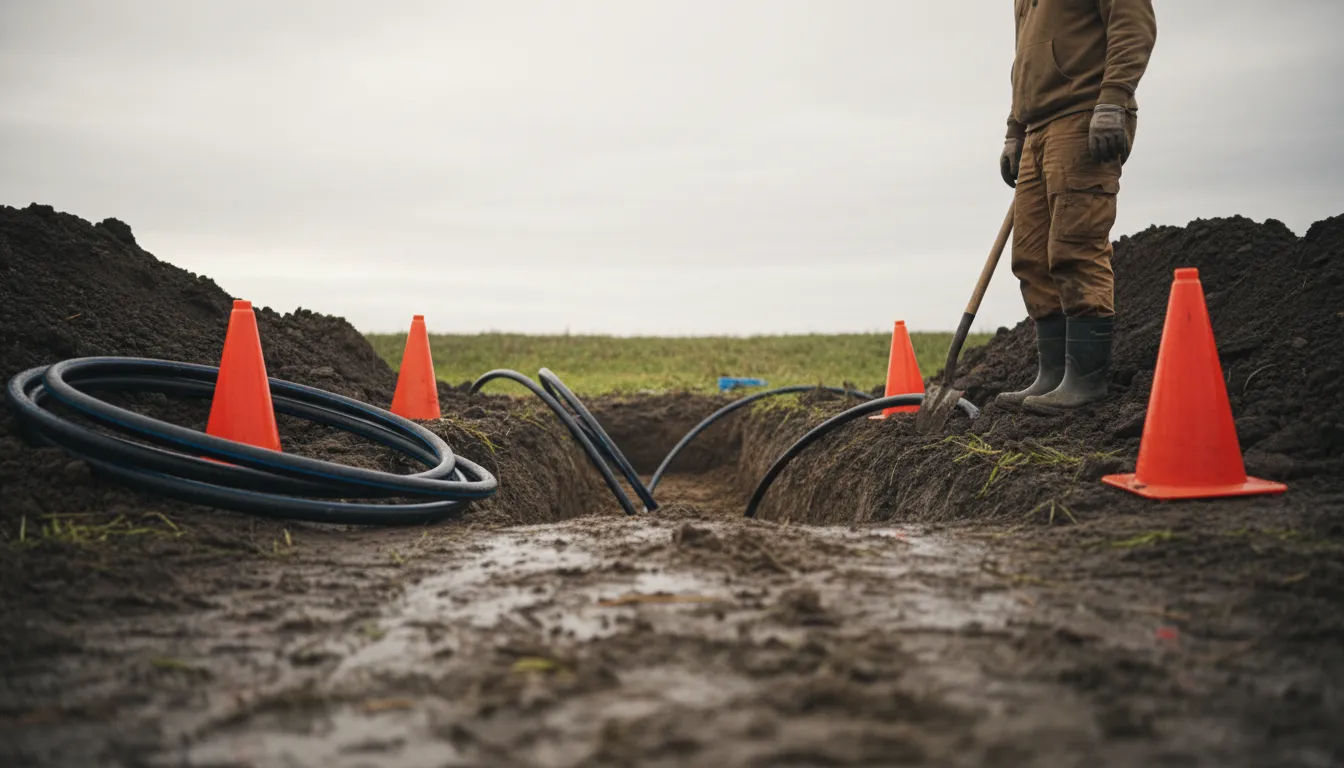
This is often the most cost-effective option if you have sufficient land. Pipes are laid in trenches that are typically 5 to 8 feet deep. A horizontal system requires a significant amount of open space-often a quarter-acre or more-as the trenches need to be long enough to provide adequate heat exchange (usually 100 to 250 feet of pipe per ton of system capacity) 2. The installation involves excavating these trenches, laying the piping in a serpentine pattern, and backfilling. While this method involves considerable temporary disruption to your yard, it generally avoids the higher costs associated with deep drilling.
Vertical Closed-Loop
For properties with limited space, such as smaller urban or suburban lots in Columbus, a vertical loop is the standard solution. Instead of trenches, installers use a drilling rig to bore deep holes, typically 150 to 400 feet down 3. U-shaped pipes are inserted into these boreholes, which are then grouted. A residential system might require two to six of these vertical boreholes, spaced about 15-20 feet apart 4. The primary advantage is minimal surface disruption, as the drilling rig only needs access to a small area for each hole. The trade-off is a higher installation cost due to the specialized drilling equipment and labor required.
Pond/Lake Loop (Open or Closed)
If you have a suitable, accessible body of water on your property, this can be the most efficient and least expensive loop option 5. A closed-loop system involves coiling long sections of pipe and submerging them at the bottom of the pond or lake, where the water temperature remains stable. An open-loop system, which is less common for residential use, would draw water from the well or pond, run it through the heat pump, and then discharge it. The pond loop avoids excavation and drilling altogether, but its feasibility is entirely dependent on having an adequate water source with the right depth and quality.
The Installation Process: What to Expect
Installing a geothermal system is a significant project that transforms your home's infrastructure. Understanding the steps can help you prepare.
-
Site Assessment and Design: A qualified installer will first conduct a thorough evaluation of your property. They will assess soil composition, available land, rock content, and the presence of water tables or ponds. This information, along with a detailed calculation of your home's heating and cooling loads (Manual J calculation), determines the optimal loop type and size for your specific situation.
-
Loop Field Installation: This is the major outdoor phase. For a horizontal system, an excavator will dig the network of trenches. For a vertical system, a drilling rig will arrive to create the boreholes. Pipe is then laid or inserted, all connections are pressure-tested for leaks, and the trenches or boreholes are backfilled with a special grout or soil that ensures good thermal conductivity.
-
Indoor Unit Installation: The geothermal heat pump unit itself is typically installed indoors, in a basement, utility room, or garage. It resembles a traditional furnace or air handler. Your installer will connect it to the ground loop piping and integrate it with your home's existing ductwork or radiant floor system to distribute conditioned air 6.
-
System Startup and Restoration: Once everything is connected, the system is charged with fluid, powered up, and tested for proper operation. The contractor will then begin restoring your yard. While seeding and landscaping can bring the surface back quickly, the soil may take a full growing season to settle completely.
Find the perfect geothermal heat pump contractors for your needs
Get personalized recommendations and expert advice
Costs and Long-Term Savings
The upfront investment for a geothermal system is its most significant barrier. For a typical Columbus home, you can expect a full system installation to range from $10,000 to over $30,000. The final cost is highly variable, driven by the loop type (vertical being more expensive than horizontal), the size of your home, soil conditions, and the complexity of connecting to your existing ductwork.
However, this initial cost must be weighed against exceptional long-term savings on utility bills. Geothermal heat pumps are 300% to 500% efficient, meaning they move three to five units of heat for every one unit of electricity they consume 7 8. This can translate to a reduction of 30% to 70% on your heating and cooling bills compared to a standard air-source heat pump or conventional furnace and air conditioner system 9 7. Over the 20-25 year lifespan of the ground loop and the 15+ year lifespan of the heat pump unit, these savings can fully offset the higher initial cost. Furthermore, these systems are renowned for their durability, with most of the components protected indoors or underground, leading to lower maintenance costs and fewer repairs over time.
Why Geothermal is a Smart Choice for Columbus, IN
Indiana's climate, with its hot, humid summers and cold winters, is perfectly suited for geothermal technology. The state's stable subterranean temperatures provide a reliable, renewable energy source that a ground-source heat pump can tap into regardless of the weather above 10. While the upfront cost is substantial, the combination of dramatic energy savings, increased home comfort, reduced carbon footprint, and potential increases in property value makes it a compelling long-term investment for Columbus homeowners who plan to stay in their homes for many years.
Frequently asked questions
Sources
Footnotes
-
Geothermal Heating And Cooling System, Toledo, Ohio - Services - https://www.tandmheatingandair.com/geothermal-heating-cooling/ ↩
-
Geothermal Heating, Cooling, and Hot Water Systems - https://igshpa.org/wp-content/uploads/Homeowners-Guide-to-Geothermal.pdf ↩
-
Geothermal Heat Pump Installation: What To Expect For Your ... - https://jomory.com/geothermal-heat-pump-installation-what-to-expect-for-your-property/ ↩
-
Geothermal heat pumps: The ultimate guide to ground-source ... - https://termo-plus.com/blog/geothermal-ultimate-guide-to-ground-source-heat-pumps/ ↩
-
How Do Geothermal Systems Work for Residential Homes? - https://www.davisheat.com/blog/how-do-geothermal-systems-work-for-residential-homes/ ↩
-
Geothermal Heat Pumps | WBDG - https://www.wbdg.org/resources/geothermal-heat-pumps ↩
-
Geothermal Heat Pumps - EnergySmart CNY - https://www.energysmartcny.org/heat-pumps/geothermal/ ↩ ↩2
-
Geothermal Heat Pump Guide: Installation Costs, Types And Benefits - https://modernize.com/hvac/heating-repair-installation/heat-pump/geothermal ↩
-
Your Step-by-Step Guide to Installing a Geothermal System in Indiana Before the 2025 Tax Credit Deadline - https://absolutecomfort.org/install-geothermal-system-indiana-2025-guide/ ↩
-
Geothermal Cooling in Indiana: How It Works and Is It Worth It? - https://absolutecomfort.org/geothermal-cooling-in-indiana-how-it-works-and-is-it-worth-it/ ↩