Find the Best Geothermal Heat Pump Contractors for Your Business
No obligation • Fast responses • Nationwide coverage

Why you can trust HVAC Firms
HVAC Firms is a leading United States resource for evaluating HVAC service providers. Our team researches companies, checks credentials, and reviews customer feedback to present clear, unbiased information. Listings and rankings are based on merit, and companies cannot pay to change our editorial content.
Search providers near you
Best Geothermal Heat Pump Contractors in Ohio Ranked
A geothermal heat pump is a highly efficient heating and cooling system that uses the earth's stable underground temperature to regulate your home's climate. For Ohio homeowners, this technology offers a reliable way to slash energy bills and reduce environmental impact, especially given the state's ideal ground conditions. This guide explains how geothermal systems work in Ohio, what to expect during installation, and how to connect with qualified local professionals who can assess your property and provide expert service.
Foust Plumbing & Heating
321 W Bigelow Ave Suite 200, Plain City, OH 43064
Foust Plumbing & Heating is a family-owned HVAC and plumbing contractor serving Columbus, OH, and surrounding areas. They offer installation, repair, and maintenance services for air conditioning, furnaces, heat pumps, boilers, and geothermal heat pumps. With over 40 years of experience, they work with all major brands and provide emergency service availability. Their team is licensed, insured, and certified, focusing on transparent pricing and skilled workmanship.
Westin Air Heating and Cooling - Sunbury Ohio
725 Kintner Pkwy, Sunbury, OH 43074
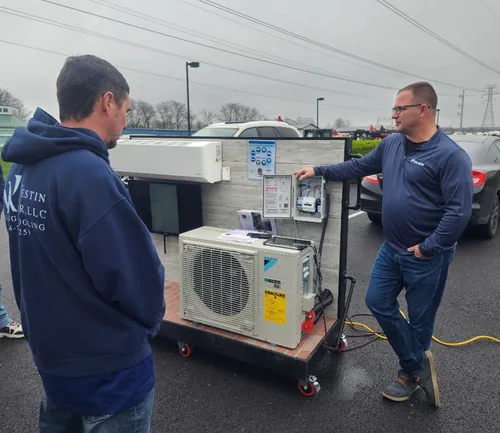
Westin Air Heating and Cooling - Sunbury Ohio provides a range of HVAC services including installation, repair, and maintenance of air conditioners, furnaces, heat pumps, and geothermal systems in Columbus, OH. The company also offers indoor air quality solutions and commercial HVAC services. Westin Air is equipped to handle emergency repairs 24/7 and stocks common replacement parts for quick service. Established in 2005, Westin Air has over 18 years of experience serving the Sunbury and Columbus area, ensuring reliable heating and cooling solutions for homes and businesses.
W.F. Hann and Sons
26401 Miles Rd, Warrensville Heights, OH 44128
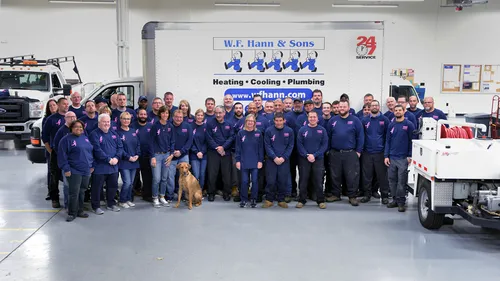
W.F. Hann and Sons is an HVAC and plumbing company serving Cleveland, OH, and the surrounding Northeast Ohio area. Established in 1907, they offer heating and cooling services including furnace, boiler, heat pump, and air conditioning repair and installation. Their team is factory-trained and certified, providing emergency services and maintenance for residential and commercial customers. The company also handles plumbing needs such as water heater installation and drain cleaning. W.F. Hann and Sons is known for upfront pricing and detailed proposals, with technicians available around the clock for urgent repairs.
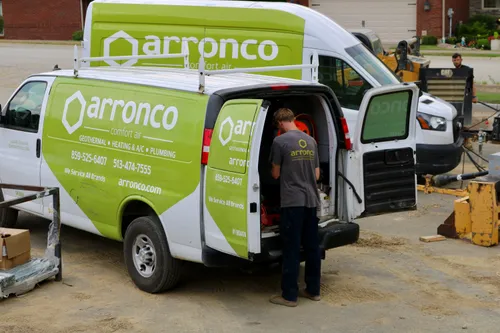
Arronco Comfort Air
5578 Limaburg Rd, Burlington, KY 41005
Arronco Comfort Air is a family-owned and operated HVAC and plumbing company serving Cincinnati, OH, and surrounding areas since 1984. They provide a range of services including air conditioning, heating, geothermal system installation, and plumbing. Their team is experienced in installing and repairing furnaces, heat pumps, mini splits, and geothermal heat pumps, offering comprehensive heating and cooling solutions. With over three decades of expertise in geothermal systems, Arronco Comfort Air supports energy-efficient home climate control.
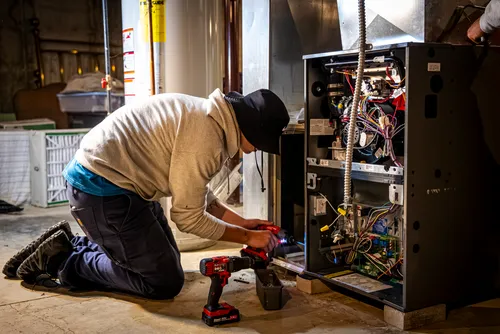
Sweet Life Heating & Cooling
5555 N Bend Rd Suite C, Burlington, KY 41005
Sweet Life Heating & Cooling is a family-owned HVAC company serving Cincinnati, OH. They provide heating and cooling services including installation and repair of air conditioners, furnaces, heat pumps, boilers, mini splits, and geothermal heat pumps. The company focuses on community connections and treats each home with care. Their offerings include HVAC tune-ups and comprehensive system installations to maintain comfort throughout the year.
How Geothermal Heat Pumps Work in Ohio's Climate
Unlike traditional systems that burn fuel or exchange heat with fluctuating outdoor air, a geothermal system, or ground-source heat pump, exchanges heat with the earth. A loop of pipes buried in your yard circulates a fluid that absorbs the ground's consistent temperature (typically 50-55°F in Ohio). In winter, the system extracts this heat and concentrates it to warm your home. In summer, the process reverses, pulling heat from your house and depositing it into the cooler ground.
Ohio's climate is particularly well-suited for geothermal efficiency. While air temperatures swing from hot summers to cold winters, the ground just a few feet below the surface remains at a nearly constant temperature year-round. This stability means your geothermal system doesn't have to work as hard as an air-source heat pump during extreme weather, leading to superior efficiency and consistent comfort.
Key Benefits for Ohio Homeowners
Installing a geothermal heating and cooling system in Ohio comes with significant advantages:
- Substantial Energy Savings: Geothermal systems can be 300-600% efficient, meaning they move three to six units of heat for every unit of electricity used. This can translate to a 30-70% reduction in heating costs and 20-50% savings on cooling compared to conventional systems.
- Lower Operating Costs: The high efficiency directly results in lower monthly utility bills, providing long-term financial relief.
- Increased Home Value: Studies indicate that homes with geothermal systems often have higher resale values. The promise of low energy bills is a powerful selling point.
- Environmental Friendliness: By leveraging renewable thermal energy from the ground, these systems drastically reduce your home's carbon footprint and reliance on fossil fuels.
- Durability and Longevity: The indoor components of a geothermal system typically last 20-25 years, while the underground loop piping is often guaranteed for 50 years and can last for generations.
- Quiet Operation and Comfort: With no noisy outdoor condenser unit, operation is very quiet. Systems also provide exceptionally even heating and cooling without drafts.
Understanding Installation Costs and Financial Incentives
The upfront cost of a complete geothermal system installation in Ohio typically ranges from $15,000 to over $40,0001 2. This wide range depends on your home's size, the type of ground loop system, soil conditions, and the complexity of the installation. Drilling for vertical loops is a major cost component. A common cost estimate is around $2,500 per ton for the equipment, with a 3-ton unit costing approximately $7,500 before installation and loop field work 1 2.
The good news is that significant financial incentives are available to make this investment more accessible:
- Federal Tax Credit: You can claim a 30% Investment Tax Credit (ITC) on the total cost of installing a qualifying geothermal heat pump system, including labor. This credit applies through 2034 3.
- Ohio Home Energy Savings Program: This state program offers two primary rebate avenues:
- HEEHRA Rebates: Provides point-of-sale rebates for appliance upgrades, including heat pumps, with a cap of $8,000.
- HOMES Rebates: Offers rebates for comprehensive home energy retrofits based on the energy saved. Rebates can range from $2,000 to $4,000 or more for deep energy savings 4.
With these incentives and the ongoing energy savings, many Ohio homeowners find the payback period for their geothermal system is between 5 and 10 years.
Find the perfect geothermal heat pump contractors for your needs
Get personalized recommendations and expert advice
The Installation Process: What to Expect
A proper geothermal installation is a multi-step process that ensures optimal system performance and longevity.
- Site Evaluation and Load Calculation: A qualified contractor will assess your property, evaluating soil composition, available land, and access for drilling equipment. They will also perform a Manual J calculation to determine your home's precise heating and cooling needs.
- System Design and Permitting: The contractor designs the loop field (horizontal or vertical) and selects the appropriate heat pump unit. They will also handle necessary permits, which may include local building, plumbing, and excavation permits.
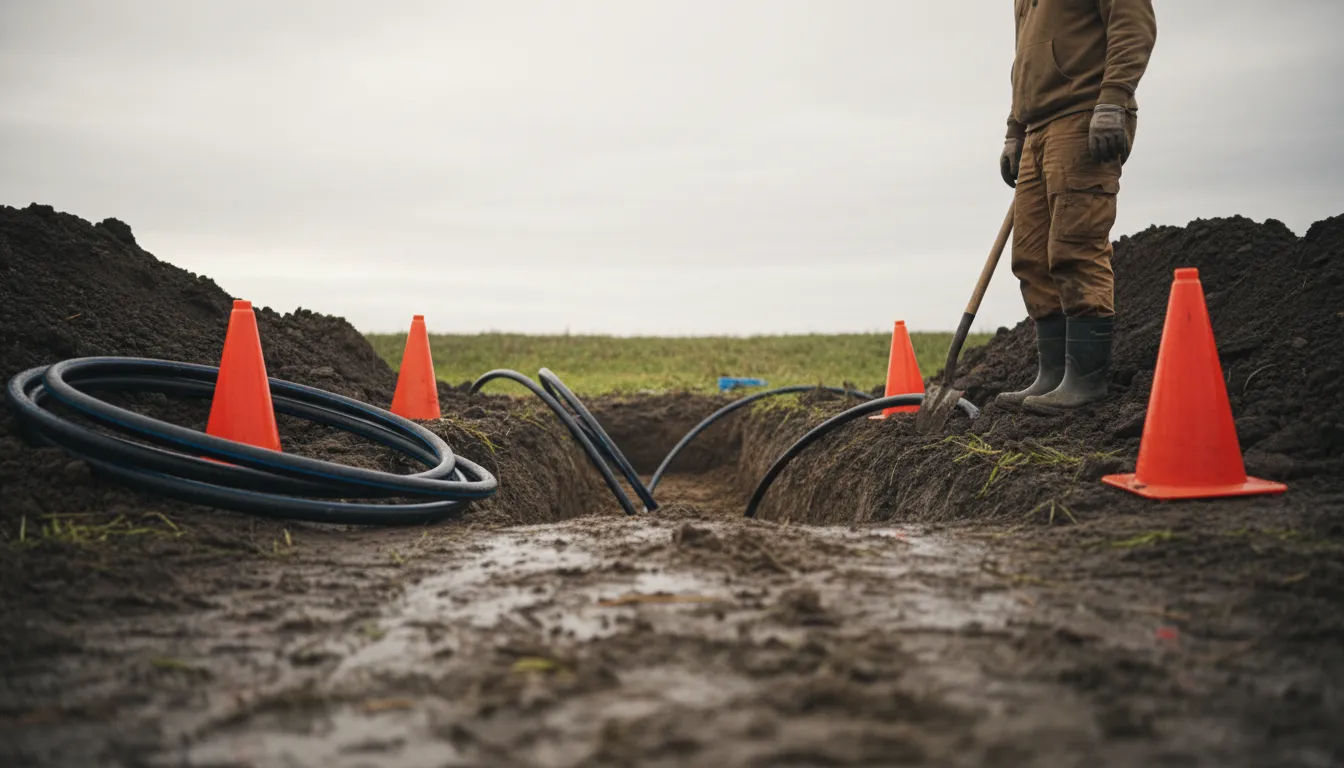
- Loop Field Installation: This is the major excavation phase. For a vertical system, a drilling rig bores deep holes (typically 150-400 feet) and inserts U-shaped loop pipes. For a horizontal system, trenches are dug at a shallower depth across a larger area.
- Heat Pump and Ductwork Integration: The indoor heat pump unit is installed, typically in a basement or utility room. It is connected to the ground loop and integrated with your home's existing ductwork or a new duct system.
- Commissioning and Startup: The system is filled, pressurized, tested for leaks, and started up. The contractor will calibrate the thermostat and explain the system's operation to you.
Ohio Regulations and Site Considerations
Understanding local rules and your property's characteristics is crucial for a smooth project.
- Soil Type: Ohio's prevalent clay soils are excellent for geothermal as they are good heat conductors and facilitate drilling. Sandy soils are less efficient at heat transfer but may still be suitable 5 6.
- Land Availability: Horizontal loop systems require a significant amount of open land. Vertical loops are ideal for smaller lots but involve deeper drilling 7.
- Water Regulations: If you opt for an open-loop system (which uses groundwater directly), you must comply with Ohio EPA regulations (OAC 3745-9). This includes obtaining a permit for the water well and adhering to strict discharge limits for the returned water 8 9 10. Closed-loop systems, which recirculate a sealed antifreeze solution, generally do not require state water permits but are subject to local codes 8 11.
- Local Permits: Always check with your township or county building department. Permits for building, plumbing, electrical, and excavation are commonly required, and there may be setback rules from property lines or septic systems.
Maintenance and Repair in Ohio
Geothermal systems are renowned for their low maintenance. Annual check-ups are recommended, which include inspecting the heat pump components, checking refrigerant levels, and cleaning coils. The buried loop is virtually maintenance-free.
When repairs are needed, it's essential to work with an HVAC technician specifically experienced with geothermal technology. Issues can be more complex due to the interaction between the ground loop and the heat pump unit. Always verify that a contractor is licensed, insured, and has strong references for geothermal work.
Frequently asked questions
Sources
Footnotes
-
Geothermal Maintenance Costs | Knueve & Sons, Inc. | OH - https://www.knueve.com/what-does-a-geothermal-system-cost/ ↩ ↩2
-
Guide to Geothermal Heat Pumps - https://www.energy.gov/sites/prod/files/guide_to_geothermal_heat_pumps.pdf ↩ ↩2
-
Geothermal Energy Pros and Cons: Complete Guide 2025 - https://a1solarstore.com/blog/pros-and-cons-of-geothermal-energy-digging-deep.html ↩
-
What Is The Value Of A Geothermal Heat Pump To My Home? | Ohio - https://www.knueve.com/what-is-the-value-of-a-geothermal-heat-pump-to-my-home/ ↩
-
Geothermal | Green Home Technology Center - https://greenhome.osu.edu/renewables/geothermal ↩
-
The Complete Guide To Geothermal Heat Pump Installation - https://ultrageothermal.com/the-complete-guide-to-geothermal-heat-pump-installation/ ↩
-
Geothermal Heat Pumps | Install & Repair | Amherst, OH - https://www.raymondplumbing.com/residential/geothermal-heat-pumps/ ↩
-
Geothermal Fact Sheet 2016 draft.pdf - Ohio.gov - https://dam.assets.ohio.gov/image/upload/epa.ohio.gov/Portals/35/permits/Geothermal%20Fact%20Sheet%202016%20draft.pdf ↩ ↩2
-
1365.09 GROUND WATER HEAT PUMP SYSTEMS. - https://codelibrary.amlegal.com/codes/huntingvalley/latest/huntingvalley_oh/0-0-0-10924 ↩
-
Recommendations for Geothermal Heating and ... - Ohio.gov - https://dam.assets.ohio.gov/image/upload/epa.ohio.gov/Portals/28/documents/sccgw/GHCS.pdf ↩
-
Recommendations for Geothermal Heating and Cooling Systems - http://my.solarroadmap.com/userfiles/GEO_M_OH-GHCS-guidance.pdf ↩