Find the Best Geothermal Heat Pump Contractors for Your Business
No obligation • Fast responses • Nationwide coverage

Why you can trust HVAC Firms
HVAC Firms is a leading United States resource for evaluating HVAC service providers. Our team researches companies, checks credentials, and reviews customer feedback to present clear, unbiased information. Listings and rankings are based on merit, and companies cannot pay to change our editorial content.
Search providers near you
Top Geothermal Heat Pump Contractors in Lorain, Ohio Ranked
Geothermal heat pumps, also known as ground-source heat pumps, are a highly efficient method for heating and cooling your home by leveraging the stable temperatures found underground. For Lorain residents, this technology offers a reliable way to manage indoor comfort year-round while significantly reducing energy consumption and utility costs. This guide explains how geothermal systems work, what installation entails, and how you can connect with qualified local professionals to explore this sustainable option for your property.
How Geothermal Heating and Cooling Works
A geothermal system operates on a simple but brilliant principle: it exchanges heat with the earth, which maintains a relatively constant temperature between 40°F and 70°F just below the surface, regardless of the season. This bypasses the extreme temperature swings of Ohio's air, from humid summers to frigid winters. The system uses a network of buried pipes, called a ground loop, filled with a water or antifreeze solution.
During the winter, the fluid circulating through these underground loops absorbs the earth's natural warmth. The geothermal heat pump inside your home then concentrates this low-grade heat and distributes it through your ductwork as warm air. In the summer, the process reverses: the system extracts heat from your indoor air and transfers it into the cooler ground loop, effectively providing air conditioning. This efficient heat exchange is the core reason these systems use far less electricity than conventional furnaces and air conditioners.
Types of Ground Loop Systems
The underground portion of the system is critical. In Lorain, the two primary types of closed-loop systems are chosen based on your property's characteristics.
Vertical Closed-Loop Systems: This is often the preferred method for homes with smaller lots, which is common in many Lorain neighborhoods. Contractors use a drilling rig to create boreholes typically 150 to 500 feet deep. U-shaped loops of high-density polyethylene (HDPE) pipe are inserted into each borehole. The holes are then grouted, creating a secure, long-lasting heat exchanger with minimal surface disruption 1. While the drilling process has a higher upfront cost due to the specialized equipment, it requires the least amount of land.
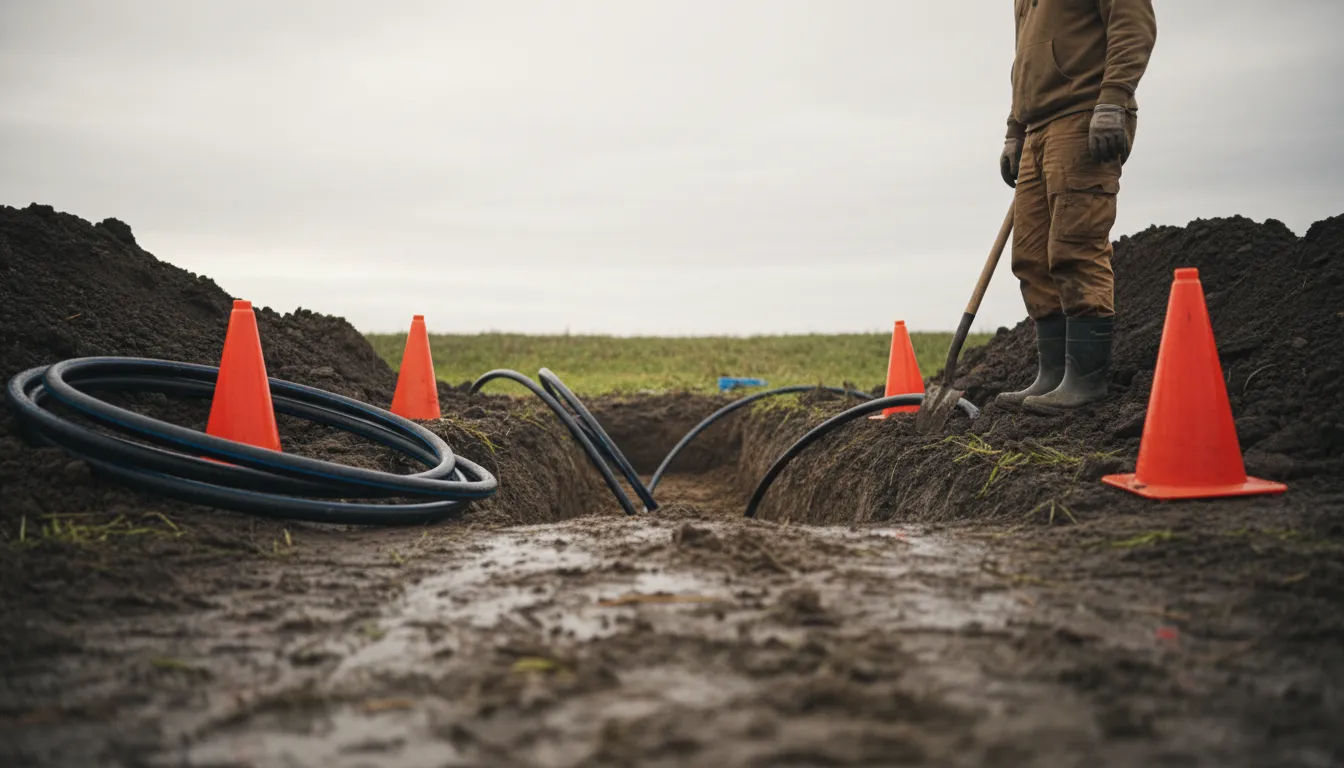
Horizontal Closed-Loop Systems: If you have ample yard space (often half an acre or more), a horizontal loop can be a cost-effective choice. Installers use excavators to dig trenches about five to eight feet deep and ranging from 100 to 250 feet in length per ton of system capacity 2. The piping is laid in these trenches in a slinky-coil or straight-run configuration before the area is backfilled. This trenching method generally has a lower installation cost than drilling but requires a significant amount of open land 3 4.
The Geothermal Installation Process in Lorain
Installing a ground-source heat pump is a significant project that requires careful planning and expert execution. Here's a typical step-by-step overview of what Lorain homeowners can expect:
- Site Assessment and Design: A qualified installer will evaluate your property's soil composition, lot size, and landscaping. They will also perform a detailed load calculation on your home to determine the correct system size. This step ensures the loop field is designed for optimal efficiency and longevity.
- Loop Installation: This is the major excavation phase. For a vertical system, a drilling rig will be brought in. For a horizontal system, track hoes or excavators will dig the necessary trenches. The HDPE piping is carefully placed, connected, and pressure-tested to ensure there are no leaks 5.
- Interior Unit Installation: The geothermal heat pump unit-which is about the size of a small refrigerator-is installed in a protected indoor space like a basement, utility closet, or garage. This unit contains the compressor, heat exchanger, and controls.
- Connection and Integration: The system is connected to your home's existing ductwork or to a new duct system. The ground loops are connected to the heat pump, and the electrical and control wiring is completed.
- System Startup and Land Restoration: After the loop is backfilled and the land is restored as much as possible, the system is charged with fluid, powered on, and tested. The installer will calibrate it for peak performance and show you how to operate it 6.
Find the perfect geothermal heat pump contractors for your needs
Get personalized recommendations and expert advice
Understanding Costs, Savings, and Incentives
The decision to install a geothermal system is a long-term investment in your home's efficiency and comfort.
Upfront Costs: The total installed cost for a residential geothermal heat pump system in the Lorain area typically ranges from $10,000 to over $40,000. This wide range depends heavily on your home's size, the chosen loop type (vertical drilling is more expensive than horizontal trenching), soil conditions, and the complexity of integrating with your existing HVAC infrastructure.
Long-Term Savings: The primary financial benefit comes from dramatically lower operating costs. By leveraging the earth's stable temperature, geothermal heat pumps can reduce your heating and cooling energy use by 30% to 70% compared to conventional systems 7 8. For many homeowners, these savings on monthly utility bills can lead to a payback period-where savings offset the initial investment-of 4 to 15 years 9 10.
Financial Incentives: To encourage the adoption of this clean energy technology, federal tax credits are often available. It is crucial to consult with your installer and a tax professional about the current status of the federal geothermal tax credit, as it can significantly reduce your net cost 11. Always verify the latest program details, as incentives can change.
Benefits Beyond Energy Bills
While savings are a major draw, the advantages of a ground-source heat pump extend further:
- Quiet Operation: The main mechanical unit is located indoors, and there is no loud outdoor condenser unit like a traditional air conditioner, leading to quieter home and neighborhood environments 12.
- Durability and Longevity: The underground piping often comes with warranties of 25 to 50 years and can last generations. The indoor heat pump unit also typically has a longer lifespan than conventional HVAC equipment due to less exposure to the elements.
- Improved Comfort: These systems provide exceptionally even heating and cooling without the drafts or hot/cold spots associated with some forced-air systems. They also excel at dehumidifying during the cooling season 13.
- Reduced Environmental Impact: By using electricity to move heat rather than create it by burning fuel, and by doing so with remarkable efficiency, geothermal systems have a much smaller carbon footprint 14.
Finding Local Geothermal Expertise
For a project of this complexity and scale, choosing an experienced, certified installer is paramount. Look for HVAC contractors in the Northeast Ohio area, including those serving Akron and Cleveland, who specialize in geothermal technology. Established local companies, such as those referenced in industry materials, have the necessary knowledge of Lorain's specific soil conditions, climate, and permitting requirements 15. A reputable professional will provide a comprehensive site evaluation, transparent pricing, detailed system design, and references from past geothermal installations.
Frequently asked questions
Sources
Footnotes
-
Geothermal Heating And Cooling System, Toledo, Ohio - Services - https://www.tandmheatingandair.com/geothermal-heating-cooling/ ↩
-
Geothermal heat pumps: The ultimate guide to ground-source ... - https://termo-plus.com/blog/geothermal-ultimate-guide-to-ground-source-heat-pumps/ ↩
-
All You Need to Know About Home Geothermal Heating & ... - https://dandelionenergy.com/all-you-need-to-know-about-home-geothermal-heating-cooling ↩
-
Geothermal Basics - https://geoexchange.org/geothermal-basics/ ↩
-
Geothermal Heat Pumps | WBDG - https://www.wbdg.org/resources/geothermal-heat-pumps ↩
-
6 Step-Guide to Ground Source Heat Pump Installation (2025) - https://www.greenmatch.co.uk/ground-source-heat-pump/replacement-installation ↩
-
Guide to Geothermal Heat Pumps - https://www.energy.gov/sites/prod/files/guide_to_geothermal_heat_pumps.pdf ↩
-
Geothermal Heat Pumps - Department of Energy - https://www.energy.gov/energysaver/geothermal-heat-pumps ↩
-
Everything You Need to Know About Geothermal Heat Pumps - https://www.familyhandyman.com/article/everything-you-need-to-know-about-geothermal-heat-pumps/ ↩
-
Geothermal Heating, Cooling, and Hot Water Systems - https://igshpa.org/wp-content/uploads/Homeowners-Guide-to-Geothermal.pdf ↩
-
Geothermal Heating Installation In Akron, OH | Call Today - https://lakesheatingandair.com/heating/geothermal/installation/ ↩
-
5 Things You Should Know about Geothermal Heat Pumps - https://www.energy.gov/cmei/articles/5-things-you-should-know-about-geothermal-heat-pumps ↩
-
The Science Behind Geothermal Cooling and Heating - https://www.alfordmechanical.com/article/the-science-behind-geothermal-cooling-and-heating ↩
-
Geothermal Heating & Cooling - Department of Energy - https://www.energy.gov/eere/geothermal/geothermal-heating-cooling ↩
-
Geothermal Systems: Stack's Energy Efficiency in Ohio - https://stackheating.com/energy-savings-2/geothermal-systems-energy-efficiency-secret-weapon/ ↩