
Find the Best Geothermal Heat Pump Contractors for Your Business
No obligation • Fast responses • Nationwide coverage

Why you can trust HVAC Firms
HVAC Firms is a leading United States resource for evaluating HVAC service providers. Our team researches companies, checks credentials, and reviews customer feedback to present clear, unbiased information. Listings and rankings are based on merit, and companies cannot pay to change our editorial content.
Search providers near you
Top Geothermal Heat Pump Contractors in Kettering, Ohio Ranked
A geothermal heat pump, or ground-source heat pump, is a highly efficient heating and cooling system that leverages the Earth's stable underground temperature. For Kettering homeowners, this technology offers a reliable way to manage indoor climate while significantly reducing energy consumption and utility bills. This guide explains how geothermal systems work, what installation entails, and how you can find qualified local experts to assess your property for this sustainable upgrade.
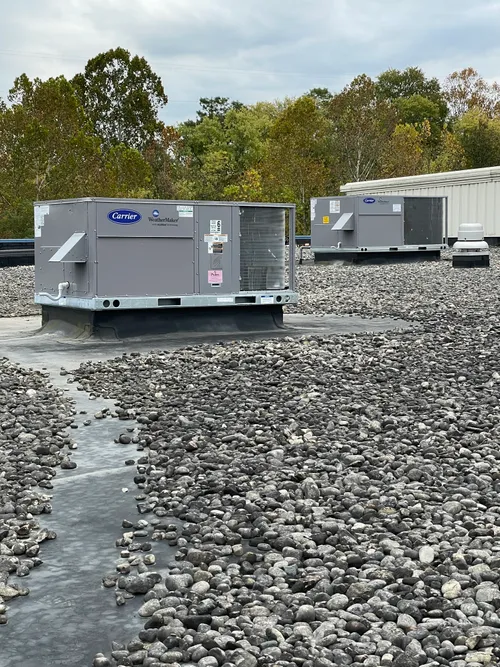
Gruter Heating & Air Conditioning Co., Inc.
164 Wyndham Dr, Maineville, OH 45039
Gruter Heating & Air Conditioning Co., Inc. is an HVAC contractor serving Cincinnati, OH, and the surrounding areas. They provide installation, repair, and maintenance services for air conditioners, furnaces, heat pumps, boilers, mini splits, and geothermal heat pumps for both residential and commercial clients. The company works with well-known brands and uses advanced diagnostic tools and genuine manufacturer parts to ensure efficient and eco-friendly solutions. With nearly 40 years of experience, Gruter Heating & Air Conditioning offers flexible scheduling and competitive pricing to meet customer needs.
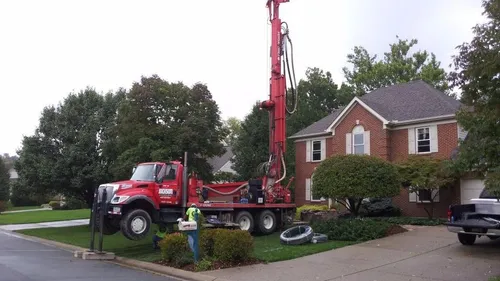
Sentry
9435 Waterstone Blvd #140-40, Cincinnati, OH 45249
Sentry is a geothermal heat pump contractor based in Cincinnati, OH. They specialize in installing geothermal heating and cooling systems that use the earth's natural temperature to efficiently heat and cool homes. This approach is noted for being significantly more efficient than traditional HVAC systems. Sentry focuses on providing geothermal solutions that can reduce operating costs and improve energy efficiency.

Arrowhead Heating and Cooling LLC
208 S Columbus St, Blanchester, OH 45107
Arrowhead Heating and Cooling LLC is an HVAC company based in Cincinnati, OH, serving Southwest Ohio with a range of heating and cooling services. They handle installation, repair, and maintenance of furnaces, air conditioners, heat pumps, geothermal systems, boilers, water heaters, and thermostats. The company is authorized to sell and install products from brands like Tempstar, Climate Master, LG, and Lochinvar. Arrowhead Heating and Cooling offers 24-hour service and focuses on providing affordable solutions for both residential and light commercial customers.
How Geothermal Heating and Cooling Works
Unlike conventional air-source heat pumps that exchange heat with the outside air, a geothermal system uses the ground as its heat source in winter and its heat sink in summer. This is possible because just a few feet below the surface, the Earth maintains a nearly constant temperature between 50°F and 60°F year-round, regardless of Ohio's seasonal extremes.
The process centers on a closed-loop system of pipes, called the ground loop, buried in your yard. A water-based solution circulates through these pipes. In the heating mode, this fluid absorbs the Earth's stable warmth and carries it to the heat pump unit inside your home. The heat pump then concentrates this thermal energy and transfers it to your home's air duct or hydronic system. For cooling, the system reverses: it extracts heat from your indoor air and transfers it into the cooler ground loop, effectively dumping the unwanted heat into the Earth. This elegant heat exchange process is what makes geothermal technology so remarkably efficient.
Types of Ground Loop Systems
The design of the underground loop field is a critical decision in any geothermal installation. The right choice depends on your property's characteristics, including lot size, soil composition, and access to water.
- Horizontal Ground Loops: This is often the most cost-effective option if sufficient land is available. Trenches are dug 4 to 6 feet deep in your yard, and pipes are laid in a series of parallel runs or slinky coils. This approach requires a larger plot of land, typically between a quarter to three-quarters of an acre, making it well-suited for new construction or homes with ample yard space 1 2 3.
- Vertical Ground Loops: For homes in Kettering with smaller lots, vertical loops are the ideal solution. Boreholes are drilled straight down to depths of 150 to 400 feet, and U-shaped pipe loops are inserted into each hole. While drilling can be more expensive than trenching, it minimizes surface disruption and is excellent for retrofitting existing landscapes.
- Pond or Lake Loops: If your property has access to a suitable body of water, this can be an efficient option. Coils of pipe are submerged at the bottom of a pond or lake that meets minimum requirements for size (usually at least half an acre) and depth (typically 10-12 feet year-round). This method avoids the need for extensive digging or drilling on your land.
The Geothermal Installation Process in Kettering
Installing a geothermal heat pump is a significant project that requires careful planning and professional expertise. Here's what you can generally expect:
- Site Evaluation and Design: A certified installer will visit your property to assess soil conditions, lot layout, and your home's heating and cooling load. This evaluation determines the most feasible and efficient loop type and sizes the system correctly for your needs 4.
- Loop Field Installation: For a horizontal system, excavation equipment will dig the necessary trenches. For a vertical system, a drilling rig will create the boreholes. High-density polyethylene (HDPE) pipe is then placed and the trenches or boreholes are backfilled with a special grout to ensure good thermal conductivity 5.
- Indoor Unit and Connection: The geothermal heat pump unit, which is about the size of a traditional furnace, is installed in your basement, utility room, or garage. It is connected to your home's existing ductwork or radiant heating system and linked to the newly installed ground loop 6.
- System Startup and Testing: Once everything is connected, the system is charged with fluid, pressurized, and tested for leaks and proper operation. The installer will calibrate the controls and walk you through the system's operation.
Kettering's climate and geology are well-suited for geothermal technology. The region's stable ground temperature provides a consistent, efficient energy source that makes these systems exceptionally effective compared to air-source alternatives that must work harder during our coldest winters and hottest summers 7.
Find the perfect geothermal heat pump contractors for your needs
Get personalized recommendations and expert advice
Understanding Costs and Long-Term Value
The primary consideration for most homeowners is the upfront investment. Installing a geothermal heating and cooling system typically costs more than a conventional HVAC system, with total installed prices often ranging from $20,000 to $40,000 or more. This higher initial cost is due to the excavation, drilling, and specialized materials required for the ground loop 8 9.
However, the long-term financial picture is where geothermal shines. By leveraging the Earth's free thermal energy, these systems can reduce your heating and cooling energy consumption by up to 65% compared to standard equipment 10 11 12. For a typical Kettering home, this can translate to annual savings of hundreds or even thousands of dollars on utility bills. Over the 20+ year lifespan of the indoor heat pump unit (the ground loops themselves can last 25 to 50 years), these savings add up significantly 10 13.
The payback period-the time it takes for energy savings to equal the initial investment-varies but often falls between 4 and 15 years. Factors like your home's energy efficiency, local utility rates, and available financial incentives all influence this timeline. When you consider the combination of drastic operating cost reductions, exceptional system longevity, and increased property value, a geothermal heat pump becomes a compelling investment in both comfort and sustainability.
Benefits Beyond Energy Savings
- Quiet Operation: With no noisy outdoor condenser unit, geothermal systems run very quietly. The main mechanical components are located indoors.
- Low Maintenance: The underground loops have no moving parts and are designed to last for decades. The indoor heat pump unit requires only the basic maintenance typical of any forced-air system.
- Safety and Cleanliness: There is no combustion, so there's no risk of carbon monoxide poisoning, no need for a flue or chimney, and no outdoor unit to clutter your yard.
- Environmental Impact: By using renewable thermal energy from the ground and electricity (which is increasingly sourced from renewables), geothermal systems have a very low carbon footprint and help reduce dependence on fossil fuels 14.
Is a Geothermal System Right for Your Home?
A ground-source heat pump is an excellent option for Kettering residents who plan to stay in their home long enough to realize the long-term savings, have a suitable property for a loop field, and prioritize energy independence and environmental responsibility. It's particularly advantageous for new construction, where loop installation can be seamlessly integrated into the site work.
Frequently asked questions
Sources
Footnotes
-
How Does A Geothermal Heat Pump Work? Complete 2025 Guide - https://solartechonline.com/blog/how-does-geothermal-heat-pump-work/ ↩
-
Geothermal heating & cooling, heat pumps, heat exchange ... - https://aztechgeo.com/residential-geothermal/how-it-works/ ↩
-
Geothermal Heat Pumps - Department of Energy - https://www.energy.gov/energysaver/geothermal-heat-pumps ↩
-
All You Need to Know About Home Geothermal Heating & ... - https://dandelionenergy.com/all-you-need-to-know-about-home-geothermal-heating-cooling ↩
-
Geothermal Heat Pump Installation: What To Expect For Your Property - https://jomory.com/geothermal-heat-pump-installation-what-to-expect-for-your-property/ ↩
-
Geothermal | Green Home Technology Center - https://greenhome.osu.edu/renewables/geothermal ↩
-
Geothermal Heating And Cooling System, Toledo, Ohio - Services - https://www.tandmheatingandair.com/geothermal-heating-cooling/ ↩
-
Guide to Geothermal Heat Pumps - https://www.energy.gov/sites/prod/files/guide_to_geothermal_heat_pumps.pdf ↩
-
Everything You Need to Know About Geothermal Heat Pumps - https://www.familyhandyman.com/article/everything-you-need-to-know-about-geothermal-heat-pumps/ ↩
-
Geothermal Heat Pumps - EnergySmart CNY - https://www.energysmartcny.org/heat-pumps/geothermal/ ↩ ↩2
-
5 Things You Should Know about Geothermal Heat Pumps - https://www.energy.gov/cmei/articles/5-things-you-should-know-about-geothermal-heat-pumps ↩
-
Geothermal Systems: Stack's Energy Efficiency in Ohio - https://stackheating.com/energy-savings-2/geothermal-systems-energy-efficiency-secret-weapon/ ↩
-
Geothermal (Ground Source) Heat Pumps - NY.gov - https://cleanheat.ny.gov/geothermal-heat-pumps/ ↩
-
Clean Energy 101: Geothermal Heat Pumps - RMI - https://rmi.org/clean-energy-101-geothermal-heat-pumps/ ↩