
Find the Best Geothermal Heat Pump Contractors for Your Business
No obligation • Fast responses • Nationwide coverage

Why you can trust HVAC Firms
HVAC Firms is a leading United States resource for evaluating HVAC service providers. Our team researches companies, checks credentials, and reviews customer feedback to present clear, unbiased information. Listings and rankings are based on merit, and companies cannot pay to change our editorial content.
Search providers near you
Top Geothermal Heat Pump Contractors in Akron, Ohio Ranked
Geothermal heat pumps, also known as ground-source heat pumps, are a highly efficient technology for heating and cooling your home by leveraging the earth's stable underground temperature. For Akron homeowners, this system offers a reliable way to significantly reduce energy bills and environmental impact while ensuring year-round comfort. This guide will help you understand how geothermal systems work, their benefits, and what to consider when looking for local installation expertise.

W.F. Hann and Sons
26401 Miles Rd, Warrensville Heights, OH 44128
W.F. Hann and Sons is an HVAC and plumbing company serving Cleveland, OH, and the surrounding Northeast Ohio area. Established in 1907, they offer heating and cooling services including furnace, boiler, heat pump, and air conditioning repair and installation. Their team is factory-trained and certified, providing emergency services and maintenance for residential and commercial customers. The company also handles plumbing needs such as water heater installation and drain cleaning. W.F. Hann and Sons is known for upfront pricing and detailed proposals, with technicians available around the clock for urgent repairs.

Kreyman Quality Heating & Cooling
4959 Commerce Pkwy, Warrensville Heights, OH 44128
Kreyman Quality Heating & Cooling is a family-owned HVAC company serving Cleveland, OH, and the surrounding areas within a 50-mile radius. Since 1995, they have provided commercial and residential heating, ventilation, and air conditioning design, installation, and service. Their expertise includes geothermal heat pump systems, offering energy-efficient solutions for homes. Kreyman Quality Heating & Cooling also handles furnace repairs, HVAC tune-ups, and emergency heating and cooling services.
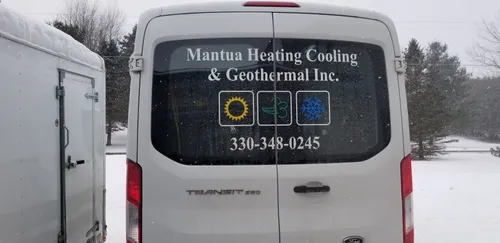
Mantua Heating Cooling & Geothermal, Inc
12602 Frost Rd, Mantua, OH 44255
Mantua Heating Cooling & Geothermal, Inc is an HVAC company serving Cleveland, OH, specializing in geothermal technology alongside traditional heating and cooling systems. They provide installation, repair, maintenance, and duct cleaning services for furnaces, air conditioners, heat pumps, and water heaters. The company focuses on using earth-friendly methods to reduce carbon footprints while educating customers about their heating and cooling systems.
How Geothermal Heating and Cooling Works in Ohio
The core principle of a geothermal system is simple: it exchanges heat with the ground, which maintains a remarkably stable temperature year-round. In Ohio, the ground temperature a few feet below the surface remains a consistent 50-60°F, regardless of the summer heat or winter chill above ground. This consistency is the key to the system's efficiency.
A geothermal heat pump system has three main components:
- The Ground Loop: This is a network of pipes buried in your yard, either horizontally in trenches or vertically in deep boreholes. A water-based solution circulates through these sealed pipes, absorbing or dissipating heat from the earth.
- The Heat Pump Unit: Located inside your home (typically in the basement or utility room), this unit concentrates the thermal energy collected from the ground loop. In winter, it extracts heat from the fluid and transfers it to your home's air. In summer, the process reverses, pulling heat from your home's air and depositing it into the cooler ground 1 2.
- The Distribution System: The conditioned air is then distributed throughout your home via your existing ductwork or a complementary system like radiant floor heating.
Unlike traditional air-source heat pumps that struggle when outdoor air is extremely cold or hot, a ground-source system always has a moderate-temperature "source" to work with, making it vastly more efficient.
Types of Ground Loop Systems
The design of the underground loop field is critical and depends on your property's characteristics. The two most common types are closed-loop systems.
Horizontal Closed Loops
This installation involves excavating long trenches, typically 5 to 8 feet deep, across a sizable area of your yard. Pipes are laid in these trenches in a slinky-like configuration to maximize surface area. A horizontal loop system generally requires a larger plot of land, often half an acre or more, making it a common choice for homes in Akron with ample yard space.
Vertical Closed Loops
For properties with limited land, such as smaller urban or suburban lots in Akron, vertical loops are the ideal solution. Contractors use a drilling rig to bore holes 150 to 400 feet deep. U-shaped pipe loops are inserted into each borehole, and the holes are then grouted. This method minimizes surface disruption, leaving your landscaping largely intact, and is often more feasible where bedrock or soil conditions are a factor 3.
The Geothermal Installation Process
Understanding the installation steps can help you prepare for the project timeline and work with your chosen provider.
- Site Assessment and Design: A qualified installer will evaluate your property, home size, heating/cooling loads, soil conditions, and available space to design the optimal system type and size.
- Loop Field Installation: This is the most significant phase. For horizontal loops, excavators dig the necessary trenches. For vertical loops, a drilling rig creates the boreholes. The high-density polyethylene pipes are then placed and connected into a continuous loop 4 5.
- Indoor Unit Installation: The geothermal heat pump unit is installed inside your home, connected to your ductwork and electrical system. The refrigerant lines are then connected to the ground loop manifold 6.
- System Charging and Testing: The loop is filled with the water-antifreeze solution, purged of air, and pressurized. The entire system is started and tested for proper operation and efficiency.
- Restoration: The contractor backfills the trenches or boreholes and restores your yard to its original condition as much as possible 7.
Find the perfect geothermal heat pump contractors for your needs
Get personalized recommendations and expert advice
Benefits and Long-Term Value for Akron Homes
Investing in a geothermal system offers compelling advantages that go beyond simple temperature control.
- Substantial Energy Savings: By tapping into the earth's free thermal energy, geothermal heat pumps can reduce your heating and cooling energy consumption by 25% to 50% compared to conventional systems 8. Homeowners often see a 30% to 70% reduction in their overall energy bills 9 8.
- Exceptional Longevity and Low Maintenance: The indoor heat pump unit typically lasts 20 years or more, while the underground polyethylene piping has a lifespan of 25 to over 50 years-essentially the life of the home. With few moving parts and no exposed outdoor unit, maintenance is minimal.
- Enhanced Comfort and Quiet Operation: These systems provide consistent, even heating and cooling without the drafts or hot/cold spots common with forced-air systems. They operate very quietly since there's no loud outdoor condenser unit.
- Improved Indoor Air Quality and Versatility: Geothermal systems often include options for energy-efficient hot water generation, further increasing savings. They also provide excellent dehumidification in summer, contributing to a healthier indoor environment 10 11.
Understanding Costs and Payback
The upfront cost for a complete geothermal system in Akron is higher than that of a standard HVAC system, primarily due to the ground loop installation. For a typical single-family home, total installed costs can range from $20,000 to $40,000 or more, depending on system size, loop type, and site conditions 12 13.
However, the financial analysis must consider the operational savings. The significant reduction in monthly utility bills means the system often pays for itself through savings within 0 to 10 years. Over the 20+ year life of the heat pump unit, the cumulative savings can be substantial, making it a wise long-term investment. Additionally, federal tax credits and potential local utility rebates can significantly reduce the net installed cost, improving the return on investment.
Is Geothermal Right for Your Akron Property?
A geothermal ground-source system is an excellent option for homeowners planning to stay in their homes long enough to realize the full savings benefit. It's particularly suitable for properties undergoing major renovations, new construction, or for those replacing an aging, inefficient HVAC system. The best way to determine feasibility is to consult with a local, experienced installer who can provide a detailed site evaluation and cost-benefit analysis specific to your home.
Frequently asked questions
Sources
Footnotes
-
Geothermal | Green Home Technology Center - https://greenhome.osu.edu/renewables/geothermal ↩
-
Geothermal and radiant: An energy-efficient powerhouse - https://www.pmmag.com/articles/106687-geothermal-and-radiant-an-energy-efficient-powerhouse ↩
-
Geothermal Heating And Cooling System, Toledo, Ohio - Services - https://www.tandmheatingandair.com/geothermal-heating-cooling/ ↩
-
Geothermal Heating, Cooling, and Hot Water Systems - https://igshpa.org/wp-content/uploads/Homeowners-Guide-to-Geothermal.pdf ↩
-
All You Need to Know About Home Geothermal Heating & ... - https://dandelionenergy.com/all-you-need-to-know-about-home-geothermal-heating-cooling ↩
-
The Ultimate Guide to Geothermal HVAC Systems in Akron ... - https://gotoapollo.com/2025/01/21/the-ultimate-guide-to-geothermal-hvac-systems-in-akron-northeast-ohio/ ↩
-
Geothermal Heat Pump Installation: What To Expect For Your Property - https://jomory.com/geothermal-heat-pump-installation-what-to-expect-for-your-property/ ↩
-
Guide to Geothermal Heat Pumps - https://www.energy.gov/sites/prod/files/guide_to_geothermal_heat_pumps.pdf ↩ ↩2
-
Geothermal Heat Pump - DSO Electric Cooperative - https://dsoelectric.com/geothermal-heat-pump ↩
-
5 Things You Should Know about Geothermal Heat Pumps - https://www.energy.gov/cmei/articles/5-things-you-should-know-about-geothermal-heat-pumps ↩
-
Geothermal Systems: Stack's Energy Efficiency in Ohio - https://stackheating.com/energy-savings-2/geothermal-systems-energy-efficiency-secret-weapon/ ↩
-
Geothermal Heating Installation In Akron, OH | Call Today - https://lakesheatingandair.com/heating/geothermal/installation/ ↩
-
Geothermal Heat Pump Guide: Installation Costs, Types And Benefits - https://modernize.com/hvac/heating-repair-installation/heat-pump/geothermal ↩