Find the Best Geothermal Heat Pump Contractors for Your Business
No obligation • Fast responses • Nationwide coverage

Why you can trust HVAC Firms
HVAC Firms is a leading United States resource for evaluating HVAC service providers. Our team researches companies, checks credentials, and reviews customer feedback to present clear, unbiased information. Listings and rankings are based on merit, and companies cannot pay to change our editorial content.
Search providers near you
Top Geothermal Heat Pump Contractors in Wilson, North Carolina Ranked
Geothermal heat pumps, also known as ground-source heat pumps, are a highly efficient method for heating and cooling your home by leveraging the earth's stable underground temperature. For homeowners in Wilson, this technology offers a way to achieve significant long-term energy savings and reduce environmental impact, despite a higher initial investment. This guide explains how these systems work, the installation process specific to our area, and how you can connect with qualified local professionals to explore this sustainable option for your property.

Call Pernell Heat and Air
111 E Oak St, Selma, NC 27576
Call Pernell Heat and Air is an HVAC company serving Raleigh, NC, and the surrounding Johnston County area. Established in 1977, they provide a wide range of heating and cooling services including furnace, heat pump, boiler, and air conditioner repair and installation. Their expertise also covers indoor air quality improvements, ductless mini-splits, and geothermal heat pump systems. With nearly five decades of experience, Call Pernell offers specialized capabilities such as real-time quotes and onsite estimates through an efficient dispatch system. They also provide 24/7 emergency service by appointment to address urgent HVAC needs.
Pappy's Heating & Air Inc.
143 Albemarle Dr, Clayton, NC 27527
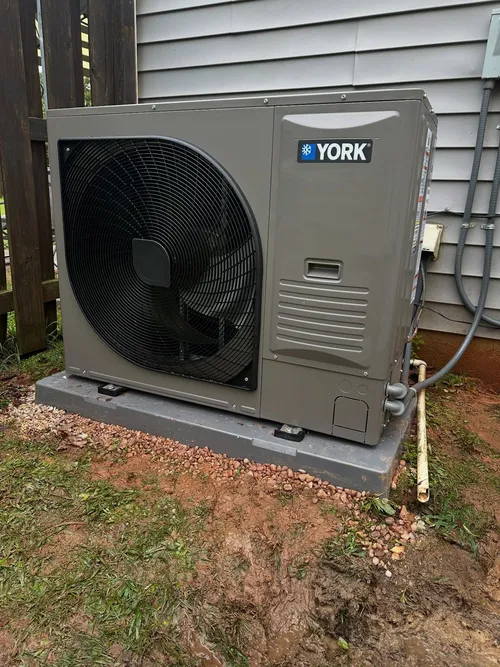
Pappy's Heating & Air Inc. provides HVAC repair, installation, and maintenance services in Raleigh, NC, and surrounding Johnston County areas. They handle a variety of systems including air conditioners, furnaces, heat pumps, ductless mini splits, and geothermal HVAC units. The company also offers indoor air quality solutions such as duct cleaning and dehumidifier installation. Pappy's is known for its 10-year labor warranties and a comprehensive worry-free program covering parts, labor, maintenance, and service calls. They support public service professionals with special rebates and financing options.
Alford Mechanical
495 Main St, Bunn, NC 27508
Alford Mechanical is an HVAC company serving Raleigh, NC, and surrounding areas including Franklin and Wake Counties. Since 2000, they have provided installation, maintenance, and repair services for heating and cooling systems such as furnaces, air conditioners, heat pumps, boilers, ductless mini-splits, and geothermal systems. The company also offers indoor air quality products like air purifiers, humidifiers, and UV lamps. They provide 24/7 emergency services and support both residential and light commercial HVAC needs. Alford Mechanical is experienced in ductless air conditioning and geothermal heat pump systems, offering specialized knowledge in these energy-efficient technologies.
Advanced Comfort Concepts
1501 W Gannon Ave, Zebulon, NC 27597
Advanced Comfort Concepts is an HVAC company serving Raleigh, NC, and nearby areas including Zebulon and Wake Forest. They provide installation, repair, and maintenance services for air conditioners, furnaces, heat pumps, boilers, mini split systems, and geothermal heat pumps. The company also offers indoor air quality solutions and thermostat installations. As a Bryant dealer, they supply a range of indoor comfort equipment and related products. Established in 2002, Advanced Comfort Concepts emphasizes tailored solutions and offers service agreements to maintain system performance.
How Geothermal Systems Work in Wilson
A geothermal or ground-source heat pump system operates on a simple principle: it exchanges heat with the ground, which maintains a relatively constant temperature year-round, typically between 50°F and 70°F in North Carolina. This is far more stable than our fluctuating outdoor air temperatures.
The process involves two main components:
- The Ground Loop: A network of pipes buried in your yard circulates a water-based fluid. In the winter, this fluid absorbs the earth's natural warmth. In the summer, the system reverses, pulling heat from your home and depositing it into the cooler ground.
- The Heat Pump Unit: Located inside your home, this unit concentrates the thermal energy gathered from the loop. It then distributes warm or cool air throughout your house via your existing ductwork or a ductless system. Because it is moving existing heat rather than generating it by burning fuel, a geothermal heat pump operates with remarkable efficiency, often delivering three to four units of heating or cooling for every one unit of electricity it consumes.
Types of Ground Loop Systems
The right loop configuration for your Wilson home depends on your property's characteristics, including soil composition, land availability, and access to groundwater. There are three primary types of geothermal loops.
Closed-Loop Horizontal Systems
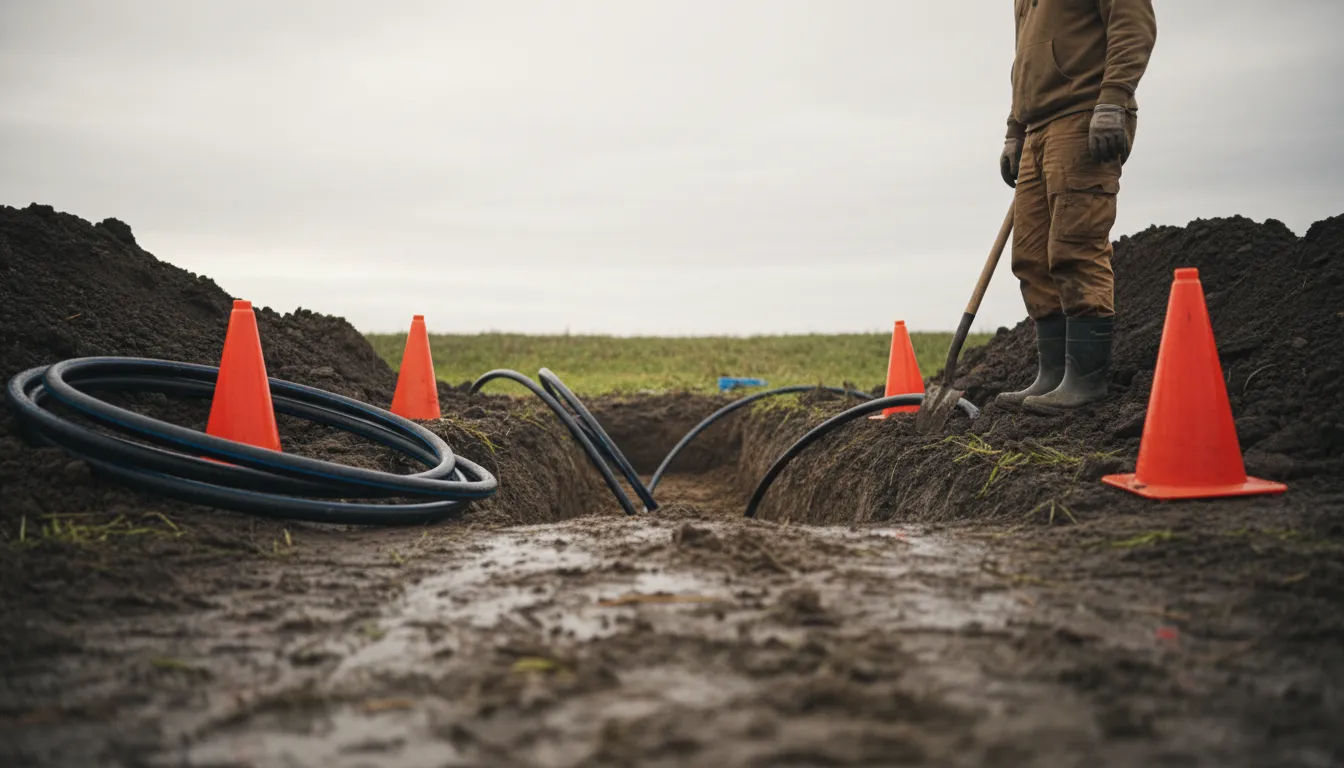
This is often the most cost-effective option for new construction or properties with ample yard space. Contractors dig trenches four to eight feet deep and lay pipes in a series of loops. While it requires a significant amount of land and disrupts a large area of the yard during installation, it generally avoids the need for specialized drilling equipment.
Closed-Loop Vertical Systems
For homes in Wilson with smaller lots, a vertical ground source heat pump system is typically the best solution. Installers use a drilling rig to create boreholes 150 to 400 feet deep, into which U-shaped pipes are inserted 1 2 3. This method minimizes surface disruption and is less dependent on land area, but it involves more specialized equipment and can be more expensive due to the drilling costs.
Open-Loop Systems
An open-loop, or groundwater, system uses well water as the direct heat exchange fluid. It draws water from a supply well, runs it through the heat pump, and then discharges it to a second well or a suitable surface body of water 4. This can be highly efficient but is heavily regulated in North Carolina to protect groundwater resources. It requires a sufficient, consistent, and clean water source and specific permits from the state.
The Installation Process: What to Expect
Installing a geothermal heating and cooling system is a significant project that requires careful planning and professional expertise. Here's a step-by-step overview of what the process entails in Wilson.
- Site Assessment and Design: A qualified installer will evaluate your property to determine soil conditions, land availability, and the best type of loop system. This assessment is critical for designing an efficient and code-compliant system.
- Permitting: In North Carolina, the installation of the ground loop is regulated. Your contractor will need to obtain permits from the NC Department of Environmental Quality (DEQ), especially for open-loop systems. Local building permits for the indoor unit and electrical work are also typically required 5.
- Ground Loop Installation: This is the most substantial phase of the project. For a horizontal system, it involves trenching across your property. For a vertical system, a drilling rig will be brought in to create the necessary boreholes. The pipes are then placed, connected, and pressure-tested.
- Indoor Unit Setup: The geothermal heat pump unit, which is similar in size to a traditional furnace, is installed inside your home-often in a basement, utility room, or garage. It is connected to your home's ductwork and the newly installed ground loop 6.
- System Startup and Testing: Once everything is connected, the system is charged with refrigerant, powered up, and thoroughly tested to ensure it operates efficiently and safely.
Benefits and Cost Considerations
The decision to invest in a geothermal system involves weighing higher upfront costs against substantial long-term benefits.
Key Benefits:
- High Efficiency and Savings: Geothermal systems are exceptionally efficient, often achieving 50-70% more heating efficiency than conventional systems like air-source heat pumps or furnaces 7. This translates to dramatically lower monthly energy bills, particularly for heating in the winter and cooling in Wilson's humid summers. Many homeowners see a return on their investment through utility savings in 4 to 15 years.
- Durability and Low Maintenance: The underground loop piping is often guaranteed for 50 years and can last generations. The indoor heat pump unit typically lasts 20-25 years, longer than conventional HVAC equipment. The systems also have fewer mechanical components exposed to the weather, leading to lower maintenance needs.
- Comfort and Environmental Impact: These systems provide very consistent temperatures and better humidity control than standard air conditioners. They also have a much smaller carbon footprint, as they use renewable thermal energy from the ground and electricity only to run the compressor and fan 8.
Cost Overview: The total installed cost for a residential geothermal system in Wilson can range from $15,000 to over $40,000. This wide range depends on your home's size, the chosen loop type (vertical loops are more expensive than horizontal), soil conditions, and the complexity of the indoor installation 9 10. It's crucial to view this as a long-term investment in your property's value and operating costs. The significant reduction in monthly energy bills, combined with potential federal tax credits for renewable energy systems (check for current availability), helps offset the initial price over time.
Find the perfect geothermal heat pump contractors for your needs
Get personalized recommendations and expert advice
Choosing a Qualified Installer in Wilson
Given the complexity and long-term nature of a geothermal installation, selecting the right contractor is paramount. Look for professionals with specific experience in ground-source heat pump systems, not just general HVAC. They should be familiar with North Carolina's DEQ regulations and local permitting processes. A reputable installer will conduct a detailed Manual J load calculation to properly size your system and provide a comprehensive site assessment before offering a quote. Ask for references from past geothermal projects and verify their licensing and insurance.
Maintenance and Long-Term Care
One of the advantages of a geothermal system is its relatively low maintenance requirement. The ground loop is virtually maintenance-free. Annual maintenance should focus on the indoor heat pump unit, similar to a traditional HVAC system. This includes checking filters, coils, fans, and the refrigerant charge. Having a professional perform a check-up every year or two can ensure the system continues to operate at peak efficiency for decades.
Frequently asked questions
Sources
Footnotes
-
Geothermal Heat Pump Installation: What To Expect For Your ... - https://jomory.com/geothermal-heat-pump-installation-what-to-expect-for-your-property/ ↩
-
Geothermal Heat Pumps - NC Sustainable Energy Association - https://www.energync.org/clean-energy-101/geothermal-heat-pumps/ ↩
-
Geothermal Heat Pumps - Department of Energy - https://www.energy.gov/energysaver/geothermal-heat-pumps ↩
-
Breakdown of 'open loop', 'closed vertical loop', and 'closed horizontal loop' systems. - https://www.greenmatch.co.uk/ground-source-heat-pump/replacement-installation ↩
-
Geothermal Heating and Cooling | NC DEQ - https://www.deq.nc.gov/about/divisions/water-resources/groundwater-resources/injection-wells-uic-program/geothermal-heating-and-cooling ↩
-
Geothermal heat pumps: The ultimate guide to ground-source ... - https://termo-plus.com/blog/geothermal-ultimate-guide-to-ground-source-heat-pumps/ ↩
-
Unlocking Underground Energy: Ground Source Heat Pumps - https://www.ncsl.org/energy/unlocking-underground-energy-ground-source-heat-pumps ↩
-
Geothermal Heat Pumps | WBDG - https://www.wbdg.org/resources/geothermal-heat-pumps ↩
-
Geothermal Heat Pumps - Carolina Country - https://www.carolinacountry.com/story/geothermal-heat-pumps-2 ↩
-
Everything You Need to Know About Geothermal Heat Pumps - https://www.familyhandyman.com/article/everything-you-need-to-know-about-geothermal-heat-pumps/ ↩