
Find the Best Geothermal Heat Pump Contractors for Your Business
No obligation • Fast responses • Nationwide coverage

Why you can trust HVAC Firms
HVAC Firms is a leading United States resource for evaluating HVAC service providers. Our team researches companies, checks credentials, and reviews customer feedback to present clear, unbiased information. Listings and rankings are based on merit, and companies cannot pay to change our editorial content.
Search providers near you
Best Geothermal Heat Pump Contractors in North Carolina Ranked
Geothermal heat pumps, also known as ground-source heat pumps, are a highly efficient way to heat and cool your North Carolina home or business by leveraging the stable temperatures underground. This technology can significantly reduce your energy bills and environmental footprint. Finding the right local professional is crucial, as proper installation involves specialized knowledge of state regulations, site geology, and system design. This guide provides the essential information you need to understand the process, benefits, and key considerations for geothermal systems in North Carolina.
Air One Cooling & Heating, LLC
16507-A Northcross Dr #107, Huntersville, NC 28078
Air One Cooling & Heating, LLC is an HVAC company based in Charlotte, NC, providing residential and commercial heating and air conditioning services. They offer installation, replacement, maintenance, and repair for systems including air conditioners, heat pumps, furnaces, boilers, geothermal systems, and ductless mini splits. As a certified Preferred Partner of Piedmont Natural Gas and a Trane dealer, they provide expertise in indoor air quality products and emergency service available 24/7. The company is known for customized solutions and extended service agreements to maintain system efficiency.
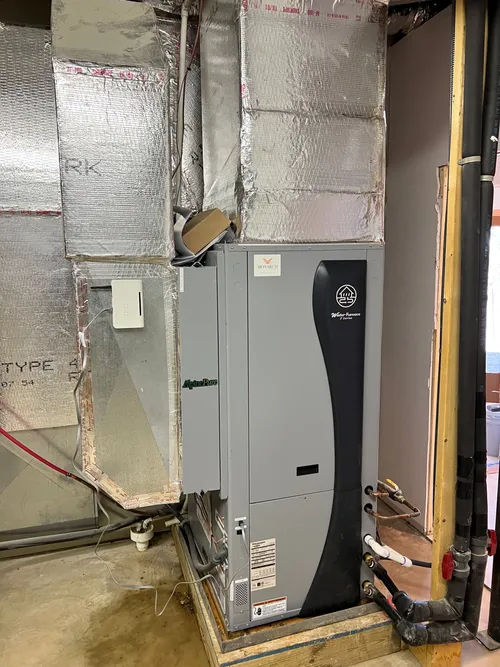
Monarch Air, Heat & Geothermal
9131 Dixie River Rd, Charlotte, NC 28278
Monarch Air, Heat & Geothermal is a locally owned HVAC company based in Charlotte, NC, specializing in heating, cooling, and geothermal systems. They provide a full range of services including installation, repair, and maintenance for air conditioners, furnaces, heat pumps, and geothermal systems. Their expertise includes designing and installing high-performance geothermal systems that use stable underground temperatures to efficiently heat and cool homes. Monarch serves both homeowners and builders with customized solutions and manages projects from system design through ongoing service. With over 20 years of experience, they focus on sustainable and energy-efficient HVAC solutions.
Precision Climate
45 Shadowbrook Rd, Mt Holly, NC 28120
Precision Climate is an HVAC company serving Charlotte, NC, specializing in repair and installation of air conditioning, furnaces, heat pumps, boilers, mini splits, and geothermal heat pumps. With over 25 years of experience, they provide comprehensive HVAC tune-up services to maintain system efficiency and comfort.
Maynor Service Company
1000 Goodworth Dr, Apex, NC 27539
Maynor Service Company is a heating, air conditioning, plumbing, and electrical service provider based in Raleigh, NC. Serving the Triangle Area, they offer repair, installation, design, and high-efficiency system upgrades including geothermal, ductless mini-split, and variable speed heating and cooling systems. With over 25 years of experience, Maynor Service Company operates 24/7 to meet customer needs and emphasizes energy-efficient and sustainable equipment options.
Bowman Heating & Cooling
1544 Mechanical Blvd, Garner, NC 27529
Bowman Heating & Cooling is a full-service HVAC company based in Raleigh, NC, serving the Triangle area including Garner. They provide a wide range of heating and cooling services such as repair, maintenance, and installation of gas furnaces, heat pumps, air conditioners, and geothermal heat pumps. Bowman Heating & Cooling specializes in geothermal systems, having installed and maintained hundreds in the region. Their offerings also include humidifiers, filtration systems, and zone control systems.
Understanding Geothermal Technology
A geothermal heat pump system works by exchanging heat with the earth. Unlike air-source heat pumps that struggle with extreme outdoor temperatures, geothermal systems use a network of buried pipes (a ground loop) to transfer heat to or from the ground, which maintains a relatively constant temperature year-round. This process is remarkably efficient, providing comfortable heating in the winter, cooling in the summer, and even hot water for your home 1.
In North Carolina's moderate climate, these systems are exceptionally well-suited. The state's geology and temperatures allow geothermal heat pumps to operate at peak efficiency, delivering more energy than they consume. The core components are the heat pump unit inside your home and the ground loop system installed on your property. There are several types of loop systems, and the right choice depends entirely on your specific site conditions.
Types of Geothermal Loop Systems
Choosing the correct loop configuration is a critical first step in your geothermal project. The main categories are closed-loop and open-loop systems, each with distinct advantages and regulatory considerations in North Carolina.
Closed-Loop Systems
This is the most common residential installation. A mixture of water and antifreeze circulates through a sealed, continuous loop of high-density polyethylene pipe buried in the ground.
- Vertical Closed-Loop: Ideal for properties with limited space, like many suburban lots in NC. Contractors drill boreholes 150 to 450 feet deep and insert U-shaped loops. The holes are then grouted to ensure proper thermal conductivity and to protect groundwater.
- Horizontal Closed-Loop: Requires more land area but is often less expensive to install than vertical loops. Trenches are dug 4 to 6 feet deep, and pipes are laid in a series of parallel runs. This is a good option for rural or larger properties 2.
- Pond/Lake Closed-Loop: A cost-effective option if you have a suitable body of water. Coils of pipe are submerged at a depth that prevents freezing. This system requires approval and may have specific environmental guidelines 3.
Open-Loop Systems
This system uses groundwater from a well as the direct heat exchange fluid. The water is pumped through the heat pump unit and then discharged. In North Carolina, this typically means returning the water to a second "return" well or a suitable surface discharge point approved by the state. It's crucial to note that "pump-and-dump" systems, which withdraw and then waste water, are not permitted by the NC Department of Environmental Quality (DEQ).
North Carolina Regulations and Permits
Installing a geothermal system in North Carolina involves specific state oversight to protect groundwater resources. The NC DEQ's Groundwater Resources Section regulates the construction of geothermal boreholes and wells.
- Closed-Loop Systems: For vertical boreholes, you or your contractor must submit a Well Notification form to the DEQ at least two business days before drilling begins. This is a notification, not a permit, but it is a mandatory step 4.
- Open-Loop Systems: These require a formal Well Permit from the DEQ. The review process for this permit can take 30 to 40 days, so it's essential to factor this into your project timeline.
- Licensing Requirements: State law mandates that the installation be overseen by a licensed HVAC contractor (holding an H-2 or H-3 classification). The actual drilling or well construction must be performed by a licensed Well Contractor certified by the state. Often, the HVAC contractor will subcontract this specialized drilling work.
- Local Rules: Always check with your county and municipal building departments. They may have additional zoning, permitting, or inspection requirements beyond the state regulations.
Costs, Savings, and Financial Incentives
The decision to install a geothermal system is a long-term investment in comfort and efficiency. Understanding the upfront costs and the substantial long-term savings is key.
Upfront Installation Costs: A complete geothermal system for a typical North Carolina home generally ranges from $20,000 to $40,000 or more, with a common benchmark of approximately $2,500 per ton of capacity. The final price depends on system type (vertical loops are more expensive than horizontal), property characteristics, and the chosen equipment.
Operational Savings & Payback: The primary financial benefit is dramatically lower utility bills. Geothermal heat pumps can reduce energy consumption for heating and cooling by 40% to 60% compared to conventional systems 5. This leads to a payback period-the time it takes for energy savings to equal the installation cost-typically ranging from 2 to 10 years in North Carolina 5 6. With a system lifespan of 20+ years for the indoor unit and 25-50 years for the underground loops, you'll enjoy decades of savings after the payback period 6.
Find the perfect geothermal heat pump contractors for your needs
Get personalized recommendations and expert advice
Financial Incentives: Significant incentives can offset a large portion of the initial cost.
- Federal Tax Credit: The Inflation Reduction Act provides a 30% tax credit for qualified geothermal heat pump installations through 2032. This credit is applied directly to your federal income tax liability 7 8.
- State & Local Incentives: Programs can change, so it's important to research current offerings. A valuable resource is the Database of State Incentives for Renewables & Efficiency (DSIRE), which lists available programs for North Carolina residents and businesses.
The Professional Installation Process
A successful geothermal installation relies on a qualified team. Here's what a typical professional process looks like in North Carolina:
- Site Assessment & Design: A qualified HVAC contractor will evaluate your property, home size, heating/cooling loads, and soil conditions. They will design a system that meets your needs and complies with all regulations.
- Permitting & Notification: Your contractor will handle the required Well Notification (closed-loop) or Well Permit application (open-loop) with the NC DEQ, as well as any local building permits 9 10.
- Ground Loop Installation: A licensed Well Contractor will perform the drilling or trenching and install the loop field according to state standards, including proper grouting of boreholes 11.
- Indoor Unit Installation: The HVAC contractor installs the heat pump unit, ductwork modifications, and controls inside your home.
- System Charging & Testing: The loop is connected to the heat pump, the system is charged with refrigerant, and all components are rigorously tested for performance and leaks.
- Inspections & Sampling (if required): For open-loop systems, a state inspector may visit to verify proper construction. Water sampling may also be required to ensure the system does not adversely affect groundwater quality 12.
Frequently asked questions
Sources
Footnotes
-
Geothermal Heat Pumps - NC Sustainable Energy Association - https://www.energync.org/clean-energy-101/geothermal-heat-pumps/ ↩
-
NC Geothermal Heat Pumps - NJ Green Building Manual - https://greenmanual.rutgers.edu/nc-geothermal-energy-systems/ ↩
-
Geothermal Heat Pumps - Department of Energy - https://www.energy.gov/energysaver/geothermal-heat-pumps ↩
-
Water Geothermal Cooling Heating - NC.gov - https://www.deq.nc.gov/environmental-assistance-and-customer-service/permit-handbook-documents/2016-revisions/water-geothermal-cooling-heating/download ↩
-
Geothermal Heat Pump Guide: Installation Costs, Types And Benefits - https://modernize.com/hvac/heating-repair-installation/heat-pump/geothermal ↩ ↩2
-
Guide to Geothermal Heat Pumps - https://www.energy.gov/sites/prod/files/guide_to_geothermal_heat_pumps.pdf ↩ ↩2
-
Geothermal Heat Pumps: Cost and Installation - https://www.energyhomes.org/renewable-technology/geoinstallation.html ↩
-
Available Tax Credits For Geothermal Heat Pumps In 2025 | NC - https://triadheating.com/available-tax-credits-for-geothermal-heat-pumps-in-2025/ ↩
-
Geothermal Heating and Cooling | NC DEQ - https://www.deq.nc.gov/about/divisions/water-resources/groundwater-resources/injection-wells-uic-program/geothermal-heating-and-cooling ↩
-
Geothermal HVAC Installation - https://nclicensing.org/wp-content/uploads/2022/07/Geothermalamended.pdf ↩
-
north carolina well contractors certification commission - https://www.dph.ncdhhs.gov/media/1376/download?attachment= ↩
-
Slide 1 - NC.gov - https://files.nc.gov/ncdeq/Water%20Quality/Aquifer%20Protection/GPU/Geothermal%20Poster-20120517.pptx ↩