Find the Best Geothermal Heat Pump Contractors for Your Business
No obligation • Fast responses • Nationwide coverage

Why you can trust HVAC Firms
HVAC Firms is a leading United States resource for evaluating HVAC service providers. Our team researches companies, checks credentials, and reviews customer feedback to present clear, unbiased information. Listings and rankings are based on merit, and companies cannot pay to change our editorial content.
Search providers near you
Top Geothermal Heat Pump Contractors in Wake Forest, North Carolina Ranked
A geothermal heat pump, also known as a ground-source heat pump, is a highly efficient heating and cooling system that leverages the Earth's stable underground temperature. For Wake Forest homeowners, this technology offers a way to achieve superior comfort while significantly reducing energy consumption and utility bills. This guide explains how these systems work, the installation options available locally, and how you can find qualified professionals to assess your property and provide a tailored solution.
Maynor Service Company
1000 Goodworth Dr, Apex, NC 27539
Maynor Service Company is a heating, air conditioning, plumbing, and electrical service provider based in Raleigh, NC. Serving the Triangle Area, they offer repair, installation, design, and high-efficiency system upgrades including geothermal, ductless mini-split, and variable speed heating and cooling systems. With over 25 years of experience, Maynor Service Company operates 24/7 to meet customer needs and emphasizes energy-efficient and sustainable equipment options.
Bowman Heating & Cooling
1544 Mechanical Blvd, Garner, NC 27529
Bowman Heating & Cooling is a full-service HVAC company based in Raleigh, NC, serving the Triangle area including Garner. They provide a wide range of heating and cooling services such as repair, maintenance, and installation of gas furnaces, heat pumps, air conditioners, and geothermal heat pumps. Bowman Heating & Cooling specializes in geothermal systems, having installed and maintained hundreds in the region. Their offerings also include humidifiers, filtration systems, and zone control systems.
Warren-Hay Mechanical
Durham, NC
Warren-Hay Mechanical is a family-owned HVAC company serving Durham, NC, and surrounding areas including Hillsborough, Chapel Hill, and Myrtle Beach, SC. They offer a wide range of heating and cooling services such as air conditioning repair, furnace repair, heat pump installation, and indoor air quality inspections. The company is recognized as a Trane Comfort Specialist and holds certifications including NATE and IGSHPA for geothermal heat pump expertise. With over 30 years of experience since 1993, Warren-Hay Mechanical provides commercial and residential HVAC solutions and offers 24/7 emergency services for urgent needs.
Pappy's Heating & Air Inc.
143 Albemarle Dr, Clayton, NC 27527
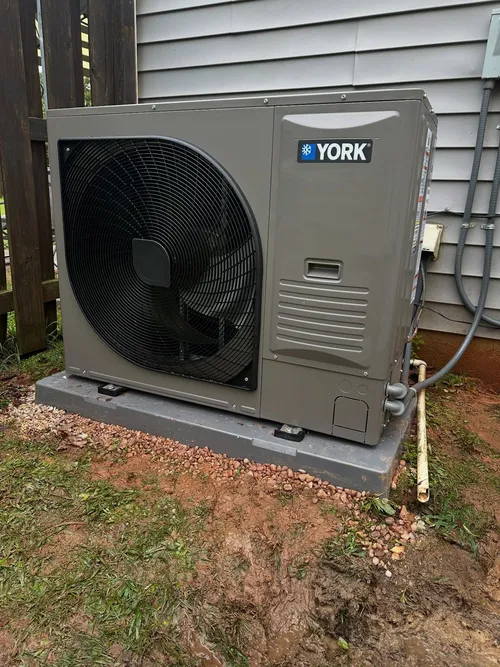
Pappy's Heating & Air Inc. provides HVAC repair, installation, and maintenance services in Raleigh, NC, and surrounding Johnston County areas. They handle a variety of systems including air conditioners, furnaces, heat pumps, ductless mini splits, and geothermal HVAC units. The company also offers indoor air quality solutions such as duct cleaning and dehumidifier installation. Pappy's is known for its 10-year labor warranties and a comprehensive worry-free program covering parts, labor, maintenance, and service calls. They support public service professionals with special rebates and financing options.
Green Horizon One Hour Heating & Air Conditioning
4628 Industry Ln Suite C, Durham, NC 27713
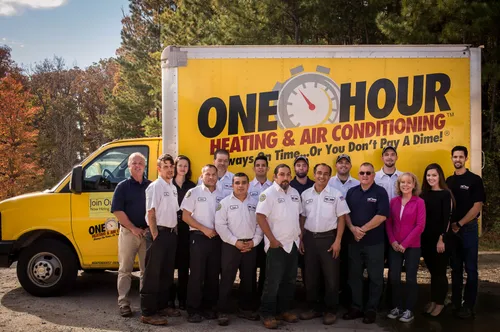
Green Horizon One Hour Heating & Air Conditioning provides HVAC repair, installation, and maintenance services in Raleigh, NC. They specialize in air conditioning, furnace, heat pump, mini split, and geothermal heat pump systems. The company offers 24/7 emergency service and backs their work with a two-year satisfaction guarantee. As an independently owned business within the One Hour Heating & Air Conditioning network, Green Horizon emphasizes punctuality and clear communication with customers.
How Geothermal Heating and Cooling Works
Unlike conventional air-source heat pumps that exchange heat with the variable outdoor air, a geothermal system uses the ground as its heat source in winter and its heat sink in summer. Just a few feet below the surface, the Earth maintains a relatively constant temperature between 50°F and 70°F year-round. A geothermal heat pump capitalizes on this stability through a ground loop-a network of pipes buried in your yard.
A water-based solution circulates through this sealed loop, absorbing the Earth's warmth in the winter and carrying it to an indoor unit. The heat pump then concentrates this thermal energy and distributes it throughout your home via your existing ductwork or a hydronic system. In the cooling mode, the process reverses: the system extracts heat from your home and transfers it into the cooler ground. This elegant exchange of thermal energy with the ground is what makes geothermal technology so remarkably efficient.
Types of Ground Loop Systems for Wake Forest Properties
The design of the underground loop field is the cornerstone of any geothermal installation. The right type for your home depends on your lot size, soil composition, and local geology. In Wake Forest and across North Carolina, there are four primary configurations.
Closed-Loop Horizontal Systems
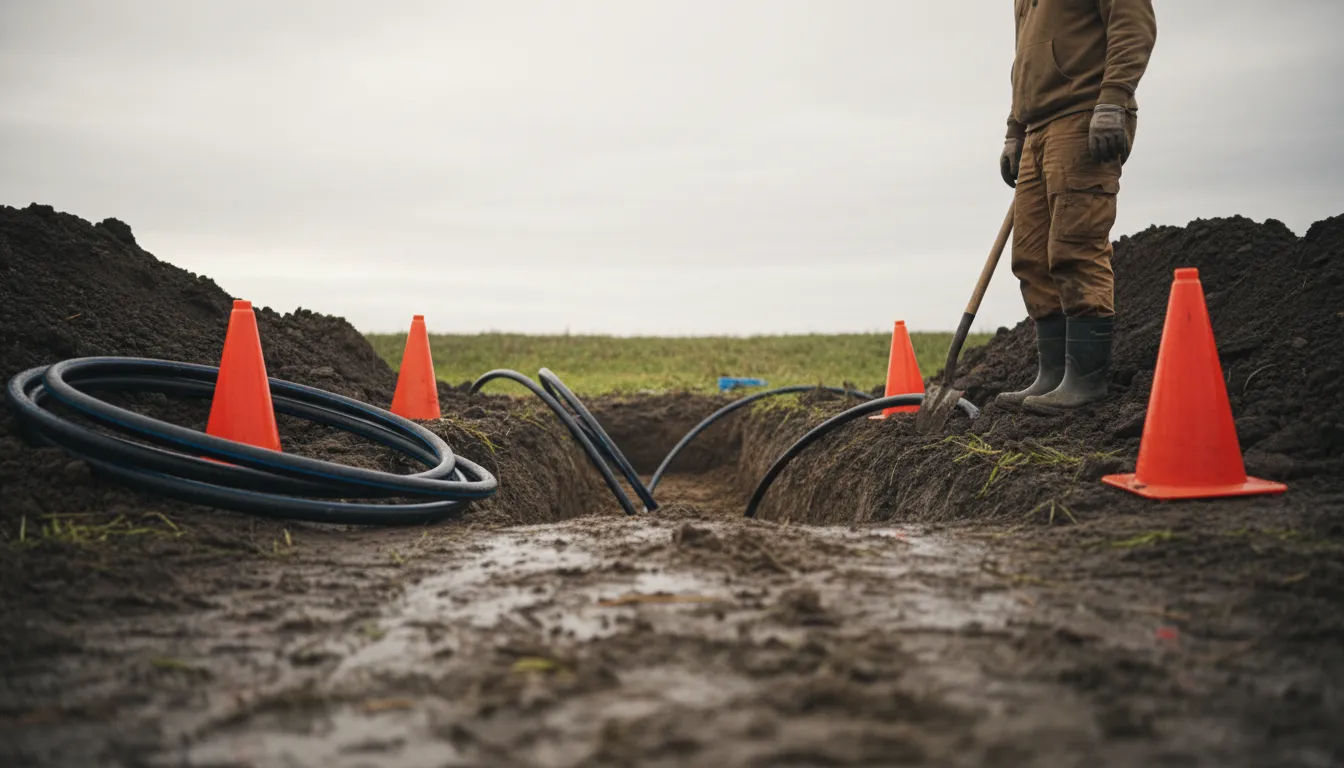
This is often the most cost-effective option if you have sufficient land. Contractors excavate trenches four to six feet deep and lay pipes in a series of horizontal loops. While this method requires a larger area and involves more surface disturbance, it typically avoids the need for specialized drilling equipment1 2.
Closed-Loop Vertical Systems
For homes with smaller lots, a vertical ground-source heat pump system is the ideal solution. Installers drill boreholes 150 to 400 feet deep and insert U-shaped pipe loops into each one. This vertical approach uses minimal surface area but involves more complex drilling, which can influence the overall project cost3 4.
Open-Loop Systems
An open-loop system uses groundwater directly from a well as the heat exchange fluid. It pumps water from an aquifer, runs it through the heat pump to exchange heat, and then discharges it to a second well, a pond, or a stream under approved conditions. This design can be very efficient but is heavily regulated in North Carolina due to water use and quality considerations.
Pond/Lake Loops
If you have a suitable body of water on your property, this can be an excellent option. Coils of pipe are submerged at the bottom of the pond or lake, where the water temperature remains stable. This method can be simpler and less expensive than drilling or extensive trenching, provided the pond meets depth and volume requirements5 6.
The Geothermal Installation Process: What to Expect
Installing a ground-source heating and cooling system is a significant project that requires careful planning and expert execution. Understanding the steps involved can help you prepare.
1. Site Evaluation and Design: A qualified installer will first conduct a thorough assessment of your property. This includes evaluating soil conditions, available space, and your home's heating and cooling loads. This data is used to design the optimal loop field and select the correctly sized heat pump unit.
2. Loop Field Installation: This is the major excavation phase. For a horizontal system, you'll see trenching equipment in your yard. For a vertical system, a drilling rig will be brought in to create the boreholes. High-density polyethylene (HDPE) pipes are then placed and connected into a continuous loop.
3. Indoor Unit and Connection: The indoor heat pump unit, which is typically compact and quiet, is installed in your basement, garage, or utility closet. The refrigerant lines and control wiring are connected between the indoor unit and the ground loop manifold. Finally, the system is filled with a water-antifreeze mixture, pressurized, and tested for leaks.
4. System Startup and Commissioning: Once everything is connected, the installer will power up the system, check all components, and balance the airflow. They should provide a full walkthrough, explaining the thermostat controls and basic maintenance procedures.
Find the perfect geothermal heat pump contractors for your needs
Get personalized recommendations and expert advice
Efficiency, Savings, and Environmental Benefits
The primary advantage of a geothermal heat pump is its extraordinary efficiency. These systems can be three to five times more energy-efficient than traditional HVAC systems because they move heat rather than generate it by burning fuel7 8. This translates directly to lower energy demand and substantial cost savings on your monthly utility bills. Homeowners often report savings of 25% to 65% on heating and cooling costs9 10.
While the upfront investment for a geothermal system is higher than for a conventional system-often costing thousands more per ton of capacity-the long-term financial picture is compelling. The energy savings accumulate over time, leading to a strong return on investment. Furthermore, the ground loops themselves have a lifespan of 50 years or more, and the indoor heat pump unit typically lasts 20-25 years, which is significantly longer than standard air conditioners and furnaces11 12. This durability, combined with lower operating costs, makes geothermal a wise long-term investment for your Wake Forest home.
From an environmental standpoint, geothermal systems have a very low carbon footprint. They use electricity, and when paired with a renewable energy source like solar panels, they can provide nearly carbon-free climate control. They also eliminate the need for an outdoor condenser unit, reducing noise pollution around your home.
Regulations and Permits in North Carolina
Installing a geothermal system in Wake Forest requires adherence to state and local regulations. The North Carolina Department of Environmental Quality (DEQ) oversees these systems, particularly open-loop configurations, under its Underground Injection Control (UIC) Program13. If you're considering an open-loop system, you will likely need a permit from the DEQ to ensure the protection of groundwater resources.
For closed-loop systems, regulations are generally less stringent but still require proper installation to prevent contamination. Always ensure your chosen contractor is familiar with and obtains all necessary local building permits and inspections required by Wake County or the Town of Wake Forest. A reputable installer will handle this permitting process for you.
Maintaining Your Geothermal System
One of the appealing aspects of ground-source heat pumps is their relatively low maintenance requirements. The buried loop is designed to be maintenance-free for decades. Attention should be focused on the indoor components:
- Air Filters: Change or clean your air filters regularly (typically every 1-3 months) to maintain airflow and efficiency.
- Annual Check-ups: Schedule an annual maintenance visit with a qualified technician. They will inspect the heat pump unit, check refrigerant levels, clean coils, and ensure the system is operating at peak performance.
- Ductwork: As with any forced-air system, ensure your ducts are properly sealed and insulated to maximize efficiency.
Frequently asked questions
Sources
Footnotes
-
All You Need to Know About Home Geothermal Heating & ... - https://dandelionenergy.com/all-you-need-to-know-about-home-geothermal-heating-cooling ↩
-
Geothermal heat pumps: The ultimate guide to ground-source ... - https://termo-plus.com/blog/geothermal-ultimate-guide-to-ground-source-heat-pumps/ ↩
-
4 Types of Geothermal Heating and Cooling Systems in Wake ... - https://www.alfordmechanical.com/blog/4-types-of-geothermal-heating-and-cooling-systems-in-wake-county-nc ↩
-
Geothermal Heat Pump Installation: What To Expect For Your Property - https://jomory.com/geothermal-heat-pump-installation-what-to-expect-for-your-property/ ↩
-
Geothermal Heat Pumps - Department of Energy - https://www.energy.gov/energysaver/geothermal-heat-pumps ↩
-
Geothermal Heat Pumps - NC Sustainable Energy Association - https://www.energync.org/clean-energy-101/geothermal-heat-pumps/ ↩
-
Geothermal Heat Pumps - EnergySmart CNY - https://www.energysmartcny.org/heat-pumps/geothermal/ ↩
-
Guide to Geothermal Heat Pumps - https://www.energy.gov/sites/prod/files/guide_to_geothermal_heat_pumps.pdf ↩
-
Unlocking Underground Energy: Ground Source Heat Pumps - https://www.ncsl.org/energy/unlocking-underground-energy-ground-source-heat-pumps ↩
-
NC Geothermal Heat Pumps - NJ Green Building Manual - https://greenmanual.rutgers.edu/nc-geothermal-energy-systems/ ↩
-
5 Things You Should Know about Geothermal Heat Pumps - https://www.energy.gov/cmei/articles/5-things-you-should-know-about-geothermal-heat-pumps ↩
-
How Do Geothermal Systems Work for Residential Homes? - https://www.davisheat.com/blog/how-do-geothermal-systems-work-for-residential-homes/ ↩
-
Geothermal Heating and Cooling | NC DEQ - https://www.deq.nc.gov/about/divisions/water-resources/groundwater-resources/injection-wells-uic-program/geothermal-heating-and-cooling ↩