Find the Best Geothermal Heat Pump Contractors for Your Business
No obligation • Fast responses • Nationwide coverage

Why you can trust HVAC Firms
HVAC Firms is a leading United States resource for evaluating HVAC service providers. Our team researches companies, checks credentials, and reviews customer feedback to present clear, unbiased information. Listings and rankings are based on merit, and companies cannot pay to change our editorial content.
Search providers near you
Top Geothermal Heat Pump Contractors in High Point, North Carolina Ranked
A geothermal heat pump, also known as a ground-source heat pump, is one of the most energy-efficient heating and cooling systems available for your home. By tapping into the stable temperatures found underground, these systems provide exceptional comfort year-round while drastically reducing energy consumption and utility bills. For High Point residents exploring sustainable home upgrades, understanding the local considerations for geothermal installation is key to making an informed decision. This guide explains how these systems work, what installation entails, and how you can connect with qualified local professionals to assess your property's potential.
Cool Breeze 1250 Heating & Cooling
305 Pineview Dr, Kernersville, NC 27284
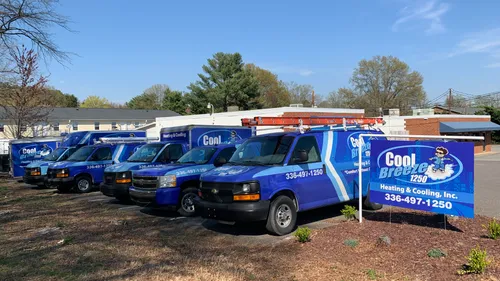
Cool Breeze 1250 Heating & Cooling is an HVAC company based in Kernersville, North Carolina, serving Greensboro and nearby areas including Summerfield, Winston Salem, High Point, and Deep River. They provide repair, maintenance, and installation services for air conditioners, furnaces, heat pumps, ductless mini-splits, and geothermal systems. Their technicians work with a wide range of brands such as Daikin, Fujitsu, Carrier, Trane, Lennox, and more. The company offers 24/7 availability for heating and cooling needs.

Triple A Heating & Cooling
Greensboro, NC
Triple A Heating & Cooling provides heating and cooling services in Greensboro, NC. They offer installation and repair for air conditioners, furnaces, heat pumps, boilers, mini splits, and geothermal heat pumps. Their services also include HVAC tune-ups to maintain system efficiency.
How Geothermal Systems Work: Tapping into the Earth's Constant Temperature
The core principle behind a geothermal heating and cooling system is remarkably simple: it uses the earth as a giant, free energy battery. Just a few feet below the surface, the ground maintains a nearly constant temperature between 55°F and 75°F year-round, regardless of the summer heat or winter chill above. A geothermal system leverages this stable resource through a process of heat exchange.
In the winter, a fluid (typically a water and antifreeze solution) circulates through a loop of pipes buried in your yard. This fluid absorbs the earth's natural warmth. The warmed fluid is then pumped to a heat pump unit inside your home, where the heat is concentrated and transferred to your home's air or hydronic heating system 1. In the summer, the process reverses: the system extracts heat from your indoor air and transfers it into the cooler ground loop, effectively providing air conditioning 2 3. Because it's moving existing heat rather than generating it through combustion, a ground-source heat pump operates with remarkable efficiency, often 300% to 500% efficient compared to the best fossil fuel systems 4.
Types of Geothermal Loop Systems for High Point Properties
The underground pipe network, or "ground loop," is the heart of the system. The right type for your High Point home depends on your soil composition, lot size, and access to water. The North Carolina Department of Environmental Quality (NC DEQ) regulates these installations to protect groundwater, so working with a licensed installer is crucial.
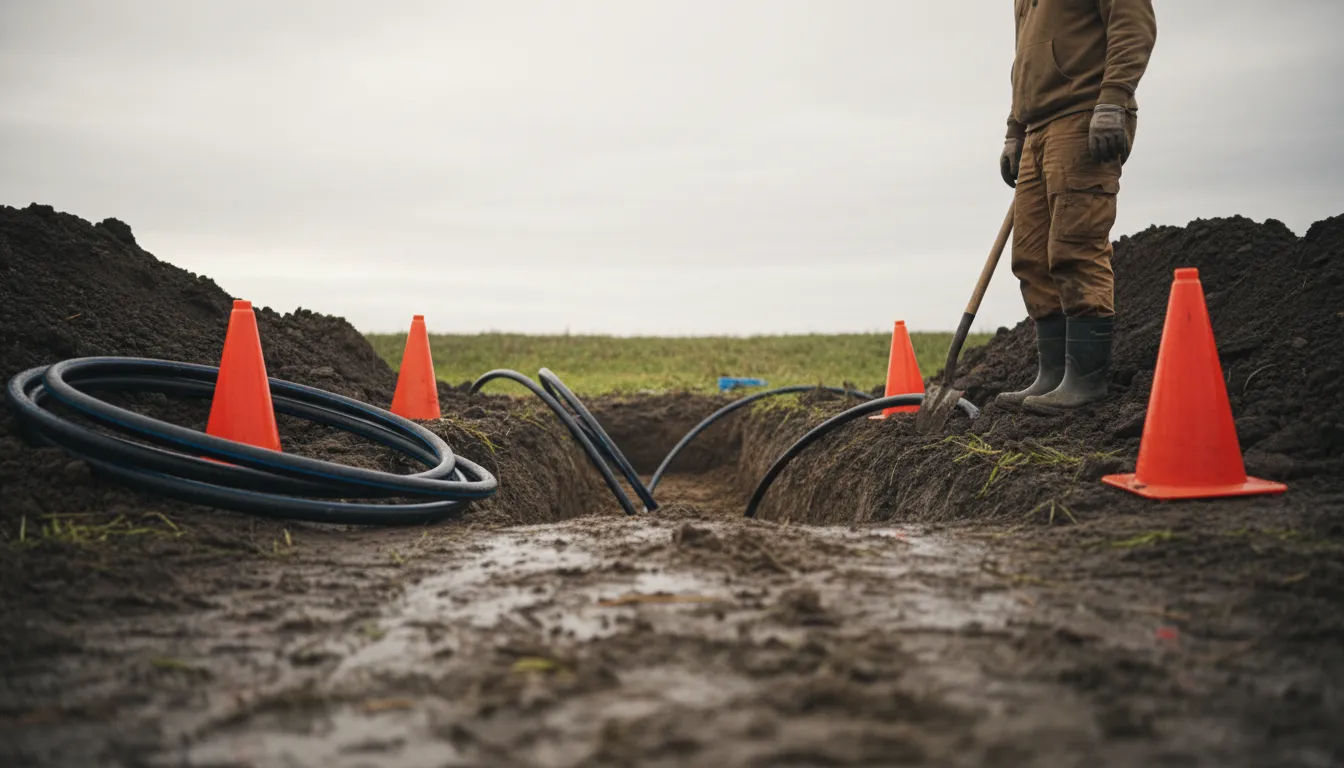
- Closed-Loop Horizontal System: This is often the most cost-effective option if you have sufficient land. Contractors dig trenches four to eight feet deep and lay pipes in a series of loops across your property 5 6. This method is well-suited for new construction where the yard can be easily excavated.
- Closed-Loop Vertical System: For homes with smaller lots, a vertical ground source heat pump is the ideal solution. Contractors drill boreholes 100 to 400 feet deep and insert U-shaped pipes into each hole. This minimizes the surface footprint but can involve higher drilling costs.
- Open-Loop (Pond or Well) System: If you have a sufficient pond, lake, or well water source, an open-loop system can be highly efficient. It circulates groundwater directly through the heat pump before returning it to the ground. This type requires specific site conditions and explicit approval from the NC DEQ due to its direct interaction with groundwater resources.
The Installation Process: What High Point Homeowners Can Expect
Installing a geothermal HVAC system is a significant project that requires careful planning and expert execution. Here's a general overview of the steps involved:
- Site Assessment and Design: A qualified installer will survey your property to evaluate soil conditions, rock content, available space, and the location of underground utilities. This assessment determines the best loop type and size for your home's heating and cooling loads.
- Trenching or Drilling: For a horizontal system, excavation equipment digs the necessary trenches. For a vertical system, a drilling rig creates the deep boreholes. This is typically the most visually disruptive phase of the installation.
- Loop Installation: The high-density polyethylene pipes are placed in the trenches or boreholes. The loops are connected into a continuous circuit, pressure-tested for leaks, and then filled with the heat transfer fluid before being buried 7.
- Heat Pump and Ductwork Connection: The indoor geothermal heat pump unit is installed (often in a basement, garage, or mechanical closet). Your existing ductwork or radiant heating system is then connected to this new unit.
- System Startup and Regulation: Once everything is connected, the system is charged, tested, and balanced. Your installer will handle any necessary permitting and ensure the installation complies with NC DEQ regulations 8.
Find the perfect geothermal heat pump contractors for your needs
Get personalized recommendations and expert advice
Costs, Savings, and Long-Term Value in High Point
The decision to install a geothermal system is a long-term investment in your home's comfort, efficiency, and value. The primary consideration for most homeowners is the cost structure.
- Upfront Investment: The total installed cost for a complete residential geothermal system in High Point typically ranges from $20,000 to over $40,000 9 10. This higher initial cost compared to conventional systems is due largely to the excavation, drilling, and ground loop installation. The price varies significantly based on your home's size, the loop type chosen, soil conditions, and the equipment selected.
- Substantial Operating Savings: Where a geothermal system shines is in its ongoing operation. Homeowners can see reductions of 50% to 70% on their heating and cooling energy bills 11 12. By leveraging the earth's constant temperature, these systems use far less electricity than air-source heat pumps or standard air conditioners and furnaces.
- Payback Period and Longevity: The dramatic energy savings mean the system often pays for itself through lower utility bills within 5 to 10 years 13. Furthermore, the components are built to last. The underground piping has a lifespan of 50 years or more, and the indoor heat pump unit often lasts 25 years or longer, offering exceptional long-term value and reliability.
Key Considerations for High Point Homeowners
Before moving forward, it's important to weigh a few local factors. The clay and rock common in the Piedmont region of North Carolina can affect drilling ease and cost. You'll also want to verify current federal tax credits and any local utility rebates that can substantially offset the installation cost. Most importantly, selecting an installer with specific experience in geothermal systems and knowledge of NC DEQ requirements is non-negotiable for a successful, compliant installation 14 15.
Frequently asked questions
Sources
Footnotes
-
How Does A Geothermal Heat Pump Work? Complete 2025 Guide - https://solartechonline.com/blog/how-does-geothermal-heat-pump-work/ ↩
-
Geothermal Heat Pumps - Department of Energy - https://www.energy.gov/energysaver/geothermal-heat-pumps ↩
-
Geothermal (Ground Source) Heat Pumps - NY.gov - https://cleanheat.ny.gov/geothermal-heat-pumps/ ↩
-
5 Things You Should Know about Geothermal Heat Pumps - https://www.energy.gov/cmei/articles/5-things-you-should-know-about-geothermal-heat-pumps ↩
-
Geothermal Heat Pumps - NC Sustainable Energy Association - https://www.energync.org/clean-energy-101/geothermal-heat-pumps/ ↩
-
Can you explain the basics of how home geothermal systems ... - https://www.quora.com/Can-you-explain-the-basics-of-how-home-geothermal-systems-work-for-heating-and-hot-water-How-can-someone-determine-if-their-property-is-suitable-for-this-type-of-system ↩
-
How Geothermal Heat Pumps Work - https://www.youtube.com/watch?v=XxlTnBukweI&t=37 ↩
-
Geothermal Heat Pump Installation: What To Expect For Your ... - https://jomory.com/geothermal-heat-pump-installation-what-to-expect-for-your-property/ ↩
-
Geothermal Heat Pumps - EnergySmart CNY - https://www.energysmartcny.org/heat-pumps/geothermal/ ↩
-
Geothermal Heat Pump Guide: Installation Costs, Types And Benefits - https://modernize.com/hvac/heating-repair-installation/heat-pump/geothermal ↩
-
Unlocking Underground Energy: Ground Source Heat Pumps - https://www.ncsl.org/energy/unlocking-underground-energy-ground-source-heat-pumps ↩
-
Guide to Geothermal Heat Pumps - https://www.energy.gov/sites/prod/files/guide_to_geothermal_heat_pumps.pdf ↩
-
Geothermal Heat Pumps - Carolina Country - https://www.carolinacountry.com/story/geothermal-heat-pumps-2 ↩
-
Geothermal Heating and Cooling | NC DEQ - https://www.deq.nc.gov/about/divisions/water-resources/groundwater-resources/injection-wells-uic-program/geothermal-heating-and-cooling ↩
-
All You Need to Know About Home Geothermal Heating & ... - https://dandelionenergy.com/all-you-need-to-know-about-home-geothermal-heating-cooling ↩