Find the Best Geothermal Heat Pump Contractors for Your Business
No obligation • Fast responses • Nationwide coverage

Why you can trust HVAC Firms
HVAC Firms is a leading United States resource for evaluating HVAC service providers. Our team researches companies, checks credentials, and reviews customer feedback to present clear, unbiased information. Listings and rankings are based on merit, and companies cannot pay to change our editorial content.
Search providers near you
Top Geothermal Heat Pump Contractors in Gastonia, North Carolina Ranked
A geothermal heat pump is one of the most efficient and sustainable ways to heat and cool your Gastonia home. By tapping into the earth's stable underground temperature, these systems, often called ground-source heat pumps, can dramatically reduce your energy bills and environmental footprint. This guide explains how geothermal technology works, the installation process, and how you can find qualified local experts to assess your property for this smart upgrade.
Air One Cooling & Heating, LLC
16507-A Northcross Dr #107, Huntersville, NC 28078
Air One Cooling & Heating, LLC is an HVAC company based in Charlotte, NC, providing residential and commercial heating and air conditioning services. They offer installation, replacement, maintenance, and repair for systems including air conditioners, heat pumps, furnaces, boilers, geothermal systems, and ductless mini splits. As a certified Preferred Partner of Piedmont Natural Gas and a Trane dealer, they provide expertise in indoor air quality products and emergency service available 24/7. The company is known for customized solutions and extended service agreements to maintain system efficiency.
Monarch Air, Heat & Geothermal
9131 Dixie River Rd, Charlotte, NC 28278
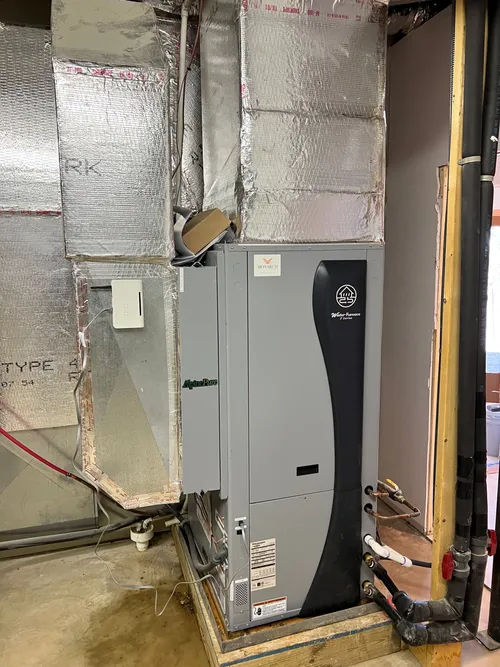
Monarch Air, Heat & Geothermal is a locally owned HVAC company based in Charlotte, NC, specializing in heating, cooling, and geothermal systems. They provide a full range of services including installation, repair, and maintenance for air conditioners, furnaces, heat pumps, and geothermal systems. Their expertise includes designing and installing high-performance geothermal systems that use stable underground temperatures to efficiently heat and cool homes. Monarch serves both homeowners and builders with customized solutions and manages projects from system design through ongoing service. With over 20 years of experience, they focus on sustainable and energy-efficient HVAC solutions.
Precision Climate
45 Shadowbrook Rd, Mt Holly, NC 28120
Precision Climate is an HVAC company serving Charlotte, NC, specializing in repair and installation of air conditioning, furnaces, heat pumps, boilers, mini splits, and geothermal heat pumps. With over 25 years of experience, they provide comprehensive HVAC tune-up services to maintain system efficiency and comfort.

All-Weather Heating & Air Conditioning
Charlotte, NC
All-Weather Heating & Air Conditioning is an HVAC contractor serving Charlotte, NC, and nearby communities including Clover. They offer installation, repair, and maintenance services for air conditioners, heat pumps, furnaces, boilers, geothermal systems, and ductless split systems. As a licensed Trane dealer, they provide a range of indoor comfort equipment and specialize in indoor air quality solutions such as air cleaners and ultraviolet lights. The company also offers emergency service and service agreements to maintain system performance throughout the year.

Tru-Comfort Heating and Cooling, Inc.
Charlotte, NC
Tru-Comfort Heating and Cooling, Inc. provides heating and air conditioning services in Charlotte, NC. They offer installation and repair for air conditioners, furnaces, heat pumps, geothermal systems, and thermostats, along with indoor air quality services. The company serves Charlotte and nearby areas including Denver and Lake Norman, NC. Their technicians are licensed and insured, and they provide complimentary estimates on new systems. Tru-Comfort emphasizes workmanship and customer service, aiming to build lasting relationships in the community.
How Geothermal Heating and Cooling Works
The core principle behind a geothermal system is remarkably simple: it uses the earth as a giant, free battery for thermal energy. Just a few feet below the surface, the ground in Gastonia maintains a nearly constant temperature of around 55°F year-round. A geothermal heat pump leverages this stability.
In the winter, the system circulates a fluid through a loop of pipes buried in your yard. This fluid absorbs the earth's natural warmth. The heat pump inside your home then concentrates this low-grade heat and transfers it to your ductwork to warm your living spaces. In the summer, the process reverses: the system extracts heat from your home and transfers it into the cooler ground, effectively using the earth as a heat sink to provide air conditioning. This efficient heat exchange process is what makes ground-source systems so effective.
Types of Geothermal Loop Systems
The underground pipe network, known as the ground loop, is the heart of the system. The right type for your Gastonia property depends on your land, soil conditions, and water availability.
Closed-Loop Systems These are the most common installations. A water-based solution is continuously circulated through a sealed, buried pipe loop.
- Vertical Closed Loop: This is ideal for properties with limited space, which is common in many Gastonia neighborhoods. Contractors drill deep boreholes, typically 150 to 400 feet down, and insert U-shaped pipes. While drilling costs can be higher, this method minimizes landscape disruption and is effective in most soil types 1 2.
- Horizontal Closed Loop: If you have more available land, this can be a cost-effective option. Contractors dig trenches four to six feet deep and lay pipes in a series of loops. This requires a larger yard but often avoids the need for specialized drilling equipment 3 4 5.
- Pond/Lake Loop: If you have a suitable body of water on your property, a closed loop can be submerged at the bottom. This is often the most economical installation type if conditions are right, as it avoids extensive digging or drilling.
Open-Loop Systems This system uses groundwater directly from a well. It pumps water through the heat pump to exchange heat and then discharges it to a second well, pond, or stream. Open-loop systems can be highly efficient but require a significant, reliable supply of clean water and are subject to more regulatory permitting from the North Carolina Department of Environmental Quality (NCDEQ).
The Geothermal Installation Process in Gastonia
Installing a geothermal system is a significant project that requires professional expertise. Here's what you can expect when working with a qualified local installer.
- Site Evaluation and Design: A certified technician will assess your home's heating and cooling loads, inspect your property's geology and soil composition, and evaluate available space. This critical step determines the best type and size of the system for maximum efficiency 6.
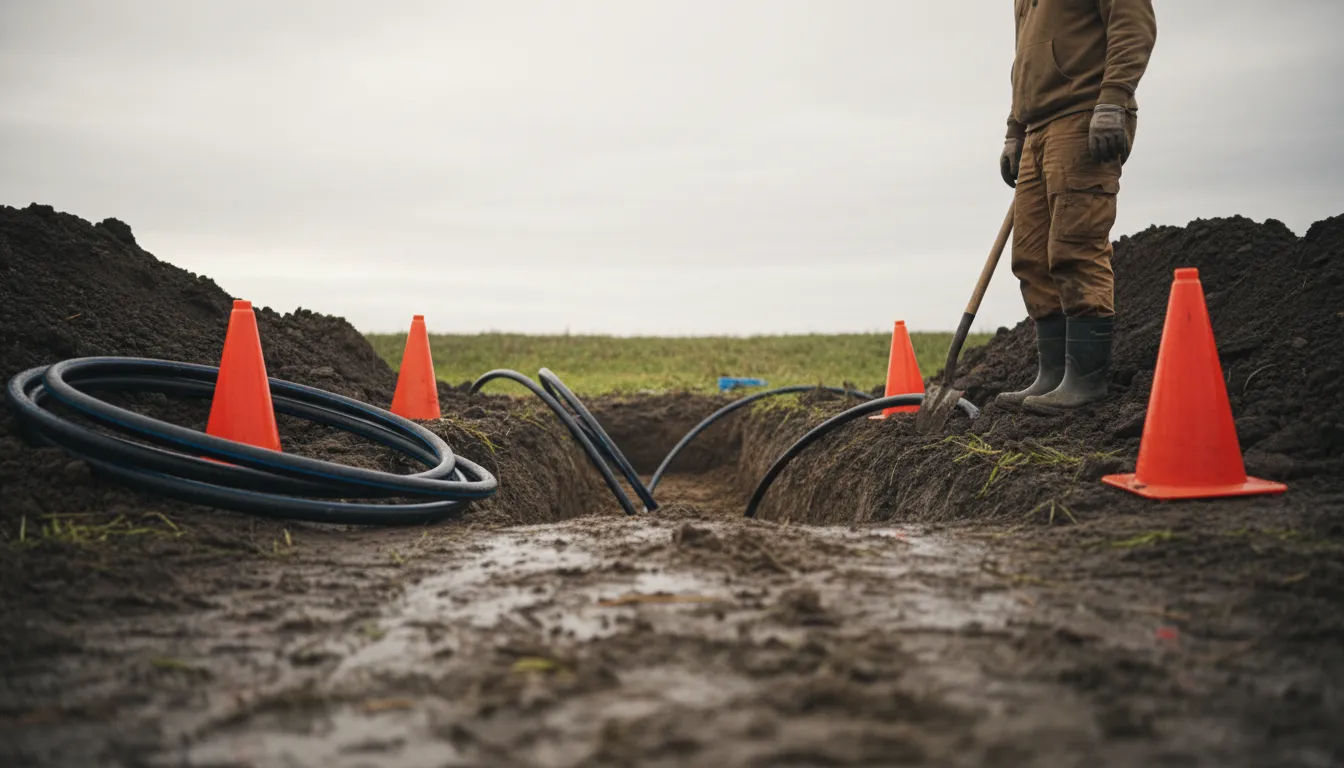
- Loop Field Installation: This is the major outdoor work. For a vertical system, a drilling rig will create the boreholes. For a horizontal system, a backhoe will dig the trenches. The high-density polyethylene pipes are then placed and connected into a continuous loop.
- Indoor Unit Installation: The geothermal heat pump unit, which is about the size of a traditional furnace, is installed inside your home-typically in a basement, utility room, or garage. It is connected to your existing ductwork or a new air distribution system.
- System Connection and Testing: The indoor and outdoor loops are connected, the system is charged with fluid, and all electrical and control connections are made. The installer will then thoroughly test and commission the entire system to ensure it operates safely and efficiently 7.
Find the perfect geothermal heat pump contractors for your needs
Get personalized recommendations and expert advice
Benefits and Financial Considerations
The decision to install a geothermal system is an investment in long-term comfort and savings.
Substantial Energy Savings Homeowners in Gastonia typically see a reduction of 30% to 60% on heating bills and 25% to 50% on cooling costs compared to conventional systems like furnaces and standard air conditioners. For a typical home, this can translate to over $1,000 in annual savings on utility bills, with some reports of reductions up to 65% or more 8 9.
Understanding Costs and Payback The upfront cost for a geothermal heat pump system is higher than for a traditional HVAC system, often ranging from $20,000 to $40,000 for a residential installation. This cost is largely due to the ground loop excavation or drilling. However, the dramatic reduction in monthly energy bills means the system often pays for itself through savings within 5 to 10 years10. After that, you enjoy decades of significantly lower operating costs.
Available Incentives and Rebates A major factor improving affordability is federal tax incentives. For qualifying systems, you may be eligible for a federal tax credit of 30% of the total installed cost 11 12. It's also wise to check with local utility companies, like those serving the Gastonia area, for any additional rebates or special financing options for energy-efficient upgrades 13.
Is a Geothermal System Right for Your Home?
Geothermal technology is a fantastic option for many, but not all, properties. It's an excellent choice if:
- You are building a new home or replacing an aging, inefficient HVAC system.
- You have the yard space for a horizontal loop or the budget for vertical drilling.
- You plan to stay in your home long enough to realize the full payback from energy savings.
- Reducing your carbon footprint and using a renewable energy source is a priority.
The best way to know for sure is to have a professional assessment. A local geothermal expert can provide a detailed analysis of your home's potential savings, installation costs, and the ideal system design for your specific lot.
Frequently asked questions
Sources
Footnotes
-
Geothermal Heating and Cooling | NC DEQ - https://www.deq.nc.gov/about/divisions/water-resources/groundwater-resources/injection-wells-uic-program/geothermal-heating-and-cooling ↩
-
How Do Geothermal Systems Work for Residential Homes? - https://www.davisheat.com/blog/how-do-geothermal-systems-work-for-residential-homes/ ↩
-
Geothermal Heat Pumps - EnergySmart CNY - https://www.energysmartcny.org/heat-pumps/geothermal/ ↩
-
Geothermal Heat Pump Installation: What To Expect For Your Property - https://jomory.com/geothermal-heat-pump-installation-what-to-expect-for-your-property/ ↩
-
How to Choose the Right System for Your Home - Morrison Inc. - https://morrisongeothermal.com/how-to-choose-the-right-system-for-your-home/ ↩
-
Clean Energy 101: Geothermal Heat Pumps - RMI - https://rmi.org/clean-energy-101-geothermal-heat-pumps/ ↩
-
Geothermal Heat Pump Installation (Steps, Benefits...) - Panther HVAC - https://pantherhvac.com/blog/geothermal-heat-pump-installation/ ↩
-
5 Things You Should Know about Geothermal Heat Pumps - https://www.energy.gov/cmei/articles/5-things-you-should-know-about-geothermal-heat-pumps ↩
-
How Does A Geothermal Heat Pump Work? Complete 2025 Guide - https://solartechonline.com/blog/how-does-geothermal-heat-pump-work/ ↩
-
Benefits of Geothermal Systems GSM Services | Gastonia NC - https://www.gsmsince1927.com/webapp/p/963/geothermal-systems ↩
-
Geothermal Heat Pumps - Department of Energy - https://www.energy.gov/energysaver/geothermal-heat-pumps ↩
-
Geothermal Heat Pump Guide: Installation Costs, Types And Benefits - https://modernize.com/hvac/heating-repair-installation/heat-pump/geothermal ↩
-
Geothermal Heat Pumps - Carolina Country - https://www.carolinacountry.com/story/geothermal-heat-pumps-2 ↩