
Find the Best Geothermal Heat Pump Contractors for Your Business
No obligation • Fast responses • Nationwide coverage

Why you can trust HVAC Firms
HVAC Firms is a leading United States resource for evaluating HVAC service providers. Our team researches companies, checks credentials, and reviews customer feedback to present clear, unbiased information. Listings and rankings are based on merit, and companies cannot pay to change our editorial content.
Search providers near you
Top Geothermal Heat Pump Contractors in Chapel Hill, North Carolina Ranked
Geothermal heat pumps, also known as ground-source heat pumps, are a highly efficient method for heating and cooling your Chapel Hill home by leveraging the earth's stable underground temperature. This technology matters because it can dramatically reduce your energy bills and environmental footprint while providing exceptional comfort year-round. You can use this guide to understand how these systems work, what installation entails, and to find qualified local professionals who specialize in this advanced HVAC solution.
Maynor Service Company
1000 Goodworth Dr, Apex, NC 27539
Maynor Service Company is a heating, air conditioning, plumbing, and electrical service provider based in Raleigh, NC. Serving the Triangle Area, they offer repair, installation, design, and high-efficiency system upgrades including geothermal, ductless mini-split, and variable speed heating and cooling systems. With over 25 years of experience, Maynor Service Company operates 24/7 to meet customer needs and emphasizes energy-efficient and sustainable equipment options.
Bowman Heating & Cooling
1544 Mechanical Blvd, Garner, NC 27529
Bowman Heating & Cooling is a full-service HVAC company based in Raleigh, NC, serving the Triangle area including Garner. They provide a wide range of heating and cooling services such as repair, maintenance, and installation of gas furnaces, heat pumps, air conditioners, and geothermal heat pumps. Bowman Heating & Cooling specializes in geothermal systems, having installed and maintained hundreds in the region. Their offerings also include humidifiers, filtration systems, and zone control systems.
Warren-Hay Mechanical
Durham, NC
Warren-Hay Mechanical is a family-owned HVAC company serving Durham, NC, and surrounding areas including Hillsborough, Chapel Hill, and Myrtle Beach, SC. They offer a wide range of heating and cooling services such as air conditioning repair, furnace repair, heat pump installation, and indoor air quality inspections. The company is recognized as a Trane Comfort Specialist and holds certifications including NATE and IGSHPA for geothermal heat pump expertise. With over 30 years of experience since 1993, Warren-Hay Mechanical provides commercial and residential HVAC solutions and offers 24/7 emergency services for urgent needs.
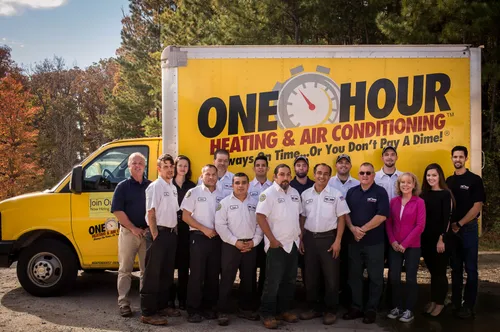
Green Horizon One Hour Heating & Air Conditioning
4628 Industry Ln Suite C, Durham, NC 27713
Green Horizon One Hour Heating & Air Conditioning provides HVAC repair, installation, and maintenance services in Raleigh, NC. They specialize in air conditioning, furnace, heat pump, mini split, and geothermal heat pump systems. The company offers 24/7 emergency service and backs their work with a two-year satisfaction guarantee. As an independently owned business within the One Hour Heating & Air Conditioning network, Green Horizon emphasizes punctuality and clear communication with customers.
Raleigh Heating and Air
2730 Rowland Rd, Raleigh, NC 27615
Raleigh Heating and Air is a full-service HVAC and plumbing company based in Raleigh, NC. Serving Wake County and surrounding areas, they provide repair, installation, and maintenance for heating and cooling systems including central air conditioners, ductless mini-splits, geothermal heat pumps, and furnaces. The company has over 30 years of experience and offers 24-hour emergency HVAC repair services to ensure homes remain safe and comfortable year-round. They also provide indoor air quality solutions to address harmful contaminants in the home environment.
How Geothermal Systems Work in Chapel Hill
The core principle behind a geothermal heating and cooling system is remarkably simple: it moves heat rather than creating it. Beneath Chapel Hill, the earth maintains a relatively constant temperature of around 55°F (13°C) year-round, just a few feet below the surface 1. A geothermal system uses this stable temperature as a free energy source.
Here's the basic process:
- Heat Exchange: A sealed loop of pipes, called a ground loop, is buried in your property. A water-based fluid circulates through these pipes.
- Winter Heating: In the heating season, the fluid absorbs the earth's natural warmth as it travels through the loop. This warmed fluid is pumped to an indoor heat pump unit.
- Heat Transfer: The indoor unit extracts the heat from the fluid, concentrates it, and distributes it through your home's existing ductwork or radiant floor system. The cooled fluid is then recirculated back into the ground to be warmed again.
- Summer Cooling: The process reverses for cooling. The system extracts heat from your home's air, transfers it to the fluid in the loop, and deposits it into the cooler earth. The now-chilled fluid cycles back to cool your home.
This method of heat transfer is vastly more efficient than generating heat through combustion or standard electric resistance, leading to significant energy savings.
Types of Ground Source Heat Pump Loops
The configuration of the underground piping system is a critical decision for any Chapel Hill installation. The right choice depends on your lot size, soil composition, and budget. The main types are:
Closed-Loop Systems This is the most common residential setup, where a mixture of water and antifreeze is continuously circulated through a sealed, high-density polyethylene (HDPE) pipe loop.
- Horizontal Loop: Ideal for properties with ample yard space. Trenches are dug 3 to 6 feet deep and hundreds of feet long to lay the pipes horizontally. This is often the most cost-effective option for new construction where the land is already being excavated2 3.
- Vertical Loop: The best solution for smaller lots common in established Chapel Hill neighborhoods. Boreholes are drilled 150 to 400 feet deep, and U-shaped pipe loops are inserted into each hole. While drilling costs are higher, vertical loops minimize landscape disruption and are less affected by surface temperature variations4.
Open-Loop Systems This system uses groundwater from a well as the direct heat exchange fluid. It pumps water from an aquifer, runs it through the heat pump, and then discharges it to a second well, pond, or stream. While potentially very efficient, open-loop systems require an abundant, suitable water source and are subject to specific regulations and permitting from the North Carolina Department of Environmental Quality (NCDEQ).
Pond/Lake Loop If you have a sufficient body of water on your property, coils of pipe can be submerged at the bottom. The water body acts as the heat source and sink. This can be a very low-cost loop option if the site conditions are perfect5.
The Geothermal Installation Process: What to Expect
Installing a ground-source heat pump is a significant project that requires specialized expertise. Understanding the steps can help Chapel Hill homeowners prepare.
- Site Evaluation & Design: A qualified installer will assess your property's soil conditions, lot size, landscaping, and access to determine the optimal loop type and size for your home's heating and cooling loads.
- Permitting: Your contractor will handle securing necessary permits. In North Carolina, this often involves the NCDEQ for any drilling or groundwater use, especially for vertical boreholes or open-loop systems6.
- Ground Loop Installation: This is the major excavation phase.
- For horizontal loops, an excavator will dig long trenches in your yard.
- For vertical loops, a drill rig will be brought in to create the deep boreholes. The HDPE pipes are then placed, connected into a continuous loop, and pressure-tested 7.
- Indoor Unit Installation: The geothermal heat pump unit-which is typically about the size of a traditional furnace-is installed inside your home, usually in a basement, utility room, or garage. It is connected to your home's ductwork and to the ground loop pipes entering the building.
- System Charging & Startup: The loop is filled with the heat transfer fluid, purged of air, and pressurized. The entire system is then started, tested, and balanced to ensure optimal performance.
Find the perfect geothermal heat pump contractors for your needs
Get personalized recommendations and expert advice
Benefits for Chapel Hill Homeowners
The decision to install a geothermal system is a long-term investment that pays dividends in multiple ways.
- Substantial Energy Savings: By moving existing heat, geothermal heat pumps operate with remarkable efficiency. Homeowners can see reductions of 30% to 70% in their heating and cooling costs compared to conventional systems like furnaces and standard air conditioners8 9. In Chapel Hill's climate, with both hot, humid summers and chilly winters, these savings are realized year-round.
- Exceptional Longevity and Reliability: The underground loop system is incredibly durable, with a lifespan often exceeding 50 years. The indoor heat pump unit typically lasts 20 to 25 years, which is about twice as long as the average conventional outdoor air conditioner or heat pump. This means decades of reliable comfort with fewer replacements.
- Enhanced Comfort: These systems provide consistent, even heating and cooling without the drafts or hot/cold spots associated with forced-air systems that rely on outside air temperatures. They also excel at dehumidifying during the summer, making your home feel more comfortable at higher thermostat settings.
- Quiet Operation and Low Maintenance: With no loud outdoor condenser unit, geothermal systems run very quietly. The indoor unit has fewer mechanical parts exposed to the elements, and the buried loop requires no maintenance, leading to lower long-term service needs 10.
- Environmental Stewardship: Geothermal systems use renewable thermal energy from the ground, drastically reducing your home's reliance on fossil fuels and its carbon footprint. They also use non-ozone-depleting refrigerants, making them one of the cleanest heating and cooling technologies available.
Important Considerations Before You Install
While the benefits are compelling, it's crucial to go in with a clear understanding of the project's scope.
- Higher Upfront Cost: The initial investment for a complete geothermal system in Chapel Hill is significant, typically ranging from $15,000 to $35,000 or more, depending on the loop type and home size11. This cost is primarily due to the excavation and loop installation. However, federal tax credits (like the 30% Residential Clean Energy Credit) and potential local incentives can substantially offset this cost, improving the return on investment.
- Property Disruption: Installing the ground loop is a major landscaping event, especially for horizontal systems. While vertical drilling is less disruptive to the surface, it still requires heavy equipment access. The process is often most seamlessly integrated during new home construction or a major renovation.
- Space Requirements: Horizontal loops require a sizable, clear area of land. Vertical loops solve space issues but require adequate access for a large drill rig and may be constrained by underground rock formations.
- Professional Expertise is Critical: Designing and installing a geothermal system is not a DIY project. It requires licensed professionals with specific experience in drilling, trenching, plumbing, and HVAC. Proper sizing and installation are paramount to achieving the promised efficiency and savings 12.
Frequently asked questions
Sources
Footnotes
-
Geothermal Heating and Cooling - https://geothermal.colorado.gov/geothermal-heating-and-cooling ↩
-
Geothermal heat pumps: The ultimate guide to ground-source ... - https://termo-plus.com/blog/geothermal-ultimate-guide-to-ground-source-heat-pumps/ ↩
-
Geothermal Heat Pump Installation: What To Expect For Your Property - https://jomory.com/geothermal-heat-pump-installation-what-to-expect-for-your-property/ ↩
-
Geothermal Heat Pumps - NC Sustainable Energy Association - https://www.energync.org/clean-energy-101/geothermal-heat-pumps/ ↩
-
Geothermal Heat Pumps - Department of Energy - https://www.energy.gov/energysaver/geothermal-heat-pumps ↩
-
Geothermal Heating and Cooling | NC DEQ - https://www.deq.nc.gov/about/divisions/water-resources/groundwater-resources/injection-wells-uic-program/geothermal-heating-and-cooling ↩
-
How Geothermal Heat Pumps Work - https://www.youtube.com/watch?v=XxlTnBukweI&t=37 ↩
-
5 Things You Should Know about Geothermal Heat Pumps - https://www.energy.gov/cmei/articles/5-things-you-should-know-about-geothermal-heat-pumps ↩
-
Unlocking Underground Energy: Ground Source Heat Pumps - https://www.ncsl.org/energy/unlocking-underground-energy-ground-source-heat-pumps ↩
-
How Do Geothermal Systems Work for Residential Homes? - https://www.davisheat.com/blog/how-do-geothermal-systems-work-for-residential-homes/ ↩
-
How Geothermal Heating and Cooling Systems Work | Belle Air - https://www.belleairservices.com/how-geothermal-heating-and-cooling-systems-work/ ↩
-
All You Need to Know About Home Geothermal Heating & ... - https://dandelionenergy.com/all-you-need-to-know-about-home-geothermal-heating-cooling ↩