Find the Best Geothermal Heat Pump Contractors for Your Business
No obligation • Fast responses • Nationwide coverage

Why you can trust HVAC Firms
HVAC Firms is a leading United States resource for evaluating HVAC service providers. Our team researches companies, checks credentials, and reviews customer feedback to present clear, unbiased information. Listings and rankings are based on merit, and companies cannot pay to change our editorial content.
Search providers near you
Top Geothermal Heat Pump Contractors in Apex, North Carolina Ranked
A geothermal heat pump is a highly efficient heating and cooling system that leverages the Earth's stable underground temperature to condition your home. For Apex residents, this technology offers a powerful way to reduce energy bills and environmental impact. This guide explains how ground-source heat pumps work, the installation process, and how you can find qualified local experts to evaluate your property for this sustainable upgrade.
Maynor Service Company
1000 Goodworth Dr, Apex, NC 27539
Maynor Service Company is a heating, air conditioning, plumbing, and electrical service provider based in Raleigh, NC. Serving the Triangle Area, they offer repair, installation, design, and high-efficiency system upgrades including geothermal, ductless mini-split, and variable speed heating and cooling systems. With over 25 years of experience, Maynor Service Company operates 24/7 to meet customer needs and emphasizes energy-efficient and sustainable equipment options.
Bowman Heating & Cooling
1544 Mechanical Blvd, Garner, NC 27529
Bowman Heating & Cooling is a full-service HVAC company based in Raleigh, NC, serving the Triangle area including Garner. They provide a wide range of heating and cooling services such as repair, maintenance, and installation of gas furnaces, heat pumps, air conditioners, and geothermal heat pumps. Bowman Heating & Cooling specializes in geothermal systems, having installed and maintained hundreds in the region. Their offerings also include humidifiers, filtration systems, and zone control systems.
Warren-Hay Mechanical
Durham, NC
Warren-Hay Mechanical is a family-owned HVAC company serving Durham, NC, and surrounding areas including Hillsborough, Chapel Hill, and Myrtle Beach, SC. They offer a wide range of heating and cooling services such as air conditioning repair, furnace repair, heat pump installation, and indoor air quality inspections. The company is recognized as a Trane Comfort Specialist and holds certifications including NATE and IGSHPA for geothermal heat pump expertise. With over 30 years of experience since 1993, Warren-Hay Mechanical provides commercial and residential HVAC solutions and offers 24/7 emergency services for urgent needs.
Pappy's Heating & Air Inc.
143 Albemarle Dr, Clayton, NC 27527
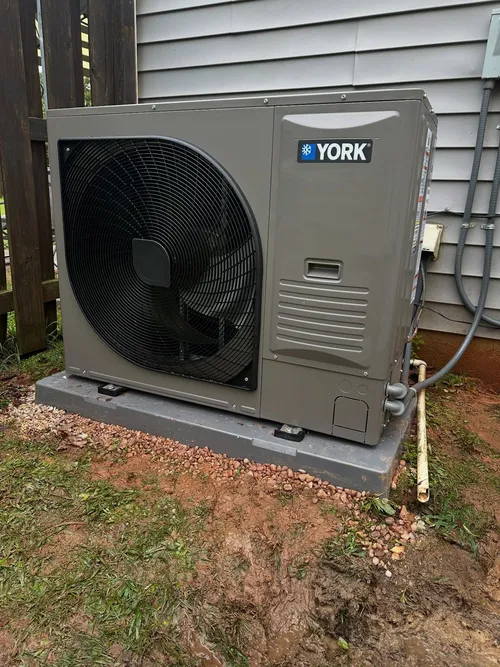
Pappy's Heating & Air Inc. provides HVAC repair, installation, and maintenance services in Raleigh, NC, and surrounding Johnston County areas. They handle a variety of systems including air conditioners, furnaces, heat pumps, ductless mini splits, and geothermal HVAC units. The company also offers indoor air quality solutions such as duct cleaning and dehumidifier installation. Pappy's is known for its 10-year labor warranties and a comprehensive worry-free program covering parts, labor, maintenance, and service calls. They support public service professionals with special rebates and financing options.
Green Horizon One Hour Heating & Air Conditioning
4628 Industry Ln Suite C, Durham, NC 27713
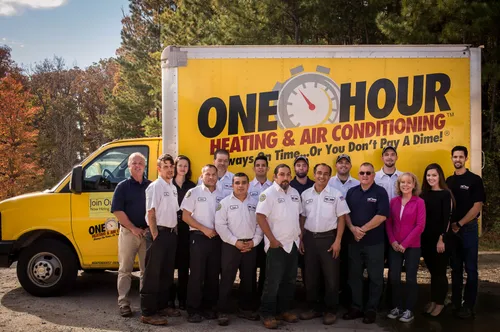
Green Horizon One Hour Heating & Air Conditioning provides HVAC repair, installation, and maintenance services in Raleigh, NC. They specialize in air conditioning, furnace, heat pump, mini split, and geothermal heat pump systems. The company offers 24/7 emergency service and backs their work with a two-year satisfaction guarantee. As an independently owned business within the One Hour Heating & Air Conditioning network, Green Horizon emphasizes punctuality and clear communication with customers.
How Geothermal Systems Work
The core principle behind a geothermal system, also known as a ground-source heat pump (GSHP), is remarkably simple. Just a few feet below the surface, the Earth maintains a nearly constant temperature between 55°F and 65°F year-round, regardless of the summer heat or winter chill above ground 1. A geothermal heat pump uses this stable thermal resource as a heat source in winter and a heat sink in summer.
The system transfers heat through a network of pipes, called a ground loop, buried in your yard. A water-based fluid circulates through this closed loop, absorbing heat from the warmer ground in winter and carrying it to the heat pump unit inside your home. The heat pump then concentrates this thermal energy and distributes warm air through your ductwork. In summer, the process reverses: the system extracts heat from your home and transfers it into the cooler ground loop fluid, which then dissipates the heat into the Earth, providing efficient air conditioning. This efficient heat exchange process is why these systems can achieve such significant energy savings compared to conventional air-source heat pumps or furnaces.
Types of Ground Loop Systems
The configuration of the buried piping is a critical part of your geothermal installation. The right loop type for your Apex home depends on your land availability, soil composition, and local geology. All systems in North Carolina are regulated by the Department of Environmental Quality (DEQ) to protect groundwater resources.
Closed-Loop Systems These are the most common residential installations. A mixture of water and antifreeze is sealed inside a continuous, high-density polyethylene pipe loop.
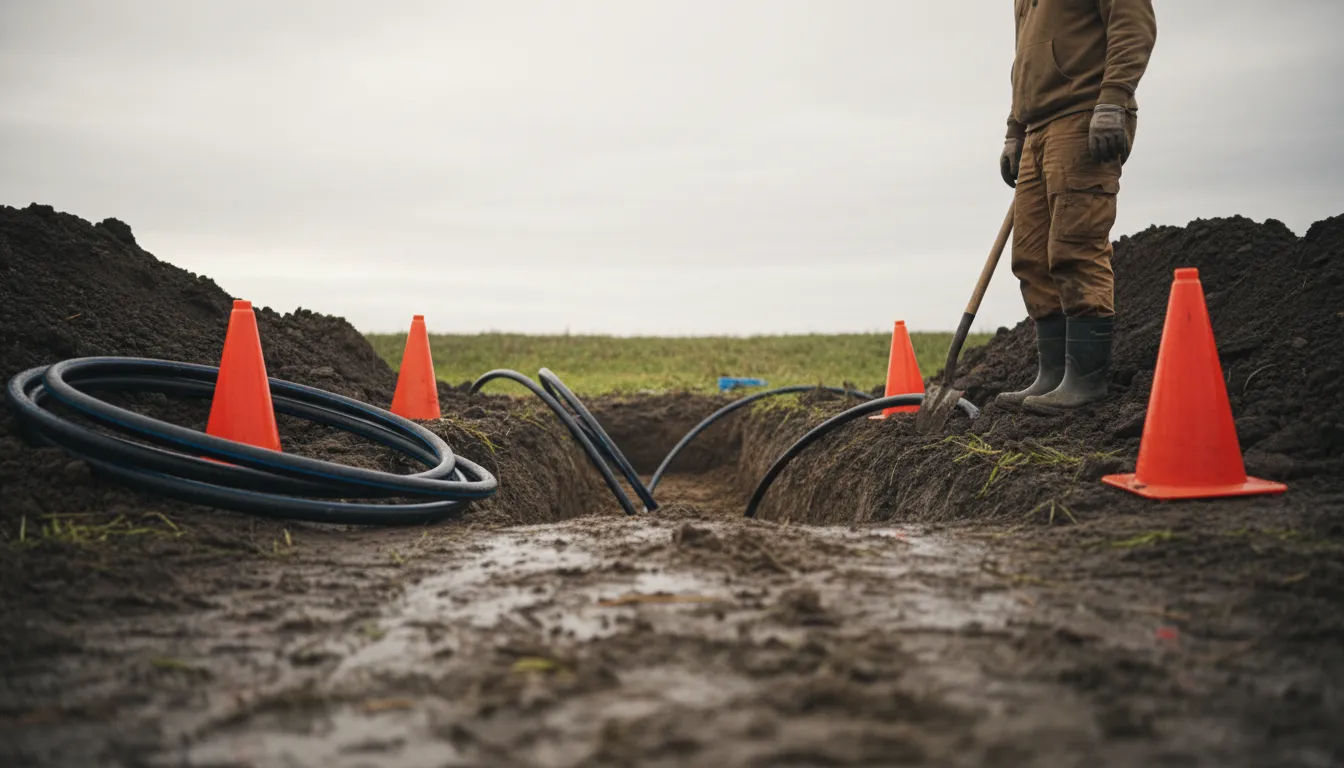
- Horizontal Closed-Loop: This design involves digging trenches 4 to 6 feet deep and laying pipes in a series of parallel rows or slinky coils. It requires a substantial amount of open land but typically has a lower installation cost than vertical systems because trenching is less expensive than drilling 2.
- Vertical Closed-Loop: For properties with limited yard space, vertical loops are the ideal solution. Contractors drill boreholes 60 to 140 meters deep and insert U-shaped pipe loops into each hole. The holes are then grouted. While the drilling process is more expensive, a vertical ground source heat pump system requires minimal surface area, making it perfect for smaller suburban lots in Apex 3.
Open-Loop Systems Also known as a groundwater heat pump, this system uses water from a well or a pond as the direct heat exchange fluid. It pumps water from the source, runs it through the heat pump, and then discharges it to a second well, a pond, or a stream (where regulations permit). Open-loop systems can be highly efficient but require an adequate, sustainable supply of clean water and are subject to specific permitting from the NC DEQ 4.
Pond/Lake Loops If you have a sufficient body of water on your property, a coil of pipe can be submerged at the bottom. This can be a very cost-effective loop option, as it avoids the need for extensive trenching or drilling, assuming the pond meets depth and quality requirements 5.
The Geothermal Installation Process in Apex
Installing a geothermal heating and cooling system is a significant project that requires careful planning and expert execution. Here's what homeowners can typically expect.
- Site Evaluation and Design: A qualified installer will begin with a comprehensive assessment of your home's heating and cooling loads, your property's layout, soil conditions, and available space. This evaluation determines the best type and size of the heat pump and the optimal ground loop design.
- Loop Installation: This is the most substantial phase. For a horizontal system, excavation equipment will dig the necessary trenches. For a vertical system, a drilling rig will create the boreholes. The polyethylene piping is then laid or inserted, connected, and pressure-tested to ensure there are no leaks.
- Trenching to the House: A separate trench is dug from the main loop field to your home's foundation. This trench carries the connected loop pipes to the point where they will enter your basement or crawl space to connect to the heat pump 6.
- Indoor Unit Installation: The geothermal heat pump unit itself is installed inside your home, typically in a basement, utility room, or garage. It is connected to your existing ductwork or to a new air distribution system if you are installing one 7.
- System Hookup and Commissioning: The ground loops are connected to the heat pump. The loop is filled with its heat transfer fluid, purged of air, and pressurized. Finally, the entire system is started, tested, and balanced to ensure it operates at peak efficiency 8.
Find the perfect geothermal heat pump contractors for your needs
Get personalized recommendations and expert advice
Costs, Savings, and Financial Incentives
The decision to install a geothermal system is a long-term investment in your home's comfort and efficiency. The primary barrier is the upfront cost, which is higher than that of a conventional HVAC system due to the ground loop excavation or drilling.
Understanding the Investment The drilling or trenching for the ground loop represents a major portion of the total installed cost. However, it's crucial to view this cost in light of the operational savings. Geothermal heat pumps are 25% to 65% more efficient than standard systems for heating and can be up to 50% more efficient for cooling 9 10. This dramatic increase in efficiency translates directly to lower monthly utility bills.
Calculating Payback and Long-Term Value For many homes in Apex, especially those with high existing heating and cooling costs, the monthly savings can be substantial-potentially hundreds of dollars annually. This often results in a payback period on the initial investment within 5 to 10 years. After the payback period, the continued savings go directly into your pocket for the remaining 20+ year lifespan of the system's indoor components (the ground loop itself can last 50 years or more).
Available Incentives To help offset the initial cost, significant financial incentives are available:
- Federal Tax Credit: The Residential Clean Energy Credit (formerly the Investment Tax Credit or ITC) allows homeowners to claim 30% of the total installed cost of a qualifying geothermal heat pump system on their federal income taxes 11 12.
- Local Utility Rebates: It's always worth checking with local Apex and Wake County utilities, as they sometimes offer additional rebates or special financing for energy-efficient upgrades like ground-source heat pumps 13.
Is a Geothermal System Right for Your Home?
Geothermal technology offers compelling benefits, but it's not a one-size-fits-all solution. It is an exceptionally strong investment for new construction projects, as the loop installation can be seamlessly integrated with other site work. It's also ideal for homeowners planning a major renovation or those replacing an old, inefficient HVAC system who plan to stay in their home long enough to realize the full financial savings.
The most critical step is to have a detailed, on-site consultation with an experienced geothermal contractor. They can provide a realistic cost estimate, savings projection, and site-specific design for your property. With the combination of superior comfort, remarkable energy savings, and valuable incentives, a geothermal heat pump is a smart, sustainable choice for many Apex homeowners looking to modernize their home's climate control.
Frequently asked questions
Sources
Footnotes
-
Ground Source Heat Pumps - https://www.consolidatedelectric.com/ground-source-heat-pumps ↩
-
Geothermal Heat Pumps - NC Sustainable Energy Association - https://www.energync.org/clean-energy-101/geothermal-heat-pumps/ ↩
-
Geothermal Heat Pump Systems - https://c03.apogee.net/mvc/home/hes/land/el?utilityname=ure&spc=goe&id=6431 ↩
-
Geothermal Heating and Cooling | NC DEQ - https://www.deq.nc.gov/about/divisions/water-resources/groundwater-resources/injection-wells-uic-program/geothermal-heating-and-cooling ↩
-
Geothermal heat pumps: The ultimate guide to ground-source ... - https://termo-plus.com/blog/geothermal-ultimate-guide-to-ground-source-heat-pumps/ ↩
-
How Geothermal Heat Pumps Work - https://www.youtube.com/watch?v=XxlTnBukweI&t=37 ↩
-
Geothermal Heat Pump Installation (Steps, Benefits...) - Panther HVAC - https://pantherhvac.com/blog/geothermal-heat-pump-installation/ ↩
-
Geothermal Heat Pump Installation: What To Expect For Your ... - https://jomory.com/geothermal-heat-pump-installation-what-to-expect-for-your-property/ ↩
-
NC Geothermal Heat Pumps - NJ Green Building Manual - https://greenmanual.rutgers.edu/nc-geothermal-energy-systems/ ↩
-
Geothermal Heat Pumps: How They Work and Benefits for Your ... - https://www.rbiva.com/resources/geothermal-heat-pumps-how-they-work-and-benefits/ ↩
-
Geothermal Heat Pumps: Ultimate Energy Savings - https://www.davisheatingac.com/2015/12/11/geothermal-heat-pumps-ultimate-energy-savings/ ↩
-
Geothermal Cost Savings and Benefits - https://energycatalysttech.com/geothermal-cost-savings-and-benefits/ ↩
-
Geothermal Heat Pumps - Carolina Country - https://www.carolinacountry.com/story/geothermal-heat-pumps-2 ↩