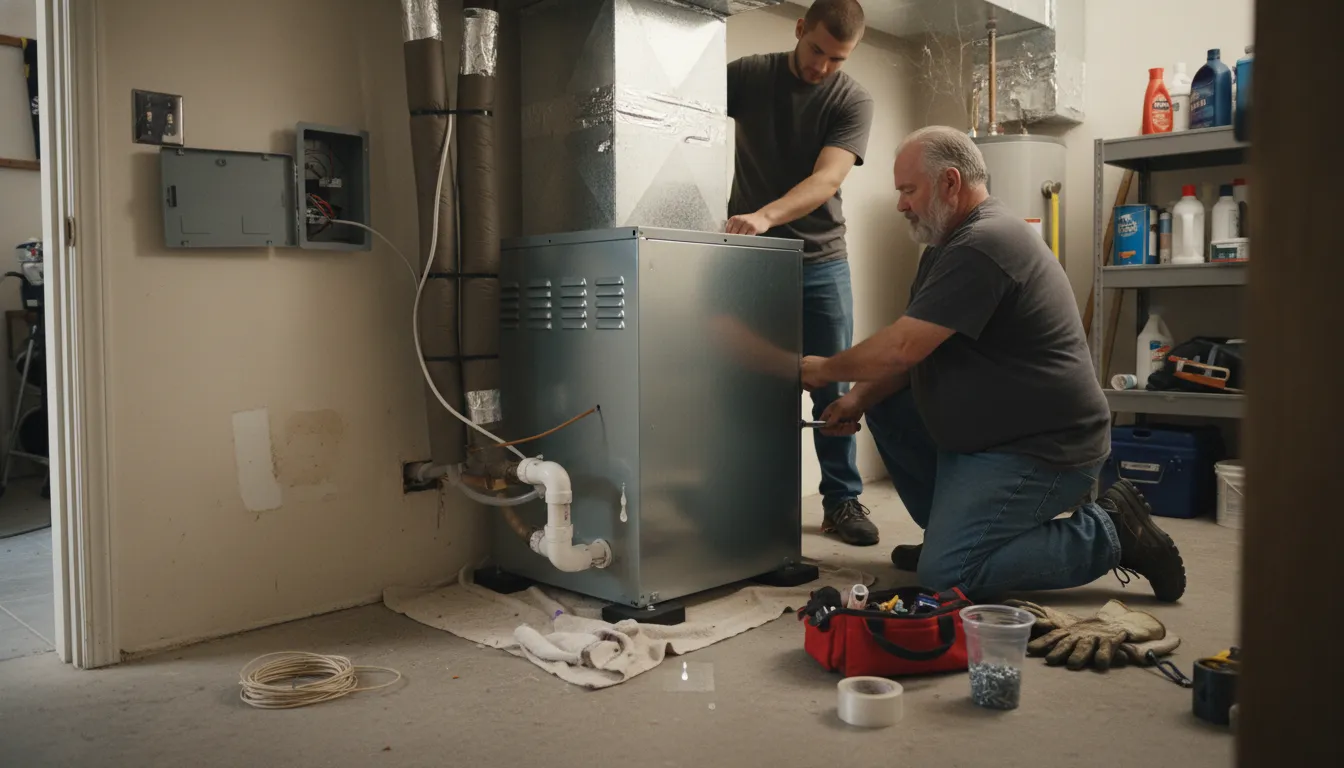
Find the Best HVAC Installers for Your Business
No obligation • Fast responses • Nationwide coverage

Why you can trust HVAC Firms
HVAC Firms is a leading United States resource for evaluating HVAC service providers. Our team researches companies, checks credentials, and reviews customer feedback to present clear, unbiased information. Listings and rankings are based on merit, and companies cannot pay to change our editorial content.
Search providers near you
Top HVAC Installers in Aurora, Colorado Ranked
Installing a new heating and cooling system is a significant investment in your Aurora home's comfort, energy efficiency, and long-term value. HVAC installation involves selecting the right system for your specific needs, ensuring it's sized and configured correctly, and having it professionally integrated into your home. This guide will help you understand the process, your options, and how to connect with qualified local professionals who can ensure your installation is done right the first time.
True Heating & Cooling
1351 W 121st Ave, Westminster, CO 80234
True Heating & Cooling is an HVAC company based in Denver, CO, offering heating, air conditioning, and indoor air quality services. They serve Westminster and nearby areas including Broomfield and Boulder. Their services include installation, repair, and maintenance of furnaces, boilers, air conditioners, heat pumps, ductless mini-split systems, and thermostats. As NATE-certified technicians and official Lennox dealers, they provide skilled work with access to quality equipment. True Heating & Cooling has 24/7 emergency availability to address urgent HVAC needs.
Signature Heating & Air, Inc.
7201 S Rome St, Centennial, CO 80016
Signature Heating & Air, Inc. is a family-owned and operated HVAC company serving Aurora, CO, and nearby communities since 1999. They provide a range of heating and air conditioning services including installation, repair, and maintenance of AC units, furnaces, and thermostats. The company also offers indoor air quality solutions to improve home ventilation. As an authorized Amana dealer, they install reliable and energy-efficient systems known for long-term comfort. Their service area includes Centennial and surrounding Colorado communities.
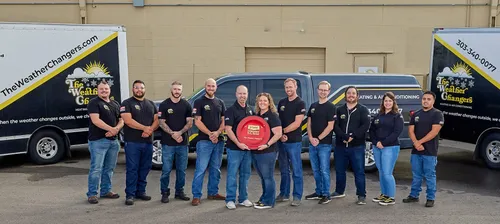
The Weather Changers Heating and Air Conditioning
10525 E 40th Ave #203, Denver, CO 80239
The Weather Changers Heating and Air Conditioning is an HVAC company based in Denver, CO, offering a full range of heating, cooling, and indoor air quality services. They provide installation, repair, and maintenance for air conditioners, furnaces, heat pumps, ductless systems, and thermostats. The company is a Bryant Factory Authorized Dealer and emphasizes proper sizing and installation to optimize system efficiency and longevity. They serve Denver and surrounding areas including Aurora, Centennial, and Parker. Their expertise includes indoor air quality solutions such as humidifier installation and duct cleaning. The Weather Changers has over 15 years of experience serving multiple properties and offers a 100% satisfaction guarantee.
Efficient Comfort: Heating, Cooling & Mechanical
10835 N Dover St #100, Westminster, CO 80021
Efficient Comfort: Heating, Cooling & Mechanical is a family owned and operated HVAC company serving Aurora, CO, and the surrounding Denver metro areas. Founded in 2007, the company offers a wide range of heating and cooling services including installation, repair, and maintenance of furnaces, air conditioners, heat pumps, boilers, and ductless mini splits. As Bryant Factory Authorized Dealers, they provide expertise in managing indoor air quality with accessories like air cleaners, humidifiers, ventilators, and UV lights. The company emphasizes ethical business practices and community involvement.
Aim High HVAC
9933 Titan Park Cir, Littleton, CO 80125
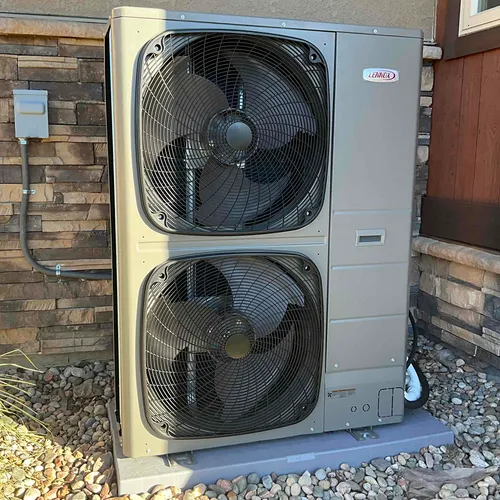
Aim High HVAC is a heating and cooling service provider based in Aurora, CO. They specialize in HVAC installation and repair, including air conditioning, furnaces, heat pumps, and indoor air quality services. Serving the greater Colorado area, Aim High HVAC offers same-day repairs and supports various home comfort needs with certified technicians. Established in 2016, the company has built a reputation for integrity and commitment to customer service.
Understanding Your HVAC System Options
When it's time for a new installation in Aurora, you have several primary system types to consider. Each has its own advantages, ideal applications, and cost considerations.
Central Air Conditioner & Furnace Combo This is the traditional and most common setup in many Aurora homes. It consists of a split-system air conditioner for cooling and a gas or propane furnace for heating. This combination is highly effective for whole-home climate control and is a straightforward replacement if you already have ductwork in place. For a full system replacement, homeowners can expect costs generally ranging from $9,000 to $14,000 or more, depending heavily on the efficiency ratings and unit size.
Heat Pump Systems Heat pumps are versatile, all-electric systems that provide both heating and cooling. They work by transferring heat rather than generating it, making them exceptionally efficient, especially in moderate climates. Modern models perform well in Illinois winters. Installing a new heat pump system typically falls in the range of $8,000 to $13,000. This can be an excellent option for those looking to reduce reliance on fossil fuels and utilize a single, streamlined system.
Ductless Mini-Split Systems If your home lacks ductwork or you're looking to add climate control to a specific addition or zone, ductless mini-splits are a perfect solution. They consist of an outdoor compressor/condenser and one or more indoor air-handling units, connected by a small conduit. Installation is less invasive than adding ducts, and costs can range from $4,000 for a single-zone system to $10,000 or more for a multi-zone setup 1 2.
The Professional Installation Process: A Step-by-Step Guide
A proper HVAC installation is a detailed process that goes far beyond simply swapping an old unit for a new one. Here's what you can expect when working with a qualified Aurora professional.
1. Initial Site Evaluation and Load Calculation This critical first step is not a sales pitch-it's an engineering necessity. A technician will assess your home's square footage, insulation levels, window quality, sun exposure, and more. This data is used to perform a Manual J load calculation, which determines the precise heating and cooling capacity (measured in BTUs or tons) your home needs. An oversized or undersized system will lead to comfort issues, short cycling, and higher energy bills.
2. System Selection and Proposal Based on the load calculation and your home's existing infrastructure (like ductwork), the contractor will recommend suitable systems. They should explain the differences in efficiency, represented by SEER2 ratings for air conditioners/heat pumps and AFUE ratings for furnaces. Higher ratings mean greater efficiency and lower operating costs, but a higher upfront price.
3. Securing Permits Reputable installers will pull all required local Aurora permits before work begins. This ensures the installation will be inspected to meet current building and safety codes, protecting your investment and your home.
4. Removal of Old Equipment The old furnace, air conditioner, or heat pump is safely disconnected and removed from your home. This includes proper recovery of any remaining refrigerant, which is required by law.
5. New System Installation This is the core phase. For a central system, it involves setting the new outdoor unit on a stable pad, installing the new indoor furnace or air handler, and making all necessary connections. This includes refrigerant lines for cooling, flue pipes for furnaces, electrical connections, and the condensate drain system.
6. Ductwork and Electrical Assessment Your existing ductwork and electrical service will be inspected. Ducts may need sealing, modifications, or, in rare cases, replacement to ensure proper airflow. The electrical circuit must be adequate for the new system's demands.
Find the perfect hvac installers for your needs
Get personalized recommendations and expert advice
7. System Startup, Testing, and Balancing Once physically installed, the technician will start the system, check refrigerant charge, test gas pressure (for furnaces), verify electrical readings, and ensure the thermostat is communicating correctly. They will also balance airflow at the registers to ensure even comfort throughout your home.
8. Homeowner Orientation A final walkthrough is essential. The installer should show you how to operate your new thermostat, explain basic maintenance tasks like filter changes, and review the system's warranty and service agreements 3.
What Influences the Timeline and Cost?
Installation Timeline A straightforward swap of a central air conditioner and furnace with no ductwork modifications can often be completed in a single day 4. More complex jobs, such as converting from one system type to another (e.g., adding AC to a furnace-only home), installing a new heat pump system, or making significant ductwork alterations, will typically take 2 to 3 days or more 5.
Key Cost Factors The final price for your Aurora HVAC installation is influenced by several variables:
- System Type and Size: Larger capacity units (more tons/BTUs) cost more.
- Efficiency Rating: High-SEER2 or AFUE units have a higher purchase price but lower lifetime operating costs.
- Equipment Brand: Premium brands often command a higher price.
- Scope of Labor: The complexity of the install, including any needed ductwork, electrical upgrades, or custom fabrication.
- Permits and Local Codes: Costs for permits and any required upgrades to meet current code.
- A Strategic Tip: If both your furnace and air conditioner are aging, replacing them simultaneously is often more cost-effective than doing them separately, as it consolidates labor and setup costs 6.
Ensuring a Successful Installation
Your choice of installer is as important as your choice of equipment. Look for licensed, insured contractors with strong local references in the Aurora area. They should provide a detailed, written proposal that includes the specific model numbers, a breakdown of labor, permit fees, and warranty information. Always ask about post-installation support and maintenance plans to keep your new system running efficiently for years to come.
Frequently asked questions
Sources
Footnotes
-
Aurora IL AC Installation & Replacement Expert Service - https://www.amazingairinc.com/air-conditioning/ac-installation-aurora-il ↩
-
How Much Does a New Furnace and AC Cost? [2026 Data] | Angi - https://www.angi.com/articles/save-money-replacing-heat-ac-same-time.htm ↩
-
Step-by-Step HVAC Installation Guide - Carrier - https://www.carrier.com/residential/en/us/products/air-conditioners/hvac-installation/ ↩
-
AC Installation Service - Aurora, IL - https://www.trmillerheatingandcooling.com/ac-installation-aurora-il/ ↩
-
Expert AC Installation Solutions for Aurora Homeowners - https://youngrensinc.com/air-conditioner/installation ↩
-
Should I Replace My Furnace and Air Conditioner at the Same Time? - https://www.ambientedge.com/faqs/should-i-replace-furnace-and-air-conditioner-at-the-same-time/ ↩