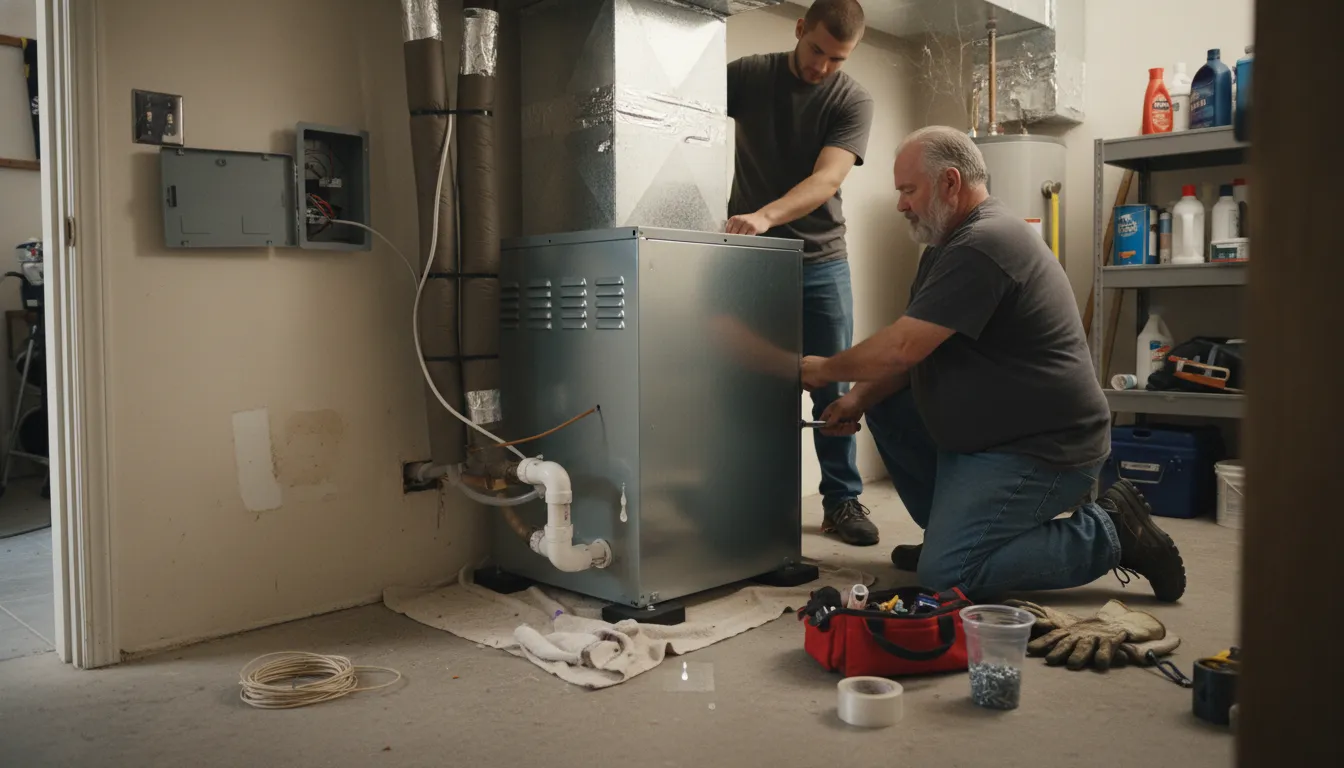
Find the Best HVAC Installers for Your Business
No obligation • Fast responses • Nationwide coverage

Why you can trust HVAC Firms
HVAC Firms is a leading United States resource for evaluating HVAC service providers. Our team researches companies, checks credentials, and reviews customer feedback to present clear, unbiased information. Listings and rankings are based on merit, and companies cannot pay to change our editorial content.
Search providers near you
Top HVAC Installers in Ventura, California Ranked
Installing a new heating, ventilation, and air conditioning system is a significant investment in your home's comfort, efficiency, and value. In Ventura's coastal climate, a properly sized and installed HVAC system is crucial for managing moderate heating needs and ensuring effective cooling and dehumidification. This guide will help you understand the options, process, and key considerations for air conditioning and heating installation in Ventura, empowering you to make an informed decision when selecting a local service provider.
Hilo Aire
28220 Ave Crocker # 407, Valencia, CA 91355
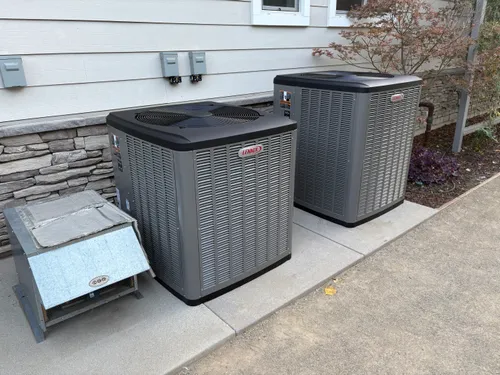
Hilo Aire is an HVAC company serving Santa Clarita, CA, and surrounding areas including Ventura and Los Angeles counties. They provide a range of heating and cooling services such as air conditioning, furnace, heat pump, and ductless mini-split installation, maintenance, and repair. The company also offers indoor air quality services and customized system design focused on energy efficiency. With over 30 years of combined industry experience, Hilo Aire emphasizes transparent pricing and customer-centered service. They provide same-day, weekend, and emergency service options.
Just Rite Air Heating & Cooling Santa Clarita
25030 Avenue Stanford suite 70, Santa Clarita, CA 91355
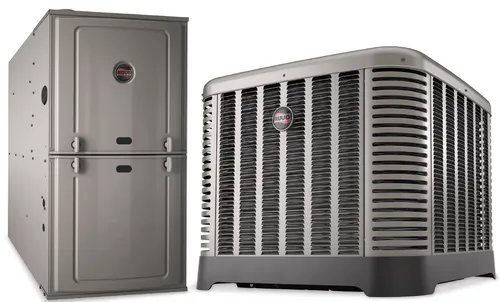
Just Rite Air Heating & Cooling Santa Clarita provides comprehensive HVAC services in Santa Clarita, CA. They specialize in the installation, repair, and maintenance of heating and cooling systems including furnaces, air conditioners, heat pumps, boilers, ductless mini-splits, and geothermal heat pumps. Their services also cover indoor air quality solutions such as air purifiers, humidifiers, and duct cleaning. The company handles diagnostics and repairs for various HVAC components and offers system tune-ups to maintain efficiency. They serve the entire Santa Clarita Valley including Valencia, Saugus, Canyon Country, and Newhall.
iComfort Heating and Air Conditioning, Inc
28422 Constellation Rd Unit #210, Valencia, CA 91355
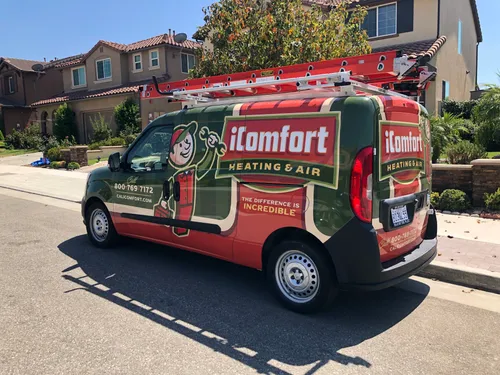
iComfort Heating and Air Conditioning, Inc is an HVAC company based in Santa Clarita, CA. They provide repair and installation services for air conditioning and furnace systems, working with many makes and models. With over a decade of experience, their technicians can handle a variety of heating and cooling equipment and offer tailored solutions for repairs or replacements.
JC Refrigeration Heating and Air
25030 Avenue Stanford Suite 90, Santa Clarita, CA 91355
JC Refrigeration Heating and Air provides a range of HVAC services in Santa Clarita, CA, including air conditioning and furnace repair, installation of heat pumps and thermostats, duct cleaning, and indoor air quality solutions. They offer comprehensive HVAC installation and tune-up services using advanced technology to improve energy efficiency and system performance. The company addresses common local HVAC challenges such as refrigerant leaks and clogged filters with tailored maintenance plans designed to extend equipment lifespan and enhance comfort. JC Refrigeration Heating and Air also offers guidance on energy-saving strategies and environmentally friendly heating and cooling options.
Air Crew
27720 Avenue Scott Ste # 140, Santa Clarita, CA 91355
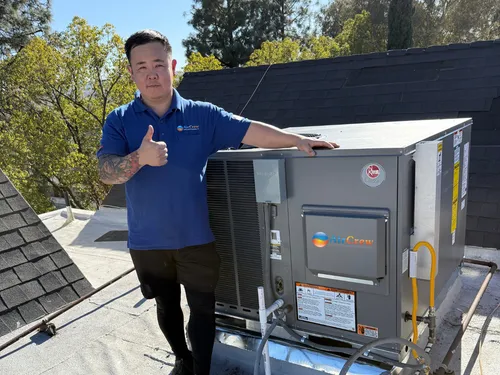
Air Crew is an HVAC company based in Santa Clarita, CA, providing air conditioning and furnace repair, installation, and maintenance services. They serve both residential and commercial clients, handling all major heating and cooling systems. Their technicians are skilled in repairing central air conditioning systems and offer professional consultations to help clients maintain efficient and up-to-date equipment. Air Crew is a Rheem Pro Partner Dealer with years of experience in the industry.
Understanding Your HVAC System Options
Choosing the right system is the first step toward year-round comfort. The coastal environment of Ventura influences which climate control solutions are most effective and efficient for local homes.
- Heat Pumps: These are highly efficient systems that provide both heating and cooling by transferring heat rather than generating it. They are increasingly popular in California due to their energy savings and eligibility for various incentives. For Ventura's mild winters, a heat pump can be an excellent all-in-one solution.
- Split Systems: This traditional setup pairs a gas furnace with a central air conditioner. It remains a reliable choice, particularly well-suited to moderate climates where distinct heating and cooling components are desired.
- Ductless Mini-Splits: Ideal for homes without existing ductwork or for adding zoned comfort to specific rooms, these systems consist of an outdoor compressor and one or more indoor air handlers. They offer flexible installation and efficient operation for targeted areas.
The Step-by-Step Installation Process
A professional HVAC installation is a multi-stage project that ensures your system operates safely, efficiently, and according to code. Understanding this process can help you know what to expect from start to finish.
1. Initial Assessment and System Design
The process begins with a thorough evaluation of your home. A qualified technician will calculate your heating and cooling loads (Manual J calculation), assess existing ductwork, and discuss your comfort goals. This critical step ensures the new system is correctly sized-not too large or too small-for optimal performance and efficiency.
2. Securing Permits
Your contractor will obtain the necessary permits from the City of Ventura. Permits are required to ensure the installation meets local building and safety codes, including energy efficiency standards. This step is non-negotiable for a legal and safe installation.
3. Removal of Old Equipment
The existing furnace, air conditioner, or heat pump is safely disconnected and removed. This may also involve removing old refrigerant lines, thermostats, and sections of ductwork if they are being replaced or modified.
4. Installation of New System
This is the core phase where new equipment is put in place. It includes:
- Setting the new outdoor condenser/compressor unit.
- Installing the new indoor air handler or furnace.
- Connecting refrigerant linesets and electrical wiring.
- Installing new ductwork or sealing and modifying existing ducts.
- Setting up the new thermostat and control system.
5. System Testing, Startup, and Balancing
Once physically installed, the system is charged with refrigerant, powered on, and put through a series of tests. Technicians will check airflow, refrigerant levels, electrical connections, and thermostat calibration. They will also balance the system to ensure even air distribution throughout your home.
6. Final Inspections
A city inspector will visit to verify the installation complies with all codes. In many cases, this includes a HERS (Home Energy Rating System) inspection to confirm the system's efficiency meets California's stringent standards. Only after passing inspection is the job considered complete.
Project Timelines and What to Expect
The duration of an HVAC replacement project can vary based on complexity. A straightforward swap of a split system with no ductwork changes may be completed in 1-3 days1. Projects involving new ductwork, a change in system type (like switching to a heat pump), or a multi-zone ductless installation can take 5 days or more2. It's important to factor in the time for permit approval and the scheduling of the final inspection, which can add days or even a week to the overall project timeline3 2.
Find the perfect hvac installers for your needs
Get personalized recommendations and expert advice
Cost Considerations and Incentives for Ventura Homeowners
The total investment for a new central air and heating system in Ventura typically ranges from $10,000 to over $25,0004. Several factors influence the final price:
- System Type and Size: High-efficiency heat pumps and ductless mini-splits often occupy the higher end of the cost spectrum, while standard-efficiency split systems may start at a lower price point.
- Equipment Efficiency: Units with higher SEER2 (Seasonal Energy Efficiency Ratio) ratings for cooling and HSPF (Heating Seasonal Performance Factor) for heat pumps cost more upfront but save significantly on utility bills.
- Installation Complexity: The need for new ductwork, electrical upgrades, or custom solutions will increase labor and material costs.
Crucially, these upfront costs can be substantially offset by incentives. Homeowners should explore:
- Federal Tax Credits: The Inflation Reduction Act offers tax credits for qualifying high-efficiency heat pumps and other HVAC equipment.
- State and Local Rebates: Programs from utilities like Southern California Edison (SCE) or SoCalGas, as well as regional energy networks like BayREN, often provide rebates for installing ENERGY STAR® certified equipment. A local Ventura contractor will be your best resource for identifying all applicable rebates and incentives, which can dramatically reduce your net cost.
Key Local Considerations for Ventura
The unique coastal climate and local regulations make specific factors especially important for Ventura residents planning an HVAC upgrade.
- Climate-Appropriate Design: Ventura's moderate weather means systems should be designed with a strong focus on efficient cooling and dehumidification, with slightly less emphasis on extreme heating capacity.
- The R-22 Refrigerant Mandate: If your existing air conditioner uses R-22 refrigerant (common in systems over 10 years old), replacement is strongly advised. R-22 is no longer produced due to its ozone-depleting properties, making repairs prohibitively expensive and environmentally unsound.
- The Importance of Local Expertise: Always seek quotes from established, licensed contractors serving the Ventura and Tri-County area. Local professionals understand the specific permit requirements of the City of Ventura, are familiar with the microclimates, and have the most current knowledge of available California-specific rebates5.
Frequently asked questions
Sources
Footnotes
-
Step-by-Step HVAC Installation Guide - Carrier - https://www.carrier.com/residential/en/us/products/air-conditioners/hvac-installation/ ↩
-
New HVAC System Cost Calculator: Get a Custom Estimate in 2026 - https://modernize.com/hvac/cost-calculator ↩ ↩2
-
Residential HVAC Replacement/Upgrade - Ventura, CA - https://www.cityofventura.ca.gov/DocumentCenter/View/42852/Inspection-Checklist---FAU-and-Duct-Replacement?bidId= ↩
-
How Much Does an HVAC System Cost in California? - https://www.perfectstarhvac.com/how-much-does-an-hvac-system-cost-in-california/ ↩
-
Ventura AC Installation | TriCounty Services - https://www.tri-county-aire.com/heating-air-conditioning/ac-installation/ ↩