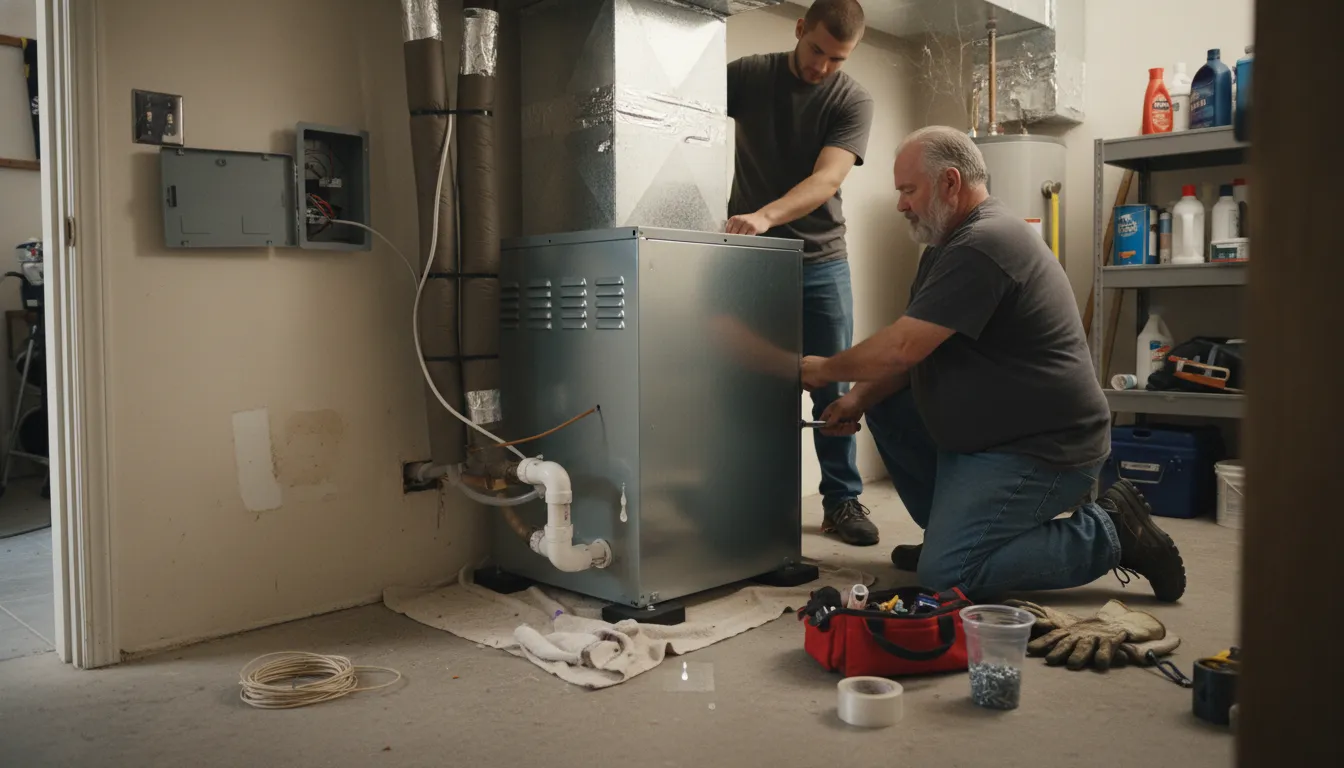
Find the Best HVAC Installers for Your Business
No obligation • Fast responses • Nationwide coverage

Why you can trust HVAC Firms
HVAC Firms is a leading United States resource for evaluating HVAC service providers. Our team researches companies, checks credentials, and reviews customer feedback to present clear, unbiased information. Listings and rankings are based on merit, and companies cannot pay to change our editorial content.
Search providers near you
Top HVAC Installers in Torrance, California Ranked
Installing a new heating, ventilation, and air conditioning (HVAC) system is a significant investment in your Torrance home's comfort, energy efficiency, and value. Whether you're replacing an aging unit or adding climate control for the first time, understanding the process, options, and local considerations is key. This guide will help you navigate the world of HVAC system setup, from choosing the right equipment to knowing what to expect during installation, so you can confidently connect with qualified local professionals.
Comfort Time Plumbing Heating & Cooling
8038 Freestone Ave, Santa Fe Springs, CA 90670
Comfort Time Plumbing Heating & Cooling is a family-owned company based in Los Angeles, CA, providing comprehensive HVAC and plumbing services for homes and businesses. They specialize in the repair and installation of air conditioning, furnaces, heat pumps, boilers, mini splits, and commercial refrigeration systems. Comfort Time Plumbing Heating & Cooling offers same-day service and uses advanced techniques such as trenchless sewer line replacement to address plumbing issues efficiently. Since 2008, they have served the local community with trained technicians who maintain up-to-date certifications and prioritize respect for customers' homes.
Eco Air Solutions- Heating/Air/QuietCool-That Fan Guy
3900 E Miraloma Ave unit d, Anaheim, CA 92806
Eco Air Solutions- Heating/Air/QuietCool-That Fan Guy is an HVAC company based in Anaheim, CA, offering services in heating, air conditioning, and indoor air quality. They serve Orange County, the Inland Empire, and South L.A. County, providing installation, repair, and maintenance for furnaces, air conditioners, and whole house fans. The company specializes in QuietCool whole house fans to improve indoor air quality and home comfort.
PDS Plumbing and Air
9706 Alondra Blvd, Bellflower, CA 90706
PDS Plumbing and Air is a veteran-owned company based in Bellflower, California, providing plumbing and HVAC services to Long Beach and nearby communities. They offer air conditioning installation and other home comfort solutions, focusing on skilled workmanship and safety. With decades of combined experience, the team handles plumbing and HVAC needs with expertise and a community-focused approach.
Thomson Air Conditioning & Heating
5731 McFadden Ave A, Huntington Beach, CA 92649
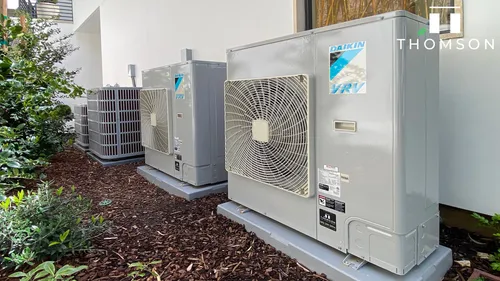
Thomson Air Conditioning & Heating provides HVAC repair, installation, and indoor air quality services in Long Beach, CA. They serve both residential and commercial customers across Southern California, offering solutions for air conditioning, heating, heat pumps, ductless systems, and HVAC tune-ups. Their team includes certified technicians who focus on honest recommendations and reliable workmanship. The company emphasizes transparent service without upselling and guarantees their labor for five years on repairs.
ASP Heating & Air Conditioning
6924 Canby Ave UNIT 108, Reseda, CA 91335
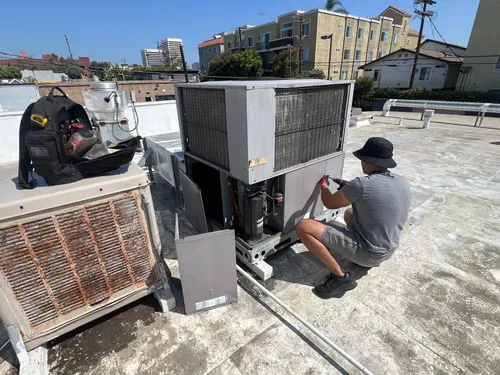
ASP Heating & Air Conditioning is an HVAC company serving Los Angeles, CA, with over 31 years of experience in the industry. They provide installation, repair, maintenance, and replacement services for commercial and residential HVAC systems, refrigeration equipment, and appliances. ASP Heating & Air Conditioning is known for handling complex HVAC and refrigeration projects, including commercial freezer repairs. The company offers 24/7 customer support and employs licensed and certified technicians to ensure quality service.
Understanding Your HVAC System Options in Torrance
Choosing the right system for your home involves balancing performance, efficiency, and budget. Torrance's mild coastal climate allows for several effective solutions, each with distinct advantages.
Heat Pumps A heat pump is an increasingly popular and highly efficient choice for Torrance homes, as it provides both heating and cooling in one unit. By moving heat rather than generating it, heat pumps can be significantly more energy-efficient than traditional furnace and air conditioner combinations, especially in moderate climates. They align perfectly with California's push toward electrification and reducing natural gas dependency. Modern models are effective even on cooler days, making them a versatile, year-round solution.
Central Air Conditioning & Furnace Systems This traditional split system-an outdoor air conditioner paired with an indoor furnace-remains a reliable choice. Newer models offer much higher SEER2 (Seasonal Energy Efficiency Ratio) ratings, which translate to lower electricity bills and reduced environmental impact. If you have existing ductwork, replacing an old central AC and furnace with a high-efficiency model is a straightforward upgrade that can dramatically improve comfort.
Ductless Mini-Split Systems For homes without existing ducts, or for adding zoned comfort to specific rooms like additions or garages, ductless mini-splits are an excellent option. These systems consist of an outdoor compressor connected to one or more indoor air handlers mounted on walls or ceilings. They offer targeted temperature control, high efficiency, and flexible installation with minimal construction disruption.
The HVAC Installation Process: A Step-by-Step Overview
A professional HVAC setup is a multi-stage project that ensures your system is safe, efficient, and compliant with local codes. Here's what a typical installation entails:
1. Site Evaluation & System Design A qualified contractor will visit your home to assess your needs. They'll measure your living space, evaluate existing ductwork (if any), check insulation, and discuss your comfort goals. Using this information, they will design a properly sized system and obtain the necessary local permits.
2. Removal of the Old System The existing furnace, air conditioner, and potentially old ductwork are carefully disconnected and removed from your property. Proper disposal of old units and refrigerants is handled according to environmental regulations.
3. Ductwork Modification or Installation If your new system requires it, technicians will install new ductwork or seal and upgrade existing ducts to ensure optimal, efficient airflow throughout your home. Well-designed ducts are critical for system performance and even comfort.
4. New Unit Installation The new outdoor condenser (for AC or heat pump) and indoor air handler or furnace are set in place. Technicians will connect the refrigerant lines, electrical wiring, condensate drainage, and, for furnaces, the gas line and venting.
5. System Testing & Startup This crucial final step involves charging the system with refrigerant, testing all electrical connections, checking for leaks, and verifying airflow. The contractor will start the system, calibrate the thermostat, and ensure everything operates correctly before handing it over to you 1.
What to Expect: Timeline and Investment
The scope of your project directly influences how long it takes and the total cost.
Installation Timeline A straightforward replacement of an existing AC and furnace with a new, similar system can often be completed in 4 to 8 hours or within a single day2. More complex jobs, such as installing a completely new system with ductwork, switching to a geothermal heat pump, or a full-home retrofit, can take several days to complete2.
Understanding the Costs HVAC installation costs in Torrance vary based on system type, size, efficiency, and the complexity of the install. Costs generally break down into equipment and labor/permits.
- Equipment Costs: The units themselves can range from $2,500 to over $12,300 for high-end, high-efficiency models.
- Installation Labor & Permits: Professional installation, including labor, materials, and permit fees, typically adds $300 to $1,000 or more to the total project cost 3.
As a combined example, for a 1,200-square-foot home in Torrance, the total cost for a new central air conditioning system can range from approximately $5,500 to $14,500 or more4 5. While higher-efficiency systems (with higher SEER2 ratings) have a greater upfront cost, they offer significant savings on monthly energy bills over their lifespan.
Find the perfect hvac installers for your needs
Get personalized recommendations and expert advice
Navigating California's HVAC Regulations
Installing an HVAC system in Torrance means complying with specific California state regulations designed to promote environmental sustainability and energy efficiency.
Refrigerant Regulations California mandates the use of refrigerants with a lower Global Warming Potential (GWP). This means newer systems use more environmentally friendly refrigerants like R-454B or R-32 instead of the older R-410A. A licensed professional will ensure your new system uses a compliant refrigerant.
Efficiency Standards The state enforces minimum efficiency standards for HVAC equipment, which are often higher than federal requirements. These standards, reflected in SEER2 ratings for air conditioners and heat pumps, are regularly updated6 7. Installing a system that exceeds these minimums can qualify you for rebates and will maximize your long-term energy savings.
Choosing the Right System for Your Home
Making the final decision involves a few key considerations:
- Home Size & Layout: A contractor will perform a "Manual J" load calculation to determine the precise capacity (in tons) needed to heat and cool your home efficiently. An oversized or undersized system will lead to comfort issues and higher costs.
- Energy Efficiency Goals: Consider the SEER2, HSPF (for heat pumps), and AFUE (for furnaces) ratings. A higher rating means better efficiency and lower utility bills.
- Long-Term Value: While the initial investment is important, consider the total cost of ownership, including estimated energy costs, potential rebates, and the system's expected lifespan (typically 15-20 years for a quality installation).
Maintaining Your New HVAC System
Once your new system is installed, protect your investment with regular maintenance. An annual tune-up for your AC/heat pump and a separate check for your furnace (if you have one) can ensure peak efficiency, prevent unexpected breakdowns, and extend the system's life. Simple homeowner tasks like regularly changing the air filter are also essential for maintaining airflow and indoor air quality.
Frequently asked questions
Sources
Footnotes
-
Step-by-Step HVAC Installation Guide - Carrier - https://www.carrier.com/residential/en/us/products/air-conditioners/hvac-installation/ ↩
-
How Long Does It Take To Replace Your HVAC System? - https://downeyplumbing.com/blog/how-long-does-it-take-to-replace-your-hvac-system/ ↩ ↩2
-
Home Depot HVAC Installation Cost, Pros & Cons, Reviews (2024) - https://www.hvaccalc.org/home-depot-hvac/ ↩
-
HVAC Installation Torrance, CA | System Setup Services - https://cloudcomforthvac.com/hvac ↩
-
How Much Does an Air Conditioner Cost for a 1,200-Square-Foot Home? - https://www.thisoldhouse.com/heating-cooling/air-conditioner-cost-for-1200-square-foot-home ↩
-
How Much Does It Cost to Install Central Air in a 2000 Square Foot ... - https://www.edgertonhvac.com/how-much-does-it-cost-to-install-central-air-in-a-2000-square-foot-house/ ↩
-
What Are the Latest California HVAC Regulations? - https://nexgenairandplumbing.com/blog/what-are-the-latest-california-hvac-regulations/ ↩