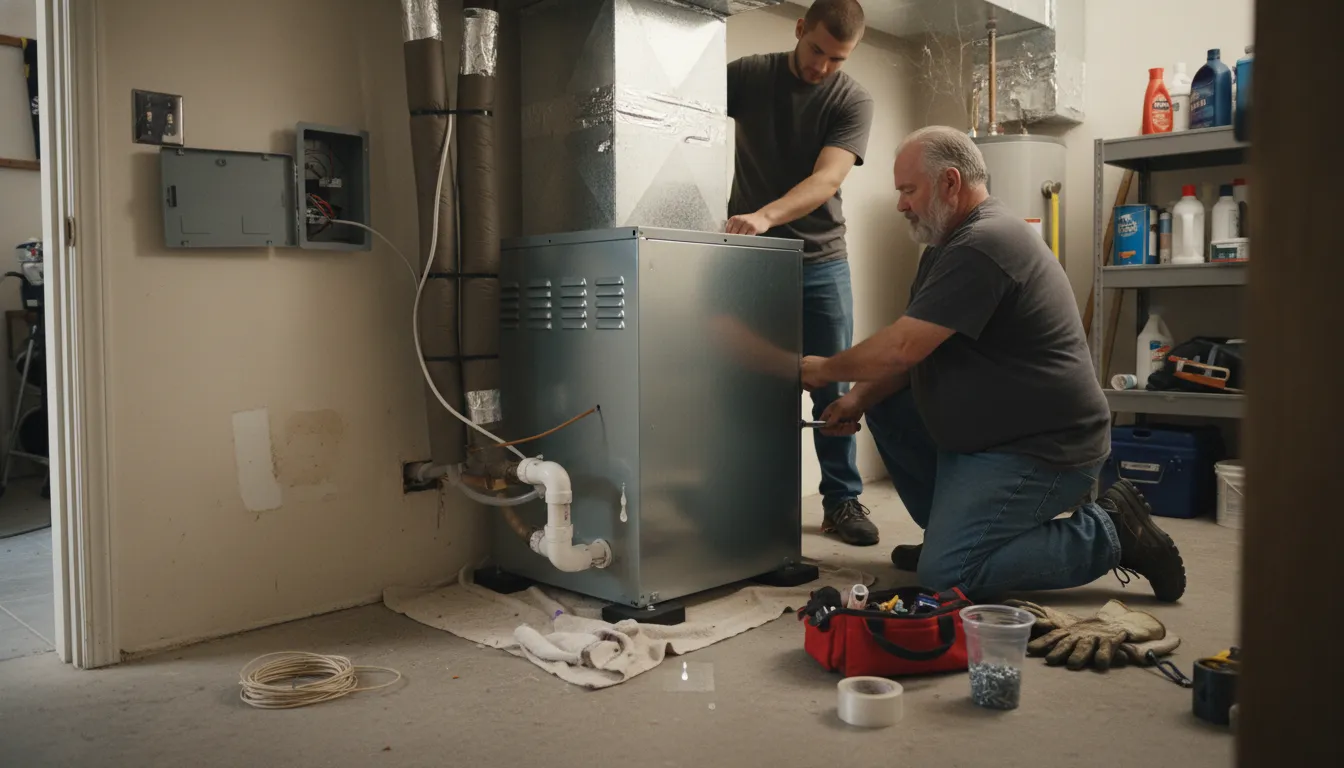
Find the Best HVAC Installers for Your Business
No obligation • Fast responses • Nationwide coverage

Why you can trust HVAC Firms
HVAC Firms is a leading United States resource for evaluating HVAC service providers. Our team researches companies, checks credentials, and reviews customer feedback to present clear, unbiased information. Listings and rankings are based on merit, and companies cannot pay to change our editorial content.
Search providers near you
Top HVAC Installers in Santa Clara, California Ranked
Upgrading your home's heating and cooling system is a significant investment in comfort, efficiency, and property value. In Santa Clara's climate, where mild winters can turn into hot summers, having a reliable and modern HVAC system is essential. This guide will help you understand your options for a new heating and air conditioning setup, from high-efficiency heat pumps to traditional systems, and what to expect during the installation process. You can use the information here to identify qualified local professionals who can assess your home and provide a tailored solution.
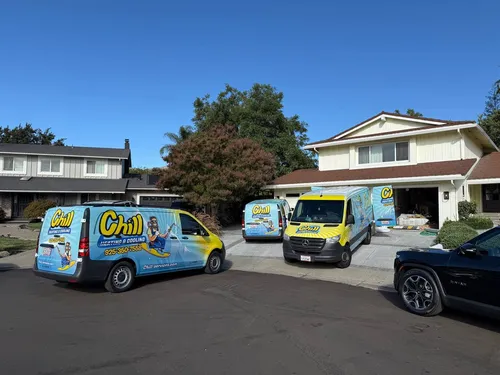
Chill Heating and Cooling
23 Beta Ct suite f, San Ramon, CA 94583
Chill Heating and Cooling is a full-service HVAC company based in Oakland, CA, offering heating and cooling repairs, maintenance, and installations for residential and commercial clients. They provide services including air conditioning, furnace, heat pump, mini split, and thermostat installation and repair. The company is an authorized Carrier dealer and serves the Oakland area with expertise in diagnosing and repairing HVAC systems, as well as installing new units tailored to home or business needs. Chill Heating and Cooling is available for emergency calls and offers same-day service to address urgent heating and cooling issues.
Heating And Air Experts - Affordable HVAC Contractor in Fremont, California
4991 Seneca Park Loop, Fremont, CA 94538
Heating And Air Experts - Affordable HVAC Contractor in Fremont, California provides heating and cooling services in San Jose, CA. They handle installation and repair of air conditioners, furnaces, heat pumps, and boilers. Their work covers both new system setups and emergency repairs to maintain efficient and safe climate control throughout the year.
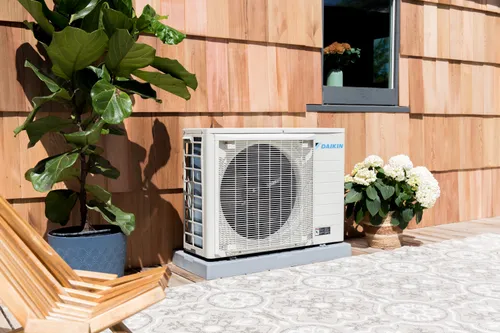
Fuse service
349 Everett Ave, Palo Alto, CA 94301
Fuse Service is an HVAC company serving Fremont, CA, offering heating and air conditioning installation, repair, and maintenance. Their services include AC and heat pump repair, furnace installation, and HVAC tune-ups. They also provide refrigeration, electrical, and plumbing services, including hydro jetting and water heater installation. Fuse Service emphasizes licensed and certified technicians, up-to-date training, and offers warranties on parts and labor.
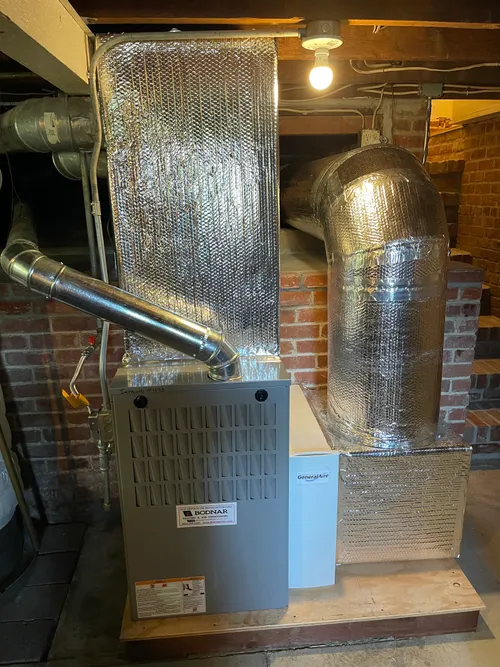
Bodnar Heating & Air Conditioning, Inc.
1251 Fifth Ave, Redwood City, CA 94063
Bodnar Heating & Air Conditioning, Inc. provides residential heating and cooling repair, installation, and maintenance services in Fremont, CA. They specialize in air conditioning, furnace, and heat pump systems, including thermostat installation and indoor air quality improvements. The company emphasizes honest recommendations without commission-based incentives and offers expertise backed by three generations of residential HVAC knowledge. Their services cover a broad area including Redwood City and nearby communities. Bodnar Heating & Air Conditioning, Inc. is committed to thorough system maintenance and proper installation to ensure long-lasting performance and energy efficiency.
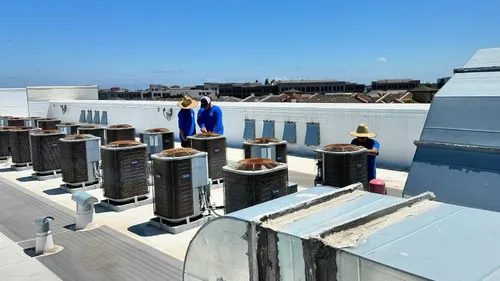
Precision Heating & Cooling
1557 Monterey Rd, San Jose, CA 95110
Precision Heating & Cooling is an HVAC installation contractor based in San Jose, CA. Serving both residential and commercial clients, they offer a wide range of services including remodeling, repair, and maintenance of heating and cooling systems. With over 20 years of experience since 2000, they handle projects of various sizes and manage all aspects from installation to regulatory compliance to ensure smooth project completion.
Understanding Your HVAC System Options
When considering a new heating and cooling installation, you have several primary system types to choose from. Each offers different benefits in terms of efficiency, fuel source, and suitability for your home's layout.
High-Efficiency Heat Pumps An air-source heat pump is often the most recommended option for Santa Clara homeowners looking to improve efficiency and electrify their homes. This system works by transferring heat, moving warmth into your home in winter and extracting it in summer. It's an all-in-one solution for both heating and cooling. Modern heat pumps are highly efficient even in cooler temperatures and are frequently eligible for local rebates and incentives. Choosing a heat pump installation can lead to substantial energy savings, with programs like San Jose Clean Energy noting potential annual savings of $229 to $425 for some households.
Gas Furnace with Central Air Conditioning The traditional combination of a gas furnace for heating and a separate central air conditioner for cooling remains a reliable choice. This setup is well-understood by contractors and can be a good fit for homes with existing natural gas lines and ductwork. While generally less efficient than a heat pump system overall, high-efficiency models are available. This option typically involves replacing both the indoor furnace and the outdoor AC unit.
Ductless Mini-Split Systems For homes without existing ductwork, or for adding zoned comfort to specific areas like additions or converted garages, ductless mini-splits are an excellent solution. These systems consist of an outdoor compressor unit connected to one or more indoor air handlers mounted on walls or ceilings. They offer tremendous flexibility for controlling temperatures in individual rooms and can be more efficient than central systems because they avoid duct losses.
The HVAC Installation Process: What to Expect
A professional HVAC installation is a multi-step process that ensures your system is safe, compliant, and performs optimally. Knowing what to expect can make the project run smoothly.
Initial Consultation and Planning The process begins with a detailed in-home assessment. A qualified technician will evaluate your current system, inspect your ductwork (if applicable), measure your home's layout, and discuss your comfort needs and budget. This is when you'll receive a detailed quote outlining the recommended equipment, project scope, and cost.
Permitting and Preparation Once you sign an agreement, your contractor will handle pulling the necessary permits from the local building department, a process that can take 1-3 days in the Bay Area. Permits are crucial as they ensure the installation meets all local building and safety codes. The contractor will also order your selected equipment for delivery.
Equipment Installation The physical installation timeline varies by system complexity. A ductless mini-split or a standard split system can often be completed in 1-2 days1. A full system replacement, such as a hybrid setup or a heat pump with new air handlers, may take 2-3 days1. The work involves safely removing the old equipment, setting up the new outdoor and indoor units, making electrical and refrigerant line connections, and integrating with existing or new ductwork.
Final Inspections and System Start-Up After installation, a city inspector will typically visit to verify the work complies with the issued permits2. Once approved, the installing technician will complete the final setup: charging the refrigerant, testing all components, calibrating the thermostat, and performing a full system check. They should also walk you through the basic operation of your new system.
Find the perfect hvac installers for your needs
Get personalized recommendations and expert advice
Key Factors Influencing Your Project Cost
The total investment for a new HVAC system in Santa Clara depends on several variables. Understanding these can help you interpret quotes and plan your budget.
System Type and Size The major cost driver is the type and capacity of the system you choose. For a complete system replacement in Santa Clara, total costs typically range from $12,000 to $28,000 or more, encompassing equipment, labor, and permits3. A high-efficiency heat pump system often falls in the $14,000 to $22,000 range before any incentives are applied. The size (or tonnage) of the system must be correctly calculated for your home's square footage and insulation levels; an improperly sized unit will not perform efficiently.
Additional Work and Components
- Ductwork Modifications: If your existing ducts are leaky, poorly sized, or non-existent, adding or replacing ductwork can add $2,000 to $6,000 to the project cost.
- Electrical Panel Upgrade: Modern heat pumps and high-efficiency AC units may require more power. If your home's electrical service panel needs an upgrade to support the new system, this can add $3,000 to $5,0004.
- Advanced Thermostats: Including a smart thermostat for better control and efficiency may add to the initial cost but can provide long-term savings.
Available Incentives and Rebates One of the most important financial considerations is leveraging available incentives. Santa Clara residents should actively check for:
- Local Utility Rebates: Programs through San Jose Clean Energy (SJCE) offer significant rebates for heat pump installations.
- State Programs: California offers incentives like the TECH Clean California initiative and others.
- Federal Tax Credits: The federal Inflation Reduction Act includes tax credits for qualified high-efficiency heat pumps and other HVAC equipment. These financial incentives can substantially reduce your net cost, making higher-efficiency systems more accessible.
The Long-Term Value of a Professional Installation
Investing in a new HVAC system goes beyond immediate comfort.
Energy and Cost Savings Modern systems are dramatically more efficient than those installed even ten years ago. Upgrading from an old SEER 10 air conditioner to a SEER 16+ heat pump or AC unit can cut your cooling energy use nearly in half. These efficiency gains translate directly to lower monthly utility bills, helping offset the initial investment over time.
Increased Home Comfort and Air Quality A correctly sized and installed system provides more consistent temperatures, reduces humidity levels, and can integrate with advanced air filtration or ventilation systems. This creates a healthier and more comfortable living environment.
Enhanced Home Value and Appeal A new, high-efficiency HVAC system is a valuable upgrade that potential homebuyers recognize. It signals that a major component of the home is modern, reliable, and cost-effective to operate, which can be a strong selling point5.
Peace of Mind with Professional Expertise Perhaps most importantly, a professional installation by a licensed contractor ensures safety and reliability. In California, always verify your HVAC contractor holds a valid C-20 license6. This guarantees they have the required knowledge of state codes and standards, protecting you from improper installation that could lead to safety hazards, poor performance, or voided equipment warranties.
Frequently asked questions
Sources
Footnotes
-
Estimated installation times for different 'HVAC System Type' systems. - https://iceaclv.com/hvac/how-long-hvac-installation-take/ ↩ ↩2
-
AC Installation Process: What to Expect from Start to Finish - https://bayareaclimatecontrol.com/blog/ac-installation-process/ ↩
-
Heat Pump HVAC System - San Jose Clean Energy - https://sanjosecleanenergy.org/heat-pump-hvac/ ↩
-
Bay Area HVAC Costs 2026: Complete Pricing Guide - https://galaxyservices.com/bay-area-hvac-costs/ ↩
-
Heating Installation Services in Santa Clara, CA - https://madesimpleheatingandair.com/heating/heating-installation/ ↩
-
HVAC Upgrade Information For Consumers - CSLB - CA.gov - https://www.cslb.ca.gov/Consumers/HVAC_Upgrade_Information_for_Consumers.aspx ↩