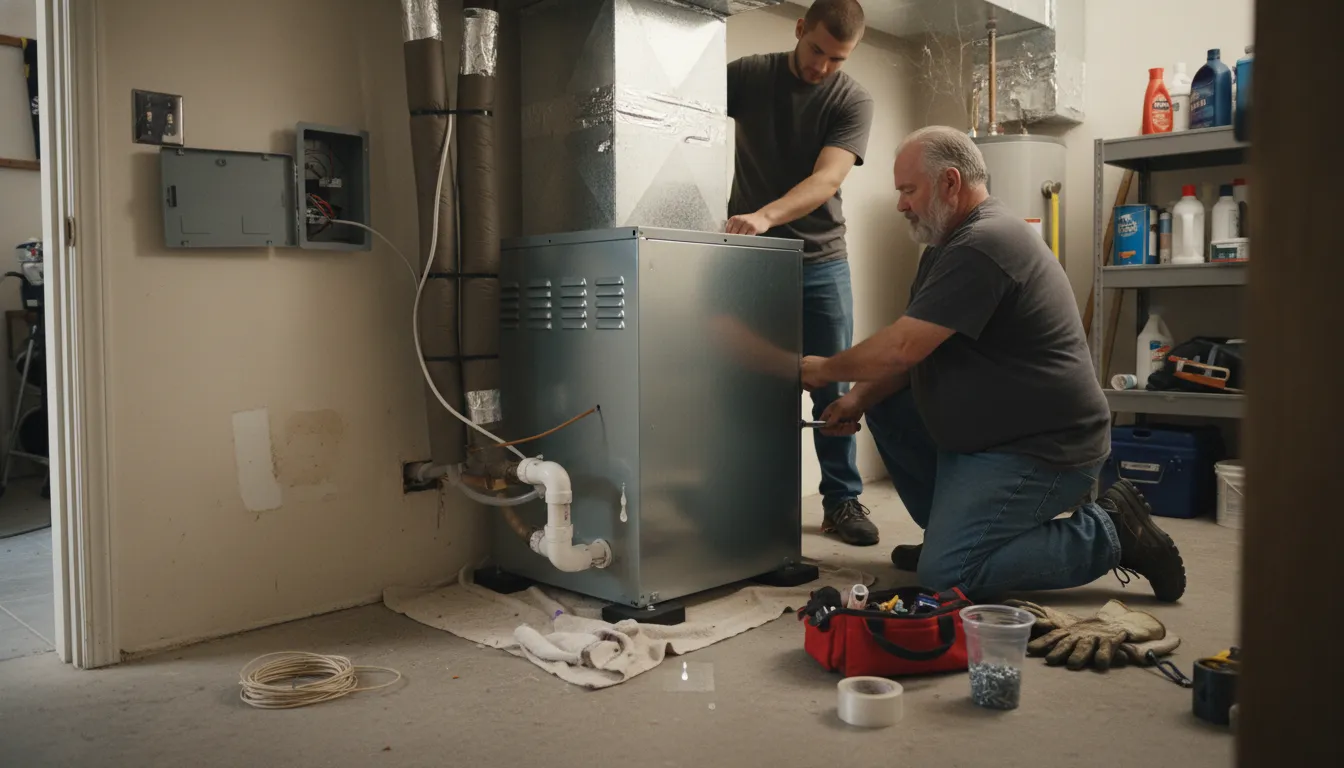
Find the Best HVAC Installers for Your Business
No obligation • Fast responses • Nationwide coverage

Why you can trust HVAC Firms
HVAC Firms is a leading United States resource for evaluating HVAC service providers. Our team researches companies, checks credentials, and reviews customer feedback to present clear, unbiased information. Listings and rankings are based on merit, and companies cannot pay to change our editorial content.
Search providers near you
Top HVAC Installers in San Bernardino, California Ranked
Choosing the right heating and cooling system for your San Bernardino home is a significant decision that impacts your comfort, energy bills, and home value. HVAC installation involves selecting and professionally setting up a complete climate control system tailored to your specific needs. This guide will help you understand the process, equipment options, and local considerations, empowering you to make an informed choice and connect with qualified professionals in the San Bernardino area.
Understanding Your HVAC System Options
When planning a new HVAC installation in San Bernardino, the first step is understanding the different types of systems available. The local climate, with its hot summers and mild winters, influences which systems are most common and cost-effective.
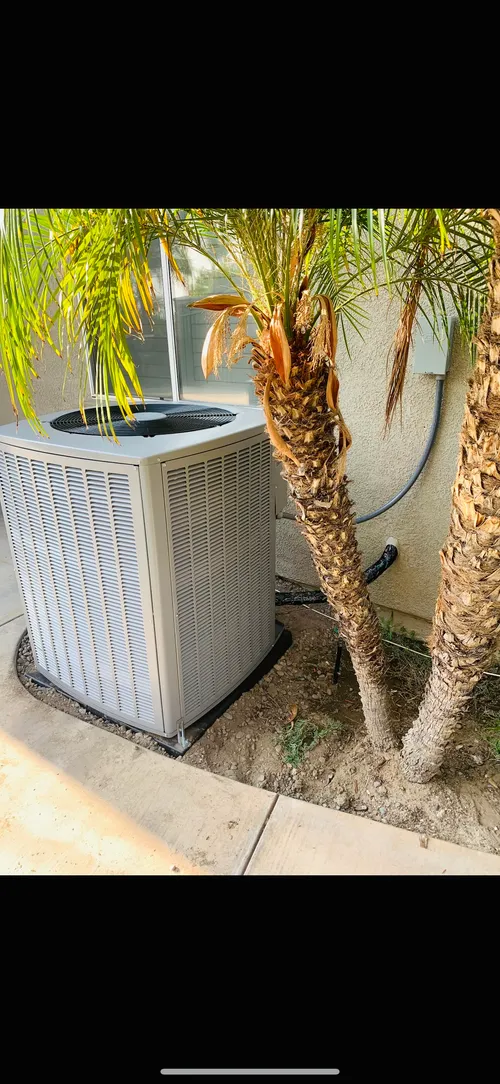
- Split Systems (Gas Furnace + AC): This is the most traditional setup in many San Bernardino homes. It combines a gas furnace for heating with a separate outdoor air conditioning unit for cooling. This option is reliable and provides consistent comfort, making it a popular choice for whole-home climate control.
- Heat Pumps: An increasingly popular and efficient electric option for both heating and cooling. A heat pump works by transferring heat, moving it into your home in the winter and out of your home in the summer. Given California's push for electrification and efficiency, heat pumps are a smart choice for many homeowners looking to reduce their carbon footprint and potentially lower operating costs.
- Ductless Mini-Splits: These systems provide zoned comfort and are excellent for home additions, rooms that are difficult to condition, or houses without existing ductwork. They consist of an outdoor compressor unit connected to one or more indoor air handlers. While a single-zone system can be very efficient, multi-zone installations for cooling an entire home can be a significant investment.
The HVAC Installation Process: A Step-by-Step Overview
A professional HVAC installation is a multi-stage project that ensures your system operates safely, efficiently, and reliably for years to come. Here's what you can expect from start to finish.
1. Site Evaluation and System Sizing
The process begins with a thorough assessment of your home. A qualified contractor will evaluate your existing ductwork (if any), insulation, window quality, and square footage. The most critical part of this step is a Manual J load calculation, which determines the precise heating and cooling capacity (measured in tons or BTUs) your home requires. Proper sizing is essential; an oversized system will short-cycle, wasting energy, while an undersized system will struggle to maintain comfort 1.
2. Permitting and Rebate Applications
Before any work begins, your contractor should pull the necessary local permits from San Bernardino County. This ensures the installation meets all building and safety codes. This is also the ideal time to identify and apply for available rebates and incentives. Programs from Southern California Gas (SoCalGas) and Southern California Edison (SCE), along with federal tax credits from the Inflation Reduction Act (IRA), can provide substantial savings on high-efficiency equipment.
3. Removal of Old Equipment
The installation team will safely disconnect and remove your old furnace, air conditioner, and indoor coil. They will properly recover any remaining refrigerant according to environmental regulations.
4. Installation of New Equipment
This is the core phase. The team will install the new outdoor condenser (for AC or heat pump), the new furnace or air handler, and the matching indoor coil. They will connect refrigerant lines, electrical wiring, condensate drains, and gas lines (for a furnace). Your new smart or programmable thermostat will also be wired and configured during this stage.
5. Ductwork Connection and Sealing
The new indoor unit will be connected to your home's existing ductwork. A critical task here is sealing all duct joints with mastic or metal-backed tape to prevent air leaks, which can waste up to 30% of your system's energy output. The contractor may also test and balance the airflow to each room 2.
6. System Testing and Startup
The final and most important step is commissioning the system. The technician will start the unit, check refrigerant levels, measure airflow, verify electrical and gas connections, and ensure all safety controls are functioning. They will also walk you through the basic operation of your new thermostat and system.
Find the perfect hvac installers for your needs
Get personalized recommendations and expert advice
Timeline and Duration of Installation
How long your HVAC replacement takes depends on the complexity of the job.
- Simple Replacement (1 Day): A straightforward swap of an existing air conditioner and furnace with new, similarly sized units, with no ductwork modifications, can typically be completed in 4 to 8 hours.
- Complex Installation (2-5 Days): Projects that involve replacing or modifying ductwork, installing a multi-zone ductless system, or integrating advanced zoning controls will require more time. A full system changeover with significant duct upgrades or a geothermal system installation can take several days to complete 3.
Cost Considerations for San Bernardino Homeowners
The investment for a new HVAC system in San Bernardino varies widely based on equipment type, efficiency, and home size. It's crucial to get multiple detailed quotes to understand your specific cost.
- Split System (Gas Furnace + AC): For a complete system replacement, homeowners can expect costs ranging from $12,000 to $22,000 or more. The final price depends on the efficiency ratings (SEER2 for cooling, AFUE for heating), brand, and the size of your home.
- Heat Pump System: Installing a high-efficiency electric heat pump system typically ranges from $14,000 to $25,000+. While the upfront cost can be higher than a traditional split system, the operating savings and available rebates can improve the long-term value.
- Ductless Mini-Split Systems: A single-zone system for one room may start around a few thousand dollars, but a multi-zone system to cool an entire home can range from $10,000 to $20,000+ 4.
- Key Cost Factors: Your home's square footage is a primary driver. For example, installing a new AC unit alone for a 1,500 square foot home can range from approximately $5,000 to $9,000, before factoring in the furnace or other components 5.
Maximizing Your Investment with Rebates: Always ask your contractor about local incentives. SCE and SoCalGas often offer rebates of $200 to $1,000 or more for installing high-efficiency equipment. Additionally, the federal IRA provides tax credits for qualifying systems, which can directly reduce your tax liability 6 7 8.
Choosing the Right Contractor
The success of your HVAC installation hinges on the skill and integrity of the contractor you choose. Here are essential tips for your selection process:
- Get Multiple Quotes: Industry experts strongly recommend obtaining at least three detailed, written estimates from licensed, insured contractors in the San Bernardino area. This allows for comparison of equipment recommendations, pricing, and project scope 9.
- Verify Licenses and Insurance: Ensure the contractor holds a valid California Contractor State License Board (CSLB) license for HVAC work. They should also carry general liability and worker's compensation insurance.
- Ask About Rebates: A reputable contractor will be knowledgeable about current utility and federal incentive programs and should help you navigate the application process.
- Review the Proposal in Detail: A good quote should include the brand and model numbers of all equipment, the scope of work, a detailed cost breakdown, the project timeline, and information on warranties for both parts and labor.
Frequently asked questions
Sources
Footnotes
-
Main Components of an HVAC System | Key Parts Explained - https://www.kjheatingandair.com/main-components-of-hvac-systems ↩
-
Step-by-Step HVAC Installation Guide - Carrier - https://www.carrier.com/residential/en/us/products/air-conditioners/hvac-installation/ ↩
-
How Long Does It Take To Replace Your HVAC System? - https://downeyplumbing.com/blog/how-long-does-it-take-to-replace-your-hvac-system/ ↩
-
How Much Does an HVAC System Cost in California? - https://www.perfectstarhvac.com/how-much-does-an-hvac-system-cost-in-california/ ↩
-
How much is a new AC unit for a 1500 sq ft house? - https://stevesultimateair.com/how-much-is-a-new-ac-unit-for-a-1500-sq-ft-house/ ↩
-
Heating and Air Conditioning Installation in San Bernardino, CA - https://www.homedepot.com/services/l/ca/san-bernardino/heating-air-conditioning-installation/c16fbb4b7 ↩
-
New HVAC System Cost Calculator: Get a Custom Estimate in 2026 - https://modernize.com/hvac/cost-calculator ↩
-
How Much Does an Air Conditioner Cost for a 1,200-Square-Foot Home? - https://www.thisoldhouse.com/heating-cooling/air-conditioner-cost-for-1200-square-foot-home ↩
-
What's the Cost to Install an Air Conditioner in Southern ... - https://www.burgesons.com/blog/whats-the-cost-to-install-an-air-conditioner-in-southern-california ↩