Find the Best HVAC Installers for Your Business
No obligation • Fast responses • Nationwide coverage

Why you can trust HVAC Firms
HVAC Firms is a leading United States resource for evaluating HVAC service providers. Our team researches companies, checks credentials, and reviews customer feedback to present clear, unbiased information. Listings and rankings are based on merit, and companies cannot pay to change our editorial content.
Search providers near you
Top HVAC Installers in National City, California Ranked
Installing a new heating and cooling system is a significant investment in your home's comfort, efficiency, and value. In National City's climate, a properly sized and installed HVAC system is essential for managing warm summers and mild winters effectively. This guide will help you understand the types of systems available, the installation process, and what to expect in terms of cost and timeline, so you can confidently connect with qualified local professionals for your project.
Ez Breezy Heating & Air
5160 Mercury Point Unit B, San Diego, CA 92111
Ez Breezy Heating & Air is an HVAC installation contractor based in San Diego, CA. They specialize in installing air conditioning systems, furnaces, heat pumps, mini splits, and thermostats. The company is an authorized dealer of Trane and Mitsubishi products and is recognized as a Google Nest Pro and Google Guaranteed contractor. Ez Breezy Heating & Air focuses on transparent communication and professional work to build lasting relationships with customers.
JPM Heating & Air Inc.
1551 Cuyamaca St, El Cajon, CA 92020
JPM Heating & Air Inc. is a family-owned HVAC contractor serving San Diego, CA, with over 20 years of experience. They provide a range of services including installation, repair, and maintenance of air conditioning, furnaces, heat pumps, and ductwork. As a Bryant Factory Authorized Dealer, they offer reliable HVAC solutions backed by warranties on labor and parts. Their services also include indoor air quality improvements such as air purifiers and humidifiers. JPM Heating & Air offers emergency response within 24 hours and same-day installation estimates, emphasizing clear communication and community values.
Flite Mechanical Heating & Air Professionals
3781 El Canto Dr, Spring Valley, CA 91977
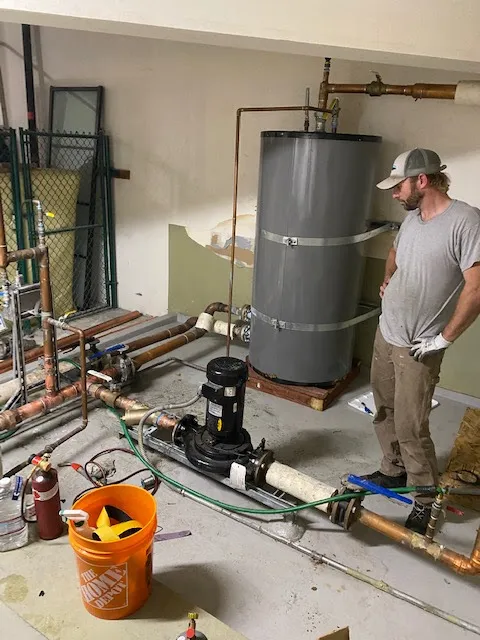
Flite Mechanical Heating & Air Professionals provides HVAC installation, repair, and indoor air quality services in San Diego, CA. They handle air conditioning, furnace, mini split, and new construction HVAC systems. The company is equipped with skilled technicians who focus on accurate and reliable service to maintain comfortable indoor environments year-round. Serving homeowners and businesses in San Diego and nearby areas, Flite Mechanical is committed to supporting both residential and commercial HVAC needs.
Morey Plumbing, Heating, & Cooling, Inc.
7895 Convoy Ct SUITE 13, San Diego, CA 92111
Morey Plumbing, Heating, & Cooling, Inc. is a family-owned HVAC and plumbing contractor serving San Diego, CA. They offer a wide range of services including air conditioning and heating installation, repair, and maintenance, as well as plumbing and water filtration solutions. With over 25 years of experience, the company provides annual maintenance programs and 24-hour emergency service to help maintain system performance and address urgent needs. Their licensed and insured technicians are equipped to handle various HVAC and plumbing projects across the greater San Diego area.
Amaze Service Electrical Air and Heating
9880 Saskatchewan Ave, San Diego, CA 92129
Amaze Service Electrical Air and Heating is an HVAC company based in San Diego, CA. They provide a range of services including air conditioner, furnace, heat pump, and mini split installation and repair, as well as duct cleaning and HVAC tune-ups. The company also offers commercial and residential refrigeration and appliance repair services. One notable capability is their expertise in installing multi-zone Mitsubishi ductless mini-split heat pump systems. The business is fully insured, licensed, and staffed with EPA-certified technicians. They serve San Diego and surrounding communities such as Del Mar, Lakeside, and Rancho San Diego.
Popular HVAC System Types for National City Homes
Choosing the right system depends on your home's layout, existing infrastructure, and your efficiency goals. Here are the most common options installed in the area.
Heat Pumps A heat pump is an increasingly popular, energy-efficient choice for California homes because it provides both heating and cooling from a single unit. It works by transferring heat rather than generating it, making it exceptionally efficient in National City's temperate climate. Modern models are effective even on cooler nights, offering year-round comfort and potential savings on utility bills, especially when paired with available rebates.
Ductless Mini-Split Systems For homes without existing ductwork, room additions, or for those seeking zoned comfort control, ductless mini-splits are an ideal solution. These systems consist of an outdoor compressor unit connected to one or more indoor air handlers mounted on walls or ceilings. They allow you to control temperatures in individual rooms and are known for high efficiency. Brands like Mitsubishi are commonly installed by local contractors.
Central Air Conditioning with Furnace This is the standard setup for whole-home comfort, pairing a central air conditioner with a gas or electric furnace. It utilizes the home's existing ductwork to distribute conditioned air. When replacing an old system, homeowners often opt for higher-efficiency models, such as those with a SEER (Seasonal Energy Efficiency Ratio) rating of 14 or above, to improve performance and reduce energy consumption.
The HVAC Installation Process: What to Expect
A full system replacement is a structured project typically managed by a licensed contractor over several days. Understanding the steps can help you prepare your home and set realistic expectations.
1. Site Evaluation and Planning The process begins with a comprehensive home evaluation. A technician will assess your current system, ductwork, insulation, and the layout of your home to determine the correct size (load calculation) and best type of new system. This crucial step ensures your new HVAC is neither underpowered nor oversized. The contractor will also handle pulling the necessary local permits 1.
2. Preparation and Removal On installation day, the crew will prepare the work area, protecting your floors and furniture. The old outdoor condenser and indoor air handler or furnace are safely disconnected and removed. If old ductwork is being replaced, it will be taken out at this stage.
3. New System Installation This is the core phase where the new equipment is set in place. It includes installing the new outdoor unit, connecting refrigerant lines, setting up the new indoor coil and air handler or furnace, and integrating a new thermostat. If new ductwork is part of the project, it will be fabricated and installed. All electrical connections are made to code2.
4. Testing and Commissioning Once physically installed, the system is not complete. The contractor will charge it with refrigerant, power it up, and test all components. They will check for proper airflow, verify thermostat operation, ensure there are no leaks, and calibrate the system for optimal efficiency and performance. They should also review the system's operation with you before considering the job complete3 4.
Find the perfect hvac installers for your needs
Get personalized recommendations and expert advice
Understanding HVAC Installation Costs in National City
The total cost for a new HVAC system varies widely based on the equipment type, home size, and complexity of the installation. Here's a breakdown of what homeowners in National City can expect.
Total Cost for a Central System For a full replacement of a central air conditioning and heating system in a typical 2,000-2,500 square foot home, the total investment often ranges from $10,000 to over $20,000. This wide range accounts for the quality of the equipment, the scope of labor, and any ancillary work like duct modifications.
Cost Breakdown
- Equipment: The furnace, air conditioner, or heat pump unit themselves typically represent a significant portion, ranging from $6,000 to $9,000.
- Labor: Professional installation labor can add $3,000 to $5,000, varying with the job's complexity and duration5.
- Ductwork: If your home needs new or replacement ductwork, this can be a major additional cost, typically between $2,000 and $6,000.
- Ductless Mini-Split Systems: For a multi-zone ductless system (e.g., three indoor units), costs can range from $9,000 to $16,000 or more6 7.
Financial Incentives and Rebates
A key part of planning your new climate control system is exploring financial incentives that can reduce your net cost. The federal Inflation Reduction Act offers tax credits for qualifying high-efficiency systems, including heat pumps 8. Additionally, local utility providers like SDG&E often have rebate programs for upgrading to high-efficiency air conditioners, heat pumps, or furnaces. Your contractor should be able to inform you about current programs and help with the application process.
Timeline for a Full HVAC Replacement
You should plan for the installation to take one to five days, depending on the system's complexity9. A straightforward swap of a central system with existing, usable ductwork might be completed in 1-2 days. Jobs requiring new ductwork, a change in system type (like switching to a ductless system), or those in homes with difficult access will naturally take longer9. A reputable contractor will provide you with a projected timeline after the initial site evaluation.
Frequently asked questions
Sources
Footnotes
-
Factors to Consider When Installing a New HVAC | Fahnestock - https://fahnestockhvac.com/2023/03/13/10-factors-to-consider-when-installing-a-new-hvac-system-in-your-home/ ↩
-
Residential HVAC Installation Process: A Comprehensive Guide - https://precisionairhc.com/blog/residential-hvac-installation-process/ ↩
-
Step-by-Step HVAC Installation Guide - Carrier - https://www.carrier.com/residential/en/us/products/air-conditioners/hvac-installation/ ↩
-
Air Conditioning Installation: A Step-by-Step Process - https://nexgenairandplumbing.com/blog/air-conditioning-installation-a-step-by-step-process/ ↩
-
Heating and Air Conditioning Installation in National City, CA - https://www.homedepot.com/services/l/ca/national-city/heating-air-conditioning-installation/c16fbb4b7 ↩
-
How Much Does an HVAC System Cost in California? - https://www.perfectstarhvac.com/how-much-does-an-hvac-system-cost-in-california/ ↩
-
How Much Does a New HVAC System Cost in 2025? - https://www.jacklehr.com/blog/air-conditioning-service/new-hvac-system-cost-2025/ ↩
-
How Much Do HVAC Systems Cost in California? - https://www.jacksonfoster.com/how-much-do-hvac-systems-cost-in-california/ ↩
-
How Long Does It Take To Replace Your HVAC System? - https://downeyplumbing.com/blog/how-long-does-it-take-to-replace-your-hvac-system/ ↩ ↩2