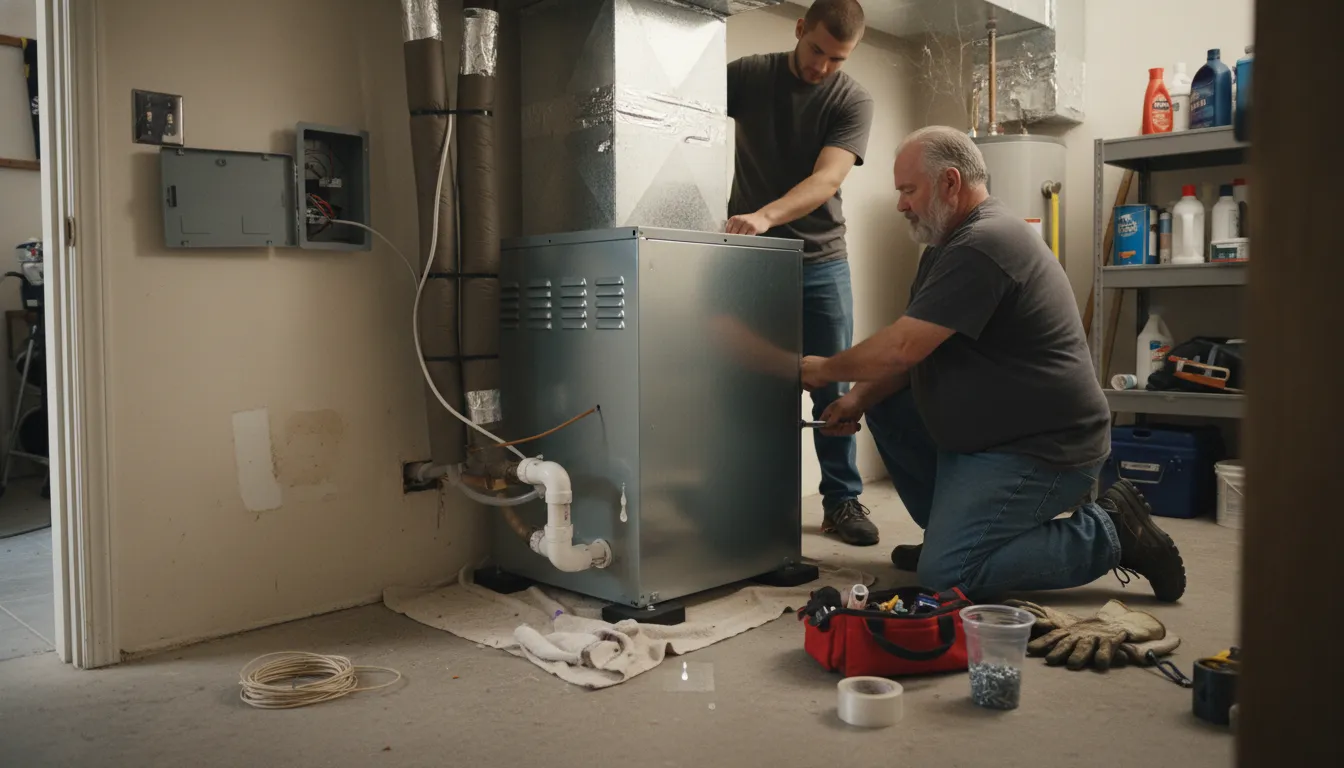
Find the Best HVAC Installers for Your Business
No obligation • Fast responses • Nationwide coverage

Why you can trust HVAC Firms
HVAC Firms is a leading United States resource for evaluating HVAC service providers. Our team researches companies, checks credentials, and reviews customer feedback to present clear, unbiased information. Listings and rankings are based on merit, and companies cannot pay to change our editorial content.
Search providers near you
Top HVAC Installers in Mountain View, California Ranked
Installing a new heating, ventilation, and air conditioning system is a significant investment in your home's comfort, energy efficiency, and value. In Mountain View's climate, a reliable system for both cooling and heating is essential for year-round comfort. This guide will help you understand the local options, processes, and considerations for your HVAC project, connecting you with qualified professionals who can assess your specific needs.
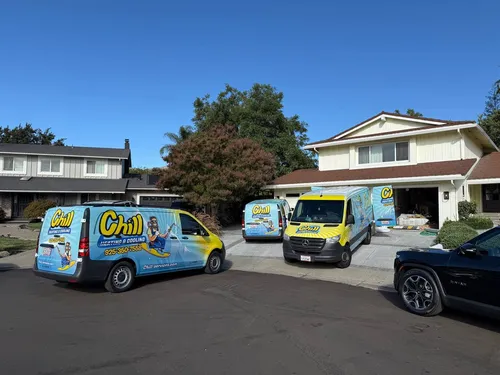
Chill Heating and Cooling
23 Beta Ct suite f, San Ramon, CA 94583
Chill Heating and Cooling is a full-service HVAC company based in Oakland, CA, offering heating and cooling repairs, maintenance, and installations for residential and commercial clients. They provide services including air conditioning, furnace, heat pump, mini split, and thermostat installation and repair. The company is an authorized Carrier dealer and serves the Oakland area with expertise in diagnosing and repairing HVAC systems, as well as installing new units tailored to home or business needs. Chill Heating and Cooling is available for emergency calls and offers same-day service to address urgent heating and cooling issues.
Heating And Air Experts - Affordable HVAC Contractor in Fremont, California
4991 Seneca Park Loop, Fremont, CA 94538
Heating And Air Experts - Affordable HVAC Contractor in Fremont, California provides heating and cooling services in San Jose, CA. They handle installation and repair of air conditioners, furnaces, heat pumps, and boilers. Their work covers both new system setups and emergency repairs to maintain efficient and safe climate control throughout the year.
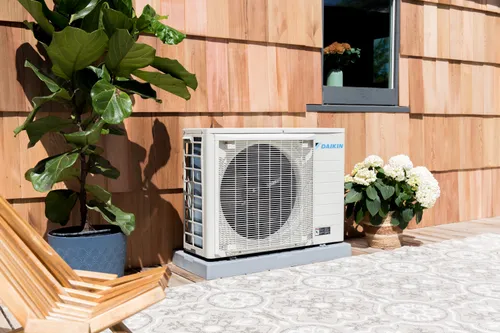
Fuse service
349 Everett Ave, Palo Alto, CA 94301
Fuse Service is an HVAC company serving Fremont, CA, offering heating and air conditioning installation, repair, and maintenance. Their services include AC and heat pump repair, furnace installation, and HVAC tune-ups. They also provide refrigeration, electrical, and plumbing services, including hydro jetting and water heater installation. Fuse Service emphasizes licensed and certified technicians, up-to-date training, and offers warranties on parts and labor.
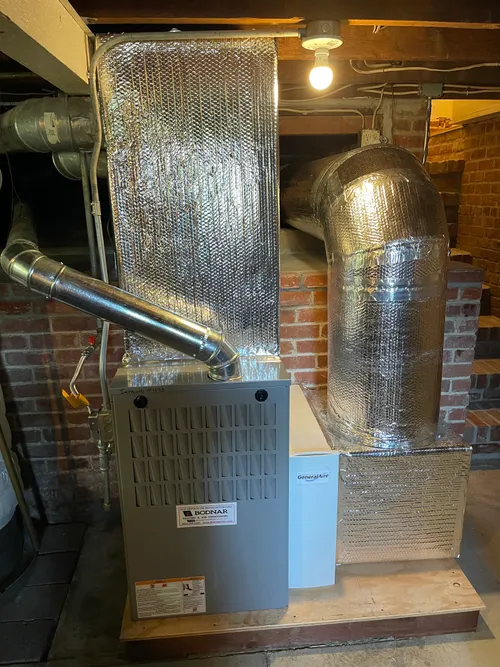
Bodnar Heating & Air Conditioning, Inc.
1251 Fifth Ave, Redwood City, CA 94063
Bodnar Heating & Air Conditioning, Inc. provides residential heating and cooling repair, installation, and maintenance services in Fremont, CA. They specialize in air conditioning, furnace, and heat pump systems, including thermostat installation and indoor air quality improvements. The company emphasizes honest recommendations without commission-based incentives and offers expertise backed by three generations of residential HVAC knowledge. Their services cover a broad area including Redwood City and nearby communities. Bodnar Heating & Air Conditioning, Inc. is committed to thorough system maintenance and proper installation to ensure long-lasting performance and energy efficiency.
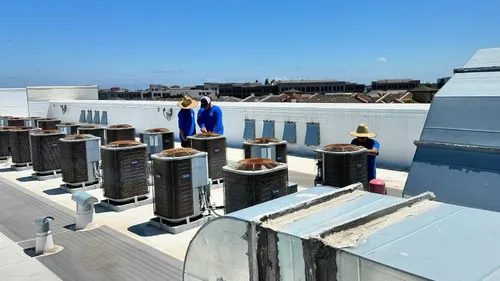
Precision Heating & Cooling
1557 Monterey Rd, San Jose, CA 95110
Precision Heating & Cooling is an HVAC installation contractor based in San Jose, CA. Serving both residential and commercial clients, they offer a wide range of services including remodeling, repair, and maintenance of heating and cooling systems. With over 20 years of experience since 2000, they handle projects of various sizes and manage all aspects from installation to regulatory compliance to ensure smooth project completion.
Popular HVAC System Choices for Mountain View Homes
When planning a new installation, selecting the right type of system is the first critical step. The choice often balances efficiency, home layout, and budget. For many local homes, high-efficiency heat pumps or furnaces are common, with ductless mini-splits gaining popularity for their zoning flexibility.
- Heat Pumps: These are a highly popular choice for their energy efficiency and dual functionality, providing both heating and cooling from one unit. Modern models are effective even in cooler Bay Area temperatures. They are often paired with ductless mini-split heads to create efficient heating and cooling zones in different parts of the home.
- Ductless Mini-Split Systems: Ideal for homes without existing ductwork, room additions, or for creating targeted comfort zones in specific areas like bedrooms or home offices. Installation is typically quick, often taking just one day for a single-zone system.
- Furnace and Air Conditioner Combo: A traditional and reliable split-system approach. Current trends focus on upgrading to high-efficiency models with variable-speed or multi-stage components for better comfort and lower energy use 1.
- High-Efficiency Units: Regardless of the system type, opting for ENERGY STAR® rated models is a smart move. California's stringent energy and environmental regulations make choosing units with lower Global Warming Potential (GWP) refrigerants particularly important.
Understanding the HVAC Installation Process
A professional HVAC setup is a multi-step project that goes beyond simply swapping an old unit for a new one. Knowing what to expect can help you plan accordingly and ensure a smooth experience.
- Initial Assessment and Planning: A certified contractor will evaluate your home's size, layout, existing ductwork, insulation, and your specific comfort needs. This crucial step determines the correct system size and configuration to avoid future issues.
- Permitting: In Mountain View, most HVAC installations require a permit from the city's Community Development Department. Reputable contractors typically handle this process, which can often be submitted online. The permit ensures the installation meets current building and safety codes and will require a final city inspection.
- Removal and Preparation: The old heating or cooling unit, and sometimes outdated ductwork, is safely removed and disposed of. The worksite is prepared for the new equipment.
- New System Installation: This phase includes setting the new outdoor condenser and/or indoor air handler, connecting refrigerant lines (for AC or heat pumps), updating electrical connections, and installing new thermostats and control systems 2.
- Ductwork Modification or Installation: If your project involves installing new ducts, sealing existing ones, or reconfiguring the layout, this step adds significant time. Properly sized and sealed ducts are vital for system efficiency and performance.
- System Testing and Startup: Once everything is physically installed, the technician will charge the system with refrigerant, test all electrical components, check airflow, and calibrate the thermostat. They will ensure the system is operating safely and efficiently before handing it over to you 3 4.
Project Timelines: What to Expect
The duration of your HVAC project depends heavily on its complexity. A straightforward replacement is much quicker than a full system overhaul.
- Simple Replacement (1-2 days): Swapping out an existing air conditioner or furnace with a new, similarly configured unit often takes just one to two days. This assumes no major changes to electrical service or ductwork are needed 5.
- Full Installation with New Ductwork (2-5+ days): Installing a completely new system type (like switching from a furnace to a heat pump) or adding ductwork to a home without it is a more involved process. You should plan for this to take several days to over a week, accounting for the ductwork installation, permitting, and inspections 6.
Cost Considerations and Financial Incentives
The cost of a new HVAC system in Mountain View varies widely based on the system type, brand, efficiency rating, and the scope of work involved with your home.
- System Costs: You can expect a broad range, from approximately $5,000 for a basic air conditioner or furnace replacement to $20,000 or more for a complete, high-efficiency system that includes new ductwork.
- Permit Fees: The city of Mountain View typically charges permit fees in the range of $200 to $300 for a residential HVAC installation 7.
- Available Incentives: A key part of planning your budget is exploring available rebates and tax credits that can substantially offset your upfront cost.
- Utility Rebates: Check with Pacific Gas and Electric (PG&E) for current rebate offers on high-efficiency heat pumps and other qualifying equipment for Bay Area residents.
Focusing on high-efficiency upgrades, such as inverter-driven heat pumps, not only lowers your long-term energy bills but also often qualifies for these significant incentives, reducing your net investment 10.
Find the perfect hvac installers for your needs
Get personalized recommendations and expert advice
Choosing the Right Equipment and Contractor
Selecting both the right hardware and the right installer is paramount to a successful project. Look for contractors who are licensed, insured, and have strong local references in Mountain View. They should perform a detailed load calculation (Manual J) to correctly size your system-a unit that is too large or too small will lead to comfort problems and higher costs. Discuss equipment warranties, maintenance plans, and ensure they are familiar with California's latest Title 24 energy efficiency standards and refrigerant regulations, which can affect which models are available for installation 11. A trustworthy professional will guide you through the entire process, from selecting an ENERGY STAR® rated system that fits your home to handling the permitting and ensuring a clean, code-compliant installation.
Preparing for Installation Day
A little preparation can make the installation process smoother for everyone. Clear the area around your indoor furnace/air handler and outdoor condenser unit, providing easy access for the technicians. Move any fragile items away from the work zones. Consider the noise and activity; if you work from home, you may want to plan for an alternative workspace for the day. Ensure that a decision-maker is available on-site to answer any questions that may arise. Finally, discuss the daily schedule with your contractor so you know when to expect the crew and what parts of the project will be completed each day.
Frequently asked questions
Sources
Footnotes
-
What Is a Two-Stage HVAC System? | American Standard® - https://www.americanstandardair.com/resources/glossary/two-stage-heating-and-cooling/ ↩
-
Step-by-Step HVAC Installation Guide | Carrier - https://www.carrier.com/residential/en/us/products/air-conditioners/hvac-installation/ ↩
-
What to Expect During HVAC Installation - AW Heating & Cooling - https://www.awheatingandcooling.com/blog/hvac/what-to-expect-during-hvac-installation/ ↩
-
What Does AC Installation Include? A Comprehensive Guide - Air Necessity - https://airnecessityhvac.com/what-does-ac-installation-include-a-comprehensive-guide/ ↩
-
How Long Does It Take To Replace Your HVAC System? - https://downeyplumbing.com/blog/how-long-does-it-take-to-replace-your-hvac-system/ ↩
-
Heating Installation Mountain View CA - Service - https://plumhvac.com/heating/heating-installation-in-mountain-view-ca-4e36c ↩
-
Air Conditioning Unit - Mountain View, CA | Home - https://developmentpermits.mountainview.gov/residential/air-conditioning-units ↩
-
What Are the Latest California HVAC Regulations? - https://nexgenairandplumbing.com/blog/what-are-the-latest-california-hvac-regulations/ ↩
-
New HVAC System Cost Calculator: Get a Custom Estimate in 2026 - https://modernize.com/hvac/cost-calculator ↩
-
Heating and Air Conditioning Installation in Mountain View, CA - https://www.homedepot.com/services/l/ca/mountain-view/heating-air-conditioning-installation/c16fbb4b7 ↩
-
How California's New Energy Efficiency Standards Affect Your Next HVAC Purchase - https://zodiachvac.com/california-energy-efficiency-standards-hvac/ ↩