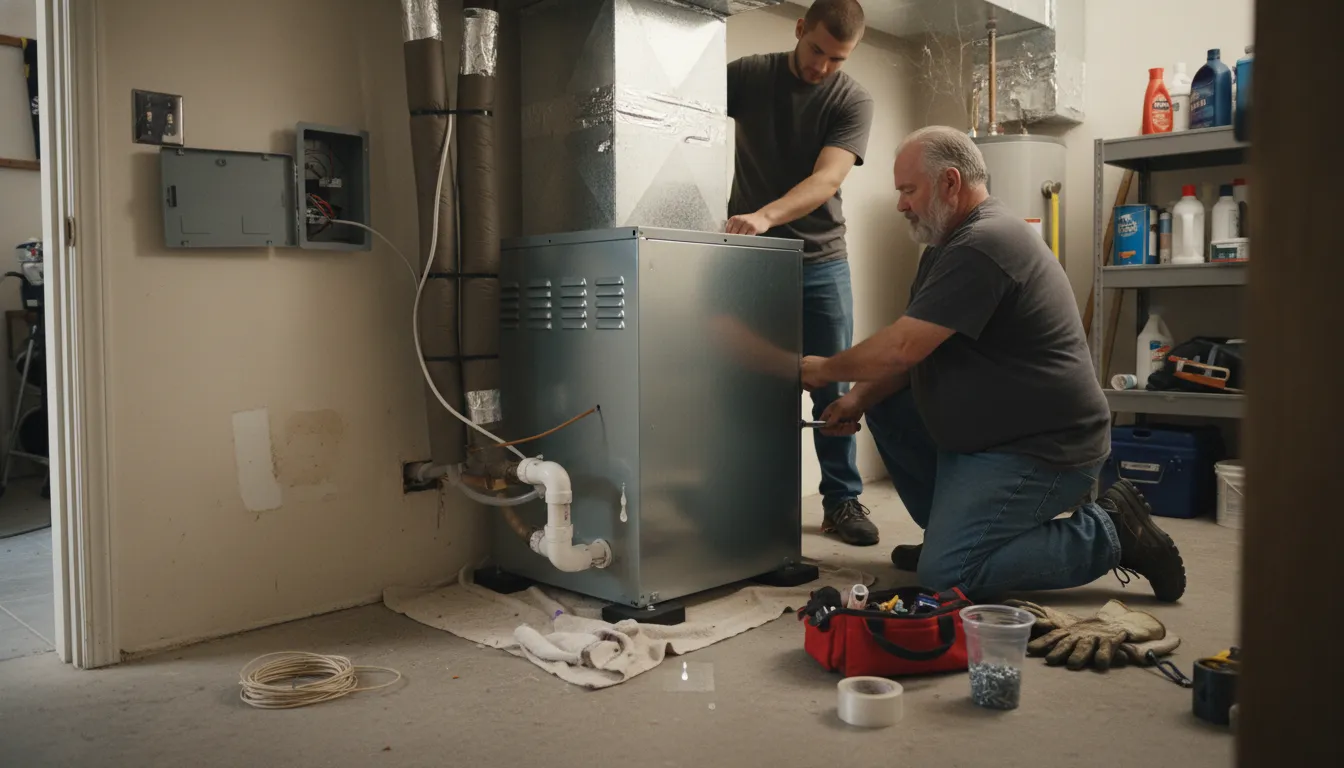
Find the Best HVAC Installers for Your Business
No obligation • Fast responses • Nationwide coverage

Why you can trust HVAC Firms
HVAC Firms is a leading United States resource for evaluating HVAC service providers. Our team researches companies, checks credentials, and reviews customer feedback to present clear, unbiased information. Listings and rankings are based on merit, and companies cannot pay to change our editorial content.
Search providers near you
Top HVAC Installers in Glendora, California Ranked
Installing a new heating and cooling system is a significant investment in your home's comfort, efficiency, and value. In Glendora's climate, where warm summers and mild winters are common, having a properly sized and installed HVAC system is essential for maintaining a pleasant indoor environment year-round. This guide will help you understand the local process, costs, and options for HVAC system installation, empowering you to make informed decisions when selecting a local service provider for your project.

All City Plumbing, Air & Electrical
5612 E La Palma Ave, Anaheim, CA 92807
All City Plumbing, Air & Electrical is a full-service provider based in Anaheim, CA, offering plumbing, HVAC, and electrical services. They serve residential and commercial customers with repair, installation, and maintenance for air conditioning, furnaces, thermostats, and indoor air quality systems. The company is known for its ACE-certified technicians and uses advanced technology such as hydro jetting for plumbing services. With over 13 years in business, All City Plumbing, Air & Electrical provides 24/7 emergency service to address urgent HVAC and plumbing needs.
MSP HEATING AND AIR CONDITIONING
2932 Rubidoux Blvd Suite B, Jurupa Valley, CA 92509
MSP HEATING AND AIR CONDITIONING is an HVAC company based in Riverside, CA, offering repair, installation, and maintenance services for air conditioning, furnaces, heat pumps, and indoor air quality systems. Serving Riverside County and parts of San Bernardino County, they provide certified expertise including heat exchange, NATE, EPA 608, and indoor air quality certifications. With over a decade of experience, MSP HEATING AND AIR CONDITIONING focuses on preventing issues through regular maintenance and delivering prompt repairs when needed. They also offer 24/7 availability for emergency HVAC services.
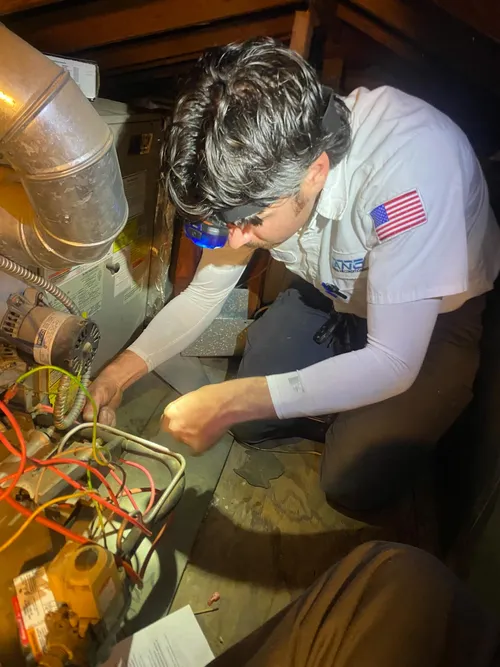
Sano Heating & Air Conditioning
5546 E La Palma Ave, Anaheim, CA 92807
Sano Heating & Air Conditioning is an HVAC company based in Anaheim, CA, providing a range of heating and cooling services. They offer repair and installation for air conditioners, furnaces, heat pumps, mini splits, and perform HVAC tune-ups. The company also specializes in indoor air quality solutions and energy-efficient options like ductless and zoned systems. Serving Anaheim and the surrounding Orange County area, they handle new construction projects and have sheet metal capabilities to support their HVAC services.
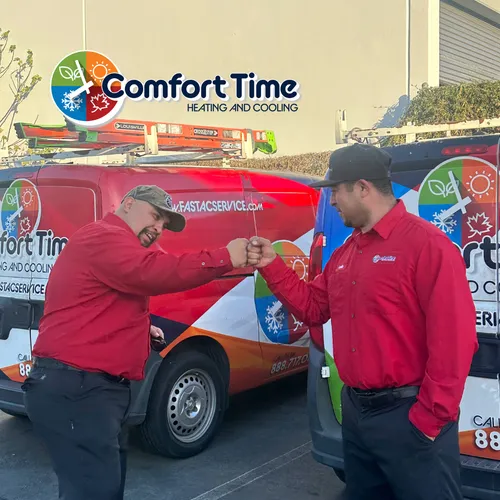
Comfort Time Plumbing Heating & Cooling
8038 Freestone Ave, Santa Fe Springs, CA 90670
Comfort Time Plumbing Heating & Cooling is a family-owned company based in Los Angeles, CA, providing comprehensive HVAC and plumbing services for homes and businesses. They specialize in the repair and installation of air conditioning, furnaces, heat pumps, boilers, mini splits, and commercial refrigeration systems. Comfort Time Plumbing Heating & Cooling offers same-day service and uses advanced techniques such as trenchless sewer line replacement to address plumbing issues efficiently. Since 2008, they have served the local community with trained technicians who maintain up-to-date certifications and prioritize respect for customers' homes.
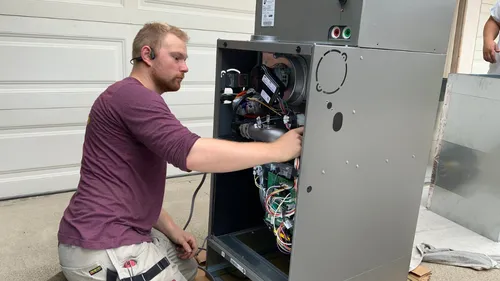
Haven Air Conditioning
1450 N Lakeview Ave, Anaheim, CA 92807
Haven Air Conditioning is an HVAC company based in Anaheim, CA, offering a range of services including air conditioning, furnace, heat pump, and mini split installation and repair. They also provide HVAC tune-ups, duct cleaning, and thermostat installation. The company is experienced in handling complex HVAC systems and offers detailed inspections and maintenance advice to improve system efficiency. Customers appreciate their thoroughness and clear communication throughout the service process. Haven Air Conditioning has built a reputation for professional installations and repairs in the Anaheim area.
Understanding Your HVAC System Options
Choosing the right type of system is the first step in your installation journey. The best choice depends on your home's layout, existing infrastructure, and your specific comfort goals.
Central Air Conditioning and Furnace/Heat Pump Systems This is the standard choice for whole-home comfort in many Glendora residences. A central system uses ductwork to distribute conditioned air throughout the house. Modern installations must comply with California's stringent Title 24 energy efficiency standards, which mandate high-efficiency equipment. When replacing an old system, this often involves installing a new outdoor condenser unit paired with either a new gas furnace or a high-efficiency heat pump, which can provide both heating and cooling from one unit.
Ductless Mini-Split Systems These systems are an excellent solution for homes without existing ductwork, room additions, sunrooms, or for creating independent temperature zones. A ductless mini-split consists of an outdoor compressor/condenser and one or more indoor air-handling units mounted on walls or ceilings. They are known for their quiet operation, high efficiency, and flexibility, with some local specialists focusing specifically on these installations.
High-Efficiency Heat Pumps Heat pumps are becoming increasingly popular in Glendora due to their dual functionality and energy efficiency. They work by transferring heat rather than generating it, providing both heating and cooling from a single system. Advances in technology now allow modern heat pumps to operate efficiently even in cooler temperatures, making them a versatile and eco-friendly choice that aligns well with California's energy goals 1.
The Step-by-Step Installation Process in Glendora
A professional HVAC installation follows a detailed sequence to ensure safety, compliance, and optimal performance. Knowing what to expect can help the project run smoothly.
1. Initial Consultation and Load Calculation The process begins with a thorough home assessment. A qualified technician will spend 1-2 hours evaluating your home's layout, insulation, windows, and existing ductwork. They will perform a Manual J calculation, which is the industry-standard software for determining the precise heating and cooling capacity (measured in BTUs) your home requires. Proper sizing is critical; an oversized or undersized system will lead to inefficiency, discomfort, and premature wear.
2. Permitting with the Glendora Building Department Before any work begins, your contractor must pull the necessary permits from the Glendora Building Department. This step typically takes 1-2 weeks and ensures the planned installation meets all local building codes and California's Title 24 requirements. Permit fees generally range from $250 to $500 and are a standard part of a legitimate, above-board installation 2.
3. Detailed Site Survey and Ductwork Evaluation A technician will conduct a detailed survey of the installation site. For central systems, this includes a comprehensive inspection of your existing ductwork for leaks, proper sizing, and insulation. Sealing and insulating ducts can significantly improve the efficiency of your new system. For ductless installations, they will determine the optimal placement for the indoor and outdoor units.
4. Final Equipment Selection Based on the load calculation and your budget, you'll select the specific equipment. It's advisable to choose ENERGY STAR® rated units from reputable manufacturers like Carrier or Trane for maximum efficiency and potential utility rebates. Your contractor will explain the differences in SEER (Seasonal Energy Efficiency Ratio) ratings for cooling and HSPF (Heating Seasonal Performance Factor) for heat pumps.
5. The Physical Installation The installation itself typically takes 1 to 3 days. For a straightforward swap of an existing central air conditioner, the core work may be completed in 4-8 hours. The process involves safely removing the old equipment, preparing the site (which may include installing a new pad for the outdoor unit), setting the new indoor and outdoor units, connecting refrigerant lines and electrical wiring, and integrating the system with your thermostat and ductwork.
6. System Testing and Commissioning Once installed, the system is not simply turned on. The technician will perform a series of tests: checking refrigerant charge, measuring airflow at each vent, verifying electrical connections, and ensuring the thermostat communicates correctly with all components. They will also review the system's operation with you and explain basic maintenance.
Timeline and Cost Expectations
Planning for the duration and investment required is a key part of your project.
Project Timeline From the initial consultation to a fully operational system, you should plan for approximately 1 to 3 weeks. The permitting phase (1-2 weeks) is often the longest variable. Once permits are secured, the physical installation and testing usually take 1-3 days 3.
Understanding the Costs The total cost for a new HVAC system installation in Glendora varies widely based on system type, size, and efficiency. For a complete central AC and furnace or heat pump system, homeowners can expect a range of $7,000 to $15,000 or more. For a typical 2,000-square-foot home, the cost often averages around $13,000 4. This includes equipment and labor. Ductless mini-split systems vary by the number of indoor "heads" installed.
- Permit Fees: As noted, budget $250 to $500 for local permit costs.
- Potential Savings: Always inquire about rebates. For example, the Los Angeles Department of Water and Power (LADWP) offers rebates of up to $750 for qualifying ENERGY STAR® rated HVAC units 5 6.
- Key Financial Advice: It is highly recommended to obtain at least three detailed, itemized bids from licensed contractors. This allows you to compare not just the bottom line, but the quality of equipment proposed, the scope of work, and warranty terms 7.
Find the perfect hvac installers for your needs
Get personalized recommendations and expert advice
How to Choose a Qualified Glendora Installer
Selecting the right professional is as important as selecting the right equipment.
Verify State Licensing Always confirm that your contractor holds a valid license from the California Contractors State License Board (CSLB). You can verify a license number online for free to ensure it's active and in good standing, and that it covers HVAC work (C-20 license classification).
Check Local Reputation and References Look for companies with a strong presence in the Glendora and San Gabriel Valley area. Read online reviews, ask for local references, and check with the Better Business Bureau. A company familiar with the Glendora Building Department will navigate the permitting process more efficiently.
Review the Proposal Thoroughly A professional proposal should be itemized and include:
- Model numbers and efficiency ratings of all proposed equipment.
- A detailed scope of work (e.g., "include new refrigerant line set," "seal all accessible duct joints").
- A clear timeline, including permit application.
- Warranty information for both parts and labor.
- Total cost, with financing options if available.
Ensure Proper Sizing A reputable contractor will insist on performing a Manual J load calculation and will explain the results. Be wary of any installer who simply recommends the same size as your old unit without a calculation.
Maintaining Your New System
Protect your investment with regular maintenance. A well-maintained system operates more efficiently, has a longer lifespan, and provides more consistent comfort. Plan for an annual professional tune-up-typically one for heating before winter and one for cooling before summer. This service includes cleaning components, checking refrigerant levels, inspecting electrical connections, and ensuring safe operation. Many contractors offer affordable maintenance plans that provide priority service and discounts.
Frequently asked questions
Sources
Footnotes
-
California HVAC code Requirements - The Building Codes Assistance Project - https://bcapcodes.org/california/residential-hvac-code-requirements-california/ ↩
-
Heating Services in Glendora, CA - Install & Repair - https://www.jerrysheatingandairconditioning.com/locations/glendora-ca ↩
-
How Long Does It Take To Replace Your HVAC System? - https://downeyplumbing.com/blog/how-long-does-it-take-to-replace-your-hvac-system/ ↩
-
What Is The Average Cost For A New HVAC System? 2025 Shocking Facts - https://comforttemp.com/what-is-the-average-cost-for-a-new-hvac-system/ ↩
-
How Much Does it Cost To Replace HVAC in Glendora, CA? - https://seanpatrickhvac.com/blog/hvac-costs/how-much-does-it-cost-to-replace-hvac-in-glendora-ca/ ↩
-
HVAC Installation Cost in California | Air & Plumbing Inc. - https://airandplumbing.com/how-much-does-hvac-installation-cost-in-california/ ↩
-
New HVAC System Cost Calculator: Get a Custom Estimate in 2026 - https://modernize.com/hvac/cost-calculator ↩