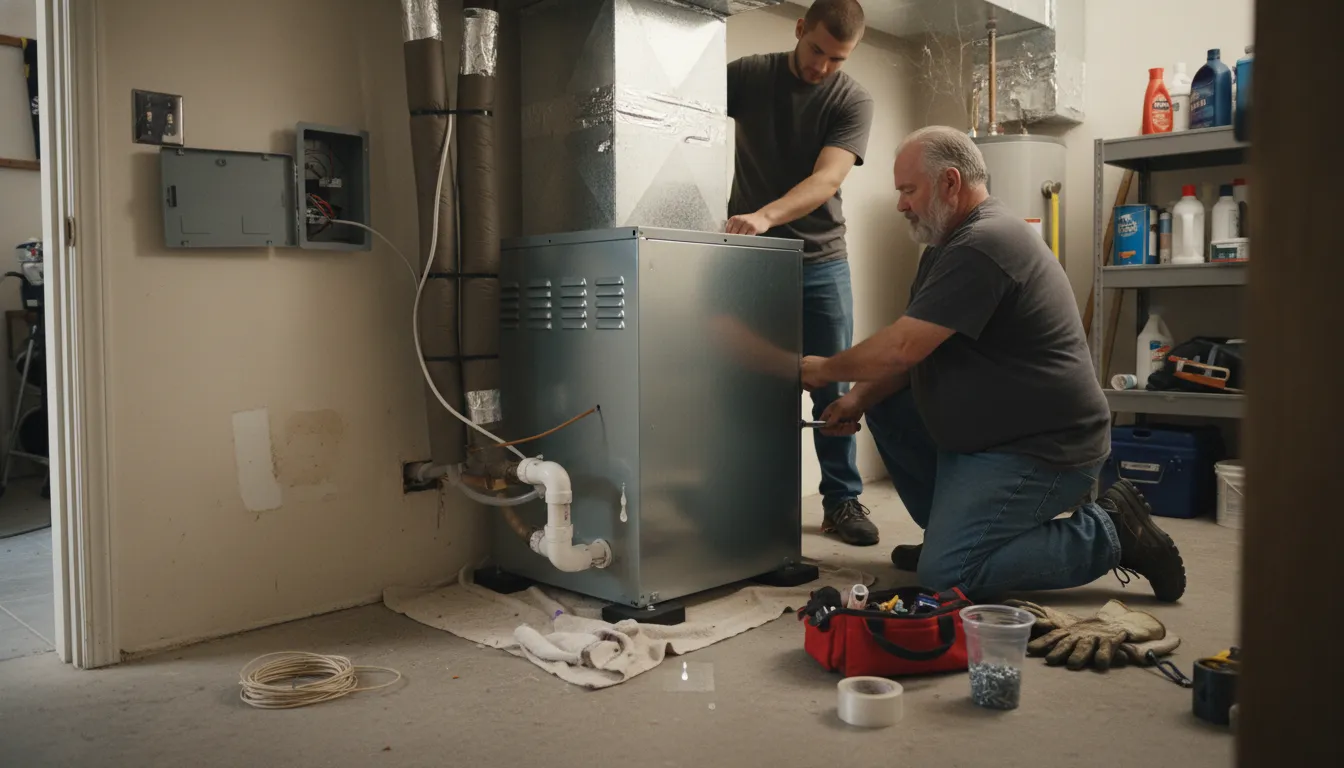
Find the Best HVAC Installers for Your Business
No obligation • Fast responses • Nationwide coverage

Why you can trust HVAC Firms
HVAC Firms is a leading United States resource for evaluating HVAC service providers. Our team researches companies, checks credentials, and reviews customer feedback to present clear, unbiased information. Listings and rankings are based on merit, and companies cannot pay to change our editorial content.
Search providers near you
Top HVAC Installers in Clovis, California Ranked
Installing a new heating and cooling system is a significant investment in your home's comfort, efficiency, and value. In Clovis's climate, where hot summers are common and winters are mild, choosing the right system and a qualified installer is crucial. This guide explains the key considerations for a new HVAC installation, from selecting the right equipment to understanding the process and costs, helping you connect with experienced local professionals for your project.
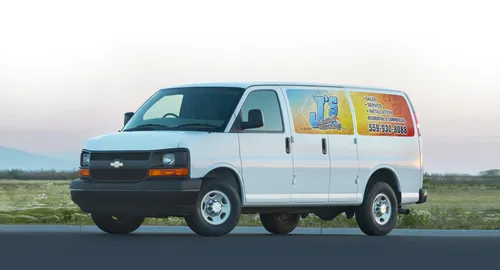
J's Heating & Cooling
2269 S G St, Fresno, CA 93721
J's Heating & Cooling is a full-service HVAC company based in Fresno, CA, serving residential and commercial clients throughout the Central Valley. They offer a wide range of services including air conditioning and furnace repair, installation, maintenance, and indoor air quality solutions. The company is known for its expertise in HVAC tune-ups and specializes in efficient heating and cooling systems, including advanced inverter technology and quiet Bosch air-to-air systems. Established in 2008, J's Heating & Cooling has built a reputation for skilled workmanship and comprehensive HVAC services. They also provide financing options to assist with system installations and repairs.

Mechanical Air
4762 W Jennifer Ave #105, Fresno, CA 93722
Mechanical Air is an HVAC company based in Fresno, CA, serving the city and the wider Central Valley. They provide a range of services including AC repair, HVAC installation, and tune-ups, addressing the specific needs of the local climate. Their capabilities include commercial refrigeration services alongside residential and commercial HVAC solutions.
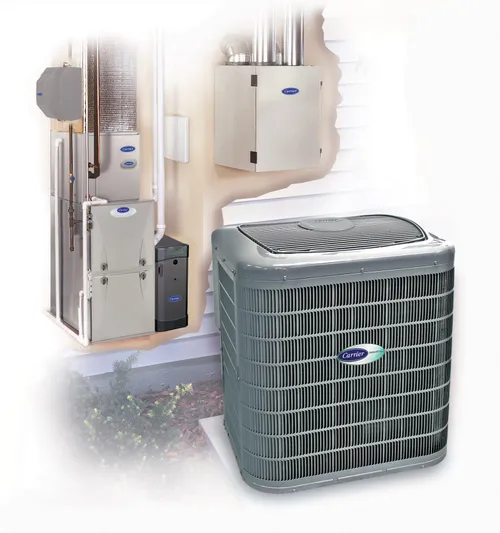
Maximum Air
3634 W Swift Ave, Fresno, CA 93722
Maximum Air is a heating and cooling service company based in Fresno, CA, serving both residential and commercial clients. They offer a range of HVAC services including air conditioner and furnace repair, as well as installation. With over three decades of experience in the Fresno metropolitan area, Maximum Air provides expert diagnostics and repairs for heating and cooling systems. They also offer emergency HVAC services to address urgent heating or air conditioning failures.
RobinAir Heating and Air Conditioning Inc
Fresno, CA
RobinAir Heating and Air Conditioning Inc provides residential and commercial HVAC services in Fresno, CA, including AC and furnace repair, installation, and tune-ups. They offer 24/7 emergency service without extra charges for nights or weekends. With over a decade of experience, they serve Fresno, Clovis, and the Central Valley, specializing in fast diagnostics and maintenance to improve energy efficiency.
Total Comfort Heating and Cooling
2890 N Sunnyside Ave #109, Fresno, CA 93727
Total Comfort Heating and Cooling provides heating and cooling services in Fresno, CA. They offer furnace and AC repair, installation, and maintenance, including HVAC tune-ups. The company serves residential and commercial customers with a focus on reliable HVAC system care.
Understanding Your HVAC System Options
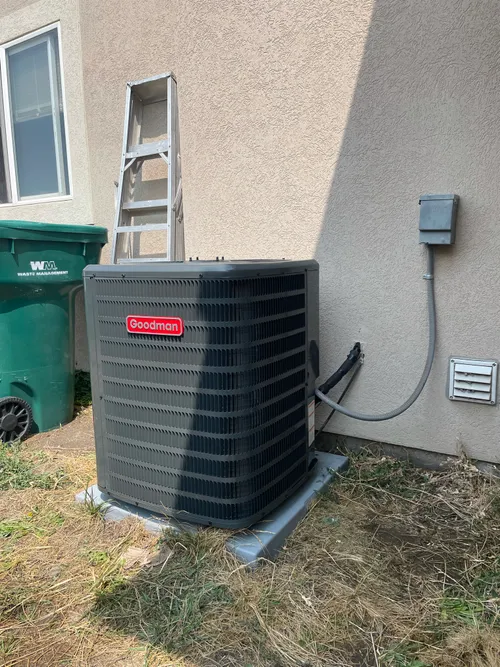
When planning a new installation, the first step is selecting the type of system that best fits your Clovis home. The primary choices include traditional split systems, modern heat pumps, and ductless mini-splits, each with distinct advantages for local weather patterns and home layouts.
Heat Pumps are a highly efficient and increasingly popular choice for all-in-one heating and cooling. They work by transferring heat rather than generating it, making them exceptionally energy-efficient. For Clovis's climate, a heat pump can provide both comfortable cooling in the summer and ample heating in the winter, often paired with a variable-speed air handler for consistent, quiet operation. This makes them an excellent option for homeowners looking to reduce their carbon footprint and utility bills.
A traditional Air Conditioner and Gas Furnace split system remains a reliable option. This setup uses a central air conditioner for cooling and a separate gas furnace for heating. It's a proven configuration that works well, especially if your home already has natural gas service. While Clovis winters are relatively mild, a furnace provides powerful, rapid heating on colder nights 1.
For homes without existing ductwork, room additions, or for those seeking zoned comfort control, Ductless Mini-Split Systems are ideal. These systems consist of an outdoor compressor/condenser and one or more indoor air-handling units mounted on walls or ceilings. They are extremely efficient and allow you to control temperatures in individual rooms or "zones." While the cost per indoor unit can add up, they avoid the energy losses associated with ductwork and are perfect for targeted comfort.
The Step-by-Step Installation Process
A professional HVAC installation follows a meticulous process to ensure safety, efficiency, and system longevity. Understanding these steps can help you know what to expect when the technicians arrive at your home.
- Initial Assessment and Load Calculation: A reputable contractor will begin with a thorough evaluation of your home. This includes measuring square footage, assessing insulation levels, window quality, and your family's comfort needs. They perform a Manual J load calculation to determine the precise heating and cooling capacity (in tons) your home requires-a critical step to avoid an oversized or undersized system.
- Securing Permits: Before any work begins, your installer will pull the necessary local permits from the City of Clovis. This ensures the installation will be inspected and meet all building and safety codes, protecting your investment.
- Removal of Old Equipment: The existing furnace, air conditioner, or heat pump is safely disconnected and removed from your home, including the proper disposal of refrigerant in old units.
- New Unit Installation: The new outdoor condenser (for AC or heat pump) and indoor furnace or air handler are set in place. This includes mounting, securing, and connecting the refrigerant lines and drain lines.
- Ductwork Evaluation and Modification: Your existing ductwork is inspected for leaks, damage, or improper sizing. Necessary repairs, sealing, or modifications are made to ensure optimal airflow to all rooms. In some cases, new ductwork may be recommended or installed.
- Electrical and Control Hookup: The system is connected to your home's electrical panel. A new programmable or smart thermostat is installed and configured, giving you control over your new system's operation.
- System Testing, Balancing, and Startup: This is the final and most important phase. The contractor will start the system, check refrigerant charge, test all safety controls, measure airflow at the vents, and ensure both heating and cooling modes operate correctly. They will also balance the system to deliver even temperatures throughout your home and review all operations with you.
What to Expect: Timeline and Investment
A full HVAC system replacement is a multi-day project. The active installation work for a standard split system or heat pump typically takes 1 to 3 days, depending on the complexity and any required duct modifications 2. It's important to factor in additional time for the initial consultation, permit acquisition, and scheduling the installation crew.
The investment for a new central air conditioning and heating system in Clovis varies widely based on system type, efficiency, home size, and labor. For a full replacement of a central AC and furnace or heat pump for a typical home, homeowners can expect a range of roughly $8,000 to $18,000 or more 3. This broad range accounts for different equipment tiers and home sizes. For example, a system for a 2,000-square-foot home will be at the higher end of this scale 3, while one for a 1,200-square-foot home may be lower 4.
This total cost generally breaks down into equipment (approximately $6,000-$9,000) and professional labor (approximately $3,000-$5,000+) 5. Additional costs can include new or modified ductwork ($2,000-$6,000) and the installation of a smart thermostat ($200-$600) 5. For ductless mini-splits, costs are often calculated per zone, with a single-zone system (e.g., 12,000 BTU) starting around $3,700 6.
Find the perfect hvac installers for your needs
Get personalized recommendations and expert advice
Maximizing Value and Efficiency
Given the upfront cost, it's wise to focus on long-term value. The key is to look beyond the initial price tag to the system's efficiency ratings, which directly impact your monthly energy bills.
- SEER2 and HSPF Ratings: For air conditioners and heat pumps in cooling mode, the SEER2 (Seasonal Energy Efficiency Ratio) rating is crucial. The higher the number, the more efficient the unit. Modern standards start at 14.3 SEER2, with high-efficiency models reaching into the 20s. For heat pumps in heating mode, look for a high HSPF (Heating Seasonal Performance Factor). Investing in a higher-rated system can lead to significant utility savings over its lifespan, a smart move in California's energy-conscious market.
- Exploring Rebates and Incentives: Always ask your installer about available rebates. Local utility companies, like PG&E, and sometimes state or federal programs, offer financial incentives for upgrading to high-efficiency HVAC equipment. These rebates can substantially reduce your net cost and improve the return on your investment.
- Choosing the Right Contractor: The quality of the installation is as important as the equipment itself. A proper installation ensures efficiency, reliability, and durability. Look for licensed, insured, and NATE-certified technicians with strong local references. They should provide a detailed, written estimate that includes the model numbers, efficiency ratings, labor warranty, and manufacturer's warranty.
Planning for a Successful Project
Before you commit to an installation, prepare for the consultation. Know the age of your current system, have a general idea of your monthly energy costs, and note any comfort issues (e.g., hot/cold rooms, humidity problems). Get at least three detailed estimates to compare not just price, but the proposed equipment, scope of work, and warranties. A trustworthy contractor will be transparent, answer all your questions, and never pressure you into a quick decision. With careful planning and the right professional partner, your new HVAC system will provide reliable comfort for years to come.
Frequently asked questions
Sources
Footnotes
-
Clovis CA Heating Installation | Expert HVAC Services - https://valleyairrepair.com/heating/heating-installation-clovis-ca ↩
-
Step-by-Step HVAC Installation Guide - Carrier - https://www.carrier.com/residential/en/us/products/air-conditioners/hvac-installation/ ↩
-
How Much Does an Air Conditioner Cost for a 2000-Square-Foot Home? - https://www.thisoldhouse.com/heating-cooling/air-conditioner-cost-for-2000-square-foot-home ↩ ↩2
-
How Much Does an Air Conditioner Cost for a 1,200-Square-Foot Home? - https://www.thisoldhouse.com/heating-cooling/air-conditioner-cost-for-1200-square-foot-home ↩
-
How Much Does an HVAC System Cost in California? - https://www.perfectstarhvac.com/how-much-does-an-hvac-system-cost-in-california/ ↩ ↩2
-
Heating and Air Conditioning Installation in Clovis, CA - https://www.homedepot.com/services/l/ca/clovis/heating-air-conditioning-installation/c16fbb4b7 ↩