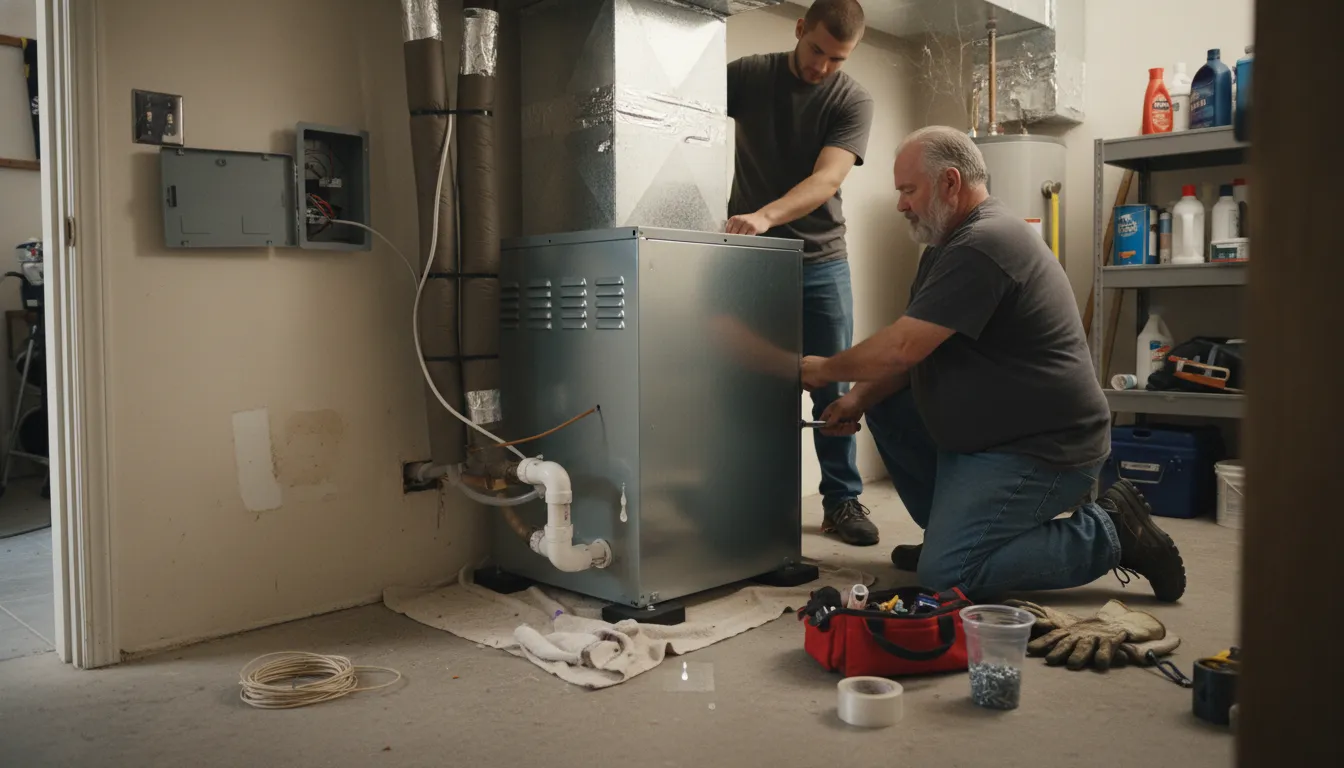
Find the Best HVAC Installers for Your Business
No obligation • Fast responses • Nationwide coverage

Why you can trust HVAC Firms
HVAC Firms is a leading United States resource for evaluating HVAC service providers. Our team researches companies, checks credentials, and reviews customer feedback to present clear, unbiased information. Listings and rankings are based on merit, and companies cannot pay to change our editorial content.
Search providers near you
Top HVAC Installers in Surprise, Arizona Ranked
Installing a new heating and cooling system is a significant investment in your home's comfort, efficiency, and value. In Surprise, where summer heat demands reliable performance, choosing the right HVAC system and a qualified installer is crucial. This guide explains the common system types, the installation process, and key cost factors to help you make an informed decision when selecting a local provider for your project.
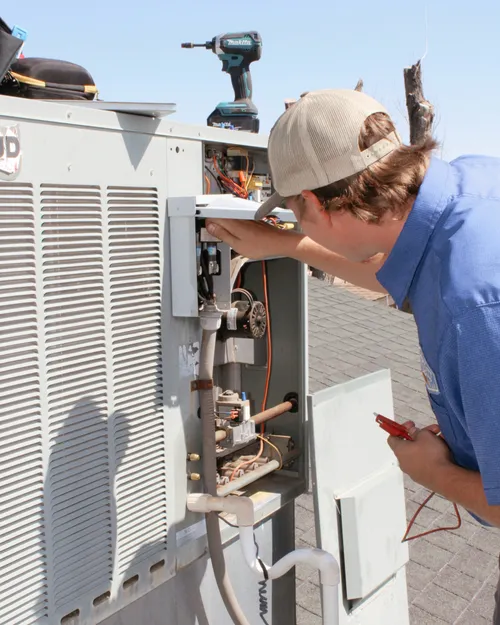
Reliance Heating and Air Conditioning
302 W Lone Cactus Dr, Phoenix, AZ 85027
Reliance Heating and Air Conditioning is a family-owned HVAC company serving Phoenix, AZ, and the surrounding areas. They offer a range of services including air conditioning, furnace, and heat pump repair and installation, as well as HVAC tune-ups and thermostat installation. As a Trane Comfort Specialist, they provide expertise with Trane systems known for reliability and quality. With over 40 years of experience as a third-generation family business, Reliance Heating and Air Conditioning emphasizes treating customers' homes with care and professionalism.
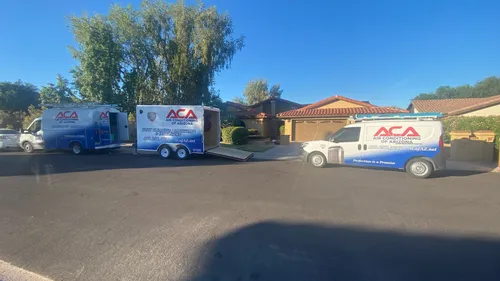
Air Conditioning of Arizona
7652 E Greenway Rd Ste 103, Scottsdale, AZ 85260
Air Conditioning of Arizona is an HVAC company based in Phoenix, AZ, providing residential and commercial air conditioning and heating services. They offer AC repair, installation, and tune-up services, along with preventative maintenance plans to ensure system reliability. With over 20 years of experience, the company emphasizes thorough diagnostics and repairs, including motor and capacitor replacements. They serve the entire Phoenix valley area and provide a 10-year labor warranty with their Comfort Protection Plus plan.

Island Breeze Air Conditioning & Heating LLC
809 E Fairmount Ave, Phoenix, AZ 85014
Island Breeze Air Conditioning & Heating LLC is a firefighter-owned HVAC company serving Phoenix, AZ, and surrounding areas including Gilbert, Mesa, Peoria, and Surprise. They provide residential and light commercial services such as air conditioning, furnace, heat pump, and ductless HVAC installation, repair, and maintenance. Their NATE-certified technicians focus on energy-efficient solutions and indoor air quality improvements. The company emphasizes integrity, accountability, and continuous improvement in their work. Island Breeze also offers after-hours service to address urgent HVAC needs.

Savage Air Conditioning
2315 W Fairmont Dr, Tempe, AZ 85282
Savage Air Conditioning is a family-owned HVAC company serving Phoenix, AZ, with over 30 years of experience since 1988. They provide installation, repair, and maintenance services for air conditioning, furnaces, heat pumps, and ductless mini splits for both residential and commercial clients. The company also offers indoor air quality solutions to improve home environments and has maintenance plans to help prolong system lifespan and efficiency.
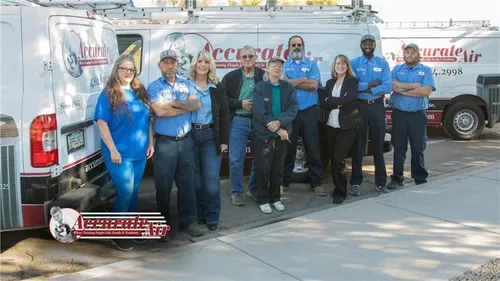
Accurate Air
1321 E Weber Dr, Tempe, AZ 85288
Accurate Air is an HVAC company based in Phoenix, AZ, offering air conditioning repair, installation, and maintenance services. They also provide thermostat installation and HVAC tune-ups. The company is known for timely service and thorough troubleshooting, including quick thermostat replacements. Accurate Air has been serving the area for over 15 years, building a reputation for detailed and careful work.
Understanding Your HVAC System Options in Surprise
Selecting the right equipment is the first step toward year-round comfort. The arid climate of Surprise influences which systems are most effective and efficient for local homes. Here are the primary choices for new HVAC installations.
Central Air Conditioning and Furnace Combos
This is the most common setup in Surprise homes. It pairs an outdoor air conditioning condenser with an indoor air handler that contains a gas furnace. This combination provides powerful cooling for the intense summer heat and efficient gas heating for the milder winters. It's an ideal solution for homes with existing ductwork and is known for its reliability and widespread serviceability.
Heat Pump Systems
Heat pumps are highly efficient electric systems that provide both heating and cooling by moving heat rather than generating it. In cooling mode, they work like a standard AC. In heating mode, they reverse the process to extract warmth from the outside air, even in cooler temperatures. For Surprise's climate, a heat pump can be an excellent, energy-efficient choice for both seasons, often paired with an air handler for optimal air distribution 1.
Ductless Mini-Split Systems
For homes without existing ductwork, additions, sunrooms, or for creating independent temperature zones, ductless mini-splits are a versatile option. These systems consist of an outdoor compressor unit connected to one or more indoor air handlers mounted on walls or ceilings. They offer targeted comfort control and can be more efficient than central systems in specific applications, as they avoid duct losses. Installation costs are typically calculated per zone 2.
The HVAC Installation Process: What to Expect
A professional HVAC replacement or new system installation is a multi-step process designed to ensure safety, compliance, and optimal performance. Understanding this timeline can help you plan accordingly.
1. Initial Evaluation and Planning A certified technician will visit your home to perform a load calculation. This assesses your home's size, insulation, window orientation, and other factors to determine the precise size (in tons) of equipment needed. An undersized unit will struggle, while an oversized one will short-cycle, reducing efficiency and comfort. This stage also includes discussing system options, efficiency ratings, and planning the installation route.
2. Securing Permits Reputable contractors will pull all necessary permits from the city of Surprise or Maricopa County. This ensures the installation meets local building codes and safety standards, which is crucial for your protection and may be required for home insurance or future sales.
3. Removal of the Old System The existing outdoor condenser, indoor air handler or furnace, and associated components like the evaporator coil are safely disconnected and removed. Technicians will also recover any remaining refrigerant according to EPA regulations.
4. Installation of New Equipment The new outdoor unit is placed on a stable, level pad. The new indoor unit (furnace or air handler) is installed, often in the same location as the old one. This phase includes setting new refrigerant line sets, electrical connections, and the condensate drain line.
5. Ductwork and Electrical Modifications If your existing ductwork is leaking, poorly sized, or damaged, modifications or sealing may be performed to ensure efficient airflow. Necessary electrical upgrades at the service panel are also completed during this stage. A new programmable or smart thermostat is typically installed 3.
6. System Charging, Testing, and Startup The system is charged with the correct type and amount of refrigerant. The contractor will then start the system, checking for proper refrigerant pressure, electrical readings, and airflow. They will test for leaks, ensure the thermostat communicates correctly, and verify that both heating and cooling modes operate as designed. Finally, they will balance the system and provide a walkthrough of its operation 4.
Find the perfect hvac installers for your needs
Get personalized recommendations and expert advice
Key Factors Influencing Installation Costs
The cost for a new HVAC system in Surprise can vary widely. Several primary factors determine the final investment, making it important to get detailed, site-specific estimates.
Home and Unit Size The capacity of an HVAC system is measured in tons. A larger home requires a larger, more expensive unit. An inaccurate load calculation leading to an improperly sized system is a common source of future problems and inefficiency. Most Surprise homes require systems ranging from 3 to 5 tons 5.
System Efficiency Ratings Higher efficiency means higher upfront cost but lower long-term operating expenses. For air conditioners and heat pumps, look at the SEER (Seasonal Energy Efficiency Ratio) rating; the current minimum in Arizona is 14.3 SEER, but systems are available up to 26 SEER or higher. For furnaces, the AFUE (Annual Fuel Utilization Efficiency) percentage indicates heating efficiency. Investing in a higher-efficiency unit can lead to significant savings on monthly utility bills 6 7.
Condition of Existing Ductwork If your home's ductwork is old, leaky, or improperly sized, the new system cannot perform efficiently. Sealing, repairing, or replacing ductwork adds to the project's labor and material costs but is essential for comfort, air quality, and energy savings. In some cases, ductwork modifications can account for a substantial portion of the total project cost 8.
Equipment Type and Brand As outlined earlier, a standard central AC/furnace combo, a heat pump system, and a ductless mini-split all have different price points. Furthermore, costs vary between equipment brands (e.g., Carrier, Trane, Lennox, Bryant) and their offered warranties. Premium brands with longer parts and labor warranties often command a higher price 9 10.
Labor, Permits, and Complexity Labor costs are influenced by the contractor's expertise, the complexity of the installation (e.g., attic vs. garage placement, roof penetrations), and local permit fees. A straightforward replacement on a readily accessible ground-level pad will cost less in labor than a first-time installation in a custom home or a system requiring significant new duct runs 11 12.
Estimated Cost Ranges for Surprise Homes
While every home is unique, the following estimates, drawn from local industry data, can provide a general budgeting framework for a full system replacement in Surprise. These are for mid-range equipment and assume standard installation conditions without major ductwork overhaul.
- Mid-Range Central AC and Furnace Combo: For a 3-ton system, homeowners can expect estimates in the range of $9,500 to $12,500+. This is the most common replacement scenario.
- Heat Pump System: A 3-ton heat pump system with an air handler, offering efficient electric heating and cooling, often falls in the range of $10,000 to $13,000+.
- High-Efficiency Systems: Units with SEER ratings of 18+ or communicating smart-system technology can start at $8,000 - $10,000+ for the equipment and installation, with premium models reaching $15,000 to $30,000+ for large or complex homes.
- Ductless Mini-Split: Installing a single-zone system typically costs between $3,000 and $5,000, with each additional indoor head (zone) adding to the total.
Remember, these are ballpark figures. The only way to get an accurate price is through an in-home assessment from a licensed Surprise HVAC contractor who can evaluate all the specific factors related to your property.
Frequently asked questions
Sources
Footnotes
-
HVAC System and AC Unit Costs for Homes in Surprise, AZ - https://objectstorage.us-ashburn-1.oraclecloud.com/n/axhftmgjrbzl/b/roofing-electrical-home-business/o/air-conditioning-repair-service/hvac-system-and-ac-unit-costs-for-homes-in-surprise.html ↩
-
Main Components of an HVAC System | Key Parts Explained - https://www.kjheatingandair.com/main-components-of-hvac-systems ↩
-
what to expect during an HVAC replacement - Modernize - https://modernize.com/homeowner-resources/hvac/what-to-expect-during-an-hvac-replacement ↩
-
How Long Does It Take To Replace Your HVAC System? - https://downeyplumbing.com/blog/how-long-does-it-take-to-replace-your-hvac-system/ ↩
-
How Much Does It Cost to Replace Central AC in Phoenix, AZ? (2025 Guide) - https://modernize.com/hvac/central-air-conditioner-installation/cost/phoenix-az ↩
-
How Much Does It Cost to Replace an AC in Arizona? - HVAC.com - https://www.hvac.com/expert-advice/cost-to-replace-air-conditioner-in-arizona/ ↩
-
Central AC Unit Costs: Pricing for Your Air Conditioner Installation by ... - https://modernize.com/hvac/central-air-conditioner-installation/cost ↩
-
Step-by-Step HVAC Installation Guide - Carrier - https://www.carrier.com/residential/en/us/products/air-conditioners/hvac-installation/ ↩
-
Heating and Air Conditioning Installation in Surprise, AZ - https://www.homedepot.com/services/l/az/surprise/heating-air-conditioning-installation/c16fbb4b7 ↩
-
HVAC Pricing Guide: Average HVAC Cost & Replacement - Bryant - https://www.bryant.com/en/us/products/hvac-pricing-guide/ ↩
-
What Does It Cost to Install a New AC System in Arizona? - https://www.brewersac.com/whats-the-cost-of-ac-installation-in-phoenix/ ↩
-
7 Factors That Influence HVAC Replacement Costs - https://www.callmattioni.com/blog/t-7-hvac-replacement-cost-factors/ ↩