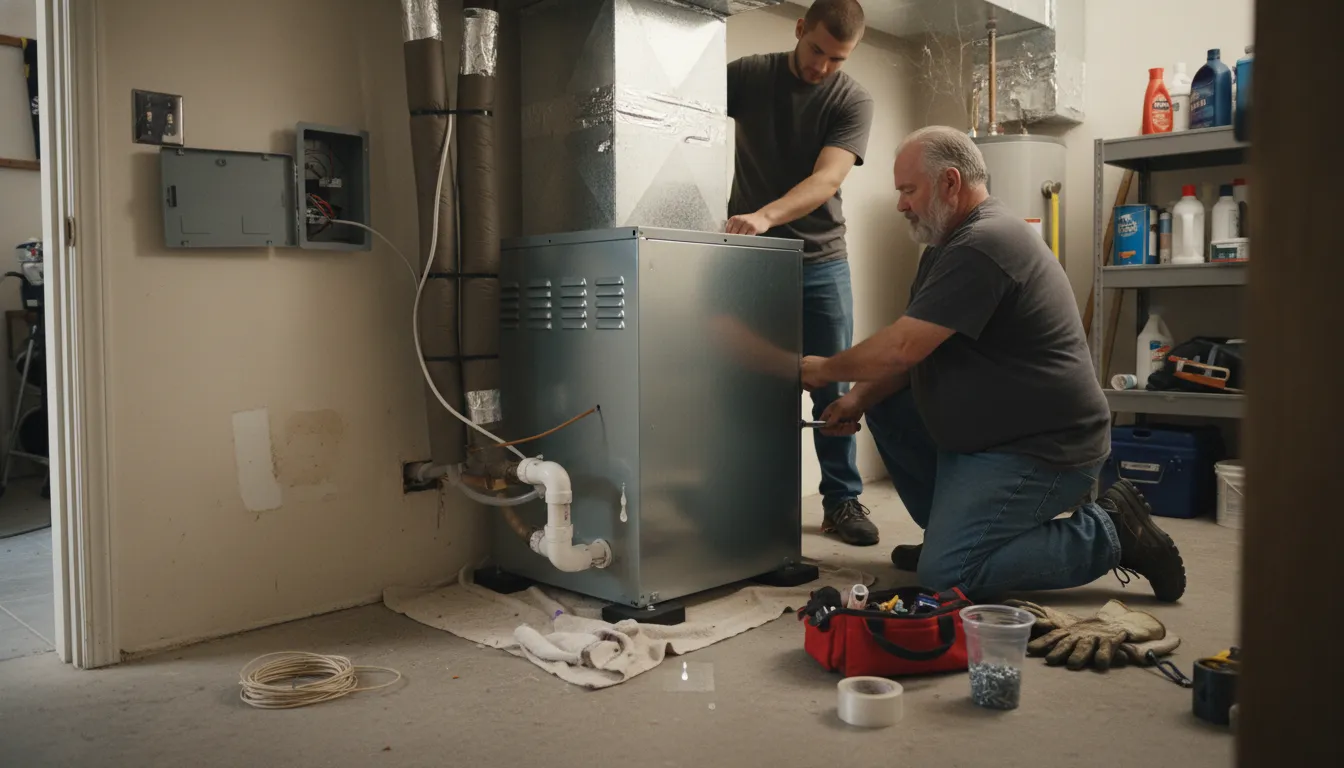
Find the Best HVAC Installers for Your Business
No obligation • Fast responses • Nationwide coverage

Why you can trust HVAC Firms
HVAC Firms is a leading United States resource for evaluating HVAC service providers. Our team researches companies, checks credentials, and reviews customer feedback to present clear, unbiased information. Listings and rankings are based on merit, and companies cannot pay to change our editorial content.
Search providers near you
Top HVAC Installers in Maricopa, Arizona Ranked
Installing a new heating and cooling system is a significant investment in your home's comfort, efficiency, and value. In Maricopa's demanding climate, a properly sized and professionally installed HVAC system is essential for managing extreme summer heat and ensuring year-round indoor air quality. This guide will help you understand your options, the installation process, and how to find qualified local professionals to handle your project.
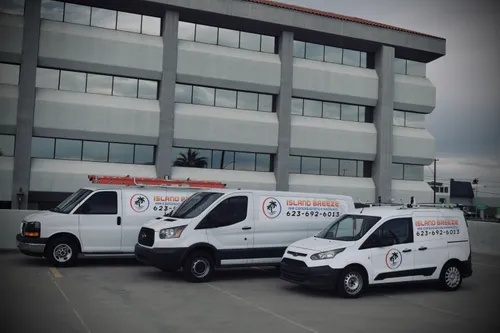
Island Breeze Air Conditioning & Heating LLC
809 E Fairmount Ave, Phoenix, AZ 85014
Island Breeze Air Conditioning & Heating LLC is a firefighter-owned HVAC company serving Phoenix, AZ, and surrounding areas including Gilbert, Mesa, Peoria, and Surprise. They provide residential and light commercial services such as air conditioning, furnace, heat pump, and ductless HVAC installation, repair, and maintenance. Their NATE-certified technicians focus on energy-efficient solutions and indoor air quality improvements. The company emphasizes integrity, accountability, and continuous improvement in their work. Island Breeze also offers after-hours service to address urgent HVAC needs.
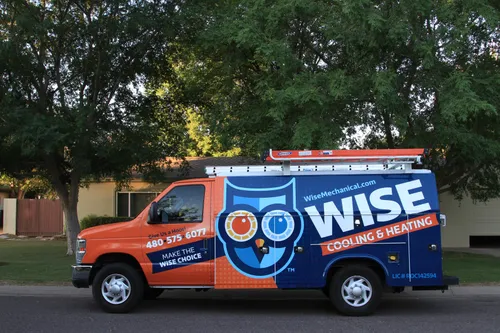
WISE Cooling & Heating
Phoenix, AZ
WISE Cooling & Heating is a family-owned HVAC company serving Phoenix, AZ, and surrounding areas. Founded in 1999 in Cave Creek, they provide installation, repair, and maintenance services for air conditioning, furnace, and heat pump systems. Their technicians are experienced with all major HVAC brands and offer services including HVAC tune-ups and thermostat installations. With over 27 years in business, WISE Cooling & Heating brings extensive knowledge to residential and commercial HVAC needs.
One Hour Heating & Air Conditioning
9831 S 51st St Suite D133, Phoenix, AZ 85044
One Hour Heating & Air Conditioning provides comprehensive HVAC services in Phoenix, AZ, including air conditioning, heating, heat pump, and mini split installation and repair. They also offer duct cleaning, thermostat installation, indoor air quality services, and HVAC tune-ups. Known for their punctuality and customer-focused approach, they serve the Phoenix metropolitan area and the West Valley with a range of capabilities such as emergency HVAC repairs and duct inspections. The company guarantees satisfaction with every job and offers 24/7 emergency service to address unexpected HVAC issues promptly.
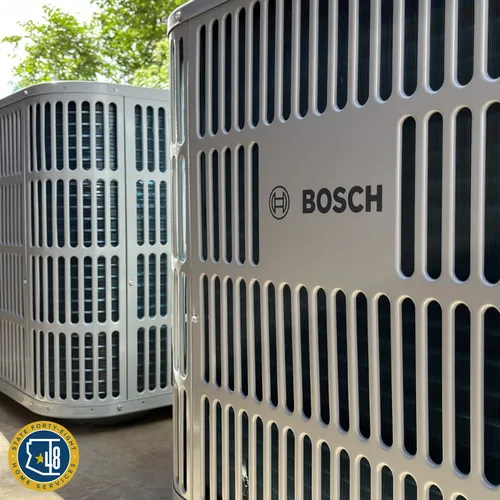
State 48 Home Services
9299 W Olive Ave #613, Peoria, AZ 85345
State 48 Home Services is an HVAC contractor serving Glendale, AZ, specializing in air conditioning repair, installation, and HVAC tune-ups. The company understands the challenges of the Arizona desert climate and offers services including AC maintenance and ductwork modifications. Based in Peoria, they focus on clear communication and thorough work to support homeowners in the Valley of the Sun.
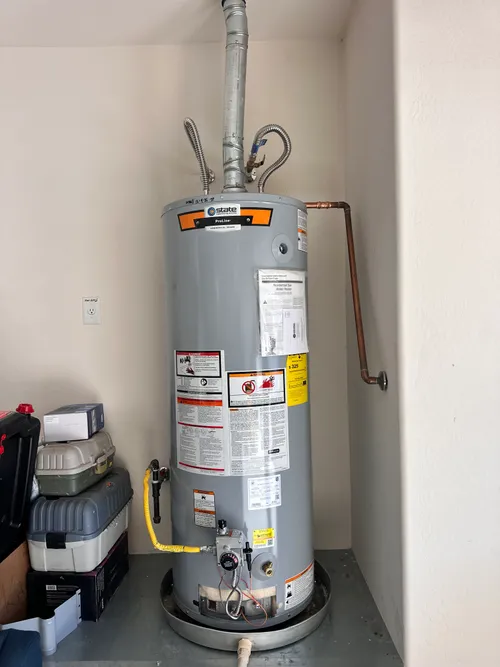
Canilu Air
Phoenix, AZ
Canilu Air is a heating, cooling, and plumbing company based in Phoenix, AZ. They provide a range of services including air conditioning repair and installation, furnace repair, HVAC installation, and duct cleaning. The company is experienced in diagnosing and fixing issues with heating and cooling systems, as well as plumbing solutions. Canilu Air serves the Phoenix metro area and offers expert guidance to help customers choose the right AC system for their needs.
Understanding Your HVAC System Options
Choosing the right type of system is the first step toward a comfortable home. The most common setups in Maricopa are designed to handle both intense cooling needs and milder heating requirements.
Split Systems (AC with Furnace or Heat Pump) This is the most prevalent residential setup. It consists of an outdoor condenser unit paired with an indoor air handler or furnace. For cooling, it functions as a central air conditioner. For heating, it can use either a gas furnace (common in many Maricopa homes) or an electric heat pump. This configuration offers flexibility and efficiency, making it a top choice for whole-home comfort.
Heat Pump Systems An increasingly popular option, a heat pump provides both heating and cooling in one unified system. It works by transferring heat-moving it out of your home in summer and bringing it inside during winter. Given Arizona's climate with relatively mild winters, a high-efficiency heat pump can be an excellent, energy-saving solution for year-round temperature control.
Packaged Units All components-the compressor, condenser, and evaporator-are housed in a single cabinet, typically installed on the ground outside or on the roof. Packaged units are common in some local developments and commercial buildings where indoor space is limited. They are a space-saving solution that simplifies maintenance access.
The Step-by-Step Installation Process
A professional HVAC installation is a multi-day project that follows a structured sequence to ensure safety, code compliance, and optimal performance. Understanding this process can help you know what to expect when the crew arrives.
1. Site Evaluation and Load Calculation Before any work begins, a qualified technician will perform a thorough assessment of your home. This includes measuring square footage, inspecting existing ductwork, evaluating insulation, and considering window placement. Most importantly, they will perform a Manual J load calculation to determine the precise heating and cooling capacity (measured in tons) your home requires. An improperly sized system will lead to poor performance, higher energy bills, and reduced equipment lifespan.
2. Permitting and Preparation The contractor will obtain any necessary permits from the city of Maricopa, ensuring the installation meets all local building and safety codes. On installation day, the team will prepare the work area, protecting your floors and furnishings, and safely disconnect and remove your old heating and air conditioning equipment.
3. Installation of New Equipment The core phase involves setting up the new system components. This includes placing and leveling the new outdoor unit on a stable pad, installing the indoor coil (often attached to a new air handler or furnace), and making all refrigerant line connections. If your ductwork is in good condition, it will be sealed and connected. If modifications or new duct runs are needed, that work will be completed at this stage.
4. Electrical, Controls, and Final Testing The electrical wiring is connected from your home's panel to the new units, and a new programmable or smart thermostat is installed. Once everything is physically in place, the technician will start the system, check refrigerant levels, test all modes of operation (heating and cooling), and verify that airflow from all vents is correct. They will also ensure the condensate drain is clear and functioning to prevent water damage 1.
The entire process for a standard replacement typically takes 1 to 5 days, depending on the complexity, any unforeseen issues with ductwork or electrical, and the scope of the job 2.
Find the perfect hvac installers for your needs
Get personalized recommendations and expert advice
Factors Influencing Installation Cost
The price for a new HVAC system in Maricopa can vary widely. It's not just about the box you buy; it's about the complete installation package tailored to your home.
System Size and Efficiency Larger homes require systems with higher capacity (more tons). Efficiency, measured by SEER (Seasonal Energy Efficiency Ratio) for cooling and HSPF for heat pumps, has a major impact on cost. A basic 14 SEER unit will cost less upfront than a high-efficiency 20+ SEER model, but the latter will save significantly on monthly energy bills, especially during Maricopa's long cooling season. New federal standards (SEER2) also influence available models and pricing.
Equipment Brand and Type Different manufacturers (like Lennox, Goodman, Trane, or Carrier) offer various tiers of equipment at different price points. Furthermore, the choice between a standard air conditioner with a furnace versus a heat pump system will affect the total project cost.
Scope of Work and Labor Is this a straightforward swap-out, or does it require new ductwork, electrical upgrades, or custom fabrication? The condition of your existing infrastructure is a primary cost driver. Labor costs also reflect the expertise and reputation of the licensed contractor you choose 3.
Navigating Costs and Financial Incentives
While a new system is an investment, understanding the typical cost range and available savings can help in planning.
Example Investment Ranges for Full System Replacement For a complete replacement of both indoor and outdoor units in Maricopa, homeowners can expect a wide range based on the factors above:
- Basic to Mid-Range System (e.g., 3-ton unit): Approximately $9,500 - $12,500 for the condenser and air handler combination.
- Higher Efficiency/Larger Home Systems: Costs often range from $10,000 to $18,000 or more for premium, high-efficiency models from top brands 4.
It's crucial to get detailed, written quotes that break down equipment, labor, materials, and permit fees. A very basic air conditioner-only installation can start around $3,000, while comprehensive, high-end installations can exceed $10,000 5 6.
Rebates and Tax Credits You can significantly reduce your net cost by leveraging available incentives:
- Federal Tax Credits: The IRS offers tax credits for installing qualifying high-efficiency heat pumps and central air conditioners. This is a direct dollar-for-dollar reduction on your tax liability.
- Utility Rebates: Local providers like SRP (Salt River Project) and APS (Arizona Public Service) frequently offer rebates for upgrading to high-efficiency HVAC equipment. Your contractor should be informed about current programs.
Key Takeaway: Always obtain multiple quotes, compare not just price but also the proposed system's SEER rating and the contractor's credentials, and explicitly ask about current rebates to secure the best long-term value for your Maricopa home.
Choosing a Qualified Maricopa HVAC Contractor
The quality of the installation is as important as the equipment itself. A poor installation can undermine the performance of even the best system.
- Verify Licenses and Insurance: Ensure the company holds an active Arizona ROC (Registrar of Contractors) license for HVAC work and carries both liability and workers' compensation insurance.
- Check Reviews and References: Look for consistently positive feedback on independent review sites and ask for references from recent local jobs similar to yours.
- Get Detailed Written Estimates: Compare proposals that include model numbers, efficiency ratings, warranty details, and a clear scope of work. Beware of vague or suspiciously low bids.
- Ask About Post-Installation Support: Understand the labor warranty offered and the process for future maintenance and service.
Frequently asked questions
Sources
Footnotes
-
Step-by-Step HVAC Installation Guide - Carrier - https://www.carrier.com/residential/en/us/products/air-conditioners/hvac-installation/ ↩
-
How Long Does It Take To Replace Your HVAC System? - https://downeyplumbing.com/blog/how-long-does-it-take-to-replace-your-hvac-system/ ↩
-
New HVAC System Cost Calculator: Get a Custom Estimate in 2026 - https://modernize.com/hvac/cost-calculator ↩
-
Heating and Air Conditioning Installation in Maricopa, AZ - https://www.homedepot.com/services/l/az/maricopa/heating-air-conditioning-installation/c16fbb4b7 ↩
-
New HVAC System Cost in Phoenix, Arizona | Wolfgangs - https://wolfgangscooling.com/air-conditioning-ac/the-true-cost-of-a-new-hvac-system-in-arizona/ ↩
-
How Much Does It Cost to Replace an AC in Arizona? - HVAC.com - https://www.hvac.com/expert-advice/cost-to-replace-air-conditioner-in-arizona/ ↩