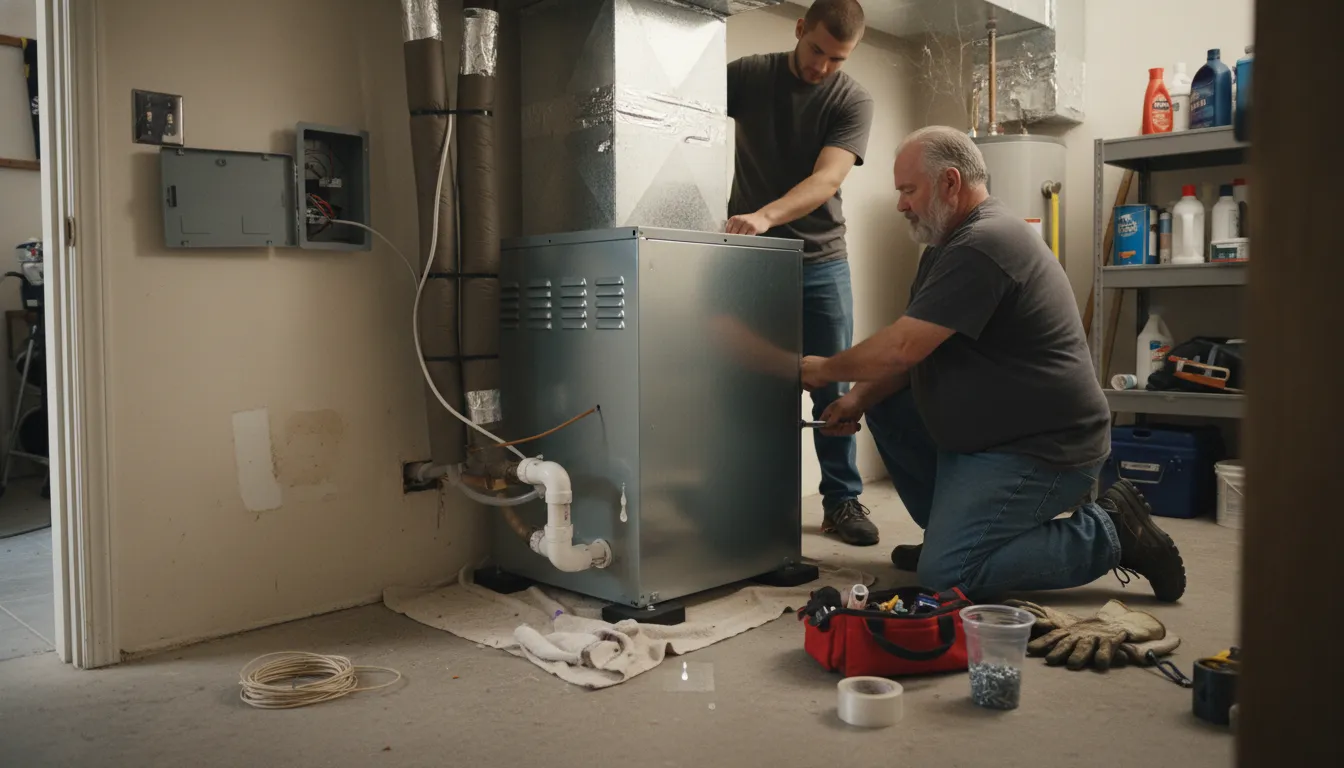
Find the Best HVAC Installers for Your Business
No obligation • Fast responses • Nationwide coverage

Why you can trust HVAC Firms
HVAC Firms is a leading United States resource for evaluating HVAC service providers. Our team researches companies, checks credentials, and reviews customer feedback to present clear, unbiased information. Listings and rankings are based on merit, and companies cannot pay to change our editorial content.
Search providers near you
Top HVAC Installers in Buckeye, Arizona Ranked
Installing a new heating and cooling system is a significant investment in your home's comfort, efficiency, and value. In Buckeye's climate, where summer heat is intense and winters can be cool, a properly sized and installed HVAC system is not a luxury-it's a necessity for year-round livability. This guide explains the key considerations for HVAC system installation, from choosing the right equipment to understanding the installation process and costs, helping you connect with qualified local professionals for your project.
State 48 Home Services
9299 W Olive Ave #613, Peoria, AZ 85345
State 48 Home Services is an HVAC contractor serving Glendale, AZ, specializing in air conditioning repair, installation, and HVAC tune-ups. The company understands the challenges of the Arizona desert climate and offers services including AC maintenance and ductwork modifications. Based in Peoria, they focus on clear communication and thorough work to support homeowners in the Valley of the Sun.
Canilu Air
Phoenix, AZ
Canilu Air is a heating, cooling, and plumbing company based in Phoenix, AZ. They provide a range of services including air conditioning repair and installation, furnace repair, HVAC installation, and duct cleaning. The company is experienced in diagnosing and fixing issues with heating and cooling systems, as well as plumbing solutions. Canilu Air serves the Phoenix metro area and offers expert guidance to help customers choose the right AC system for their needs.
Modern Degree Services llc
Phoenix, AZ
Modern Degree Services llc provides HVAC repair, installation, ductwork, insulation, heating, and hot water heater services in Phoenix, AZ. Their licensed technicians serve the Metro Phoenix area and surrounding communities, offering emergency HVAC service and regular maintenance visits to keep systems efficient year-round. They specialize in seamless duct design to optimize airflow and fast AC repair and installation to maintain indoor comfort during Arizona's hot climate.
Promise Heating & Air
2010 N 22nd Ave, Phoenix, AZ 85009
Promise Heating & Air is an HVAC company based in Phoenix, AZ, offering heating and air conditioning repair, installation, and tune-up services. They serve the West Valley area with a focus on honest and fair pricing. Their capabilities include handling HVAC repairs such as freon recharge, leaky pipes, and replacement parts. The company emphasizes licensed and trained staff and has received several industry awards and certifications.
Mario Bros Heating & Cooling
1705 117th Dr, Avondale, AZ 85323
Mario Bros Heating & Cooling provides heating and air conditioning installation, maintenance, and repair services in Glendale, AZ. Their NATE-certified and factory-trained technicians handle furnace, heat pump, and air conditioning systems for both residential and commercial customers. The company offers HVAC tune-ups as well as new construction and replacement installations. Their team stays current with ongoing training to ensure knowledgeable service across a range of HVAC technologies.
Choosing the Right System for Your Buckeye Home
Selecting the correct heating and air conditioning equipment is the first critical step. The choice impacts your comfort, energy bills, and the system's longevity. For most Buckeye homes, the decision comes down to a few primary options, each with distinct advantages.
High-Efficiency AC and Furnace Split Systems: This is the most common and popular choice for Arizona homes. It pairs a high-efficiency air conditioner with a gas furnace. The key is to look for units with high SEER2 (Seasonal Energy Efficiency Ratio) ratings for the AC and high AFUE (Annual Fuel Utilization Efficiency) ratings for the furnace. Modern systems are designed to meet updated SEER2 standards, offering significant energy savings that are crucial for managing cooling costs during long, hot summers.
Heat Pump Systems: An increasingly popular all-electric option, heat pumps provide both heating and cooling from a single unit1. They are highly efficient for both modes of operation and are excellent for moderate climates. For Buckeye, careful sizing and selection are paramount, as the system must be robust enough to handle the peak summer heat loads efficiently. Advances in technology have made cold-climate heat pumps more viable, offering a potential alternative to traditional gas furnaces.
System Efficiency and Ratings: Beyond the type of system, prioritizing efficiency is a smart financial decision. ENERGY STAR® certified models often qualify for rebates from local utilities like APS or SRP and may be eligible for federal tax credits. Investing in a higher SEER2 rating for your air conditioner can translate to lower monthly electricity bills, making the upfront cost worthwhile over the system's lifespan.
The HVAC Installation Process: A Step-by-Step Overview
A professional HVAC installation is a detailed process that typically takes one to three days, depending on the system's complexity and whether ductwork modifications are needed. Understanding the steps can help you know what to expect when the technicians arrive.
1. Initial Assessment and Load Calculation: This is the most important pre-installation step. A reputable contractor will perform a Manual J load calculation. This is not a simple rule-of-thumb based on square footage; it's a detailed analysis of your home's insulation, window types, orientation, and local climate to determine the exact heating and cooling capacity (in BTUs) your home requires. Proper sizing prevents future issues like short cycling, inadequate comfort, and high humidity.
2. Removal of Old Equipment: The installation team will safely disconnect and remove your existing outdoor condenser, indoor evaporator coil, and furnace or air handler. They will also properly recover any remaining refrigerant according to EPA regulations.
3. Preparation and Setup of New Equipment: The area for the new outdoor unit will be prepared, often with a new, level pad. Indoors, the new furnace or air handler and evaporator coil will be positioned. This stage may involve modifying existing ductwork to ensure optimal airflow to and from the new system. Proper duct sealing and insulation are critical for efficiency.
4. Electrical and Refrigerant Line Work: New electrical connections will be made to meet the power requirements of the new, often more efficient, equipment. New copper refrigerant lines are typically installed between the outdoor condenser and indoor coil, then pressure-tested for leaks before being charged with the precise amount of refrigerant specified by the manufacturer2 3.
5. System Startup and Testing: The final and crucial phase involves starting up the system. Technicians will test for proper operation in both heating and cooling modes, verify refrigerant levels and airflow, ensure the condensate drain is working, and calibrate the thermostat4 5. They should also review the system's operation with you and explain basic maintenance.
Find the perfect hvac installers for your needs
Get personalized recommendations and expert advice
Understanding Installation Costs in Buckeye
The cost for a full HVAC system replacement in Buckeye can vary widely based on the equipment's efficiency, brand, your home's size, and the installation's complexity. It's important to view quotes as an investment in long-term performance rather than just an upfront expense.
A complete system replacement typically ranges from $8,000 to over $20,0006 7. This total generally breaks down into two main components:
- Equipment Cost: This covers the condenser, evaporator coil, and furnace or air handler. For a quality, high-efficiency system, equipment costs often fall between $6,000 and $9,000 or more.
- Labor and Materials Cost: This includes the physical installation, any necessary duct modifications, electrical work, permits, and the final testing and commissioning. This portion commonly ranges from $3,000 to $4,500 or more8.
These figures are estimates, and your specific project may differ. Always obtain detailed, written estimates from multiple contractors. Crucially, ask what is included. A very low bid might exclude essential items like permits, proper refrigerant charging, or a thorough load calculation, which can lead to higher costs down the road.
The Importance of Professional Installation and Contractor Selection
The best equipment will underperform if installed incorrectly. In Arizona's extreme heat, precision is non-negotiable. The difference between a good installation and a poor one can mean hundreds of dollars in annual energy waste and frequent repair calls.
Why Expertise Matters: Key tasks like the Manual J load calculation and precise refrigerant charging are skilled arts9 10. An undersized system will run constantly on the hottest days without cooling your home, while an oversized system will short cycle, failing to dehumidify properly and wearing out components prematurely. Similarly, incorrect refrigerant levels can reduce efficiency by 20% or more and damage the compressor.
Choosing Your Contractor: Look for licensed, insured, and experienced local professionals. Check reviews and ask for references from recent installations. A trustworthy contractor will spend time assessing your home, answer your questions clearly, provide a detailed written proposal, and never pressure you into a quick decision. They are your partner in ensuring your new system delivers decades of reliable comfort.
Frequently asked questions
Sources
Footnotes
-
2026 Heat Pump Costs | Purchase, Installation & Repair - Carrier - https://www.carrier.com/residential/en/us/products/heat-pumps/how-much-does-a-heat-pump-cost/ ↩
-
A Step-by-Step Guide to Air Conditioner Installation - https://candcheat.com/a-step-by-step-guide-to-air-conditioner-installation/ ↩
-
Air Conditioning Installation: A Step-by-Step Process - https://nexgenairandplumbing.com/blog/air-conditioning-installation-a-step-by-step-process/ ↩
-
What to Expect During HVAC Installation - AW Heating & Cooling - https://www.awheatingandcooling.com/blog/hvac/what-to-expect-during-hvac-installation/ ↩
-
What does standard AC installation include? - ANSA Painting - https://budmatthews.com/blog/what-does-standard-ac-installation-include ↩
-
Replacing Heating & Air Conditioning Systems Buckeye AZ - https://cloud9coolheat.com/replacing-heating-air-conditioning-systems/ ↩
-
How Much Does It Cost to Replace an AC Unit in Arizona? - Comfort Experts - https://azcomfortexperts.com/blog/ac-replacement-cost-arizona/ ↩
-
How Much Does an Air Conditioner Cost for a 2000-Square-Foot Home? - https://www.thisoldhouse.com/heating-cooling/air-conditioner-cost-for-2000-square-foot-home ↩
-
HVAC Installation in Buckeye, AZ - Efficient Cooling and Heating - https://efficientcoolheataz.com/hvac-installation.asp ↩
-
How Long Do AC Units Last in Arizona? | One Hour® - https://www.onehourheatandair.com/yuma/about-us/blog/2025/april/how-long-do-ac-units-last-in-arizona/ ↩