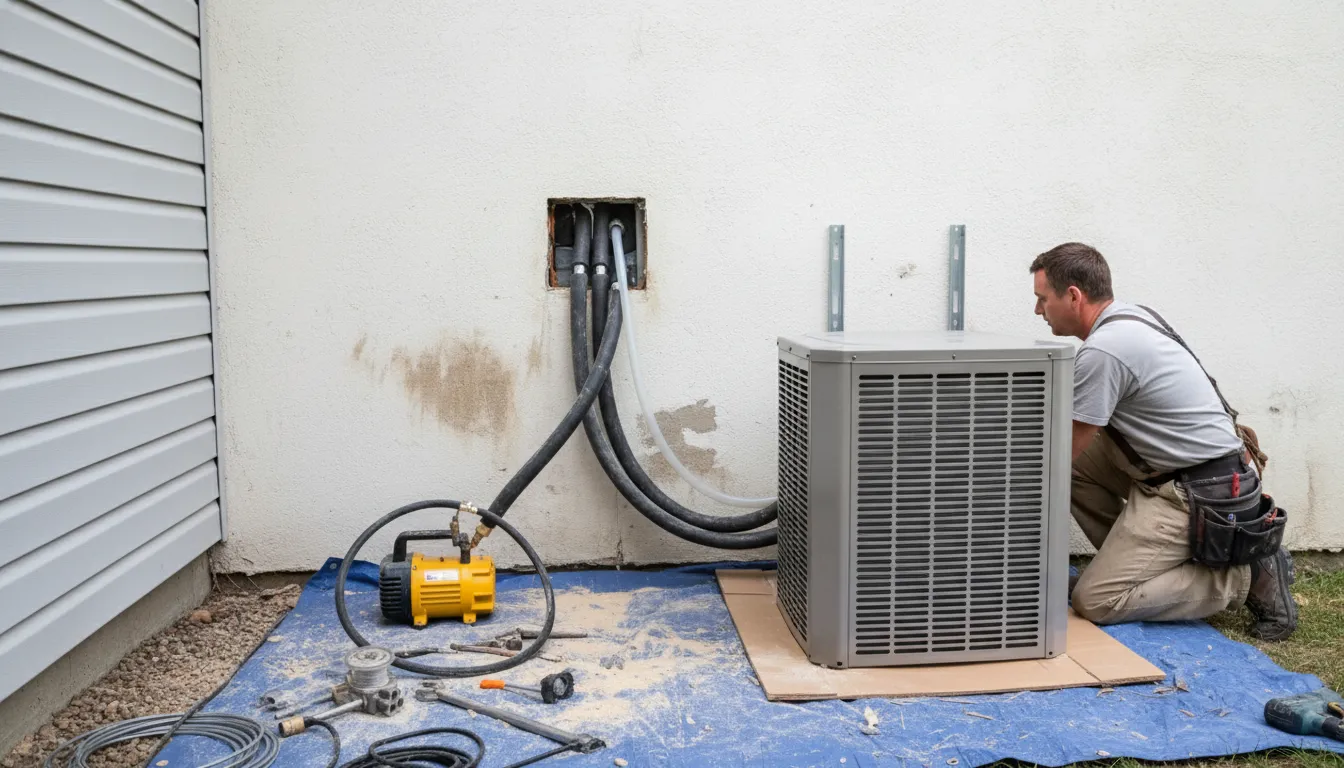
Find the Best Heat Pump Installation & Replacement Contractors for Your Business
No obligation • Fast responses • Nationwide coverage

Why you can trust HVAC Firms
HVAC Firms is a leading United States resource for evaluating HVAC service providers. Our team researches companies, checks credentials, and reviews customer feedback to present clear, unbiased information. Listings and rankings are based on merit, and companies cannot pay to change our editorial content.
Search providers near you
Top Heat Pump Installation & Replacement Contractors in The Colony, Texas Ranked
Upgrading your home's heating and cooling system with a heat pump is a smart investment for year-round comfort and energy efficiency in The Colony. This technology provides both heating and cooling from a single unit, making it exceptionally well-suited for the North Texas climate. Finding a qualified local professional for your heat pump project ensures proper sizing, installation, and access to valuable financial incentives, helping you maximize your home's comfort and savings.
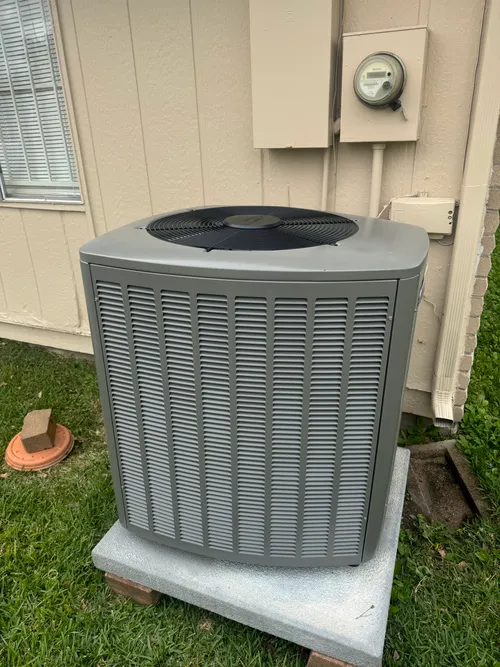
United States Home Services
1805 Royal Ln #101, Dallas, TX 75229
United States Home Services is a Dallas, TX-based company specializing in HVAC, plumbing, and insulation solutions. They provide a range of services including air conditioning, furnace, and heat pump repair and installation, as well as HVAC tune-ups. With over 20 years of experience, they serve homeowners throughout the Dallas metroplex, offering reliable and transparent service. One of their key capabilities is providing custom HVAC installations tailored to home comfort needs. The company emphasizes clear pricing and customer satisfaction, backed by a 100% satisfaction guarantee.
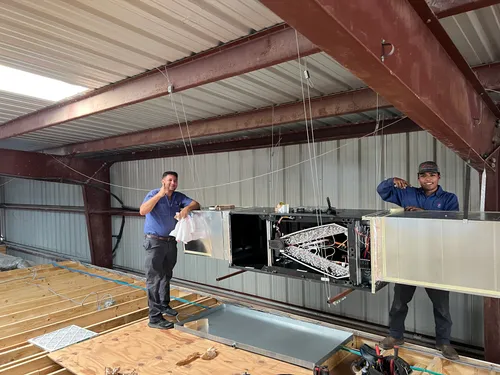
Aircons Heat & Better Air Inc
220 Commercial St, Garland, TX 75040
Aircons Heat & Better Air Inc is an HVAC company based in Dallas, TX, offering a wide range of heating and cooling services. They provide air conditioning and furnace repair, installation of heat pumps and geothermal systems, duct cleaning, thermostat installation, and indoor air quality solutions for both residential and commercial clients. The company is a certified Trane dealer and has over 15 years of experience in the industry. Their team is trained to handle all major HVAC brands and systems. Aircons Heat & Better Air Inc also offers financing options and is available for service calls day and night.

Tiger Air
17606 Preston Rd, Dallas, TX 75252
Tiger Air is an HVAC company based in Dallas, TX, offering heating and cooling services including furnace repair, AC installation, heat pump repair, and HVAC tune-ups. Serving Dallas County and surrounding areas, they provide both residential and commercial HVAC solutions. Established in 2016, Tiger Air is known for its certified technicians and comprehensive maintenance plans. Their team operates 13 hours daily to address heating and cooling needs efficiently.

Cozy - D Heating & A/C LLC
117 Elston Dr, Dallas, TX 75232
Cozy - D Heating & A/C LLC is an HVAC company based in Dallas, TX, serving the Dallas-Fort Worth metroplex. They provide heating, ventilation, and air conditioning services including installation, repair, and maintenance of systems such as furnaces, heat pumps, central air systems, and ductless mini-splits. With over 27 years in business since 1997, Cozy - D offers comprehensive HVAC solutions and emphasizes quality workmanship. Their technicians are drug tested and background checked, and they provide support six days a week.
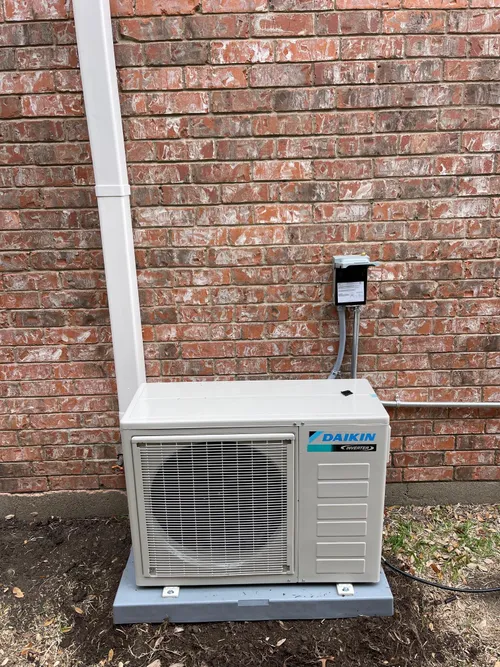
Mullins Mechanical Air Conditioning & Heating
Dallas, TX
Mullins Mechanical Air Conditioning & Heating is an HVAC company serving Dallas, TX. Established in 1979, they provide installation, repair, and maintenance services for air conditioning, furnaces, heat pumps, and indoor air quality systems for both residential and commercial properties. Their certified technicians focus on preventative maintenance and servicing all makes and models to help avoid additional repair costs. Mullins Mechanical emphasizes clear pricing and guarantees their work.
Why a Heat Pump is Ideal for The Colony Homes
The climate in The Colony and the broader Dallas-Fort Worth area is uniquely advantageous for heat pump technology. Our winters are relatively mild, with average lows typically ranging from 35°F to 45°F. This is the sweet spot where modern air-source heat pumps operate at peak efficiency. Unlike in colder climates, a backup heating system is rarely needed, allowing the heat pump to handle the entire heating load efficiently.
Furthermore, since air conditioning is a necessity for seven or more months of the year, adding efficient heating capability to your existing cooling infrastructure represents an incremental and logical upgrade 1. You're essentially getting a high-efficiency, dual-purpose system that manages your home's climate throughout all seasons, simplifying maintenance and often reducing overall energy consumption compared to separate heating and cooling units.
Types of Heat Pump Systems Available
When considering a heat pump installation or replacement, you'll encounter several system types, each with its own benefits.
Air-Source Heat Pumps (Split Systems) This is the most common and versatile type for homes in The Colony. It consists of an outdoor condenser/compressor unit and an indoor air handler, connected by refrigerant lines. If your home has existing ductwork, this system can utilize it, making it a straightforward replacement for a traditional air conditioner and furnace. These split systems are the workhorses of residential HVAC, offering reliable and efficient performance for whole-home comfort.
Ductless Mini-Split Heat Pumps For homes without ductwork, room additions, sunrooms, or for creating independent temperature zones, ductless mini-splits are an excellent solution. These systems feature a compact outdoor unit connected to one or more sleek, wall-mounted indoor units. They are known for being exceptionally quiet and highly efficient, as they eliminate energy losses associated with ductwork 2. They offer precise control over individual rooms, which can lead to additional energy savings.
Geothermal Heat Pumps (Ground-Source) For the ultimate in efficiency and long-term savings, geothermal systems are unmatched. They leverage the earth's stable underground temperature to heat and cool your home 3. While they have the highest upfront installation cost due to the required ground loop excavation, they offer the lowest operating costs and longest equipment lifespan. For homeowners in The Colony planning to stay in their homes for many years, a geothermal heat pump can be a remarkable investment.
Understanding Efficiency Ratings and Costs
The performance and price of a heat pump are closely tied to its efficiency ratings. The key metric for cooling efficiency is the Seasonal Energy Efficiency Ratio (SEER). For heating in our region, the Heating Seasonal Performance Factor (HSPF) is also important. Higher numbers indicate greater efficiency and lower utility bills.
- Entry-Level Systems (14-15 SEER): These are budget-friendly options, with equipment costs typically starting around $4,200-$6,500+. They meet the federal minimum efficiency standards and are a good choice for straightforward replacements where upfront cost is the primary concern.
- Mid-Range Systems (16-18 SEER): This is a popular category for homeowners seeking a balance of efficiency and cost. Installation for these units often falls in the $7,500 to $11,000+ range. They offer noticeable energy savings over basic models and often come with enhanced features.
- Premium High-Efficiency Systems (20+ SEER): These top-tier models, including variable-speed compressors, provide the quietest operation and maximum energy savings. They are designed for optimal comfort with minimal temperature fluctuation. Accordingly, they command a higher price, often ranging from $12,000 to $18,500+ for the equipment and installation 4.
Find the perfect heat pump installation & replacement contractors for your needs
Get personalized recommendations and expert advice
What Influences Your Total Installation Cost?
The total cost for heat pump installation and replacement in The Colony can vary widely, from around $6,500 for a basic system to over $25,000 for a high-end or complex installation 5. Several key factors contribute to this range:
- System Type and Size: The capacity of the unit (measured in tons) must be correctly matched to your home's square footage, insulation, and window exposure. An oversized or undersized system will perform poorly.
- Existing Infrastructure: A simple swap of an old heat pump for a new one is the most cost-effective scenario. However, many projects reveal additional needs:
- Ductwork Modifications: Older homes may need duct sealing, repairs, or entirely new ductwork, which can add $2,000 to $4,000 or more to the project.
- Electrical Upgrades: Newer, higher-capacity systems may require an electrical panel upgrade or new circuit runs, costing approximately $1,500 to $3,000.
- Labor and Complexity: The accessibility of the installation site, whether it's a single-story or multi-story home, and the need for custom fabrication can affect labor time and costs.
Financial Incentives to Reduce Your Upfront Cost
One of the most compelling reasons to consider a heat pump upgrade now is the availability of significant financial incentives.
Federal Tax Credits Homeowners can claim a federal tax credit of up to $2,000 for installing a qualifying high-efficiency heat pump. This credit is worth 30% of the total project cost (including equipment and labor), up to that $2,000 maximum, and is available through 2032 6 7 8. This directly reduces your federal income tax liability.
Utility and Local Rebates It's always worth checking with your local utility company, such as CoServ Electric, for any additional rebates or special offers on high-efficiency HVAC equipment. These rebates are often paid directly to you or applied at the point of sale, providing immediate savings on top of the federal credit 9.
Combined, these incentives can substantially lower the net cost of a high-efficiency system, making it much more accessible and improving the return on your investment.
The Professional Installation Process
A successful heat pump project hinges on professional installation. A qualified local technician will follow a comprehensive process:
- Home Evaluation and Load Calculation: This critical first step involves more than just square footage. The contractor will assess your insulation, windows, air leakage, and more to determine the precise size (in tons) of system you need.
- System Selection and Proposal: Based on the evaluation, the professional will recommend specific system types and models that fit your home's needs and your budget, outlining all costs and potential incentives.
- Preparation and Installation: The old equipment is safely removed. The team will then install the new outdoor and indoor units, connect refrigerant and electrical lines, and integrate the system with your thermostat and ductwork.
- Testing and Commissioning: Once installed, the system is charged with refrigerant, started, and meticulously tested. The technician will verify airflow, temperature differentials, and system pressures to ensure it operates at its rated efficiency.
- Owner Education: A good contractor will walk you through the operation of your new system, explain your thermostat settings, and review maintenance requirements.
Frequently asked questions
Sources
Footnotes
-
How to Choose the Right HVAC System for Your Home in North Texas - https://www.premierairandelectric.com/how-to-choose-the-right-hvac-system-for-your-home-in-north-texas ↩
-
Read Heat Pump Installation Cost Guide In Fort Worth Tx - https://r10heatandair.com/heat-pump-installation-cost/ ↩
-
The Complete Guide to Heating & Cooling System Types for ... - https://www.airtechsheatingcooling.com/blog/the-complete-guide-to-heating-cooling-system-types-for-texas-homeowners/ ↩
-
Best Heating Systems for Texas Homes: Cost, Comfort and ... - https://colleyrefrigeration.com/best-heating-systems-texas-homes/ ↩
-
Heat Pump Cost Analysis: What To Expect & How It's Determined - https://clinesairconditioning.com/heat-pump-cost/ ↩
-
Heat Pump Installation Cost Texas 2025 - Jupitair HVAC - https://jupitairhvac.com/blog/heat-pump-installation-cost-guide-2025-north-texas/ ↩
-
2026 Heat Pump Cost Guide: Purchase, Installation & Repair - Carrier - https://www.carrier.com/residential/en/us/products/heat-pumps/how-much-does-a-heat-pump-cost/ ↩
-
What Texans needs to know about heat pumps - https://environmentamerica.org/texas/center/articles/what-texans-needs-to-know-about-heat-pumps/ ↩
-
Heat Pumps in Texas | The Complete Guide for Homeowners - https://jupitairhvac.com/texas-hvac-guide/equipment/heat-pumps/ ↩