Find the Best Heat Pump Installation & Replacement Contractors for Your Business
No obligation • Fast responses • Nationwide coverage

Why you can trust HVAC Firms
HVAC Firms is a leading United States resource for evaluating HVAC service providers. Our team researches companies, checks credentials, and reviews customer feedback to present clear, unbiased information. Listings and rankings are based on merit, and companies cannot pay to change our editorial content.
Search providers near you
Top Heat Pump Installation & Replacement Contractors in Austin, Texas Ranked
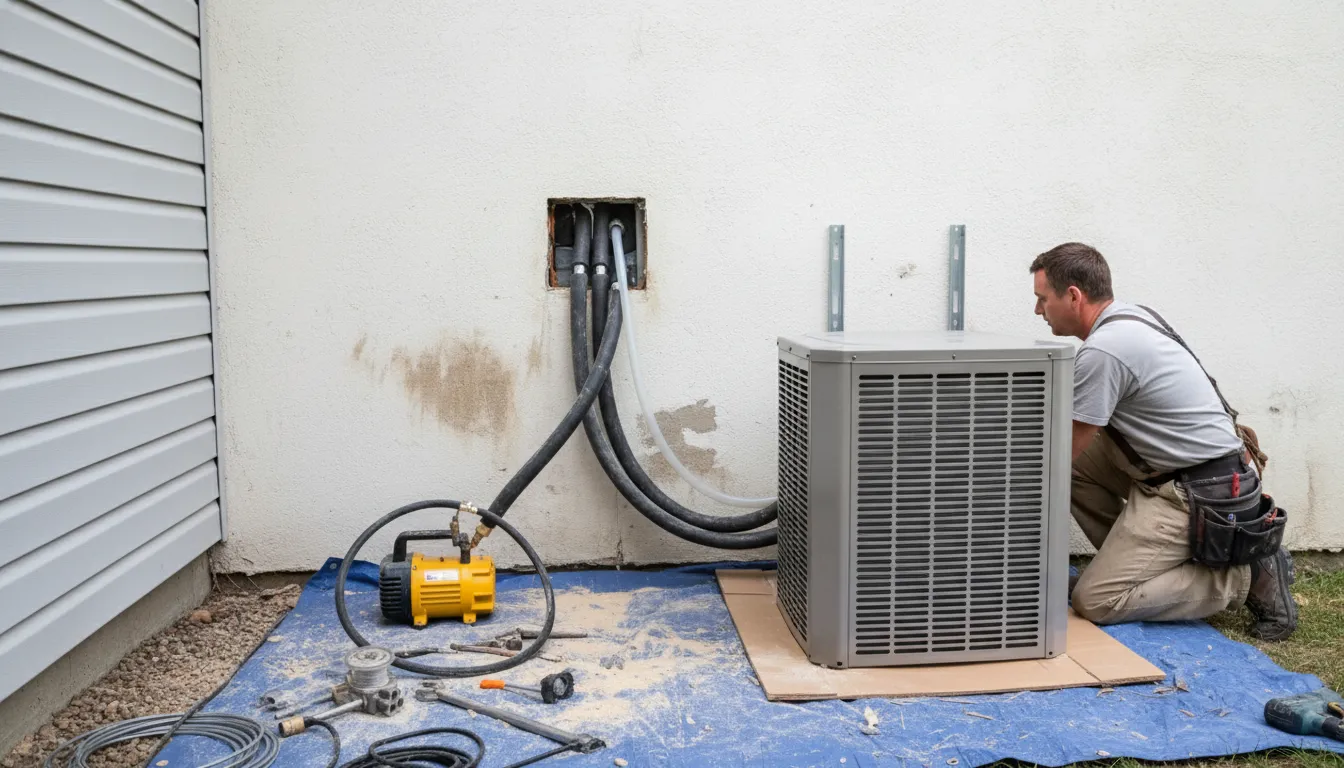
Upgrading your home's heating and cooling system with a heat pump is a smart, energy-efficient choice for Austin's climate. These systems provide both heating and cooling from a single unit, offering year-round comfort while potentially lowering your utility bills. This guide will help you understand the types of systems available, key considerations for your home, and how to connect with qualified local professionals to ensure a successful installation or replacement.

SM Air A/C & Heating
3500 TX-123, San Marcos, TX 78666
SM Air A/C & Heating provides heating and cooling services in Austin, TX, specializing in repair, installation, and maintenance of HVAC systems. Their offerings include furnace and heat pump services, air conditioning repairs and installations, and indoor air quality solutions such as air purifiers and whole-home dehumidifiers. The company serves residential customers with a focus on energy-efficient and reliable HVAC solutions. SM Air is a member of the ACCA and emphasizes using innovative technology to meet industry standards and customer needs.
Mend Services
12951 Wright Rd, Buda, TX 78610
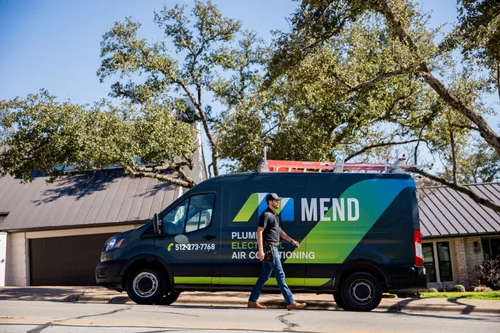
Mend Services is a comprehensive home service provider based in Austin, TX, offering plumbing, electrical, and HVAC solutions. They serve Austin and surrounding areas including Buda, Cedar Park, Round Rock, and more. Their HVAC services cover installation, repair, and maintenance of air conditioning, furnaces, heat pumps, mini splits, and smart thermostats, along with indoor air quality solutions like humidifiers and air purifiers. Mend Services also provides 24/7 emergency after-hours support. The company emphasizes a workmanship guarantee and integrates smart technology for efficient home system management.

All About TEXAS Cooling and Heating
2125 Downing Ln, Leander, TX 78641
All About TEXAS Cooling and Heating is an HVAC company based in Austin, TX, offering a wide range of services including air conditioning, furnace, heat pump, and mini-split installation and repair. They also provide HVAC tune-ups and indoor air quality solutions. With over 34 years of experience, they specialize in advanced systems such as zoning, two-stage, and fully modulating inverter technology. The company emphasizes local values and respectful service practices.
Air Runs Services LLC
Austin, TX
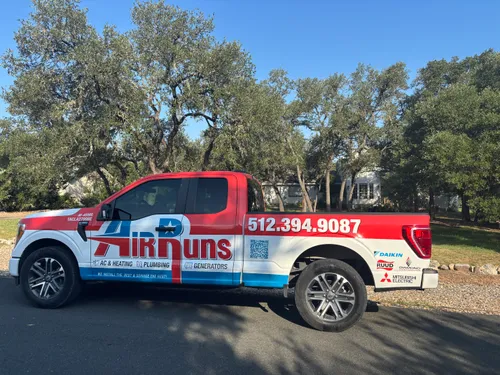
Air Runs Services LLC is an HVAC and plumbing company based in Austin, TX. They provide heating, cooling, plumbing, air quality, and generator services for single-family, multi-family, and commercial properties. Their offerings include installations, repairs, and maintenance with a focus on HVAC systems such as air conditioners, furnaces, heat pumps, and mini splits. As a Diamond Elite Contractor for Mitsubishi Electric, they deliver factory-certified installations with exclusive extended warranties. The company has over 20 years of experience serving the Austin area.

Trinity Inc
Austin, TX
Trinity Inc is an HVAC company based in Austin, TX, offering a range of services including air conditioning, furnace, and heat pump repair and installation. They also provide HVAC tune-ups, duct cleaning, and indoor air quality services. The company is experienced in handling various heating and cooling systems and emphasizes thorough, detail-oriented work, including heat pump system installations and ductwork. Trinity Inc is known for clear communication and ensuring compliance with city inspections.
Why a Heat Pump is Ideal for Austin's Climate
Austin's weather, characterized by hot summers and relatively mild winters, is perfectly suited for heat pump technology. Unlike traditional systems that generate heat, a heat pump transfers existing heat, making it exceptionally efficient. During our long cooling season, it operates like a high-efficiency air conditioner. In the winter, it efficiently extracts heat from the outside air to warm your home, a process that remains cost-effective in our typical Central Texas temperatures. This dual functionality means you maintain consistent comfort throughout the year with a single, streamlined system that can be more economical to operate than separate heating and cooling units.
Types of Heat Pump Systems
Understanding the different configurations is the first step in choosing the right system for your Austin home.
Split System (Central) Heat Pumps This is the most common type for homes with existing ductwork. It consists of an outdoor condenser/compressor unit paired with an indoor air handler or coil. The system uses your home's duct network to distribute conditioned air. If your home already has central air conditioning or a forced-air furnace, a split system heat pump can often be a straightforward replacement, leveraging the existing infrastructure.
Ductless Mini-Split Heat Pumps For homes without ducts, room additions, sunrooms, or for targeting specific zones, ductless mini-splits are an excellent solution1 2. These systems feature a compact outdoor unit connected to one or more sleek, wall-mounted indoor units. Each indoor unit can be controlled independently, allowing for customized "zoning" of temperatures in different parts of your home, which can lead to additional energy savings.
Hybrid or Dual-Fuel Systems While Austin's winters are generally mild, we do experience occasional cold snaps. A hybrid system combines an electric heat pump with a backup gas furnace3 4. The system intelligently switches to the most cost-effective fuel source based on the outdoor temperature. The heat pump handles heating during most of the winter, and the gas furnace provides powerful, efficient heat during periods of extreme cold, offering a balance of efficiency and reliability.
Key Considerations for Your Installation
Selecting the right system involves more than just choosing a type. Several technical factors are crucial for performance, efficiency, and comfort.
Efficiency Ratings: SEER2 and HSPF2 Efficiency is measured by two key metrics. SEER2 (Seasonal Energy Efficiency Ratio) rates cooling efficiency, while HSPF2 (Heating Seasonal Performance Factor) rates heating efficiency. For the South region, which includes Austin, the minimum standard is 15.2 SEER2 and 8.8 HSPF2. Investing in a unit with ratings significantly higher than the minimum will yield greater energy savings over the life of the system. Look for models with high SEER2 ratings to maximize savings during our long, hot summers.
Proper Sizing is Critical Perhaps the most important step is having a professional perform a Manual J load calculation5. This analysis considers your home's square footage, insulation levels, window types, orientation, and local climate data to determine the exact heating and cooling capacity (measured in tons) your home needs. An oversized system will short-cycle (turn on and off too frequently), wasting energy and failing to properly dehumidify your air. An undersized system will run constantly, struggling to maintain temperature and driving up costs. Correct sizing ensures optimal efficiency, comfort, and system longevity.
Climate Compatibility Modern heat pumps are effective in a wide range of temperatures. Austin's winter design temperatures are well within the efficient operating range of today's models6 7. For the vast majority of winter days, a standard air-source heat pump will provide ample, efficient heat. The mild climate is a primary reason heat pumps are such a cost-effective heating solution compared to traditional electric or gas systems in our area 8.
Find the perfect heat pump installation & replacement contractors for your needs
Get personalized recommendations and expert advice
Understanding Installation Costs
The investment for a new heat pump system in Austin varies based on several factors, with typical costs ranging from $5,000 to over $10,000 for a standard central system installation 9.
- System Size & Type: The capacity of the unit (e.g., 2-ton vs. 5-ton) is a major cost driver. Ductless mini-splits vary by the number of indoor "heads" installed. A complex hybrid system will have a higher upfront cost than a standard split system10 11.
- Equipment Efficiency: Higher SEER2 and HSPF2 rated models come with a premium price tag but offer lower operating costs.
- Installation Complexity: The job cost includes labor, which can be affected by the accessibility of the installation site, the need to modify or repair existing ductwork, and any required electrical upgrades. Proper permitting is also part of a professional installation.
- Existing Infrastructure: A replacement that uses existing, compatible ductwork and electrical lines will generally cost less than a first-time installation in a home without ducts.
Financial Incentives and Long-Term Savings
The upfront cost of a heat pump is often offset by significant incentives and operational savings.
Available Rebates and Tax Credits
- Federal Tax Credit: Homeowners may be eligible for a tax credit of up to 30% of the project cost, with a maximum of $2,000, for installing a qualified high-efficiency heat pump 12. This credit is applied when you file your annual federal income taxes.
- Utility Rebates: Local energy providers, such as Austin Energy, frequently offer rebates for upgrading to high-efficiency HVAC equipment. These rebates are typically applied directly to your project cost or issued as a check after installation and verification.
Reduced Operating Expenses The primary financial benefit of a heat pump is its efficiency. By moving heat rather than creating it, heat pumps can use significantly less electricity to provide the same amount of heating as a traditional electric furnace or baseboard heaters. Many homeowners see a reduction of 20% to 70% in their annual heating and cooling costs after switching to a properly sized and installed heat pump13 14. When combined with the available incentives, the long-term savings make a heat pump a financially sound home improvement.
The Professional Installation Process
A successful installation hinges on working with a skilled technician. The process typically involves:
- Initial Consultation & Load Calculation: A technician assesses your home, discusses your needs, and performs the essential load calculation.
- System Design & Proposal: You'll receive a detailed quote outlining the recommended equipment, layout, labor, and total cost.
- Equipment Removal & Preparation: The old system is safely disconnected and removed. The installation area is prepped.
- New System Installation: The outdoor and indoor units are placed, connected with refrigerant lines and electrical wiring, and integrated with your ductwork or indoor heads.
- Testing & Commissioning: The system is charged with refrigerant, started, and thoroughly tested for proper operation, airflow, and thermostat communication. The technician will ensure it meets all performance specifications.
- Owner Orientation: A final walk-through to explain system operation, maintenance requirements, and warranty details.
Frequently asked questions
Sources
Footnotes
-
What Is the Ideal HVAC System for Austin's Climate? - https://hvacexpress.pro/what-is-the-ideal-hvac-system-for-austins-climate/ ↩
-
Your 2025 Cold Climate Heat Pump Buying Guide - Modernize - https://modernize.com/hvac/heating-repair-installation/heat-pump/cold-climate ↩
-
Heat Pump Price Guides - Heat Pump Prices and Replacement Costs - https://heatpumppriceguides.com/ ↩
-
Types of Heat Pumps and When They Work Best - https://koalacooling.com/types-of-heat-pumps/ ↩
-
Austin Heat Pump Replacement - https://www.precisionheatac.com/hvac-guide/heating-systems/heat-pumps/ ↩
-
How Austin's Unique Climate Impacts HVAC System Performance - https://freedomhvac.us/how-austins-unique-climate-impacts-hvac-system-performance/ ↩
-
Heat Pump vs. Traditional AC: Which Is Better for Your Central Texas ... - https://accutemptexas.com/heat-pump/ ↩
-
Heat Pump Repair & Installation - Radiant - https://radiantplumbing.com/heating-air/heat-pumps/ ↩
-
How Much Does a Heat Pump Cost in Austin? [2026 Data] - https://www.angi.com/articles/how-much-does-heat-pump-cost/tx/austin ↩
-
Heat Pump Installation Cost Texas 2025 - Jupitair HVAC - https://jupitairhvac.com/blog/heat-pump-installation-cost-guide-2025-north-texas/ ↩
-
Ductless Heat Pump Buying Guide Canada - https://www.furnaceprices.ca/ductless-systems/ductless-heat-pump-buying-guide/ ↩
-
Austin Heat Pump Replacement - Fox Service Company - https://www.foxservice.com/heating/heat-pump-replacement/ ↩
-
What Texans needs to know about heat pumps - https://environmentamerica.org/texas/center/articles/what-texans-needs-to-know-about-heat-pumps/ ↩
-
Heat Pumps in Texas | The Complete Guide for Homeowners - https://jupitairhvac.com/texas-hvac-guide/equipment/heat-pumps/ ↩