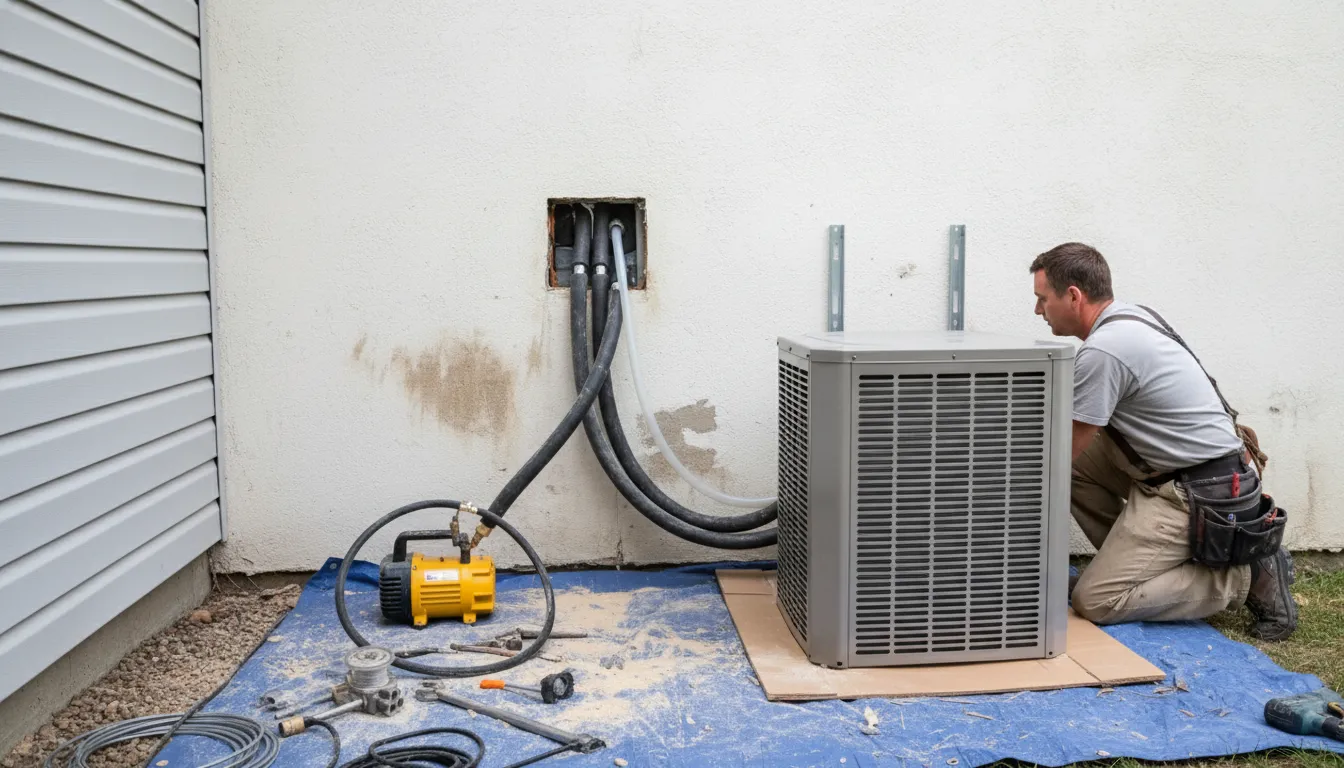
Find the Best Heat Pump Installation & Replacement Contractors for Your Business
No obligation • Fast responses • Nationwide coverage

Why you can trust HVAC Firms
HVAC Firms is a leading United States resource for evaluating HVAC service providers. Our team researches companies, checks credentials, and reviews customer feedback to present clear, unbiased information. Listings and rankings are based on merit, and companies cannot pay to change our editorial content.
Search providers near you
Top Heat Pump Installation & Replacement Contractors in McKinney, Texas Ranked
Upgrading your home's heating and cooling system with a heat pump is a smart, energy-efficient choice for McKinney homeowners. This technology provides both air conditioning and heating in one unit, moving heat rather than generating it, which can lead to significant savings on your utility bills. For residents in North Texas, the region's climate makes heat pumps an ideal solution for year-round comfort. This guide will help you understand your options, the investment involved, and how to find qualified local professionals for your installation or replacement project.
United States Home Services
1805 Royal Ln #101, Dallas, TX 75229
United States Home Services is a Dallas, TX-based company specializing in HVAC, plumbing, and insulation solutions. They provide a range of services including air conditioning, furnace, and heat pump repair and installation, as well as HVAC tune-ups. With over 20 years of experience, they serve homeowners throughout the Dallas metroplex, offering reliable and transparent service. One of their key capabilities is providing custom HVAC installations tailored to home comfort needs. The company emphasizes clear pricing and customer satisfaction, backed by a 100% satisfaction guarantee.
Aircons Heat & Better Air Inc
220 Commercial St, Garland, TX 75040
Aircons Heat & Better Air Inc is an HVAC company based in Dallas, TX, offering a wide range of heating and cooling services. They provide air conditioning and furnace repair, installation of heat pumps and geothermal systems, duct cleaning, thermostat installation, and indoor air quality solutions for both residential and commercial clients. The company is a certified Trane dealer and has over 15 years of experience in the industry. Their team is trained to handle all major HVAC brands and systems. Aircons Heat & Better Air Inc also offers financing options and is available for service calls day and night.

Tiger Air
17606 Preston Rd, Dallas, TX 75252
Tiger Air is an HVAC company based in Dallas, TX, offering heating and cooling services including furnace repair, AC installation, heat pump repair, and HVAC tune-ups. Serving Dallas County and surrounding areas, they provide both residential and commercial HVAC solutions. Established in 2016, Tiger Air is known for its certified technicians and comprehensive maintenance plans. Their team operates 13 hours daily to address heating and cooling needs efficiently.

Mr. Air Repair
465 Neva Ln, Wylie, TX 75098
Mr. Air Repair is an HVAC company serving Plano, TX, specializing in air conditioning, heating, and indoor air quality services. They offer repair, installation, and maintenance for air conditioners, heat pumps, and furnaces, along with air purifier and filtration system installations. Their services include 24/7 emergency heating support to ensure comfort during cold weather. Routine maintenance plans are also available to help extend the life of HVAC equipment and maintain efficiency.
Bear Air Services
2801 Justin Rd Bldg 200 Suite 220, Flower Mound, TX 75028
Bear Air Services is a licensed heating and cooling contractor serving Irving, TX, and nearby communities. They offer residential HVAC installation, repair, and maintenance services, including air conditioners, heat pumps, furnaces, mini splits, thermostats, and indoor air quality solutions. As a Bryant dealer, they provide a range of products and specialize in equipment retrofit and replacement. The company emphasizes employee training and safety, and offers 24/7 emergency service to support customers whenever needed.
Why a Heat Pump is Ideal for McKinney's Climate
McKinney's weather pattern is perfectly suited for the efficient operation of a heat pump. Understanding this synergy is key to making an informed decision.
- Mild Winters: North Texas experiences average winter lows between 35-45°F. Heat pumps operate at peak efficiency in this temperature range, effectively extracting heat from the outdoor air to warm your home. A backup heat source is typically only needed for about 5-10 days per year during rare, deeper cold snaps.
- Long Cooling Season: You are already investing in an air conditioning system to handle the hot Texas summers. A heat pump serves as a highly efficient AC in the summer and seamlessly switches to provide heating in the winter, making it a cost-effective, dual-purpose upgrade.
- Proven Energy Savings: In mild weather, which characterizes most of McKinney's winter, a heat pump can heat your home for significantly less cost than a traditional gas furnace because it moves existing heat rather than burning fuel to create it 1.
Types of Heat Pump Systems Available
Choosing the right type of heat pump depends on your home's layout, existing ductwork, and performance goals. Here are the common systems installed in McKinney homes.
- Standard Air-Source Heat Pumps (14-16 SEER): This is a budget-friendly entry point, offering reliable efficiency for both heating and cooling. It's a solid choice for replacing an older, less efficient system without a major upfront investment.
- High-Efficiency Air-Source Heat Pumps (19-21 SEER): These models offer a substantial jump in energy savings and are a very popular choice for McKinney homeowners. The higher Seasonal Energy Efficiency Ratio (SEER) means lower electricity consumption during the long cooling season, and a higher Heating Seasonal Performance Factor (HSPF) for more efficient winter operation.
- Premium Variable-Speed Heat Pumps (20+ SEER): This tier represents the top in comfort and efficiency. Variable-speed compressors adjust their output in small increments to precisely match your home's needs, eliminating temperature swings, reducing humidity, and operating at whisper-quiet levels. While they have a higher initial cost, they deliver maximum long-term savings.
- Ductless Mini-Split Heat Pumps: These air-source systems are excellent for homes without existing ductwork, for room additions, or for creating zoned comfort. An outdoor unit connects to one or more indoor wall-mounted units, allowing you to control temperatures in individual rooms 2 3.
Understanding Heat Pump Costs in McKinney
The cost of a new heat pump installation in McKinney can vary widely based on the system's efficiency, capacity, and the complexity of the installation in your specific home.
Typical Total Installation Cost Ranges:
- Entry-Level System (14 SEER): $6,000 - $8,000
- Mid-Range System (16-18 SEER): $7,500 - $11,000
- Premium High-Efficiency System (20+ SEER): $12,000 - $18,500+
Common Cost Add-Ons: It's important to budget for potential ancillary work that may be required for a proper installation.
- Ductwork Modification/Repair: If your existing ducts are leaky, poorly sized, or in disrepair, sealing or replacing them is crucial for system performance. This can cost between $1,500 and $4,000 4.
- Electrical Panel Upgrade: Modern, high-efficiency heat pumps may require more power. Upgrading an older electrical panel can cost between $1,200 and $3,000 5.
Find the perfect heat pump installation & replacement contractors for your needs
Get personalized recommendations and expert advice
Financial Incentives and Rebates
A significant portion of your investment in a high-efficiency heat pump can be offset by available financial incentives, making premium models more accessible.
- Federal Tax Credit: Homeowners can claim a tax credit of up to $2,000 for the installation of a qualifying high-efficiency heat pump through 2032. This credit is applied directly to your tax liability.
- Local Utility Rebates: Oncor Electric Delivery, the primary utility provider in the area, often offers rebates for installing qualifying energy-efficient equipment. These rebates can range from $300 to $3,000 and are typically processed directly through your installing contractor 6 7.
These incentives dramatically improve the return on investment, often making a higher-efficiency system the most economically smart choice over its lifespan.
Is It Time to Repair or Replace Your System?
If your current HVAC system is failing, deciding between a repair and a full heat pump replacement is a critical financial decision.
A general rule of thumb for North Texas homeowners is to consider replacement if the repair cost exceeds 40-50% of the cost of a new system, especially if your existing unit is over 8-10 years old 8. Older systems are not only less reliable but also far less efficient than modern heat pumps. Investing in a repair for an aging, inefficient system often means throwing good money after bad, whereas a new installation comes with warranties, modern efficiency, and lower monthly energy bills.
Choosing the Right Contractor for the Job
A heat pump is a complex mechanical system, and its performance is heavily dependent on a precise, high-quality installation. Look for a licensed, insured contractor with specific experience installing heat pumps in North Texas homes. They should perform a detailed load calculation (Manual J) to correctly size the system for your home, not just match the tonnage of your old unit. Ask for references, verify they pull proper permits, and ensure they provide a detailed, written estimate that includes all equipment, labor, and potential ancillary costs.
Frequently asked questions
Sources
Footnotes
-
Best Heating Systems for Homes in Texas - Arthur Heating & Air - https://www.callarthurair.com/best-heating-systems-homes-texas/ ↩
-
Heat Pump Cost Analysis: What To Expect & How It's Determined - https://clinesairconditioning.com/heat-pump-cost/ ↩
-
Select an Energy Efficient, Zero Energy Home Heating and Cooling System - https://zeroenergyproject.com/build/twelve-steps-affordable-zero-energy-home-construction-design/select-energy-efficient-zero-energy-home-heating-cooling-system/ ↩
-
Heat Pumps in Texas | The Complete Guide for Homeowners - https://jupitairhvac.com/texas-hvac-guide/equipment/heat-pumps/ ↩
-
HVAC Replacement Costs in Fort Worth, TX - https://www.hvac.com/expert-advice/hvac-replacement-costs-in-fort-worth-tx/ ↩
-
Heat Pump Installation Cost Texas 2025 - Jupitair HVAC - https://jupitairhvac.com/blog/heat-pump-installation-cost-guide-2025-north-texas/ ↩
-
Your Complete Guide to AC Installation in McKinney, TX - https://www.airviewac.com/blog/ac-install-guide-mckinney-tx/ ↩
-
HVAC Replacement vs Repair Decision Guide: North Texas 2025 - https://jupitairhvac.com/blog/hvac-replacement-vs-repair-decision-guide-north-texas-2025/ ↩