Find the Best Heat Pump Installation & Replacement Contractors for Your Business
No obligation • Fast responses • Nationwide coverage

Why you can trust HVAC Firms
HVAC Firms is a leading United States resource for evaluating HVAC service providers. Our team researches companies, checks credentials, and reviews customer feedback to present clear, unbiased information. Listings and rankings are based on merit, and companies cannot pay to change our editorial content.
Search providers near you
Top Heat Pump Installation & Replacement Contractors in Burleson, Texas Ranked
Considering a heat pump for your Burleson home? You're exploring a smart, energy-efficient solution for year-round comfort. Heat pump systems provide both heating and cooling by moving heat rather than generating it, making them exceptionally efficient, especially in Texas's climate. This guide will help you understand your options, from air-source to geothermal systems, and how to find qualified local professionals for your installation or replacement project.
Understanding Heat Pump Systems for Texas Homes
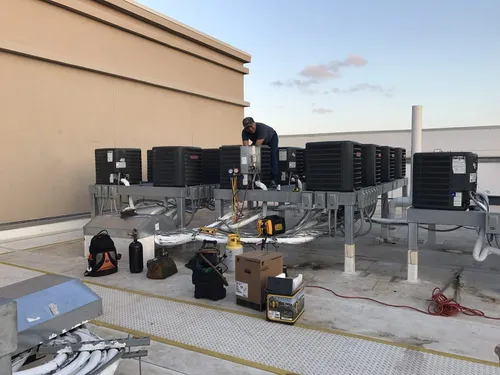
A heat pump is a versatile HVAC system that acts as both an air conditioner and a heater. In cooling mode, it extracts heat from inside your home and releases it outdoors. In heating mode, the process reverses, pulling ambient heat from the outside air (even in cool weather) and transferring it indoors. This technology is highly efficient because it moves existing heat rather than burning fuel to create it, which is particularly advantageous in regions with mild winters like North Texas.
For Burleson residents, this efficiency translates to significant energy savings compared to traditional electric resistance heating or, in many cases, even gas furnaces during our typical winter conditions. Modern heat pumps are designed to operate effectively in a wide range of temperatures, making them a reliable primary heating source for most of the year.
Types of Heat Pumps Available
Not all heat pumps are the same. The right type for your home depends on your existing infrastructure, budget, and performance goals. Here are the primary systems available:
- Air-Source Heat Pumps: This is the most common and cost-effective type installed in Burleson. It uses an outdoor unit to exchange heat with the outside air. Modern air-source models are efficient even in cooler temperatures common to Texas winters 1. They are a direct replacement for a standard air conditioner and furnace combo if you have existing ductwork.
- Ductless Mini-Split Systems: Ideal for homes without ducts, room additions, sunrooms, or for creating independent temperature zones. These systems have an outdoor compressor unit connected to one or more indoor air-handling units mounted on walls or ceilings. They offer excellent efficiency and flexible installation options.
- Dual-Fuel or Hybrid Systems: This configuration pairs an air-source heat pump with a backup gas furnace. The system intelligently switches to the most efficient heat source based on the outdoor temperature. The heat pump handles heating during mild weather, and the furnace takes over during rare, deeper freezes, offering optimal efficiency and peace of mind 2.
- Geothermal (Ground-Source) Heat Pumps: These are the most efficient systems available, exchanging heat with the stable temperature of the earth. While they have the highest upfront installation cost due to the required ground loop, they offer the lowest long-term operating costs and are incredibly durable.
Key Efficiency Ratings: SEER2 and HSPF
When comparing heat pump systems, you'll encounter two critical efficiency ratings:
- SEER2 (Seasonal Energy Efficiency Ratio 2): This measures cooling efficiency. The higher the SEER2 number, the more efficient the system is at cooling your home. As of 2023, the federal minimum standard is 14.3 SEER2 in the South.
- Basic (14-15 SEER2): Meets minimum standards.
- Mid-Range (16-18 SEER2): A popular choice for Burleson homes, offering a great balance of upfront cost and energy savings.
- Premium (20+ SEER2): These top-tier models often feature variable-speed compressors for ultra-quiet operation, superior humidity control, and maximum energy savings.
- HSPF (Heating Seasonal Performance Factor): This measures heating efficiency. A higher HSPF indicates a more efficient heating cycle. Look for units with an HSPF of 9 or higher for the best winter performance.
Cost Considerations for Installation & Replacement
The total investment for a new heat pump system in Burleson varies based on system type, efficiency, home size, and the complexity of the installation. Here's a general breakdown:
Air-Source Heat Pump Costs (Most Common):
- Basic System (14 SEER2): Starting around $4,200 - $6,500 for equipment and standard installation.
- Mid-Range System (16-18 SEER2): Typically $7,500 - $11,000 for a properly sized, quality system. This is a common range for a full system replacement in Burleson.
- Premium System (20+ SEER2): Can range from $12,000 to $18,500+ for advanced, variable-speed models with the highest efficiency 3.
Additional Cost Factors:
- Ductwork Modifications/Repair: If your existing ducts are leaky, undersized, or absent, modifications can add $2,000-$4,000 or more to the project.
- Electrical Service Upgrades: Installing a new heat pump may require a dedicated circuit or panel upgrade, costing approximately $1,500-$3,000.
- Ductless Mini-Splits: Cost is often calculated per zone (indoor unit), ranging from $3,000 to $6,000+ per zone installed.
- Dual-Fuel Systems: Combining a heat pump with a gas furnace for backup typically ranges from $10,000 to $14,000+.
- Geothermal Systems: Given the extensive ground loop installation, these systems have a much higher upfront cost, generally between $15,000 and $30,000+ 4.
Find the perfect heat pump installation & replacement contractors for your needs
Get personalized recommendations and expert advice
The Critical Importance of Proper Sizing
One of the most important steps in your heat pump project is ensuring the system is correctly sized for your home. An oversized system will short-cycle (turn on and off frequently), leading to poor humidity control, uneven temperatures, and increased wear. An undersized system will struggle to maintain comfort on extreme days.
Professional contractors perform a Manual J Load Calculation. This is a detailed analysis that considers your home's square footage, insulation levels, window types and orientation, air infiltration, and local climate data (like Burleson's design temperatures) to determine the exact heating and cooling capacity (measured in tons) your home needs. For example, a well-insulated 2,000 sq ft home in Burleson might require a 3 to 4-ton system. Always insist on a Manual J calculation from any contractor providing a quote.
Incentives and Long-Term Value
Investing in a high-efficiency heat pump can be offset by financial incentives:
- Federal Tax Credits: Through 2032, homeowners may be eligible for a federal income tax credit of up to $2,000 for the installation of a qualified heat pump that meets specific efficiency tiers (CEE Tier 1)5 6 7. This credit is claimed on your annual tax return.
- Utility Rebates: Check with local utilities like Oncor or your retail electric provider for any available rebates on energy-efficient equipment.
- Long-Term Savings: While the initial cost may be higher than a standard AC unit, the significantly lower operating costs of a heat pump, especially during the heating season, lead to savings on your monthly energy bills that accumulate over the system's lifespan.
Choosing a Qualified Burleson Contractor
The quality of the installation is just as important as the quality of the equipment. A poor installation can undermine the efficiency and reliability of even the best heat pump. When seeking quotes:
- Get Multiple Estimates: Aim for at least 2-3 detailed, written quotes from established local contractors.
- Verify Credentials: Ensure the company is licensed, insured, and has positive reviews on trusted platforms. Look for technicians who are NATE-certified.
- Review the Quote Thoroughly: The quote should include the specific model numbers, efficiency ratings (SEER2/HSPF), a detailed scope of work (including any duct modifications or electrical work), warranty information, and a complete breakdown of costs.
- Ask About the Process: A reputable contractor will discuss performing a Manual J load calculation, evaluating your existing ductwork, and explaining the installation timeline and cleanup.
Frequently asked questions
Sources
Footnotes
-
Heat Pumps in Texas | The Complete Guide for Homeowners - https://jupitairhvac.com/texas-hvac-guide/equipment/heat-pumps/ ↩
-
Best Heating Systems for Homes in Texas - Arthur Heating & Air - https://www.callarthurair.com/best-heating-systems-homes-texas/ ↩
-
Read Heat Pump Installation Cost Guide In Fort Worth Tx - https://r10heatandair.com/heat-pump-installation-cost/ ↩
-
What Texans needs to know about heat pumps - https://environmentamerica.org/texas/center/articles/what-texans-needs-to-know-about-heat-pumps/ ↩
-
Heat Pump Installation Cost Texas 2025 - Jupitair HVAC - https://jupitairhvac.com/blog/heat-pump-installation-cost-guide-2025-north-texas/ ↩
-
How Much Does Heating System Installation Cost in Fort Worth? - https://r10heatandair.com/heating-system-installation-cost/ ↩
-
2026 Heat Pumps Installation Cost Guide: Types, Sizes and Brands - https://modernize.com/hvac/heating-repair-installation/heat-pump ↩