Find the Best Geothermal Heat Pump Contractors for Your Business
No obligation • Fast responses • Nationwide coverage

Why you can trust HVAC Firms
HVAC Firms is a leading United States resource for evaluating HVAC service providers. Our team researches companies, checks credentials, and reviews customer feedback to present clear, unbiased information. Listings and rankings are based on merit, and companies cannot pay to change our editorial content.
Search providers near you
Top Geothermal Heat Pump Contractors in Richmond, Virginia Ranked
A geothermal heat pump, often called a ground-source heat pump, is a highly efficient heating and cooling system that leverages the earth's stable underground temperature. For Richmond homeowners, this technology offers a path to dramatically lower energy bills and a reduced environmental footprint. This guide explains how these systems work locally, the installation process, and how you can connect with qualified professionals in the Richmond area to explore this sustainable home comfort solution.

How Geothermal Systems Work in Richmond
The core principle of a geothermal system is elegant in its simplicity: it exchanges heat with the ground, which maintains a relatively constant temperature year-round, unlike the fluctuating air temperatures above. In Richmond, this means tapping into the earth's natural warmth in the winter and its coolness in the summer to condition your home.
The process involves three key components:
- The Ground Loop: A network of durable pipes is buried in your yard or submerged in a nearby pond. A water-based solution circulates through these pipes, absorbing heat from the ground in winter and depositing excess heat from your home into the ground in summer.
- The Heat Pump Unit: This indoor unit, typically installed in a basement or utility room, contains a compressor and heat exchanger. It concentrates the thermal energy gathered from the loop and uses a small amount of electricity to transfer it at the right temperature for your home.
- The Distribution System: In most Richmond homes, the warmed or cooled air is distributed through the existing ductwork, just like a conventional forced-air system.
This method of using the earth as a heat source and sink is what makes ground-source heat pumps remarkably efficient, often leading to savings of 40-80% on heating and cooling bills compared to standard systems.
Types of Geothermal Loop Systems
The design of the underground piping, or "loop field," is tailored to your property's characteristics. The most common types installed in Virginia are closed-loop systems, which continuously circulate the same fluid.
Horizontal Closed Loops
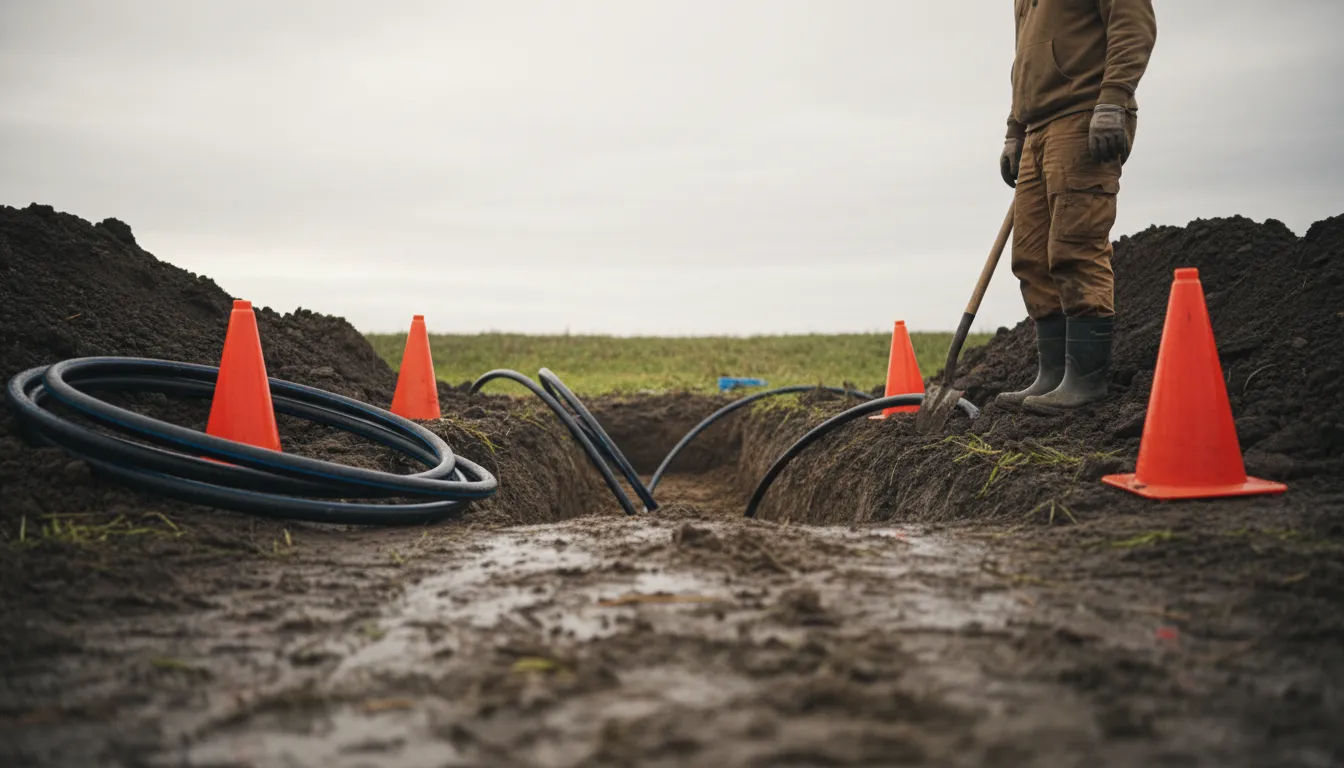
This is often the most cost-effective installation method if you have sufficient land. Excavators dig trenches four to six feet deep across a wide area of your yard-typically requiring a quarter to three-quarters of an acre of usable land1. Pipes are laid in these trenches and then backfilled. This approach is less expensive than drilling but requires more surface area.
Vertical Closed Loops
For properties with smaller lots, which is common in many Richmond neighborhoods, vertical loops are the ideal solution. A drilling rig creates boreholes 150 to 250 feet deep. U-shaped pipe loops are inserted into each borehole, which are then grouted for optimal thermal conductivity. This method minimizes landscape disruption and is well-suited to the clay soils prevalent in the region.
Pond/Lake Loops
If your property has access to a sufficiently deep and large pond or lake, this can be an excellent option. Coils of pipe are submerged at the bottom, where the water temperature remains stable. This can be one of the least expensive loop installations, avoiding the need for extensive trenching or drilling.
Open-Loop Systems
Less common, an open-loop system uses groundwater directly from a well as the heat exchange fluid. After passing through the heat pump, the water is discharged to a second well, pond, or drainage ditch. This system requires an abundant supply of clean water and is subject to local regulations regarding groundwater use 2.
The Geothermal Installation Process in Richmond
Installing a residential geothermal system is a significant project that requires expertise. Here's what Richmond homeowners can generally expect from the process when working with a qualified installer.
- Site Assessment and Design: A professional will evaluate your property, considering soil composition (like Richmond's common clay), available land, your home's heating and cooling load, and access for equipment. This assessment determines the optimal loop type and size for maximum efficiency.
- Loop Field Installation: This is the major outdoor phase. For horizontal loops, an excavator digs the network of trenches. For vertical systems, a drilling rig will be on site to create the boreholes. The high-density polyethylene pipes are then placed and connected into a continuous loop.
- Trench to House: A separate trench is dug from the main loop field to your home's foundation. The pipes from the ground loop are run through this trench and into the house to connect to the indoor unit3.
- Indoor Unit Installation: The geothermal heat pump unit is installed in your designated utility space. Your installer will connect it to the ground loop, your home's electrical system, and the existing ductwork or hydronic distribution system4 5.
- System Charging and Startup: The loop is filled and pressurized with its fluid. The entire system is tested, and the thermostat is programmed. The installer will provide a thorough overview of system operation and maintenance before completing the job.
Find the perfect geothermal heat pump contractors for your needs
Get personalized recommendations and expert advice
Understanding Costs and Long-Term Savings
The decision to invest in a geothermal system involves weighing higher upfront costs against substantial long-term operational savings.
Typical Installation Costs: For a standard 2,000-square-foot home in the Richmond area, a complete geothermal heat pump system installation typically ranges from $20,000 to over $40,000. This cost is often about 40% higher than installing a new high-efficiency traditional HVAC system, with the majority of the expense attributed to the ground loop installation.
Factors Influencing Cost: The final price depends heavily on your chosen loop type (vertical drilling is more expensive than horizontal trenching), your property's soil and accessibility, the size and efficiency rating of the indoor heat pump unit, and any necessary upgrades to ductwork or electrical service6.
Energy Savings and Payback: This is where geothermal systems shine. By harnessing the earth's free thermal energy, they operate with exceptional efficiency, commonly reducing home heating and cooling bills by 40% to 80%7 8. For many households, this translates to annual savings of $1,000 or more on energy costs7 9. The "payback period"-the time it takes for energy savings to recoup the installation premium-can vary from 4 to 15 years, depending on your local utility rates, the system cost, and any available incentives8 10.
Financial Incentives: It's crucial to investigate available rebates and tax credits. Federal tax incentives for qualified geothermal heat pumps can significantly reduce the net cost. Always consult with a tax professional and your installer about current federal, state, and local incentives.
Benefits Beyond Savings
While cost savings are a major driver, the advantages of a ground-source heat pump extend further:
- Environmental Impact: These systems use renewable thermal energy from the ground and only a small amount of electricity to operate the compressor and pumps, drastically reducing your home's carbon footprint.
- Durability and Longevity: The underground piping often carries warranties of 25 to 50 years and can last generations. The indoor heat pump unit typically has a lifespan of 20 years or more, significantly longer than many conventional air conditioners.
- Quiet Operation and Comfort: With no noisy outdoor condenser unit, operation is very quiet. The systems provide consistent, even heating and cooling without the drafts or temperature swings associated with some fossil fuel systems.
- All-in-One Solution: A single geothermal system can provide space heating, air conditioning, and with the addition of a "desuperheater," can significantly contribute to your home's hot water needs, further increasing overall efficiency11 12.
Frequently asked questions
Sources
Footnotes
-
How Do Geothermal Systems Work for Residential Homes? - https://www.davisheat.com/blog/how-do-geothermal-systems-work-for-residential-homes/ ↩
-
Geothermal Heating and Cooling - Open Energy Information - https://openei.org/wiki/GeoBridge/Heating_and_Cooling ↩
-
How Does a Geothermal System Work? - ClimateMaster - https://www.climatemaster.com/homeowner/side-links/how-it-works ↩
-
Geothermal Heat Pump Installation: What To Expect For Your ... - https://jomory.com/geothermal-heat-pump-installation-what-to-expect-for-your-property/ ↩
-
Ground Source Heat Pump (GSHP) - Benefits and Costs - HIES - https://www.hiesscheme.org.uk/renewable-energy/ground-source-heat-pumps/ ↩
-
Geothermal Heating, Cooling, and Hot Water Systems - https://igshpa.org/wp-content/uploads/Homeowners-Guide-to-Geothermal.pdf ↩
-
Geothermal Heat Pumps | Falls Church, VA - Official Website - https://www.fallschurchva.gov/2282/Geothermal-Heat-Pumps ↩ ↩2
-
Geothermal Heat Pump Guide: Installation Costs, Types And Benefits - https://modernize.com/hvac/heating-repair-installation/heat-pump/geothermal ↩ ↩2
-
How Does A Geothermal Heat Pump Work? Complete 2025 Guide - https://solartechonline.com/blog/how-does-geothermal-heat-pump-work/ ↩
-
Everything You Need to Know About Geothermal Heat Pumps - https://www.familyhandyman.com/article/everything-you-need-to-know-about-geothermal-heat-pumps/ ↩
-
Geothermal Heat Pumps - Department of Energy - https://www.energy.gov/energysaver/geothermal-heat-pumps ↩
-
All You Need to Know About Home Geothermal Heating & Cooling - Dandelion Energy - https://dandelionenergy.com/all-you-need-to-know-about-home-geothermal-heating-cooling ↩