
Find the Best Geothermal Heat Pump Contractors for Your Business
No obligation • Fast responses • Nationwide coverage

Why you can trust HVAC Firms
HVAC Firms is a leading United States resource for evaluating HVAC service providers. Our team researches companies, checks credentials, and reviews customer feedback to present clear, unbiased information. Listings and rankings are based on merit, and companies cannot pay to change our editorial content.
Search providers near you
Top Geothermal Heat Pump Contractors in Manassas, Virginia Ranked
A geothermal heat pump is one of the most efficient and sustainable ways to heat and cool your home. By leveraging the earth's stable underground temperature, these systems can drastically reduce your energy bills while providing consistent, quiet comfort year-round. For homeowners in Manassas, understanding how geothermal technology works and what local installation entails is the first step toward making an informed decision about this long-term investment in your property's value and environmental footprint.

EverCool, Inc.
7516 Fullerton Rd J, Springfield, VA 22153
EverCool, Inc. is a family-owned HVAC company serving Washington, DC, and the surrounding Northern Virginia area since 2003. They provide a range of heating and cooling services including air conditioning and furnace repair, installation of mini splits and geothermal heat pumps, thermostat installation, and indoor air quality solutions. EverCool is a Carrier factory-authorized dealer with NATE-certified technicians, offering 24-hour emergency HVAC services to ensure year-round comfort. Their team handles all brands and focuses on proper system sizing and maintenance to enhance efficiency and system lifespan.
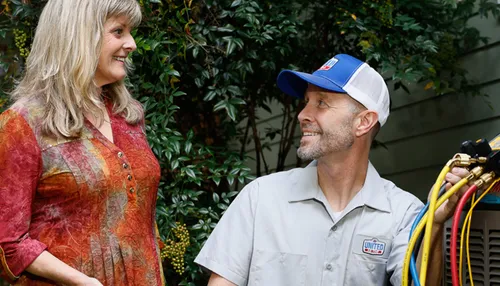
United Air Temp
11900 Parklawn Dr #110, Rockville, MD 20852
United Air Temp provides heating, cooling, plumbing, and whole-home generator services in Washington, DC. The company offers installation, repair, and maintenance for air conditioners, furnaces, heat pumps, boilers, mini splits, and geothermal heat pumps. They also specialize in whole-home generator installation to keep essential systems running during power outages. With over 90 years of experience since 1931, United Air Temp serves the local community with licensed and insured technicians. They provide 24/7 emergency repair services for heating and cooling systems.
How Geothermal Systems Work in Manassas
The core principle behind a geothermal heating and cooling system is remarkably simple: it uses the earth as a giant thermal battery. In Northern Virginia, including Manassas, the ground temperature remains a consistent 50-60°F year-round, just a few feet below the surface. This provides a reliable and free source of heat in the winter and a place to dump excess heat in the summer.
The process involves a closed loop of pipes, called a ground loop, buried in your yard. A water-based fluid circulates through this loop. During the winter, the fluid absorbs the earth's warmth and carries it to an indoor heat pump unit. The heat pump concentrates this low-grade heat and distributes warm air throughout your home via your existing ductwork or a radiant floor system. In the summer, the system reverses: it extracts heat from your home's air, transfers it to the fluid in the loop, and deposits it into the cooler ground. This elegant heat exchange process is what makes ground-source heat pumps so remarkably efficient compared to conventional air-source systems that must battle the extreme outdoor air temperatures.
Types of Ground Loop Systems
The design of the underground loop system is critical and depends largely on your property's characteristics. There are two primary types of closed-loop systems suitable for Manassas homes:
Vertical Loops This is the most common installation type for residential properties in Manassas, especially those with smaller lots. Contractors use a drilling rig to bore holes typically 150 to 500 feet deep. U-shaped pipes are inserted into each borehole, and the holes are then filled with a special grout to ensure good thermal conductivity. Vertical loops are ideal when yard space is limited, as they have a small surface footprint, though the drilling process can be more costly upfront 1 2.
Horizontal Loops If you have ample land (often half an acre or more), a horizontal loop system may be an option. Contractors dig trenches four to eight feet deep and lay pipes in a serpentine pattern before backfilling. This method generally has a lower installation cost than vertical drilling because it uses standard trenching equipment, but it requires a significant amount of unobstructed land 3.
Other, less common configurations include pond/lake loops (if a suitable water body is present) and open-loop systems that use well water. A qualified local installer will conduct a thorough site assessment to determine the best and most cost-effective loop configuration for your specific property 4 5.
The Installation Process for Manassas Homes
Installing a geothermal HVAC system is a significant project that requires careful planning and skilled execution. Understanding the steps can help you prepare.
- Site Evaluation and Design: A certified installer will assess your property's soil composition, lot size, and layout. They will also evaluate your home's heating and cooling loads to properly size the system. This stage determines whether a vertical or horizontal ground loop is feasible and designs the entire system for optimal performance.
- Ground Loop Installation: This is the most distinctive phase. For a vertical system, a drilling rig will create the necessary boreholes. For a horizontal system, a backhoe will dig the trenches. The high-density polyethylene pipes are then placed and connected into a continuous loop.
- Connection and Indoor Unit Installation: The ground loop is connected to pipes that run into your home to the location of the indoor heat pump unit. The heat pump, which is typically about the size of a small furnace, is installed and connected to your home's ductwork or hydronic distribution system.
- System Charging and Testing: The loop is filled with fluid, purged of air, and pressurized. The entire system is then tested for leaks and performance to ensure it operates at peak efficiency before being handed over to the homeowner.
Find the perfect geothermal heat pump contractors for your needs
Get personalized recommendations and expert advice
Benefits for Manassas Homeowners
Investing in a geothermal system offers a compelling array of advantages that go beyond just temperature control.
- Substantial Energy Savings: This is the most significant benefit. By moving heat rather than creating it through combustion, geothermal heat pumps are exceptionally efficient. Homeowners can typically expect a 40% to 80% reduction in their heating and cooling energy costs compared to conventional systems 6 7. Given Virginia's climate with both hot, humid summers and cold winters, these savings add up quickly.
- Long-Term Reliability and Value: The indoor heat pump components often last 20 years or more, while the underground piping carries warranties of 50 years and can last for generations 8. This durability, coupled with the dramatic energy savings, increases your home's resale value. A geothermal system is a premium feature that appeals to energy-conscious buyers.
- Quiet and Clean Operation: Since there's no loud outdoor condenser unit (like with a traditional air conditioner), geothermal systems operate very quietly. They also produce no on-site emissions, combustion, or flame, making them a safe and environmentally friendly choice 9.
- Consistent Comfort: Unlike air-source heat pumps that can struggle in extreme cold, a ground-source system draws from the earth's stable temperature. This means it can provide steady, draft-free warmth even on the coldest Manassas winter night and efficient, dehumidifying cooling during summer heatwaves 10.
Understanding Costs and Incentives
The upfront cost of a geothermal heating and cooling system is higher than that of a standard furnace and air conditioner. For a typical Manassas home, complete installation often ranges from $20,000 to $40,000 or more, with the ground loop work representing a major portion of the expense 11 12.
However, it's crucial to view this as a long-term investment. The dramatic reduction in monthly utility bills means the system often pays for itself through energy savings within 5 to 10 years 13. Furthermore, federal tax incentives can significantly offset the initial investment. Always check for current federal renewable energy tax credits, which can cover a substantial percentage of the installed cost 14. Some state or local utility rebates may also be available.
Is Geothermal Right for Your Home?
A ground-source heat pump is an excellent option for many, but not all, homeowners in Manassas. It is ideally suited for those who plan to stay in their home long enough to reap the long-term savings, have a suitable lot for the ground loop (even a small lot can accommodate a vertical system), and are looking for a permanent, low-maintenance solution for home comfort. If you are building a new home or replacing an aging, inefficient HVAC system, it is an ideal time to explore geothermal technology.
Frequently asked questions
Sources
Footnotes
-
Geothermal Heat Pumps, Explained - Bosch Home Comfort - https://www.bosch-homecomfort.com/us/en/residential/connect/blog/geothermal-heat-pumps-go-green-save-green/ ↩
-
Geothermal Heat Pumps - Department of Energy - https://www.energy.gov/energysaver/geothermal-heat-pumps ↩
-
Geothermal Heat Pumps | WBDG - https://www.wbdg.org/resources/geothermal-heat-pumps ↩
-
Geothermal Heating, Cooling, and Hot Water Systems - https://igshpa.org/wp-content/uploads/Homeowners-Guide-to-Geothermal.pdf ↩
-
All You Need to Know About Home Geothermal Heating & ... - https://dandelionenergy.com/all-you-need-to-know-about-home-geothermal-heating-cooling ↩
-
Geothermal Heat Pumps | Falls Church, VA - Official Website - https://www.fallschurchva.gov/2282/Geothermal-Heat-Pumps ↩
-
5 Things You Should Know about Geothermal Heat Pumps - https://www.energy.gov/cmei/articles/5-things-you-should-know-about-geothermal-heat-pumps ↩
-
How Does A Geothermal Heat Pump Work? Complete 2025 ... - https://solartechonline.com/blog/how-does-geothermal-heat-pump-work/ ↩
-
How Do Geothermal Systems Work for Residential Homes? - https://www.davisheat.com/blog/how-do-geothermal-systems-work-for-residential-homes/ ↩
-
How a Geothermal Heat Pump Works | This Old House - https://www.youtube.com/watch?v=d5Tbsx3R2T8 ↩
-
Geothermal Heat Pump Guide: Installation Costs, Types And Benefits - https://modernize.com/hvac/heating-repair-installation/heat-pump/geothermal ↩
-
Understanding Geothermal Heating & Cooling Systems - https://www.tchvac.net/news/geothermal-heating-and-cooling-explained ↩
-
Do Geothermal Heat Pumps Use Gas? - https://scottleeheating.com/do-geothermal-heat-pumps-use-gas/ ↩
-
Guide to Geothermal Heat Pumps - https://www.energy.gov/sites/prod/files/guide_to_geothermal_heat_pumps.pdf ↩