Find the Best Geothermal Heat Pump Contractors for Your Business
No obligation • Fast responses • Nationwide coverage

Why you can trust HVAC Firms
HVAC Firms is a leading United States resource for evaluating HVAC service providers. Our team researches companies, checks credentials, and reviews customer feedback to present clear, unbiased information. Listings and rankings are based on merit, and companies cannot pay to change our editorial content.
Search providers near you
Top Geothermal Heat Pump Contractors in Alexandria, Virginia Ranked
A geothermal heat pump, or ground-source heat pump, is a highly efficient system for heating and cooling your home by exchanging heat with the stable temperature of the earth. For Alexandria homeowners, this technology offers a reliable way to slash energy bills and reduce environmental impact. This guide explains how these systems work, the installation process, and how you can find qualified local professionals to assess your property for this sustainable upgrade.
Grove Heating & Cooling
2142 Priest Bridge Court #6, Crofton, MD 21114
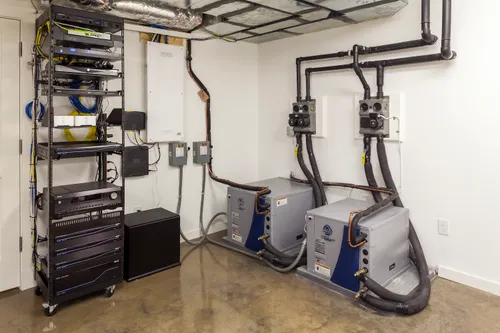
Grove Heating & Cooling is an HVAC company serving Washington, DC, and nearby areas including Bowie, Crofton, and Annapolis. They provide a range of services such as furnace repair, air conditioner repair, heat pump repair, HVAC installation, and indoor air quality solutions. The company also offers geothermal heat pump installation and HVAC tune-ups. Grove Heating & Cooling is equipped to handle heat pump repairs at any time, including day or night service. They aim to support customers with reliable heating, cooling, and ventilation needs.

EverCool, Inc.
7516 Fullerton Rd J, Springfield, VA 22153
EverCool, Inc. is a family-owned HVAC company serving Washington, DC, and the surrounding Northern Virginia area since 2003. They provide a range of heating and cooling services including air conditioning and furnace repair, installation of mini splits and geothermal heat pumps, thermostat installation, and indoor air quality solutions. EverCool is a Carrier factory-authorized dealer with NATE-certified technicians, offering 24-hour emergency HVAC services to ensure year-round comfort. Their team handles all brands and focuses on proper system sizing and maintenance to enhance efficiency and system lifespan.
United Air Temp
11900 Parklawn Dr #110, Rockville, MD 20852
United Air Temp provides heating, cooling, plumbing, and whole-home generator services in Washington, DC. The company offers installation, repair, and maintenance for air conditioners, furnaces, heat pumps, boilers, mini splits, and geothermal heat pumps. They also specialize in whole-home generator installation to keep essential systems running during power outages. With over 90 years of experience since 1931, United Air Temp serves the local community with licensed and insured technicians. They provide 24/7 emergency repair services for heating and cooling systems.
United Air Temp
601 7th St Suite #301, Laurel, MD 20707
United Air Temp is an HVAC, plumbing, and whole-home generator service provider based in Baltimore, MD. Serving the Baltimore area, they offer a wide range of heating and cooling services including air conditioning, furnace, heat pump, boiler, geothermal heat pump, and mini split installation and repair. The company also provides water heater services and whole-home generator installation to help maintain home comfort and safety. Established in 1931, United Air Temp has over 90 years of experience in the industry. They offer 24/7 emergency repair services for heating and cooling systems to address urgent needs promptly.
Ambient LLC
1910 Towne Centre Blvd Suite 250, Annapolis, MD 21401
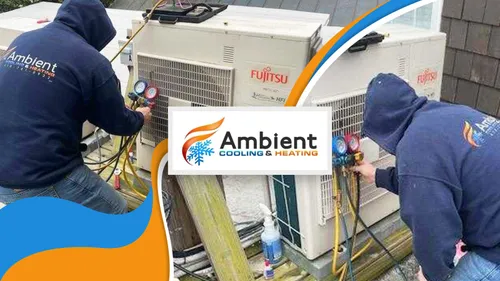
Ambient LLC provides comprehensive HVAC services including air conditioner repair, heating system maintenance, and installation of heat pumps, mini splits, and geothermal HVAC systems in Washington, DC. They serve a broad area around Annapolis, Maryland, offering tailored solutions to improve indoor air quality and energy efficiency. The company is licensed and insured, with a strong focus on sustainable and reliable climate control for homes and businesses. Ambient LLC offers 24/7 emergency HVAC services to address urgent issues promptly.
How Geothermal Heating and Cooling Works
Unlike traditional air-source heat pumps or furnaces that generate heat, a geothermal system simply moves it. The earth beneath your property maintains a relatively constant temperature, typically between 50°F and 70°F in Virginia, regardless of the season 1. A geothermal unit leverages this stable thermal resource to provide year-round comfort.
In the winter, a fluid (often a water-antifreeze mix) circulates through a loop of pipes buried in the ground, absorbing the Earth's gentle warmth. This heat is concentrated by the geothermal heat pump and distributed throughout your home via your existing ductwork or a hydronic (water-based) system. During Alexandria's humid summers, the process reverses: the system extracts heat from your indoor air and transfers it into the cooler ground loop, effectively providing air conditioning 2. This "heat exchange" process is vastly more efficient than burning fuel or battling scorching outdoor air temperatures, which is why ground-source systems can dramatically cut energy use.
Types of Ground Loop Systems
The heart of any geothermal installation is the ground loop. The right configuration for your Alexandria home depends on your lot size, soil composition, and local geology. There are two primary categories: closed-loop and open-loop systems.
Closed-Loop Systems These are the most common, where a sealed, continuous pipe circulates the heat-transfer fluid. They come in several configurations:
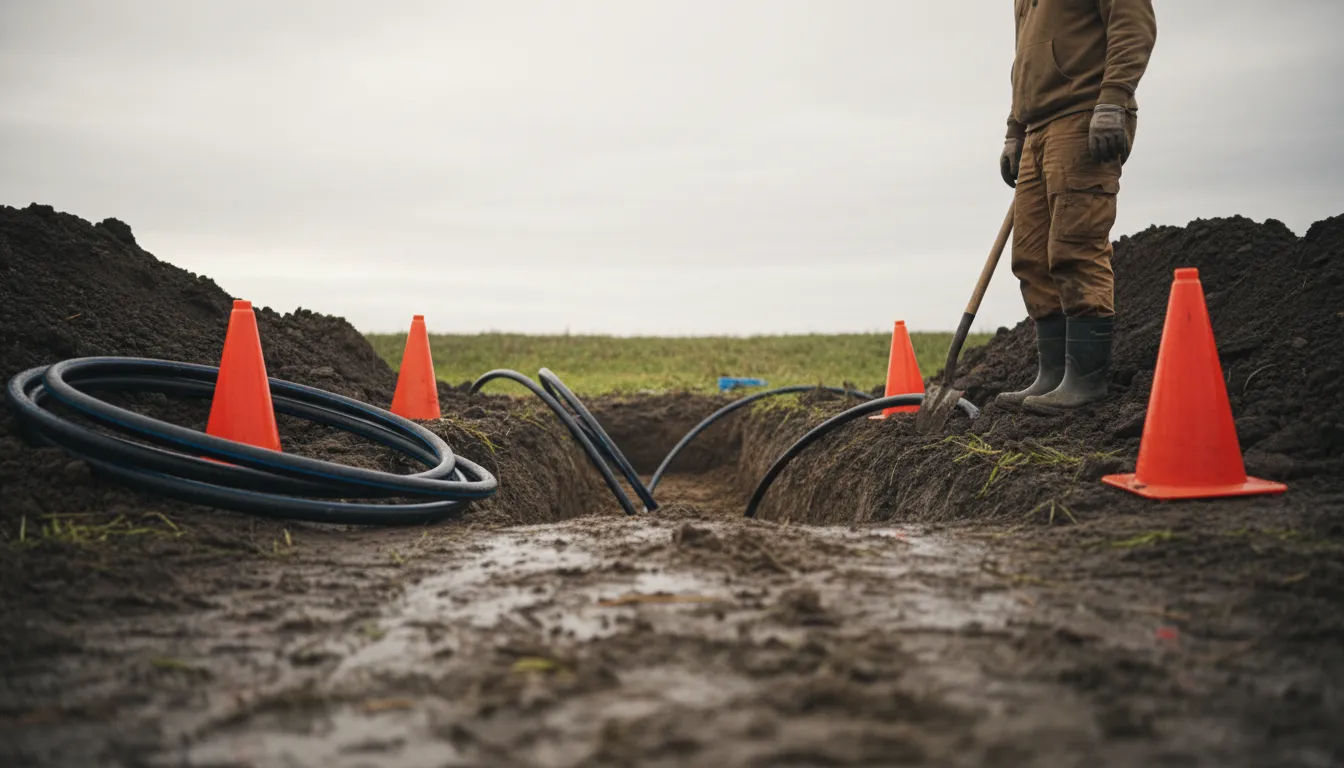
- Horizontal Loop: This is often the most cost-effective option if space allows. Trenches are dug 4 to 6 feet deep, requiring a significant amount of land-typically between a quarter to three-quarters of an acre for an average home 3 4. This makes it a great choice for properties with ample yard space.
- Vertical Loop: Ideal for smaller urban or suburban lots common in Alexandria, vertical systems are the go-to for retrofits. Boreholes are drilled 150 to 450 feet deep, and U-shaped loops of pipe are inserted and grouted. While drilling increases the upfront cost, it minimizes landscape disruption and requires the least surface area 5 6 7.
- Pond/Lake Loop: If you have access to a sufficiently deep body of water, coils of pipe can be submerged at the bottom. This can be a very efficient and lower-cost installation, but it requires a nearby, suitable pond or lake 8.
Open-Loop Systems This configuration uses groundwater from a well as the heat-exchange fluid. After passing through the heat pump, the water is discharged back into a second well, a pond, or a stream, following local regulations. While potentially very efficient, open-loop systems require an adequate supply of clean water and are subject to more permitting and environmental considerations.
The Geothermal Installation Process in Alexandria
Installing a ground-source heat pump is a significant project that requires expert planning and execution. Understanding the steps can help you know what to expect when working with a local contractor.
- Site Assessment and Design: A qualified installer will evaluate your property, considering soil type (Alexandria's clay soils are generally suitable), land availability, drilling access, and your home's heating and cooling loads. This assessment determines the optimal loop type and size.
- Loop Field Installation: For a vertical system, a drilling rig will create the necessary boreholes. For a horizontal system, a backhoe will dig the trenches. High-density polyethylene (HDPE) pipe is then laid in the trenches or lowered into the boreholes.
- Connection and Backfilling: The pipe loops are connected into a manifold system. Vertical holes are filled with a special grout to ensure good thermal contact with the earth, while horizontal trenches are backfilled with native soil.
- Indoor Unit Installation: The geothermal heat pump unit itself is installed inside your home, typically in a basement, utility room, or garage. It is connected to your home's existing ductwork or to a separate hydronic distribution system.
- System Startup and Testing: The loop is filled and pressurized, the indoor unit is connected to the electrical supply, and the entire system is tested for performance and efficiency.
Key local considerations include securing the necessary permits from the City of Alexandria, ensuring drilling equipment can access your yard, and planning for the temporary disruption during the excavation phase.
Benefits and Cost Considerations
Investing in a geothermal system offers compelling long-term advantages for Alexandria residents, both financial and environmental.
Substantial Energy Savings: By harnessing the earth's consistent temperature, geothermal heat pumps operate with remarkable efficiency. Homeowners can typically expect to reduce their energy consumption for heating and cooling by 40% to 80%, leading to significantly lower utility bills 9 10.
Long-Term Value and Comfort: A properly installed ground-source system has a long lifespan-the underground loops can last 50+ years, and the indoor heat pump unit often lasts 20 years or more. This reliability, combined with ultra-quiet operation and even heating/cooling, enhances home comfort. Furthermore, this upgrade can increase your property's market value.
Environmental Impact: Geothermal systems have a very small carbon footprint. They use electricity only to move heat, not to create it, and if paired with renewable electricity, they can provide truly carbon-free climate control. They also eliminate the need for an outdoor condenser unit, freeing up yard space 11.
Find the perfect geothermal heat pump contractors for your needs
Get personalized recommendations and expert advice
Understanding Costs and Incentives: The upfront cost for a complete residential geothermal installation in the Alexandria area typically ranges from $20,000 to over $40,00012 13. The final price depends heavily on the loop type (vertical is more expensive than horizontal), your home's size, and the existing ductwork. While this investment is higher than a conventional HVAC system, the dramatic operational savings and available financial incentives improve the return on investment (ROI).
Crucially, homeowners should explore current federal tax credits, which can cover a significant percentage of the installation cost, including both the heat pump unit and the ground loop 14. Local utility companies may also offer rebates or special rates for geothermal customers. A knowledgeable local installer will be your best resource for navigating these incentives.
Maintaining Your Geothermal System
One of the appealing aspects of ground-source heat pumps is their relatively low maintenance requirements. The protected, underground loop has no moving parts and is designed to last for decades. Maintenance focuses on the indoor components:
- Regular Filter Changes: Just like any forced-air system, replace or clean air filters according to the manufacturer's schedule to maintain airflow and efficiency.
- Annual Check-ups: Have a qualified technician inspect the heat pump unit, check refrigerant levels, clean coils, and verify system pressures once a year. This proactive service can ensure optimal performance and catch minor issues before they become major problems.
- Ductwork Inspection: Periodically check your home's ductwork for leaks or insulation issues, as these can undermine the efficiency of any HVAC system.
By following these simple steps, you can ensure your geothermal system delivers peak efficiency and comfort for its entire long life.
Frequently asked questions
Sources
Footnotes
-
Geothermal (Ground Source) Heat Pumps - NY.gov - https://cleanheat.ny.gov/geothermal-heat-pumps/ ↩
-
How Geothermal Heat Pumps Work - https://www.youtube.com/watch?v=XxlTnBukweI&t=37 ↩
-
Geothermal Heat Pump | DSO Electric Cooperative - https://dsoelectric.com/geothermal-heat-pump ↩
-
Geothermal Heating, Cooling, and Hot Water Systems - https://igshpa.org/wp-content/uploads/Homeowners-Guide-to-Geothermal.pdf ↩
-
How Do Geothermal Systems Work for Residential Homes? - https://www.davisheat.com/blog/how-do-geothermal-systems-work-for-residential-homes/ ↩
-
Geothermal heating & cooling, heat pumps, heat exchange ... - https://aztechgeo.com/residential-geothermal/how-it-works/ ↩
-
FAQs • What types of ground-source heat pumps and configurat - https://concordma.gov/FAQ.aspx?QID=484 ↩
-
Geothermal Heat Pumps - Department of Energy - https://www.energy.gov/energysaver/geothermal-heat-pumps ↩
-
Geothermal Heat Pumps | Falls Church, VA - Official Website - https://www.fallschurchva.gov/2282/Geothermal-Heat-Pumps ↩
-
5 Things You Should Know about Geothermal Heat Pumps - https://www.energy.gov/cmei/articles/5-things-you-should-know-about-geothermal-heat-pumps ↩
-
Geothermal Heating & Cooling - Department of Energy - https://www.energy.gov/eere/geothermal/geothermal-heating-cooling ↩
-
Geothermal Heat Pump Guide: Installation Costs, Types And Benefits - https://modernize.com/hvac/heating-repair-installation/heat-pump/geothermal ↩
-
Guide to Geothermal Heat Pumps - https://www.energy.gov/sites/prod/files/guide_to_geothermal_heat_pumps.pdf ↩
-
EGLE PowerPoint Template - EGLE blue - https://www.michigan.gov/egle/-/media/Project/Websites/egle/Documents/Programs/MMD/Energy/renewables/MI-Solar-Communities-Utilization-of-Geothermal-and-Other-Resources-120423.pdf?rev=06f2e8e214cb40e0b46dc13191642850&hash=A25AB4A8201F10F98650D014B47A9F3D ↩