
Find the Best Geothermal Heat Pump Contractors for Your Business
No obligation • Fast responses • Nationwide coverage

Why you can trust HVAC Firms
HVAC Firms is a leading United States resource for evaluating HVAC service providers. Our team researches companies, checks credentials, and reviews customer feedback to present clear, unbiased information. Listings and rankings are based on merit, and companies cannot pay to change our editorial content.
Search providers near you
Top Geothermal Heat Pump Contractors in Omaha, Nebraska Ranked
A geothermal heat pump is a highly efficient heating and cooling system that uses the earth's stable underground temperature to regulate your home's climate. For Omaha residents, this technology offers a powerful way to combat seasonal temperature swings while dramatically reducing energy bills. This guide will help you understand how these ground-source systems work, what installation entails, and how to connect with qualified local professionals for your project.
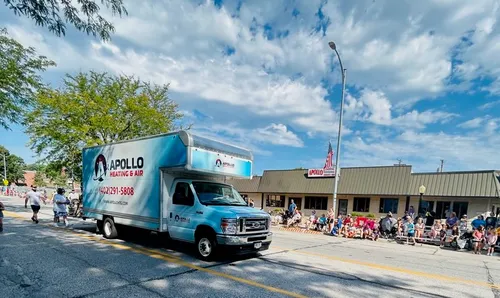
Apollo Heating & Air Conditioning
114 W Mission Ave, Bellevue, NE 68005
Apollo Heating & Air Conditioning is a family-owned HVAC company serving Omaha, NE, and the surrounding areas including southeast Nebraska and southwest Iowa. Established in 1971, they provide a wide range of heating and cooling services such as furnace, heat pump, and air conditioning installation, repair, and maintenance. The company is a Lennox Premier Dealer but works on all makes and models. They also offer specialized services including geothermal heat pump installation, ductless mini-split systems, custom sheet metal fabrication, and indoor air quality solutions. Apollo Heating & Air Conditioning supports both residential and commercial clients with comprehensive HVAC solutions.
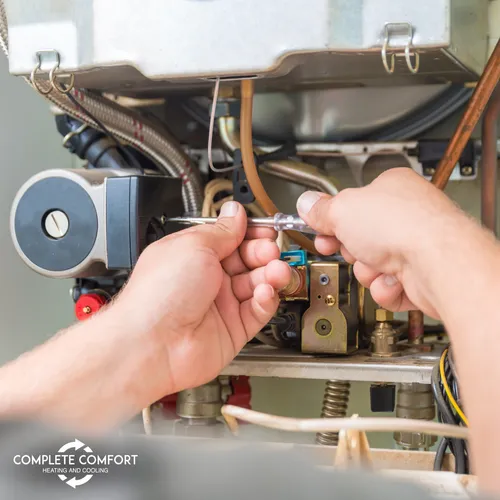
Complete Comfort Heating & Cooling
6235 S 90th St, Omaha, NE 68127
Complete Comfort Heating & Cooling is an HVAC company based in Omaha, NE, offering a range of services including air conditioner and furnace repair, installation, geothermal heat pump services, and indoor air quality evaluations. They serve both residential and commercial customers, providing expertise in HVAC tune-ups and home performance assessments to improve efficiency and comfort. Established in 1998, Complete Comfort has over two decades of experience in the industry. The company also offers 24/7 emergency repair services to address urgent heating and cooling needs.
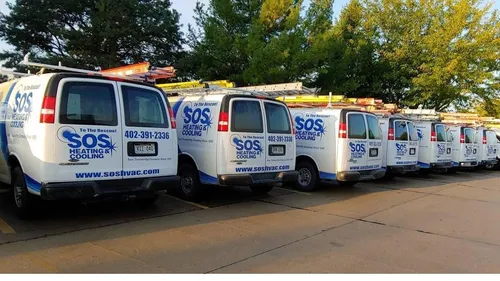
SOS Heating & Cooling
8314 Maple St, Omaha, NE 68134
SOS Heating & Cooling is a third-generation, family-owned HVAC company serving Omaha, NE, and the surrounding areas. Since 1950, they have provided a wide range of heating and cooling services including air conditioner and furnace repair, heat pump installation, duct cleaning, and indoor air quality solutions. The company is known for straightforward pricing without upselling and offers long warranties on installations. They are licensed, bonded, insured, and members of the Heating & Cooling Contractors Association, emphasizing professionalism and industry standards.
Sandhills
6007 Orchard Ave, Omaha, NE 68117
Sandhills Heating & Air Conditioning is a family-owned and woman-owned HVAC company serving Omaha, NE, and nearby communities since 1994. They provide a wide range of heating and cooling services including installation, repair, maintenance, and upgrades for furnaces, air conditioners, heat pumps, ductless mini-splits, and geothermal systems. Their team of certified technicians also offers indoor air quality solutions to improve home and business environments. Sandhills is equipped to handle emergency repairs 24/7, ensuring systems are restored quickly with advanced diagnostic tools and replacement parts.
Interstate Heating and Air Conditioning
14724 Grover St, Omaha, NE 68144
Interstate Heating and Air Conditioning is a Lennox Premier Dealer providing a wide range of HVAC services in Omaha, NE. They specialize in furnace and air conditioning repair, installation, and maintenance, including mini-split and geothermal heat pump systems. The company has been serving the Omaha community since 1961, offering expertise in energy-efficient Lennox products and 24/7 emergency support. Their technicians handle everything from system tune-ups to indoor air quality solutions, ensuring comprehensive home comfort services.
How Geothermal Systems Work in Omaha
The core principle behind a geothermal heat pump, or ground-source heat pump, is remarkably simple and effective. Just a few feet below Omaha's surface, the soil maintains a consistent temperature between 50°F and 55°F year-round, regardless of summer heat or winter cold. This stable thermal energy is the system's powerhouse.
During the winter, a fluid (typically a water-antifreeze mixture) circulating through underground pipes, called a ground loop, absorbs this gentle warmth from the earth. The heat pump inside your home then concentrates this low-grade heat and transfers it to your ductwork to warm your living spaces. In the summer, the process reverses: the system extracts heat from your indoor air and transfers it into the cooler ground loop fluid, which then dissipates the heat into the earth, effectively cooling your home 1. This exchange with the constant ground temperature is what makes geothermal technology vastly more efficient than conventional air-source systems that must work harder against extreme outdoor air temperatures.
Types of Ground Loop Systems
The underground portion of the system, known as the ground loop or earth loop, is the most critical installation component. The right type for your Omaha property depends on your land availability, soil composition, and landscaping goals. Local installers are experts at assessing these factors to recommend the optimal configuration.
Horizontal Closed Loops This is often the most cost-effective option if sufficient land is available. Contractors dig trenches, typically 4 to 6 feet deep, and lay piping in a series of parallel rows or slinky coils. A horizontal loop field requires a significant amount of open yard space but involves less specialized drilling equipment 2.
Vertical Closed Loops For homes with smaller lots, which is common in many Omaha neighborhoods, vertical loops are the standard solution. Installers use drilling rigs to create boreholes, usually between 150 and 450 feet deep. U-shaped pipes are inserted into these holes, which are then grouted. A system may require two to six or more of these vertical boreholes, connected at the bottom in a closed loop. This method minimizes landscape disruption and is well-suited to a variety of soil and rock conditions.
Pond/Lake Loops (Open Loops) If your property has access to a sufficiently large and deep pond or lake, this can be an efficient option. Coils of piping are submerged at a depth where water temperatures remain stable. While potentially lower in cost, this system requires a dependable, clean water source and may be subject to local environmental regulations 3.
The Geothermal Installation Process: What to Expect
Installing a geothermal heating and cooling system is a significant project that requires careful planning and skilled execution. Understanding the steps involved can help Omaha homeowners prepare for a smooth process.
- Site Assessment and Design: A qualified installer will first evaluate your property. This includes assessing soil conditions, available space, your home's heating and cooling load, and existing ductwork. This information is used to design the loop field and select the correctly sized heat pump unit 4.
- Ground Loop Installation: This is the major exterior work. For a horizontal system, it involves trenching with excavators. For a vertical system, a drilling rig will be brought in to create the boreholes. The high-density polyethylene piping is then placed, connected, and pressure-tested to ensure there are no leaks before the trenches or boreholes are backfilled.
- Indoor Unit Installation: The geothermal heat pump unit itself is typically installed where your old furnace was located, such as in a basement, utility closet, or garage. It is connected to the ground loop piping and to your home's electrical system and ductwork. If you don't have existing ducts, a ductless (mini-split) style geothermal system may be an option 5.
- System Startup and Commissioning: Once everything is connected, the system is filled with fluid, purged of air, and started. The contractor will test all components, verify refrigerant charge, and ensure the system is operating at peak efficiency before handing it over to you.
Find the perfect geothermal heat pump contractors for your needs
Get personalized recommendations and expert advice
Financial Benefits and Long-Term Value
The most compelling reason Omaha homeowners consider a geothermal system is the substantial financial benefit over time. While the upfront investment is higher than a standard HVAC system, the operational savings are dramatic.
Energy Bill Savings By leveraging the earth's consistent temperature, geothermal heat pumps require far less electricity to move heat than conventional systems create it. Homeowners typically see a reduction of 40% to 70% on their heating and cooling bills 6 7. In a climate like Omaha's with both hot summers and cold winters, these savings add up quickly, often amounting to hundreds of dollars per year.
Payback Period and ROI The "payback period"-the time it takes for energy savings to equal the initial installation cost-varies but often falls within 5 to 10 years for residential systems 8. After this point, the ongoing savings translate directly into increased return on investment. Furthermore, a geothermal system can significantly increase your property's value due to its low operating costs and modern, sustainable technology.
Incentives and Rebates Federal tax credits for qualified geothermal heat pump installations can significantly offset the initial cost. It's essential to discuss current federal, state, and even local utility incentives with your installer, as these can make the project much more affordable 9.
Key Considerations for Omaha Properties
Successful geothermal installation in Omaha hinges on a few local factors that experienced contractors know well.
- Soil and Geology: Omaha's soil composition can vary. The thermal conductivity of your soil-how well it transfers heat-directly impacts loop design and efficiency. Professional installers understand local conditions and can design a system accordingly.
- Space and Landscaping: Choosing between horizontal and vertical loops is a primary decision. If you wish to preserve mature trees or extensive landscaping, vertical drilling may be the preferred route despite potentially higher drilling costs, as it confines disruption to a small area 10 11.
- Professional Expertise is Crucial: Proper sizing and design are non-negotiable for geothermal efficiency. An undersized loop field or an oversized heat pump will not perform optimally. Always work with certified and experienced geothermal contractors who can provide detailed load calculations and system designs 12 13.
Maintenance and Longevity
One of the advantages of geothermal technology is its durability and low maintenance. The indoor heat pump unit requires similar basic maintenance as a traditional HVAC system: regular filter changes and occasional check-ups by a technician. The buried ground loop, made of durable plastics, is designed to last for decades-often 50 years or more-with no maintenance required. This longevity contributes greatly to the system's life-cycle value and reliability.
Frequently asked questions
Sources
Footnotes
-
Omaha Geothermal Heat Pumps | Installation, Maintenance & Repair - https://standardac.com/heating/geothermal-heat-pumps/ ↩
-
Geothermal heat pumps: The ultimate guide to ground-source ... - https://termo-plus.com/blog/geothermal-ultimate-guide-to-ground-source-heat-pumps/ ↩
-
Geothermal Heat Pumps - Department of Energy - https://www.energy.gov/energysaver/geothermal-heat-pumps ↩
-
Geothermal Loop Design 101 - https://precisioncomfort.com/geothermal-loop-design-101/ ↩
-
Unlock Energy Savings with Geothermal HVAC for Commercial Buildings - https://galgonhvac.com/geothermal-hvac/ ↩
-
Is a Geothermal Heat Pump Right for You? - https://nebraskamagazine.org/geothermal-heat-pump-right-you ↩
-
How Does A Geothermal Heat Pump Work? Complete 2025 Guide - https://solartechonline.com/blog/how-does-geothermal-heat-pump-work/ ↩
-
Geothermal Heat Pump - DSO Electric Cooperative - https://dsoelectric.com/geothermal-heat-pump ↩
-
All You Need to Know About Home Geothermal Heating & ... - https://dandelionenergy.com/all-you-need-to-know-about-home-geothermal-heating-cooling ↩
-
Geothermal Heat Pump Installation: What To Expect For Your ... - https://jomory.com/geothermal-heat-pump-installation-what-to-expect-for-your-property/ ↩
-
Ground Source Borehole Cost: Planning Your Budget - Baystar - https://baystar.co.uk/ground-source-borehole-cost/ ↩
-
How Does Geothermal Heating Work Around Omaha, NE - https://xtremeheatingandcooling.com/how-does-geothermal-heating-work-around-omaha-ne/ ↩
-
Guide to Geothermal Heat Pumps - https://www.energy.gov/sites/prod/files/guide_to_geothermal_heat_pumps.pdf ↩