
Find the Best Geothermal Heat Pump Contractors for Your Business
No obligation • Fast responses • Nationwide coverage

Why you can trust HVAC Firms
HVAC Firms is a leading United States resource for evaluating HVAC service providers. Our team researches companies, checks credentials, and reviews customer feedback to present clear, unbiased information. Listings and rankings are based on merit, and companies cannot pay to change our editorial content.
Search providers near you
Best Geothermal Heat Pump Contractors in Nebraska Ranked
Geothermal heat pumps are a highly efficient heating and cooling technology that leverages Nebraska's stable underground temperatures to provide year-round comfort. These systems, also known as ground-source heat pumps, offer significant long-term energy savings and environmental benefits compared to conventional HVAC systems. This guide provides practical information for Nebraska homeowners considering this technology, including details on costs, incentives, installation requirements, and how to connect with qualified local professionals for your project.
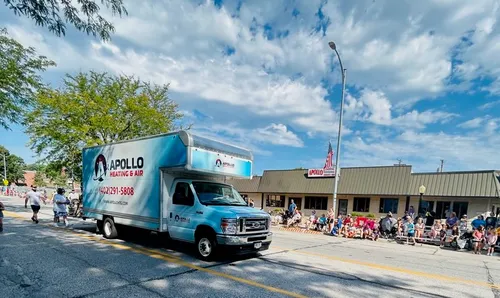
Apollo Heating & Air Conditioning
114 W Mission Ave, Bellevue, NE 68005
Apollo Heating & Air Conditioning is a family-owned HVAC company serving Omaha, NE, and the surrounding areas including southeast Nebraska and southwest Iowa. Established in 1971, they provide a wide range of heating and cooling services such as furnace, heat pump, and air conditioning installation, repair, and maintenance. The company is a Lennox Premier Dealer but works on all makes and models. They also offer specialized services including geothermal heat pump installation, ductless mini-split systems, custom sheet metal fabrication, and indoor air quality solutions. Apollo Heating & Air Conditioning supports both residential and commercial clients with comprehensive HVAC solutions.
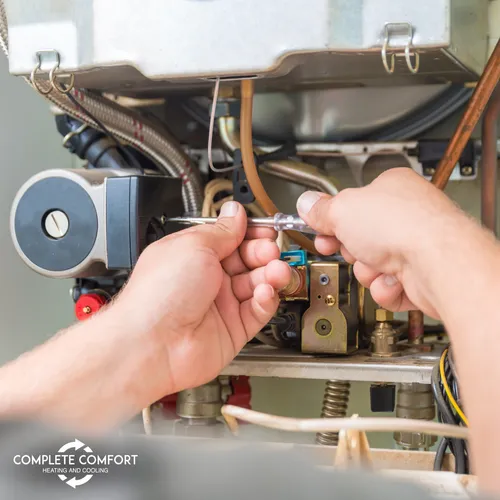
Complete Comfort Heating & Cooling
6235 S 90th St, Omaha, NE 68127
Complete Comfort Heating & Cooling is an HVAC company based in Omaha, NE, offering a range of services including air conditioner and furnace repair, installation, geothermal heat pump services, and indoor air quality evaluations. They serve both residential and commercial customers, providing expertise in HVAC tune-ups and home performance assessments to improve efficiency and comfort. Established in 1998, Complete Comfort has over two decades of experience in the industry. The company also offers 24/7 emergency repair services to address urgent heating and cooling needs.
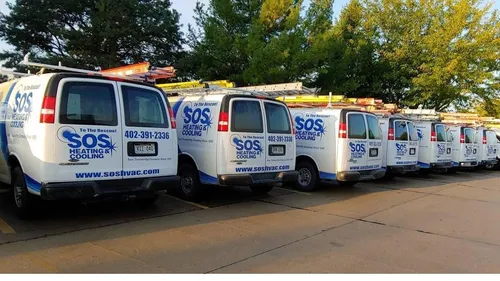
SOS Heating & Cooling
8314 Maple St, Omaha, NE 68134
SOS Heating & Cooling is a third-generation, family-owned HVAC company serving Omaha, NE, and the surrounding areas. Since 1950, they have provided a wide range of heating and cooling services including air conditioner and furnace repair, heat pump installation, duct cleaning, and indoor air quality solutions. The company is known for straightforward pricing without upselling and offers long warranties on installations. They are licensed, bonded, insured, and members of the Heating & Cooling Contractors Association, emphasizing professionalism and industry standards.
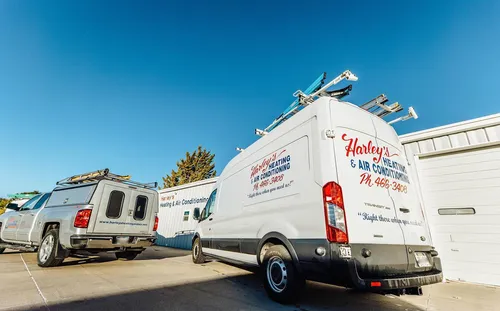
Harley's Heating & Air Conditioning
4224 Progressive Ave, Lincoln, NE 68504
Harley's Heating & Air Conditioning is a family-owned HVAC company serving Lincoln, NE, and surrounding areas since 1970. They provide a full range of heating and cooling services, including installation, repair, and maintenance of furnaces, heat pumps, boilers, air conditioners, and indoor air quality systems. Their NATE-certified technicians handle complex diagnostics and offer transparent solutions focused on energy efficiency and system reliability. Harley's also offers 24/7 emergency service without overtime fees, ensuring support when urgent heating or cooling issues arise.
Sandhills
6007 Orchard Ave, Omaha, NE 68117
Sandhills Heating & Air Conditioning is a family-owned and woman-owned HVAC company serving Omaha, NE, and nearby communities since 1994. They provide a wide range of heating and cooling services including installation, repair, maintenance, and upgrades for furnaces, air conditioners, heat pumps, ductless mini-splits, and geothermal systems. Their team of certified technicians also offers indoor air quality solutions to improve home and business environments. Sandhills is equipped to handle emergency repairs 24/7, ensuring systems are restored quickly with advanced diagnostic tools and replacement parts.
How Geothermal Systems Work in Nebraska's Climate
A geothermal heat pump system transfers heat between your home and the ground. In winter, it extracts heat from the earth to warm your home. In summer, the process reverses, pulling heat from your house and depositing it into the cooler ground. This process is remarkably efficient because it moves heat rather than generating it by burning fuel, and it relies on the earth's consistent temperature, which in Nebraska ranges from a stable 50 to 58°F below the surface year-round 1.
This stability is a key advantage in Nebraska's climate, which experiences both hot summers and cold winters. While air-source heat pumps must work harder as outside air temperatures become extreme, a ground-source system's efficiency remains high because the ground temperature is constant. This makes geothermal an ideal technology for managing Nebraska's temperature swings efficiently and reliably 2 3.
Benefits for Nebraska Homeowners
Installing a geothermal system offers several compelling advantages:
- Substantial Energy Savings: Geothermal systems are 300-600% efficient, meaning they move three to six units of heat for every unit of electricity used. This can translate to savings of 30-70% on heating and 20-50% on cooling costs compared to conventional systems 4.
- Long-Term Durability: The indoor components of a geothermal system typically last about 20-25 years, while the underground ground loop is often guaranteed for 50 years and can last for generations. This is nearly double the lifespan of a standard furnace or air conditioner 5.
- Consistent Comfort: These systems provide steady, even heating and cooling without the drafts or hot/cold spots associated with forced-air systems that rely on outside air temperatures.
- Quiet Operation and Low Maintenance: With no noisy outdoor condenser unit, operation is very quiet. The systems also have fewer mechanical components exposed to the weather, leading to lower maintenance needs.
- Environmental Impact: By drastically reducing fossil fuel consumption or electricity use for heating and cooling, geothermal systems significantly lower a home's carbon footprint.
Understanding Costs and Financial Incentives
The primary consideration for most homeowners is the upfront investment, which is higher than for a conventional system.
Installation Costs
The total installed cost for a residential geothermal heat pump system in Nebraska typically ranges from $15,000 to $40,000 or more 6. The final price depends on several factors:
- Home Size and Heating/Cooling Load: Larger homes require larger capacity systems.
- Property Characteristics and Loop Type: The choice between a horizontal, vertical, or pond loop system depends on your land availability and soil conditions, with vertical loops often being more expensive due to deeper drilling.
- Existing Ductwork: Homes without ductwork will need it installed, adding to the cost.
A useful rule of thumb is an average of $2,500 per ton of capacity 7. A typical single-family home may require a 3-to-5-ton system.
Available Rebates and Tax Credits
Fortunately, significant financial incentives can offset 30-50% of the total system cost.
- Federal Tax Credit: The federal Residential Clean Energy Credit provides a 30% tax credit on the total cost of installing a qualifying geothermal heat pump system. There is no upper dollar limit on this credit, and it is available for systems installed through December 31, 2034 8.
- Nebraska Utility Rebates: Many local utilities offer direct rebates:
- Nebraska Public Power District (NPPD): Through its EnergyWise program, NPPD offers rebates of up to $3,300 for variable-capacity geothermal heat pump installations 9 10.
- Lincoln Electric System (LES): LES provides rebates ranging from $550 to $1,500 depending on the type and efficiency of the geothermal system installed 11.
- Omaha Public Power District (OPPD): OPPD provides information and resources on the federal tax credits for qualifying homeowners.
- Future State Programs: The Nebraska Department of Environment and Energy (NDEE) is working to establish new "Home Energy Rebates" programs funded by the federal Inflation Reduction Act, which may provide additional point-of-sale discounts or rebates in the future 12.
These incentives are often stackable; for example, a homeowner could use an NPPD rebate and still claim the full 30% federal tax credit on the remaining net cost.
Find the perfect geothermal heat pump contractors for your needs
Get personalized recommendations and expert advice
Installation Process and Permitting in Nebraska
A proper geothermal installation is a multi-step process that requires professional expertise.
1. Site Evaluation and Design: A certified contractor will assess your property's soil composition, geology, land area, and heating/cooling needs. Nebraska's soil-a mix of clay, loam, and sand-is generally well-suited for ground loops 13 14. This evaluation determines the optimal loop type (horizontal, vertical, or pond/lake).
2. Securing Permits: Geothermal installations in Nebraska require several permits to ensure safety and environmental protection 15 16.
- Local Building Permit: Required from your city or county building department for the indoor unit and any electrical work.
- Groundwater Permit: If the system uses groundwater (for an open-loop system) or drills a deep borehole, a permit from the Nebraska Department of Environment and Energy (NDEE) is generally required 17.
- Drilling/Excavation Permit: Local permits are often needed for the ground loop installation. For closed-loop systems using a water/antifreeze mix, state regulations specify well-construction standards and minimum distances from water sources 18.
Your installer should handle the permit application process, but it's wise for homeowners to be aware of these requirements.
3. Loop Installation and System Setup: The ground loop is installed via trenching or drilling. The piping is connected to the heat pump unit inside your home, which is then integrated with your ductwork or hydronic distribution system.
4. Commissioning and Verification: After installation, the system is charged, tested, and balanced. For certain rebates, performance verification testing may be required to prove the system is operating at its rated efficiency 19.
Choosing a Qualified Nebraska Installer
Selecting the right contractor is critical for a system that performs efficiently for decades. Look for professionals with:
- Specific Geothermal Experience: Ask for references and examples of past geothermal projects.
- Industry Certifications: Credentials from the International Ground Source Heat Pump Association (IGSHPA) or North American Technician Excellence (NATE) certification indicate specialized training 20.
- Proper Licensing and Insurance: Ensure the contractor is licensed to work in Nebraska and carries adequate liability and workers' compensation insurance.
- Detailed Proposal: A trustworthy installer will provide a comprehensive quote that includes load calculations, loop design specifications, equipment models, a clear breakdown of costs, and projected energy savings.
Long-Term Maintenance and Performance
Geothermal systems require minimal maintenance. Annual check-ups should include inspecting the heat pump components, checking refrigerant levels, and cleaning filters and coils. The underground loop is virtually maintenance-free. With proper care, you can expect decades of reliable service and continued energy savings, often paying back the initial investment through lower utility bills within 5 to 10 years.
Frequently asked questions
Sources
Footnotes
-
Geothermal Systems | Heating & Cooling Service in Omaha - https://www.canigliahvac.com/hvac-services/geothermal-systems/ ↩
-
How Does Geothermal Heating Work Around Omaha, NE - https://xtremeheatingandcooling.com/how-does-geothermal-heating-work-around-omaha-ne/ ↩
-
Installation ... - Geothermal Heat Pump Repair Nebraska (NE) - https://geothermalheatpumprepairs.netlify.app/ne/ ↩
-
Guide to Geothermal Heat Pumps - https://www.energy.gov/sites/prod/files/guide_to_geothermal_heat_pumps.pdf ↩
-
Geothermal Heat Pumps: Cost and Installation - https://www.energyhomes.org/renewable-technology/geoinstallation.html ↩
-
Ground Source Heat Pump Cost: How Much Will You Pay in 2025? - https://www.energysage.com/heat-pumps/costs-benefits-geothermal-heat-pumps/ ↩
-
Omaha Geothermal Heat Pumps | Installation, Maintenance ... - https://standardac.com/heating/geothermal-heat-pumps/ ↩
-
Inflation Reduction Act Tax Credits - OPPD - https://www.oppd.com/business/inflation-reduction-act-tax-credits/ ↩
-
Incentives For Your Home - EnergyWise - https://nppd.energywisenebraska.com/residential/ ↩
-
Ground Source Heat Pump - Cornhusker PPD - https://cornhusker-power.com/rebates/ground-source-heat-pump/ ↩
-
LES SUSTAINABLE ENERGY PROGRAM - Lincoln Insulation - https://lincolninsulation.com/les/ ↩
-
Energy Innovations: Heat Pumps 101 - https://dee.nebraska.gov/sites/default/files/publications/June%202024%20Nebraska%20Energy%20Quarterly.pdf ↩
-
The Complete Guide To Geothermal Heat Pump Installation - https://ultrageothermal.com/the-complete-guide-to-geothermal-heat-pump-installation/ ↩
-
Geothermal Heat Pump Systems - https://c03.apogee.net/mvc/home/hes/land/el?utilityname=ure&spc=goe&id=7038 ↩
-
Permitting | DWEE NE - https://dee.nebraska.gov/permitting ↩
-
What Are the Permitting Requirements Typically Needed for a ... - https://lifestyle.sustainability-directory.com/learn/what-are-the-permitting-requirements-typically-needed-for-a-geothermal-installation/ ↩
-
Cross References - Nebraska Legislature - https://nebraskalegislature.gov/laws/statutes.php?statute=66-1105 ↩
-
178 Neb. Admin. Code, ch. 12, § 010 - GROUND WATER HEAT ... - https://www.law.cornell.edu/regulations/nebraska/178-Neb-Admin-Code-ch-12-SS-010 ↩
-
Residential Energy Efficiency Rebate Programs - DSIRE - https://programs.dsireusa.org/system/program/detail/3323 ↩
-
Geothermal Heating Systems In Omaha, NE | Repair & Replace - https://www.thermalservices.com/heating/geothermal/ ↩