
Find the Best Geothermal Heat Pump Contractors for Your Business
No obligation • Fast responses • Nationwide coverage

Why you can trust HVAC Firms
HVAC Firms is a leading United States resource for evaluating HVAC service providers. Our team researches companies, checks credentials, and reviews customer feedback to present clear, unbiased information. Listings and rankings are based on merit, and companies cannot pay to change our editorial content.
Search providers near you
Top Geothermal Heat Pump Contractors in New Orleans, Louisiana Ranked
In New Orleans, finding an efficient and reliable way to heat and cool your home is a year-round concern. Geothermal heat pumps, also known as ground-source heat pumps, offer a powerful solution by tapping into the earth's stable underground temperature. This technology provides exceptional comfort, drastically reduces energy bills, and minimizes environmental impact. This guide explains how these systems work, what installation involves for local properties, and how you can connect with qualified professionals in the New Orleans area to explore this sustainable option for your home.
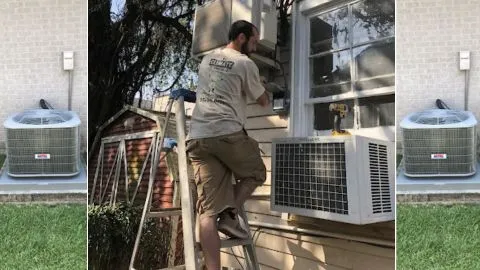
Climate Tamers
109 Trefny Ave Unit C, Metairie, LA 70003
Climate Tamers is a family-owned HVAC company serving New Orleans, LA, since 2012. They provide a wide range of heating and cooling services including installation, repair, and maintenance of air conditioning, furnaces, heat pumps, mini splits, and geothermal systems. Their expertise also extends to duct design, indoor air quality improvements with UV light installations, and commercial refrigeration. Climate Tamers offers 24/7 emergency repair services to address urgent HVAC needs promptly.
J. Marin Heating & Air Conditioning
2709 St Claude Ave, New Orleans, LA 70117
J. Marin Heating & Air Conditioning provides a wide range of HVAC services in New Orleans, LA. They specialize in air conditioning installation and repair, mini-split and geothermal heat pump installations, thermostat upgrades, and indoor air quality improvements. Their services include regular maintenance and tune-ups to keep systems running efficiently, as well as emergency repair support. The company also offers commercial HVAC solutions and refrigerant leak repairs, addressing both residential and business needs.
Mayeux's A/C Htg. & Generator Systems LLC
650 St Charles St, Norco, LA 70079
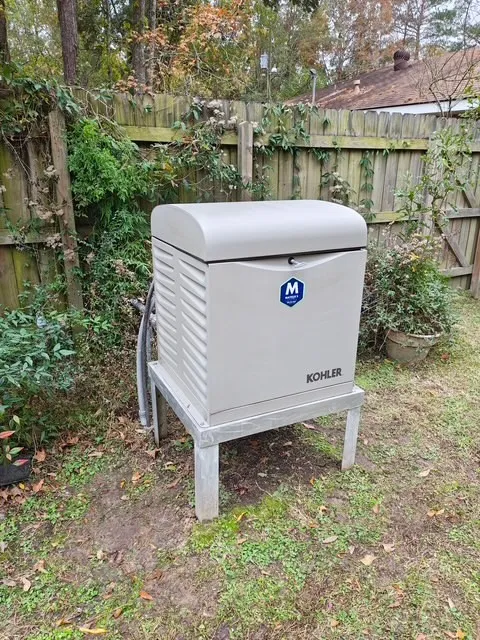
Mayeux's A/C Htg. & Generator Systems LLC provides a wide range of HVAC services in New Orleans, LA, including installation, repair, and maintenance of air conditioners, furnaces, heat pumps, mini-splits, and geothermal systems. They also offer indoor air quality solutions and generator services. The company serves the River Parishes area and is a Lennox® Premier Dealer™, offering energy-efficient HVAC products and expert furnace repair and installation. Their technicians are experienced in handling various heating and cooling needs to ensure home comfort throughout the year.
How Geothermal Systems Work in Our Climate
The principle behind a geothermal heating and cooling system is elegant in its simplicity. While New Orleans' air temperature swings from humid summers to mild winters, the ground just a few feet below the surface maintains a remarkably stable temperature, typically between 60°F and 70°F year-round. A geothermal system uses this constant thermal resource as a free energy source.
The process involves a closed-loop of pipes, called a ground loop, buried in your yard. A water-based solution circulates through these pipes, absorbing the earth's warmth in the winter and carrying excess heat from your home back into the ground in the summer 1. This fluid then travels to an indoor heat pump unit. The heat pump concentrates the gathered thermal energy to warm your home or, in cooling mode, expels indoor heat into the cooler loop fluid. This concentrated heating or cooling is then distributed through your home's existing ductwork or a hydronic system 2.
Ground Loop Options for New Orleans Properties
The design of the underground loop field is the most critical site-specific part of a geothermal installation. The right choice depends heavily on your property's characteristics. The two primary types are horizontal and vertical loops.
Horizontal Ground Loops This is often the most cost-effective installation method. Contractors dig trenches four to six feet deep and lay pipes in a series of loops 3 4. The main requirement is sufficient available land area; a typical home may need several thousand square feet of clear, diggable space 5 6. For many older New Orleans properties with smaller, landscaped lots, this can be a limiting factor.
Vertical Ground Loops This is the most common solution for urban and suburban settings in New Orleans. Contractors use a drilling rig to bore holes 150 to 400 feet deep 7. U-shaped pipe loops are inserted into each borehole, which are then grouted. Vertical loops require significantly less surface area, making them ideal for typical city lots, though the drilling equipment and depth make this option more expensive upfront than a horizontal system 8.
Pond/Lake Loops If you have access to a sufficiently deep, year-round body of water, a pond loop can be a highly efficient option. Coils of pipe are submerged at the bottom of the pond, utilizing the water's stable temperature. This method avoids extensive digging or drilling but is entirely dependent on water access and quality.
Find the perfect geothermal heat pump contractors for your needs
Get personalized recommendations and expert advice
The Installation Process: What to Expect
Installing a geothermal heat pump is a significant project that requires professional expertise. Understanding the steps can help you prepare.
- Site Evaluation and Load Calculation: A qualified installer will first assess your property. This includes evaluating soil composition (critical in Louisiana's varied geology), available space, and performing a detailed heating and cooling load calculation for your home to properly size the system.
- Loop Field Installation: Based on the evaluation, the crew will install the ground loop. For vertical systems, this involves drilling the boreholes and inserting the pipes. For horizontal systems, it requires trenching. This is the most disruptive phase of the project but is typically completed in a few days.
- Loop Connection and Pressure Test: The buried pipes are connected to a manifold and brought into the home. The entire loop is pressurized and tested for integrity to ensure there are no leaks before it is permanently buried or grouted 9.
- Heat Pump and Ductwork Connection: The indoor geothermal unit is installed, typically where your old furnace was located. It is connected to the ground loop, your home's electrical system, and the existing ductwork. Your thermostat is also upgraded to control the new system.
- System Startup and Commissioning: Finally, the system is charged with fluid, powered up, and meticulously tested and balanced by the technician to ensure optimal performance and efficiency 10.
Key Considerations for New Orleans Homeowners
Upfront Cost vs. Long-Term Savings The most significant barrier is the initial investment. Installing a complete geothermal system in New Orleans can range from $12,000 to over $45,000, with a typical 3-ton residential system often around $25,000 installed 11 12. However, the operational savings are substantial. Homeowners typically see a 30% to 70% reduction in their heating and cooling energy bills compared to conventional systems 13 14. With annual savings often between $1,000 and $2,000, the system can pay for itself in 10-15 years, followed by decades of lower-cost operation 11.
Financial Incentives The federal government offers a tax credit for residential geothermal heat pump installations, which can cover 30% of the total project cost, including labor and site work 15 16. This incentive dramatically improves the return on investment. It's essential to verify the current status and details of this credit with your installer or tax advisor.
Property Suitability As mentioned, lot size and soil conditions are paramount. A professional assessment is non-negotiable. The moist, clay-heavy soils common in the area can be excellent for heat transfer, which is beneficial for system efficiency. A good contractor will perform the necessary tests to design the most effective and cost-efficient loop for your specific site.
Environmental Impact Choosing a geothermal system significantly reduces your home's carbon footprint. By using renewable thermal energy from the ground and electricity only to run the compressor and pumps, these systems emit no on-site greenhouse gases and are one of the cleanest heating and cooling technologies available.
Maintaining Your Geothermal System
One of the great advantages of a ground-source heat pump is its durability and low maintenance. The underground piping often carries warranties of 25 to 50 years and can last generations. The indoor heat pump unit typically lasts 20 years or more, which is significantly longer than conventional air conditioners and furnaces. Annual maintenance is similar to a standard HVAC system: checking filters, the ductwork, and the electrical components, and ensuring the fluid loop is operating correctly. This routine service helps maintain peak efficiency and system longevity.
Frequently asked questions
Sources
Footnotes
-
Geothermal Heating, Cooling, and Hot Water Systems - https://igshpa.org/wp-content/uploads/Homeowners-Guide-to-Geothermal.pdf ↩
-
How Geothermal Heat Pumps Work - https://www.youtube.com/watch?v=XxlTnBukweI&t=37 ↩
-
Geothermal heat pumps: The ultimate guide to ground-source ... - https://termo-plus.com/blog/geothermal-ultimate-guide-to-ground-source-heat-pumps/ ↩
-
Geothermal Heat Pumps - Department of Energy - https://www.energy.gov/energysaver/geothermal-heat-pumps ↩
-
Geothermal Installation Steps Explained - https://ultrageothermal.com/geothermal-installation-steps-explained/ ↩
-
Ground source heat pumps: horizontal collectors Vs. vertical boreholes - https://www.mesh-energy.com/insights/ground-source-heat-pumps-horizontal-collectors-vs-vertical-boreholes ↩
-
How it Works - https://www.climatemaster.com/homeowner/side-links/how-it-works ↩
-
Geothermal Heat Pump - https://encyclopedia.pub/entry/28898 ↩
-
All You Need to Know About Home Geothermal Heating & Cooling - Dandelion Energy - https://dandelionenergy.com/all-you-need-to-know-about-home-geothermal-heating-cooling ↩
-
Geothermal Heat Pump Installation: What To Expect For Your ... - https://jomory.com/geothermal-heat-pump-installation-what-to-expect-for-your-property/ ↩
-
Guide to Geothermal Heat Pumps - https://www.energy.gov/sites/prod/files/guide_to_geothermal_heat_pumps.pdf ↩ ↩2
-
Geothermal Heat Pump Installation (Steps, Benefits...) - https://pantherhvac.com/blog/geothermal-heat-pump-installation/ ↩
-
How Does A Geothermal Heat Pump Work? Complete 2025 Guide - https://solartechonline.com/blog/how-does-geothermal-heat-pump-work/ ↩
-
Geothermal Heating and Cooling - https://geothermal.colorado.gov/geothermal-heating-and-cooling ↩
-
What's a Geothermal Heat Pump? - https://www.youtube.com/watch?v=uU3FqM9QLSc ↩
-
Air Source vs Ground Source Heat Pump: Which Is Best? - https://harmonmechanical.com/air-source-vs-ground-source-heat-pump/ ↩