Find the Best Geothermal Heat Pump Contractors for Your Business
No obligation • Fast responses • Nationwide coverage

Why you can trust HVAC Firms
HVAC Firms is a leading United States resource for evaluating HVAC service providers. Our team researches companies, checks credentials, and reviews customer feedback to present clear, unbiased information. Listings and rankings are based on merit, and companies cannot pay to change our editorial content.
Search providers near you
Best Geothermal Heat Pump Contractors in Louisiana Ranked
Geothermal heat pumps (GHPs), also known as ground-source heat pumps, are a highly efficient way to heat and cool your Louisiana home or business. By exchanging heat with the stable temperature of the earth, these systems can drastically reduce energy consumption compared to traditional air-source units, leading to significant savings on utility bills, especially in our warm, humid climate. While the initial investment is higher, long-term operational savings and available incentives can make geothermal a smart financial and environmental choice. This guide provides the essential information you need to understand the process, regulations, and benefits specific to Louisiana, helping you connect with qualified local professionals for your project.
WinterSaire Heating & Cooling
Baton Rouge, LA
WinterSaire Heating & Cooling is a family-owned HVAC company based in Baton Rouge, LA, serving all areas of South Louisiana. They provide a wide range of heating, cooling, and refrigeration services for residential and commercial clients, including air conditioning and furnace installation, geothermal heat pump systems, HVAC maintenance, and indoor air quality solutions. Their expertise includes geothermal heat pump installation, which uses the earth's natural energy for efficient heating and cooling. With over ten years of experience, WinterSaire Heating & Cooling is locally owned and operated from Denham Springs, Louisiana.
Climate Tamers
109 Trefny Ave Unit C, Metairie, LA 70003
Climate Tamers is a family-owned HVAC company serving New Orleans, LA, since 2012. They provide a wide range of heating and cooling services including installation, repair, and maintenance of air conditioning, furnaces, heat pumps, mini splits, and geothermal systems. Their expertise also extends to duct design, indoor air quality improvements with UV light installations, and commercial refrigeration. Climate Tamers offers 24/7 emergency repair services to address urgent HVAC needs promptly.
Magnolia Breeze
115 N College St, Denham Springs, LA 70726
Magnolia Breeze is an HVAC company serving the Baton Rouge, LA area, specializing in both commercial and residential HVAC services. They provide repair, maintenance, and installation for air conditioning, furnaces, heat pumps, boilers, mini splits, and geothermal heat pumps. The company was founded by two experienced technicians who developed their skills working for larger HVAC companies in Baton Rouge before starting Magnolia Breeze. They handle a wide range of HVAC tasks with expertise and care.
Shield Mechanical LLC
8565 Rome Dr, Baton Rouge, LA 70818
Shield Mechanical LLC provides heating and cooling services in Baton Rouge, LA, and nearby parishes including East Baton Rouge, West Baton Rouge, Ascension, and Livingston. With over 30 years of experience, their trained technicians offer installation, repair, and maintenance for HVAC systems such as air conditioners, furnaces, heat pumps, geothermal systems, and ductless mini-splits. They also provide indoor air quality solutions and thermostat installations. Shield Mechanical emphasizes energy-efficient and eco-friendly options tailored to local needs and offers same-day and weekend appointments to accommodate customers' schedules.
Central Heating & Air LLC
Baton Rouge, LA
Central Heating & Air LLC is an HVAC contractor serving Baton Rouge, LA, and nearby communities. Since 1997, they have provided air conditioning, furnace, heat pump, geothermal HVAC, and ductless system installation, repair, and maintenance services. Their offerings also include indoor air quality inspections, thermostat and home automation installation, and light commercial HVAC services. The company is a Trane Comfort Specialist dealer and employs NATE-certified technicians. They provide 24/7 emergency service to support customers whenever needed.
Why Consider Geothermal in Louisiana?
Louisiana's climate presents a unique advantage for geothermal systems. While they provide both heating and cooling, their exceptional efficiency in dehumidifying and cooling air makes them particularly well-suited for our long, hot summers. The ground temperature remains relatively constant year-round, so the system doesn't have to work as hard as an air-source heat pump that struggles with scorching outdoor air. This translates to reliable comfort, lower electricity usage, and reduced strain on the power grid during peak demand periods.
Beyond comfort, homeowners are increasingly interested in resilience and sustainability. Geothermal systems have fewer exposed outdoor components, making them less susceptible to storm damage. They also have a longer lifespan than conventional systems, with ground loops often guaranteed for 50 years and indoor components lasting 20 years or more. For those looking to reduce their carbon footprint, using the earth's natural heat with electricity (which can be sourced from renewables) is a clean alternative to burning fossil fuels on-site.
Understanding Costs and Financial Incentives
The most significant consideration for any geothermal project is the upfront cost. In Louisiana, a complete residential geothermal heat pump system for a typical home can range from $20,000 to over $40,0001 2 3. The wide range depends on your home's size (3-5 tons is common), the chosen loop system, soil conditions, and the complexity of installing the indoor components. The major cost drivers are the excavation or drilling for the ground loop and the heat pump unit itself.
However, substantial financial incentives can offset a large portion of this investment:
- Federal Tax Credit: The Inflation Reduction Act offers a 30% federal tax credit for qualified geothermal heat pump installations4 5. This credit applies to both the equipment and installation costs, with no upper limit for residential systems, making it the most impactful incentive available.
- State & Utility Rebates: Incentives from utilities like Entergy or CLECO can change annually. It is crucial to check the Database of State Incentives for Renewables & Efficiency (DSIREUSA.org) for the most current Louisiana-specific rebates and programs6. Your local installer should also be well-versed in available incentives.
When evaluating cost, it's vital to consider the total lifecycle expense. While the initial price is higher, geothermal systems can reduce heating and cooling energy costs by 25% to 50%7. This means the system can pay for itself over time through utility savings, after which you enjoy dramatically lower operating costs for decades.
Louisiana's Soil, Climate, and System Design
Successful geothermal installation hinges on proper design tailored to local conditions.
Soil Conditions: Louisiana's soil varies greatly, which affects system efficiency. Clay soils, common in many areas, have better thermal conductivity than sandy soils, allowing for more effective heat exchange. A professional site assessment will determine your soil's properties to correctly size the ground loop. Poor soil may require a longer loop or a different configuration.
Climate Impact: System design must account for Louisiana's primary load: cooling. The ground loop must be sized to reject the significant amount of heat absorbed from your home during the long summer8. An undersized loop will lead to poor performance and higher costs. A certified installer will perform a Manual J calculation to determine your home's exact heating and cooling needs before designing the loop field.
Loop Type Options:
- Vertical Closed-Loop: The most common choice for Louisiana homes with limited yard space. Boreholes are drilled 150 to 400 feet deep, and U-shaped pipes are inserted. This type is less disturbed by seasonal surface temperature changes and is ideal for clay soils.
- Horizontal Closed-Loop: Requires more land area but can be less expensive if trenching is easy. Pipes are laid in trenches 4 to 6 feet deep. This may be suitable for properties with ample, clear land.
- Open-Loop (Pond or Well): Uses groundwater from a well or a pond as the heat exchange fluid. This is the most efficient but has the most regulatory hurdles in Louisiana (see Permitting section) and requires an adequate, clean water source.
Find the perfect geothermal heat pump contractors for your needs
Get personalized recommendations and expert advice
Permitting and Regulations in Louisiana
Installing a geothermal system in Louisiana involves navigating specific state and local regulations. Working with a licensed, experienced local contractor is essential, as they will handle this process.
1. Local Building Permits: All installations require standard building, electrical, and HVAC permits from your city or parish building department. This ensures the work meets local safety and construction codes.
2. State Environmental Permits (Critical for Open-Loop): The Louisiana Department of Environmental Quality (LDEQ) regulates groundwater use. If you are considering an open-loop system that pulls water from a well and discharges it, you will likely need an LDEQ permit 9. This is to protect aquifer levels and water quality. The permitting process can be lengthy, which is why most residential installations use closed-loop systems.
3. Well Construction Permits: For vertical closed-loop systems, the drilling of boreholes is often classified as "well construction." Your contractor must comply with state regulations for well construction to prevent aquifer contamination10. They will secure any necessary permits for this activity.
The Installation Process: Step by Step
A professional geothermal installation follows a structured process to ensure optimal performance and compliance.
- Initial Consultation and Site Evaluation: A qualified installer assesses your home, evaluates your property for suitable loop locations, reviews soil conditions, and discusses your goals and budget.
- System Design and Proposal: Using Manual J load calculations, the contractor designs a system sized for your home. You'll receive a detailed proposal outlining the loop type, equipment specifications, costs, and projected savings.
- Permitting: Your contractor submits plans and applications for all required local and state permits.
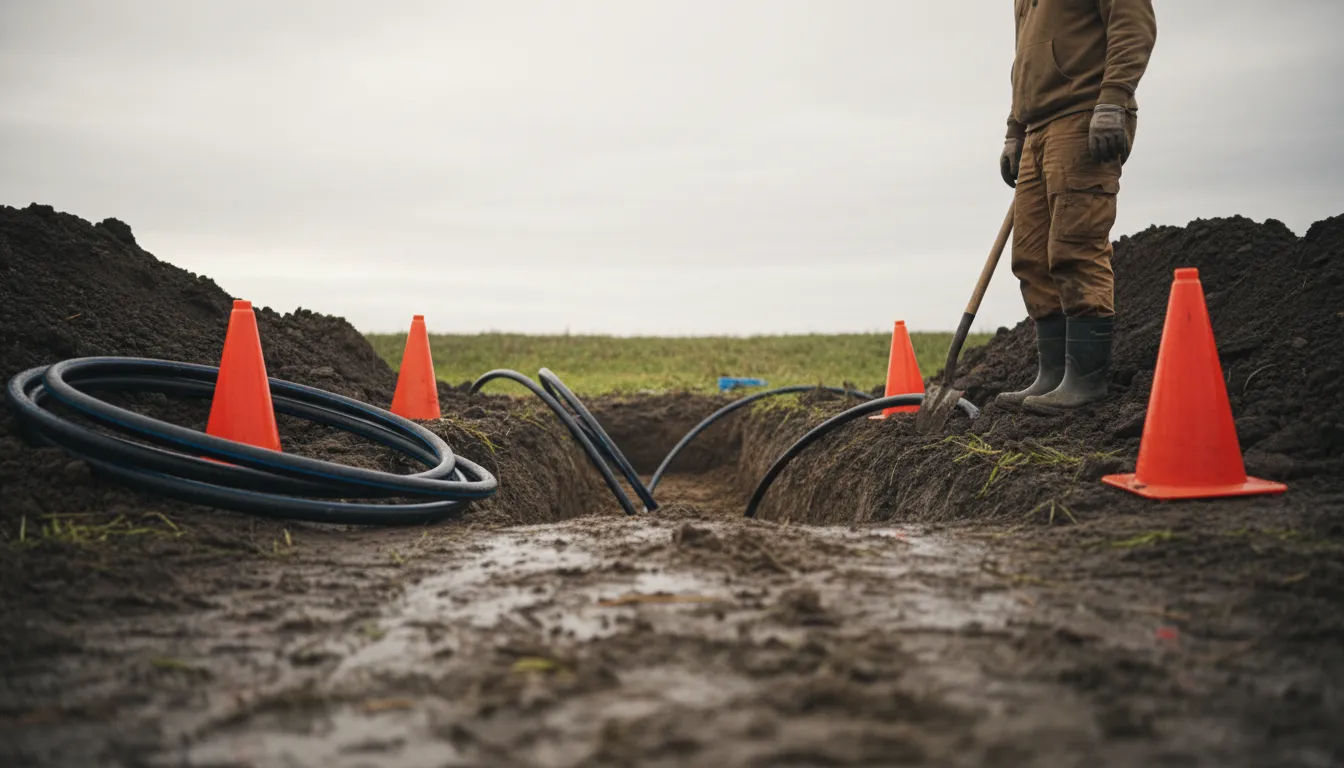
- Ground Loop Installation: Once permits are secured, excavation or drilling begins. For vertical loops, a drilling rig creates the boreholes; pipes are connected into a manifold and pressure-tested for leaks before being buried.
- Indoor Unit Installation: The geothermal heat pump unit (which looks like a traditional furnace) is installed inside, connected to the ground loop, and integrated with your existing ductwork or hydronic system.
- System Startup and Commissioning: The contractor fills the loop, purges air, starts the system, and tests all components to ensure everything operates correctly and efficiently. You will be instructed on how to use and maintain your new system.
Maintenance and Repair Considerations
Geothermal systems are renowned for their durability and low maintenance. The indoor components require similar basic maintenance as a standard HVAC system: checking filters, coils, and blowers. The ground loop, having no moving parts, is virtually maintenance-free.
When repairs are needed, they typically involve the above-ground components like the pump, compressor, or controls-similar to repairing any heat pump. The most serious potential issue is a leak in the ground loop 11. While rare with proper installation and pressure testing, a leak requires specialized equipment to locate and can be costly to repair, as it involves excavation. This underscores the importance of choosing an installer with extensive experience and a strong warranty.
Frequently asked questions
Sources
Footnotes
-
The Complete Guide To Geothermal Heat Pump Installation - https://ultrageothermal.com/the-complete-guide-to-geothermal-heat-pump-installation/ ↩
-
Geothermal Heat Pump Guide: Installation Costs, Types And Benefits - https://modernize.com/hvac/heating-repair-installation/heat-pump/geothermal ↩
-
Understanding and Evaluating Geothermal Heat Pump Systems - https://www.nyserda.ny.gov/-/media/Project/Nyserda/Files/EERP/Residential/Geothermal/geothermal-manual.pdf ↩
-
Installation ... - Geothermal Heat Pump Repair Louisiana (LA) - https://geothermalheatpumprepairs.netlify.app/la/ ↩
-
Geothermal HVAC Rebates | Inflation Reduction Act - https://www.southernprideservice.com/geothermal-services/rebates/ ↩
-
Geothermal Heat Pumps: Cost and Installation - https://www.energyhomes.org/renewable-technology/geoinstallation.html ↩
-
Guide to Geothermal Heat Pumps - https://www.energy.gov/sites/prod/files/guide_to_geothermal_heat_pumps.pdf ↩
-
Overcoming Legal and Regulatory Barriers to District Geothermal in ... - https://www.nyserda.ny.gov/-/media/Project/Nyserda/Files/Publications/Research/Clean-Power-Innovation/21-22-Overcoming-legal-and-Regulatory-Barriers-to-District-Geothermal-in-NY.pdf ↩
-
Table of Contents Title 43 NATURAL RESOURCES Part XIX ... - https://www.doa.la.gov/media/t3qldhn5/43v19.pdf ↩
-
Coupling Geothermal Heat Pumps (GHP) with Underground ... - https://s3.us-gov-west-1.amazonaws.com/sepub-demo-0001-124733793621-us-gov-west-1/s3fs-public/2024-02%2FEW18-5316%20Guidance%20Document.pdf ↩
-
Geothermal Heat Pump Manual - NYC.gov - https://www.nyc.gov/html/ddc/downloads/pdf/geotherm.pdf ↩