
Find the Best Geothermal Heat Pump Contractors for Your Business
No obligation • Fast responses • Nationwide coverage

Why you can trust HVAC Firms
HVAC Firms is a leading United States resource for evaluating HVAC service providers. Our team researches companies, checks credentials, and reviews customer feedback to present clear, unbiased information. Listings and rankings are based on merit, and companies cannot pay to change our editorial content.
Search providers near you
Top Geothermal Heat Pump Contractors in Baton Rouge, Louisiana Ranked
Geothermal heat pumps, also known as ground-source heat pumps or geoexchange systems, are a highly efficient method for heating and cooling your Baton Rouge home. By leveraging the earth's stable underground temperature, these systems can provide year-round comfort with significant energy savings compared to traditional air conditioners and furnaces. This guide will help you understand how geothermal heating and cooling works, what installation entails, and how to find qualified local specialists to assess your property.
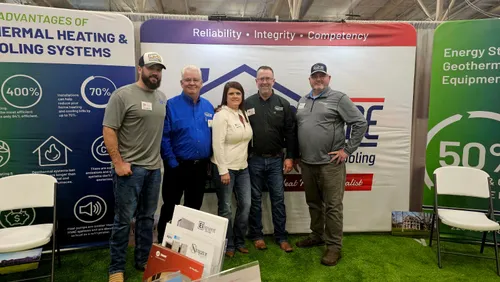
WinterSaire Heating & Cooling
Baton Rouge, LA
WinterSaire Heating & Cooling is a family-owned HVAC company based in Baton Rouge, LA, serving all areas of South Louisiana. They provide a wide range of heating, cooling, and refrigeration services for residential and commercial clients, including air conditioning and furnace installation, geothermal heat pump systems, HVAC maintenance, and indoor air quality solutions. Their expertise includes geothermal heat pump installation, which uses the earth's natural energy for efficient heating and cooling. With over ten years of experience, WinterSaire Heating & Cooling is locally owned and operated from Denham Springs, Louisiana.
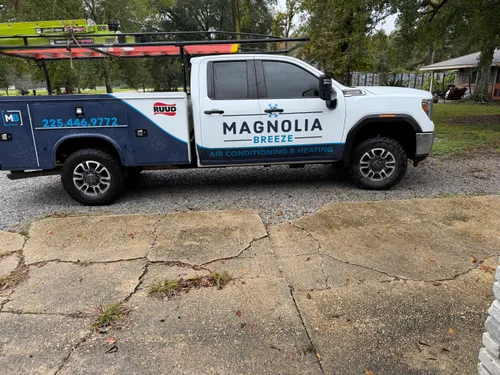
Magnolia Breeze
115 N College St, Denham Springs, LA 70726
Magnolia Breeze is an HVAC company serving the Baton Rouge, LA area, specializing in both commercial and residential HVAC services. They provide repair, maintenance, and installation for air conditioning, furnaces, heat pumps, boilers, mini splits, and geothermal heat pumps. The company was founded by two experienced technicians who developed their skills working for larger HVAC companies in Baton Rouge before starting Magnolia Breeze. They handle a wide range of HVAC tasks with expertise and care.
Shield Mechanical LLC
8565 Rome Dr, Baton Rouge, LA 70818
Shield Mechanical LLC provides heating and cooling services in Baton Rouge, LA, and nearby parishes including East Baton Rouge, West Baton Rouge, Ascension, and Livingston. With over 30 years of experience, their trained technicians offer installation, repair, and maintenance for HVAC systems such as air conditioners, furnaces, heat pumps, geothermal systems, and ductless mini-splits. They also provide indoor air quality solutions and thermostat installations. Shield Mechanical emphasizes energy-efficient and eco-friendly options tailored to local needs and offers same-day and weekend appointments to accommodate customers' schedules.
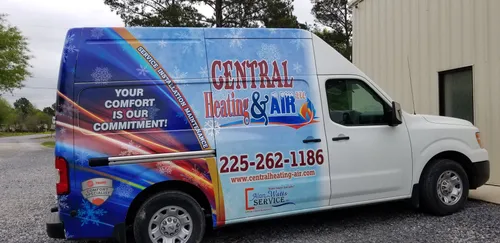
Central Heating & Air LLC
Baton Rouge, LA
Central Heating & Air LLC is an HVAC contractor serving Baton Rouge, LA, and nearby communities. Since 1997, they have provided air conditioning, furnace, heat pump, geothermal HVAC, and ductless system installation, repair, and maintenance services. Their offerings also include indoor air quality inspections, thermostat and home automation installation, and light commercial HVAC services. The company is a Trane Comfort Specialist dealer and employs NATE-certified technicians. They provide 24/7 emergency service to support customers whenever needed.
How Geothermal Systems Work in Our Climate
The principle behind a geothermal heat pump is elegantly simple. Just a few feet below the surface, the earth maintains a nearly constant temperature of around 60°F year-round, regardless of the sweltering Louisiana summer or occasional chilly winter night. A geothermal system uses this stable resource as a heat source in winter and a heat sink in summer.
For heating, a fluid (usually water or an antifreeze solution) circulates through a loop of pipes buried in your yard, absorbing the earth's warmth 1. This warmed fluid is pumped to an indoor unit, where a heat pump concentrates the thermal energy and distributes it as warm air through your home's ductwork 2. The cooling cycle simply reverses this process: the system extracts heat from your indoor air and transfers it into the fluid, which then releases that heat into the cooler ground 3. This process is incredibly efficient, often achieving 400-600% efficiency, meaning they move four to six units of heat for every one unit of electricity used.
Types of Geothermal Loop Systems
The buried pipe network, called the ground loop, is the heart of the system. The right type for your Baton Rouge property depends on your land, soil conditions, and local water regulations.
Closed-Loop Systems This is the most common configuration for residential installations. A sealed, continuous pipe loop is buried and filled with a heat-transfer fluid. There are two primary designs:
- Horizontal: Pipes are laid in trenches dug 4 to 6 feet deep. This requires a larger amount of available yard space but is often less expensive than vertical drilling where conditions allow.
- Vertical: For properties with limited space, like many urban Baton Rouge lots, contractors drill boreholes 150 to 400 feet deep and insert U-shaped loops of pipe. This method minimizes landscape disturbance and is effective in most soil types.
Open-Loop Systems This system uses groundwater from a well or a pond as the direct heat exchange fluid. After passing through the heat pump, the water is returned to a second well or discharged on the surface (where local codes permit). These are less common in the Baton Rouge area due to considerations around water availability, quality, and permitting.
Hybrid Systems Also known as dual-source systems, these combine a geothermal ground loop with a traditional air-source heat pump. This can optimize efficiency and cost, using the geothermal system for the bulk of heating and cooling and the air-source unit as a booster during extreme temperature peaks 4.
The Installation Process: What to Expect
Installing a geothermal HVAC system is a significant project that requires careful planning and professional expertise. Here's a typical step-by-step overview.
- Site Assessment and Design: A qualified contractor will evaluate your property. They'll assess soil composition, available land, bedrock depth, and the location of utilities. This assessment determines the best loop type and size for your home's heating and cooling loads 5.
- Ground Loop Installation: This is the most substantial phase. For a horizontal system, a backhoe will dig the necessary trenches. For a vertical system, a drilling rig will be brought in to create the boreholes. The high-density polyethylene pipes are then placed and connected into a continuous loop.
- Indoor Unit Setup: The geothermal heat pump unit-which is typically about the size of a small refrigerator-is installed in your garage, basement, or utility closet. It is connected to your home's existing ductwork or to a new duct system, as well as to the fluid lines running from the ground loop.
- System Start-Up and Testing: Once everything is connected, the system is filled with fluid, purged of air, and pressurized. The contractor will start the system, check its operation, and balance the airflow to ensure optimal performance in every room 6.
Find the perfect geothermal heat pump contractors for your needs
Get personalized recommendations and expert advice
Costs, Savings, and Incentives
The upfront investment for a geothermal system is higher than for a conventional HVAC system. For a typical Baton Rouge home, a complete installed system can range from $20,000 to $40,000 or more, with factors like loop type, home size, and soil conditions influencing the final price 7. A common 3-ton system might cost around $25,000 installed, including drilling 8.
The payoff comes from dramatically lower operating costs. Homeowners can expect to reduce their heating and cooling energy consumption by 30% to 70% 9. In Louisiana's climate, where HVAC runs for much of the year, these savings can add up to hundreds of dollars annually, leading to a payback period often estimated between 5 to 10 years 10 11. Furthermore, the equipment is remarkably durable. The indoor heat pump components often last 20-25 years, while the underground piping can last 50 years or more with virtually no maintenance 12.
It's also crucial to investigate available financial incentives. Federal tax credits for qualifying geothermal heat pump installations have historically been available, which can significantly offset the initial cost. Always check with your installer or the Database of State Incentives for Renewables & Efficiency (DSIRE) for the most current programs.
Is a Geothermal System Right for Your Home?
Geothermal technology offers a compelling blend of comfort, efficiency, and long-term value. It's an excellent option for homeowners planning to stay in their homes long enough to realize the energy savings, those with sufficient property for a ground loop (or the budget for vertical drilling), and anyone looking to reduce their carbon footprint with a renewable energy solution. The consistent performance provides even heating and cooling, superior humidity control, and quiet operation since the noisiest components are indoors.
Frequently asked questions
Sources
Footnotes
-
Geothermal Heating and Cooling Systems - MN Dept. of Health - https://www.health.state.mn.us/communities/environment/water/wells/geothermal.html ↩
-
How It Works: Geothermal Heat Pump 101 - GeoComfort Blog - https://geocomfort.com/blog/how-it-works-geothermal-heat-pump-101 ↩
-
All You Need to Know About Home Geothermal Heating & Cooling - Dandelion Energy - https://dandelionenergy.com/all-you-need-to-know-about-home-geothermal-heating-cooling ↩
-
4 Types of Geothermal HVAC Systems - https://wallerhvac.com/article/types-geothermal-hvac-systems ↩
-
Geothermal Heat Pump Installation: What To Expect For Your ... - https://jomory.com/geothermal-heat-pump-installation-what-to-expect-for-your-property/ ↩
-
How Geothermal Heat Pumps Work - https://www.youtube.com/watch?v=XxlTnBukweI&t=37 ↩
-
Geothermal Heat Pump Guide: Installation Costs, Types And Benefits - https://modernize.com/hvac/heating-repair-installation/heat-pump/geothermal ↩
-
Geothermal Heat Pumps - Department of Energy - https://www.energy.gov/energysaver/geothermal-heat-pumps ↩
-
How Does A Geothermal Heat Pump Work? Complete 2025 Guide - https://solartechonline.com/blog/how-does-geothermal-heat-pump-work/ ↩
-
Guide to Geothermal Heat Pumps - https://www.energy.gov/sites/prod/files/guide_to_geothermal_heat_pumps.pdf ↩
-
How Does a Geothermal System Work? - ClimateMaster - https://www.climatemaster.com/homeowner/side-links/how-it-works ↩
-
5 Things You Should Know about Geothermal Heat Pumps - https://www.energy.gov/cmei/articles/5-things-you-should-know-about-geothermal-heat-pumps ↩