
Find the Best Geothermal Heat Pump Contractors for Your Business
No obligation • Fast responses • Nationwide coverage

Why you can trust HVAC Firms
HVAC Firms is a leading United States resource for evaluating HVAC service providers. Our team researches companies, checks credentials, and reviews customer feedback to present clear, unbiased information. Listings and rankings are based on merit, and companies cannot pay to change our editorial content.
Search providers near you
Top Geothermal Heat Pump Contractors in Loveland, Colorado Ranked
A geothermal heat pump, also known as a ground-source heat pump, is a highly efficient system that uses the earth's stable underground temperature to heat and cool your home. For Loveland residents, this technology offers a path to significant energy savings and reduced environmental impact. This guide explains how these systems work, what installation entails, and how you can find qualified local experts to assess your property for this sustainable upgrade.
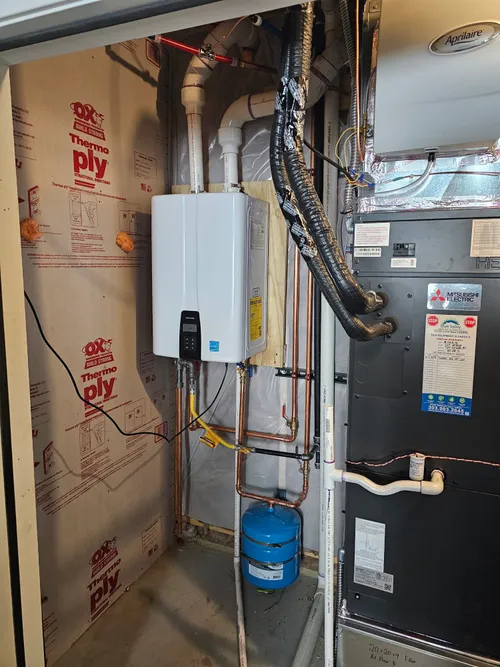
How Geothermal Heating and Cooling Works
At its core, a geothermal system is a heat exchange system. It doesn't create heat by burning fuel; instead, it transfers existing thermal energy between your home and the ground. The earth beneath Loveland maintains a relatively constant temperature of around 50-60°F year-round, just a few feet below the surface. A geothermal heat pump leverages this stable resource.
The process involves three key components:
- The Ground Loop: A closed loop of high-density polyethylene pipe is buried in your yard. A water-based solution circulates through this loop, absorbing heat from the earth in the winter and depositing excess heat from your home into the earth in the summer.
- The Heat Pump Unit: Located inside your home, this unit concentrates the thermal energy collected from the ground loop. In heating mode, it extracts the heat from the fluid and transfers it to your home's air or hydronic system. In cooling mode, the process reverses, pulling heat from your home and depositing it into the ground loop.
- The Distribution System: The conditioned air is delivered through your existing ductwork or via a radiant floor system.
This method of heat transfer is exceptionally efficient. For every unit of electricity used to run the compressor and pump, a geothermal system can move three to five units of heating or cooling energy, drastically reducing the energy required for home comfort compared to traditional furnaces and air conditioners.
Types of Ground Loop Systems for Loveland Properties
The design of the underground loop field is critical and depends on your property's characteristics. There are three primary configurations, each with its own advantages.
Vertical Closed Loops This is the most common type for homes in newer developments or with limited yard space. Contractors drill boreholes typically 200 to 500 feet deep and insert U-shaped loops of pipe into each hole 1. The holes are then backfilled with a special grout to ensure good thermal conductivity. Vertical loops are ideal for smaller lots and are less disruptive to existing landscaping, though the drilling process can be more costly upfront.
Horizontal Closed Loops For properties with ample land, a horizontal loop field can be a cost-effective option. Contractors excavate trenches four to six feet deep and lay loops of pipe horizontally 2. This system requires more square footage of open land but often avoids the need for specialized drilling equipment, which can reduce installation costs. The soil composition and topography of your Loveland lot will be key factors in determining feasibility.
Pond/Lake Loops If your property has a sufficient pond or lake, this can be the most economical loop option. Coils of pipe are submerged at a depth where water temperatures remain stable. The water acts as an excellent heat exchange medium3 4. This system requires a body of water that meets specific volume, depth, and quality criteria, which a qualified installer will assess.
Find the perfect geothermal heat pump contractors for your needs
Get personalized recommendations and expert advice
The Geothermal Installation Process: What to Expect
Installing a residential geothermal system is a significant project that requires careful planning and expert execution. Understanding the steps can help you prepare.
- Site Evaluation and Design: A certified installer will conduct a thorough assessment of your property. This includes evaluating soil and rock conditions, available space, and your home's current heating and cooling load. This data is used to design the most effective and efficient loop system and select the properly sized heat pump unit.
- Loop Field Installation: This is the major earthwork phase. For a vertical system, a drilling rig will create the boreholes. For a horizontal system, a backhoe will dig the trenches. The HDPE pipe is then placed and connected into a continuous loop5.
- Manifold and Connection: The ends of the ground loop are brought into your home, usually through the basement or crawlspace wall, and connected to a manifold. This manifold links the outdoor loop to the indoor heat pump unit.
- Indoor Unit Installation: The geothermal heat pump unit is installed in place of your old furnace, typically in a basement, utility closet, or garage. It is connected to the ground loop manifold and to your home's existing ductwork or radiant piping.
- System Startup and Testing: Once everything is connected, the system is charged with fluid, purged of air, and started. The contractor will test and balance the entire system to ensure it operates at peak efficiency.
Key Considerations for Loveland Homeowners
Upfront Cost vs. Long-Term Savings The initial investment for a geothermal heat pump system is higher than for a conventional HVAC system, with costs often ranging significantly based on loop type and home size6 7. However, this is balanced by substantial long-term benefits. Loveland homeowners can typically expect a 30% to 60% reduction in their heating and cooling energy bills6 8 9. Furthermore, a federal tax credit is available for qualified geothermal installations, which can offset a significant portion of the upfront cost8 9. When viewed as a 20+ year investment, the total cost of ownership often becomes very favorable.
Property Suitability Your lot size and geology are primary determinants. A vertical loop system is often the best fit for standard residential lots, especially in more developed areas of Loveland. A detailed site survey by a professional is essential to determine the best and most cost-effective approach10 11.
System Longevity and Maintenance The underground loop system is incredibly durable, with pipes often carrying warranties of 50 years or more. The indoor heat pump unit typically has a lifespan similar to or longer than a traditional furnace and air conditioner. Maintenance requirements are generally lower than for combustion-based systems, usually involving routine checks of the pump, filters, and fluid levels12.
The Environmental and Comfort Advantage
Choosing a ground-source heat pump is a powerful decision for reducing your home's carbon footprint. By using renewable thermal energy from the earth and electricity, these systems eliminate on-site fossil fuel combustion for heating. They also provide exceptional comfort. Geothermal systems deliver steady, even heating and cooling without the hot blasts or cold drafts associated with traditional systems. They operate quietly, both indoors and out, and can also be configured to provide a portion of your home's hot water, increasing overall efficiency 13.
Frequently asked questions
Sources
Footnotes
-
The Geothermal Process | Colorado Geothermal Drilling - https://www.cogeothermal.com/services/our-process/ ↩
-
All You Need to Know About Home Geothermal Heating & ... - https://dandelionenergy.com/all-you-need-to-know-about-home-geothermal-heating-cooling ↩
-
Geothermal Heat Pumps: How They Work | AHRI - https://www.ahrinet.org/scholarships-education/education/homeowners/how-things-work/geothermal-heat-pumps-how-they-work ↩
-
Geothermal heating & cooling, heat pumps, heat exchange ... - https://aztechgeo.com/residential-geothermal/how-it-works/ ↩
-
How Do Geothermal Systems Work for Residential Homes? - https://www.davisheat.com/blog/how-do-geothermal-systems-work-for-residential-homes/ ↩
-
Geothermal Heating | Grand Junction, CO | Haining Home Services - https://www.hainingplumbing.com/residential-geothermal-heating ↩ ↩2
-
The Economics of Geothermal Heating & Cooling | Apollo - https://apollohtg.com/economics-of-geothermal-heating-and-cooling/ ↩
-
How to mine your backyard for underground heat - https://www.cpr.org/2025/04/24/colorado-geothermal-energy-homes/ ↩ ↩2
-
5 Things You Should Know about Geothermal Heat Pumps - https://www.energy.gov/cmei/articles/5-things-you-should-know-about-geothermal-heat-pumps ↩ ↩2
-
Geothermal heat pumps: The ultimate guide to ground-source ... - https://termo-plus.com/blog/geothermal-ultimate-guide-to-ground-source-heat-pumps/ ↩
-
How Does A Geothermal Heat Pump Work? Complete 2025 Guide - https://solartechonline.com/blog/how-does-geothermal-heat-pump-work/ ↩
-
Geothermal Heat Pumps - EnergySmart CNY - https://www.energysmartcny.org/heat-pumps/geothermal/ ↩
-
Guide to Geothermal Heat Pumps - https://www.energy.gov/sites/prod/files/guide_to_geothermal_heat_pumps.pdf ↩